I Saved $121,920 in 18 Months on a Working Holiday in Australia
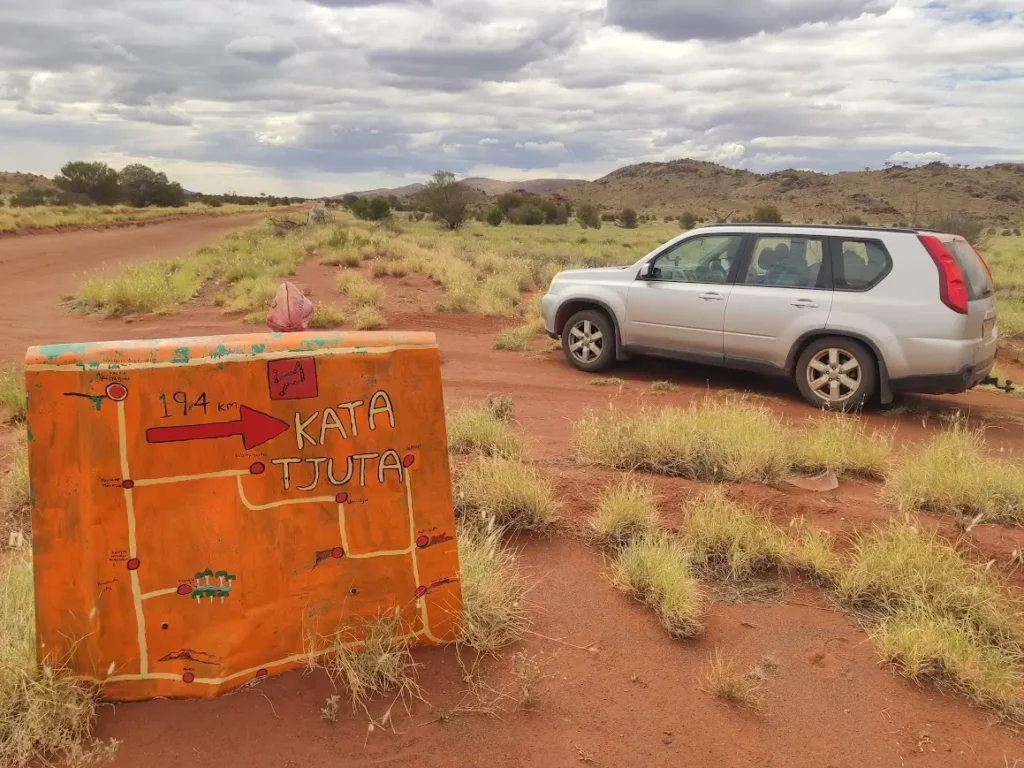
In March 2023, after a year of road-tripping around Australia, I accepted a job in a remote store in an Aboriginal community deep in the Outback. I had no idea how much it would change my life. I got in my car and drove 2,700 km from Sydney to the remote APY Lands in northern South Australia, near Uluru. By September 2024, 18 months later, I had saved AU$121,920 (approx. US$88,000 or €75,000 as of May 2026).
Note: All the dollar amounts throughout the post are in Australian dollars.
| Total earned (after tax) | $108,799 |
| Tax returns (3 tax years) | $11,639 |
| Super payout (DASP) | $7,492 |
| Spent | –$6,010 |
| Total saved | $121,920 |
How I Saved That Much
Not many working holiday makers save $100,000+. These things worked in my favor:
- I stayed in remote Aboriginal communities for 18 months.
- Accommodation was subsidized in the first job, then free.
- On the casual contract, I worked 50–60 hour weeks consistently, with overtime rates kicking in above 38 hours. My best week paid $1,688 after tax.
- There was virtually nowhere to spend money.
Most working holiday makers spend part of their visa traveling, changing jobs, or living in expensive cities. I had done a loop of Australia before starting to work, and once I did, I stayed put for the next 18 months.
The Two Jobs
Mai Wiru – APY Lands, South Australia
- Employer: Mai Wiru
- Location: Amata, SA – remote Aboriginal community in the APY Lands, ~1,400 km northwest of Adelaide, ~500 km southwest of Alice Springs
- Position: Casual Retail Employee (Retail Award Lvl 2, current rate: $33.95/h)
- Contract: Casual
| Gross income | After-tax income | |
|---|---|---|
| 03/2023–06/2023 17 weeks at $29.90/h | $23,919 | $17,672 |
| 07/2023–02/2024 35 weeks at $31.61/h | $62,595 | $47,438 |
| Total (52 weeks) | $86,514 | $65,110 |
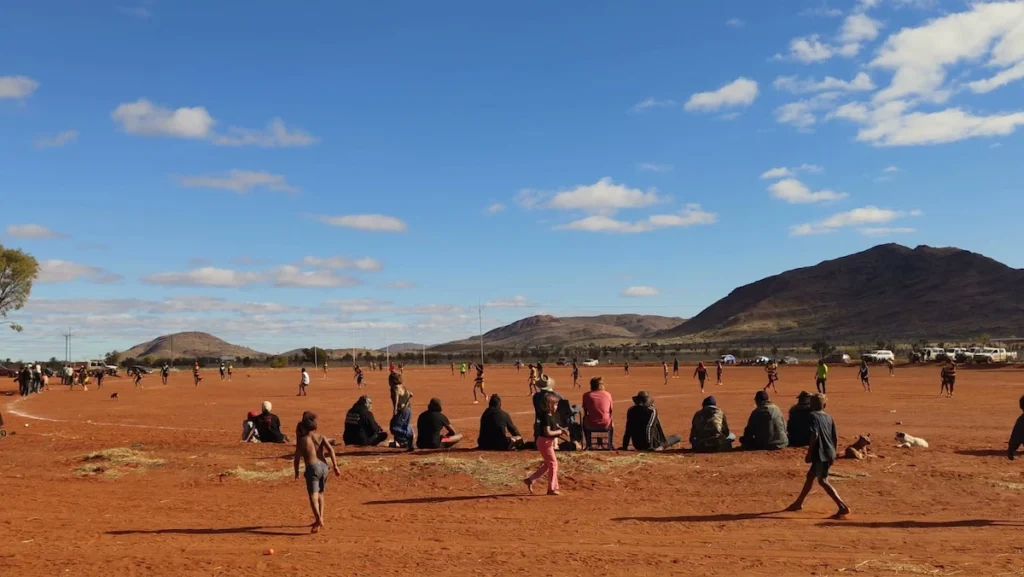
I got the job by answering a Facebook post Mai Wiru put up. After I sent my CV, they called and hired me the same day. No relevant qualifications were needed – my background was mostly in hospitality and construction.
Australian employment rules (called Awards) increased my rate for weekend work or overtime (above 38 hours a week), up to $44.26/h or $56.90/h. During my record 60-hour work week, I earned $1,688 net ($2,365 gross). Work weeks of 50–60 hours were common.
The commute was around 5 minutes on foot, a crucial difference from a city job. Just before this, I’d done a month of construction labor in Sydney, sometimes with a 3-hour daily commute. Six days a week, that turned a 40-hour job into effectively 60 hours – without the extra pay.
My casual role was not too stressful. To be honest, I couldn’t imagine being a store manager and handling all of that responsibility for months. You always have to be available in case something happens.
Outback Stores – Arnhem Land, Northern Territory
- Employer: Outback Stores
- Location: Maningrida, NT – remote community in Arnhem Land, ~400 km east of Darwin
- Position: Assistant Store Manager – Salary: $75,000/year ($2,885/fortnight)
- Contract: Full-Time
| Gross income | After-tax income (+salary sacrifice) | |
|---|---|---|
| 03–09/2024 (27 weeks) | $47,819 | $43,689 |
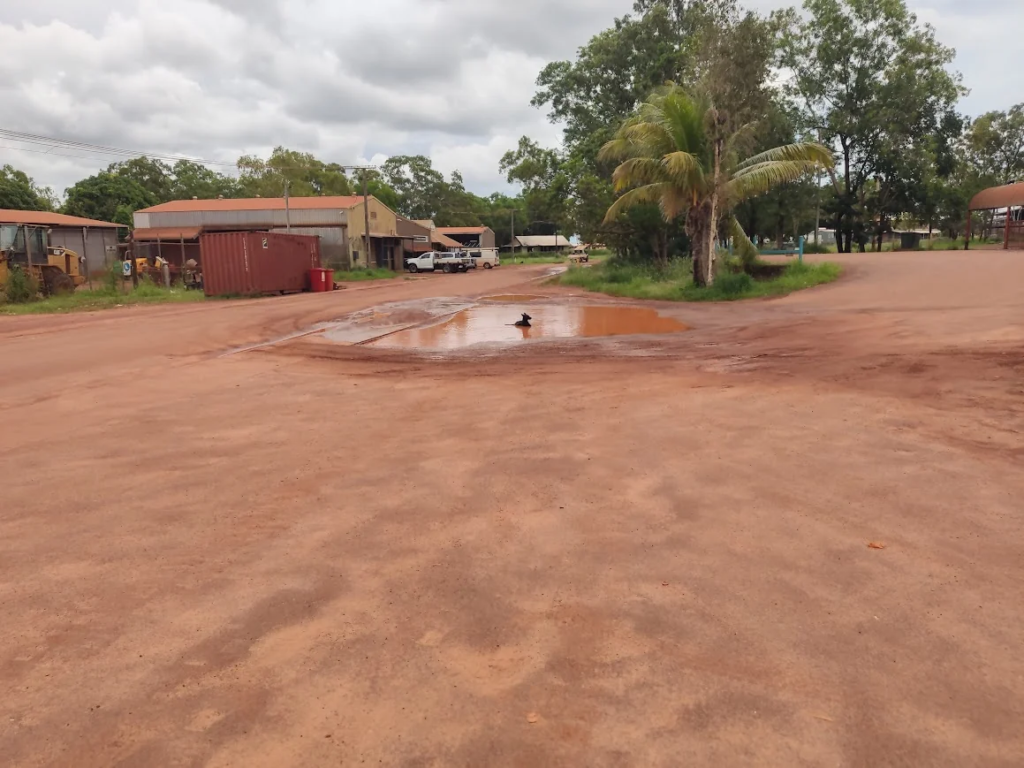
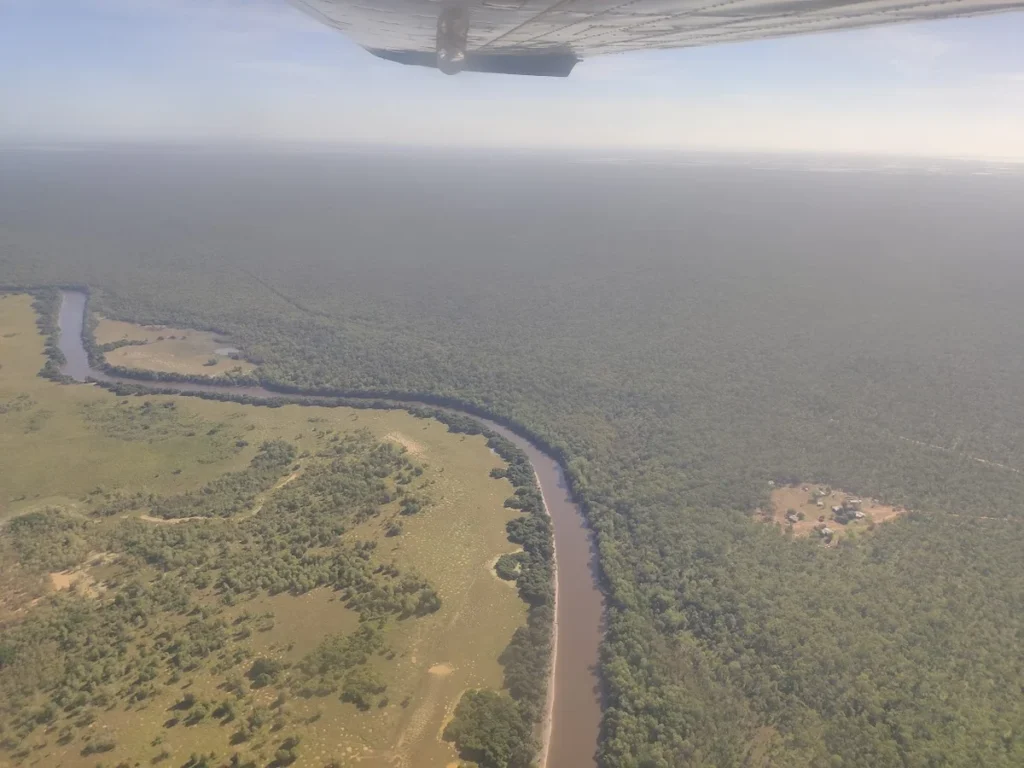
In February 2024, the second offer came through people I met at the first job. That’s how a lot of remote hiring works – once you’re in, opportunities come. The new employer covered my relocation flights from Alice Springs to Darwin, then on to remote Arnhem Land in the Northern Territory – passing over Kakadu National Park and Cahill’s Crossing.
The role itself was different from Amata. I went from casual retail worker to assistant store manager. Some days it was just the two of us running the store – responsible for everything: opening and closing, finances, stock orders, picking up staff and driving them to work. That shift also changed the contract: from casual hourly (where your incentive is to work as many hours as possible, especially with overtime rates) to a salaried 38-hour week, where you just want to do your work efficiently and go home.
My Expenses
Out in the bush, there is literally nowhere to spend money. My total expenses over 18 months were only $6,010.
- Accommodation: $2,080 ($40×52). Subsidized at $40/week initially, then free in the second role.
- Food: $3,600 ($200×18). Averaged $200/month by cooking all meals – I batch-cooked a pea/lentil soup on Sundays to last the week. Oatmeal for breakfast – simple, healthy, cheap.
- Phone: $105 ($35×3). Telstra/Boost for the best remote signal. I used Telstra’s $35 180-day Casual plan.
- Insurance: $225 ($150×1.5). I paid $150 per year for travel insurance from my home country.
What It’s Actually Like
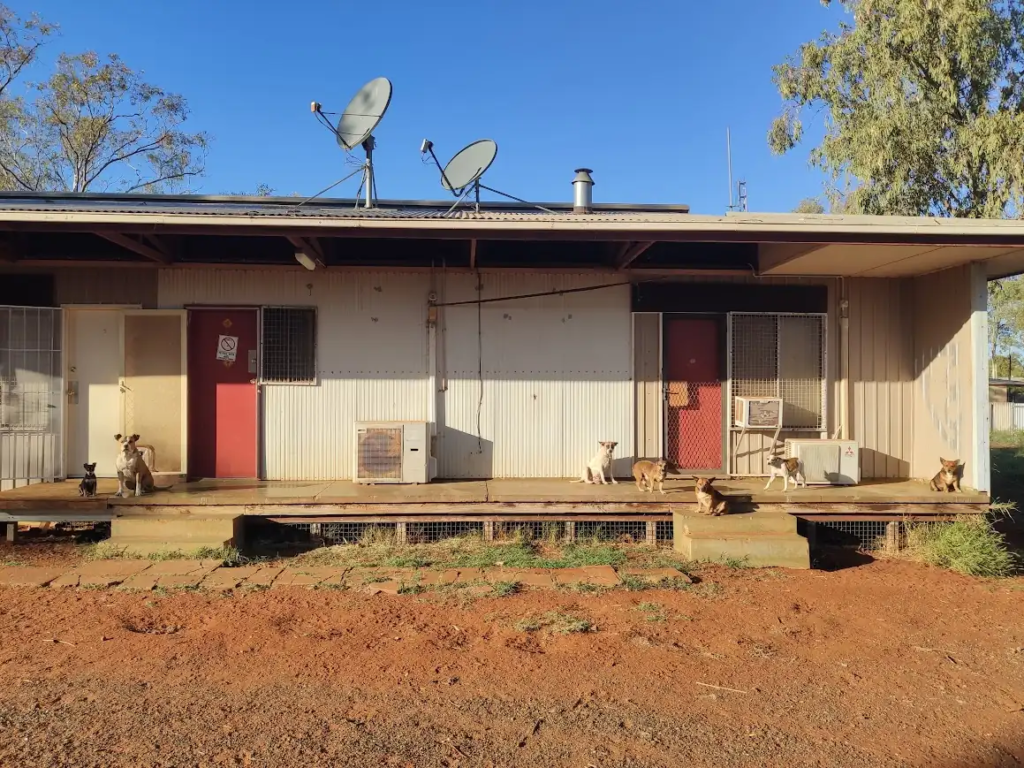
The remote APY Lands and Arnhem Land are not typical Australian destinations. They require a permit to enter – mine was handled by the employer. They have their own culture, languages, and rules.
I was there with my partner and that made a big difference in the whole experience. Friendly coworkers help too – ours were easy-going and happy to hang out after work. Without all that, 18 months of isolation would have been much harder.
Amata, SA
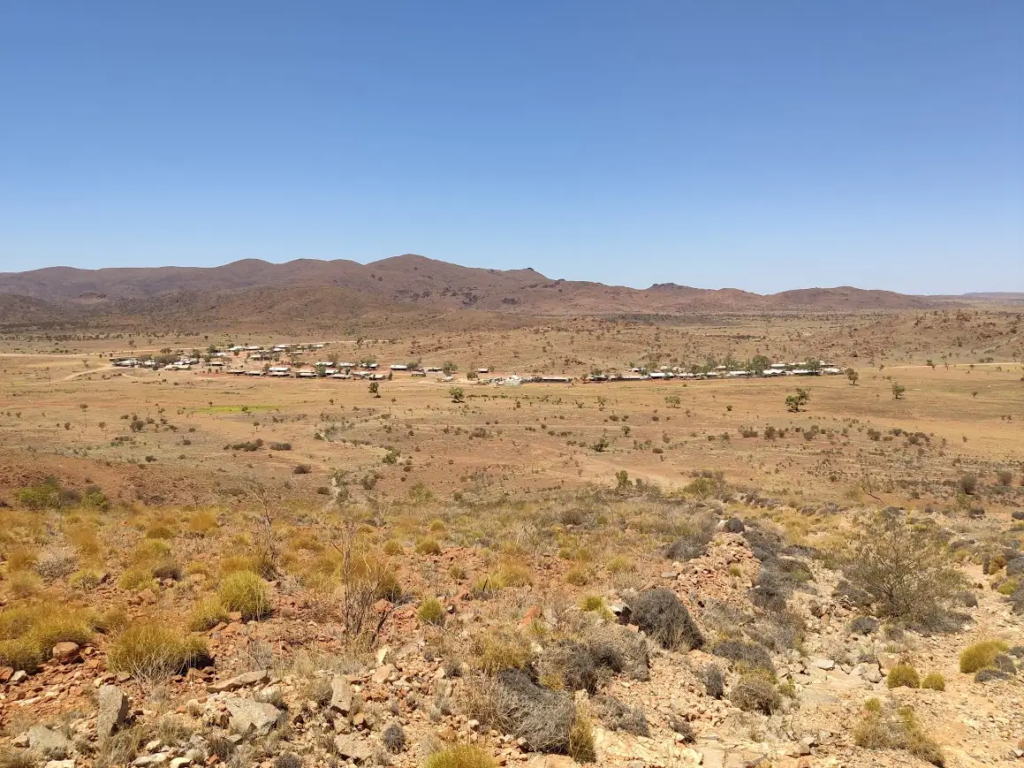
Amata has a population of around 400, but seasonally that would drop to 100–200 and feel very empty. The desert climate has sharply defined seasons: summer days up to 45°C, winter nights near 0°C. One language group – Pitjantjatjara.
The community is dry. Alcohol is banned by the elders. The cultural gap between staff and locals was real and wide. Social life was mostly with other outsiders – teachers, clinic workers, arts center people. Evenings were relaxed: cooking, sometimes having dinner together.
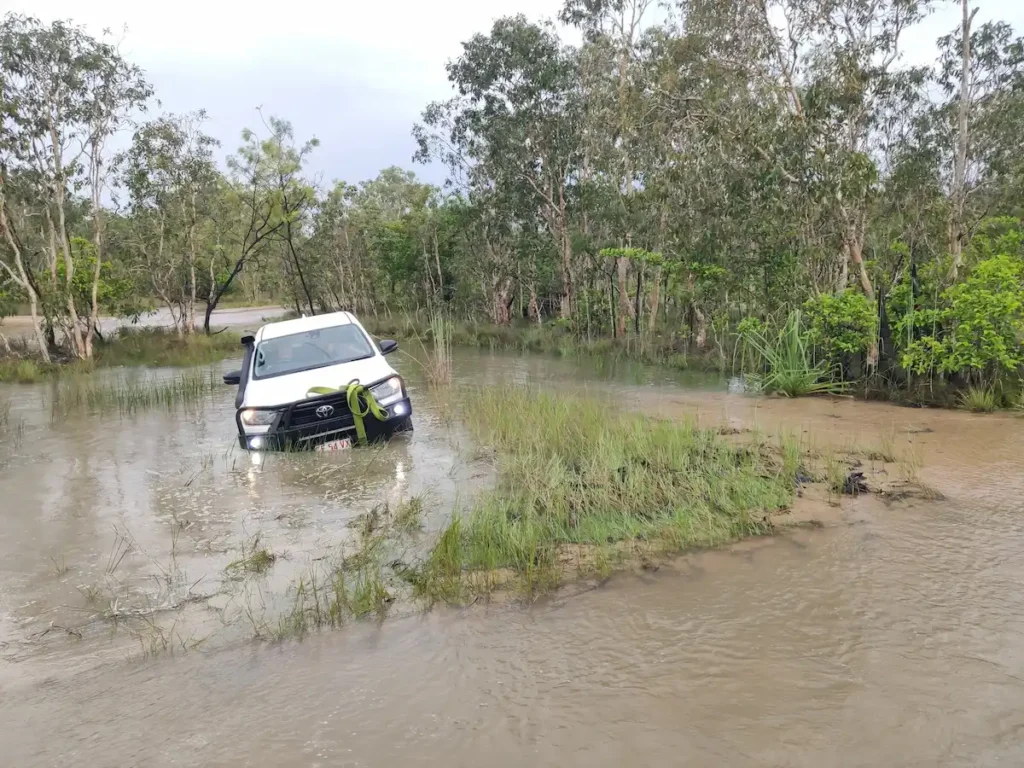
The isolation is real. During heavy rains, the roads can get flooded, supply trucks can stop coming for weeks, and power can go out – when that happens, there’s no internet or phone signal. The bus runs once a week – and sometimes not at all. Without a car you can feel stuck – I had my own.
On Sundays, I’d go for a drive on the main roads between communities. You have to be careful where you go – many places are private homelands or sacred land requiring permission from the landowner or elder. I generally stuck to the main roads – half an hour out, half an hour back. Breaking down out there is dangerous. I always carried extra water – some roads see no cars for weeks and there’s no phone signal between communities at all.
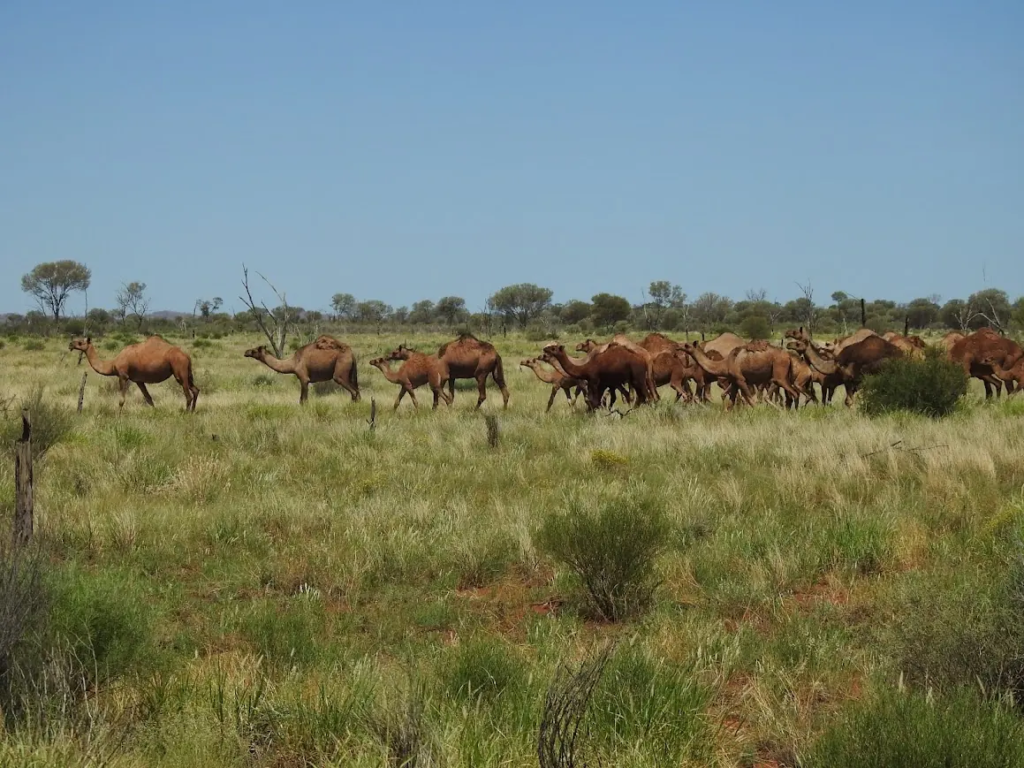
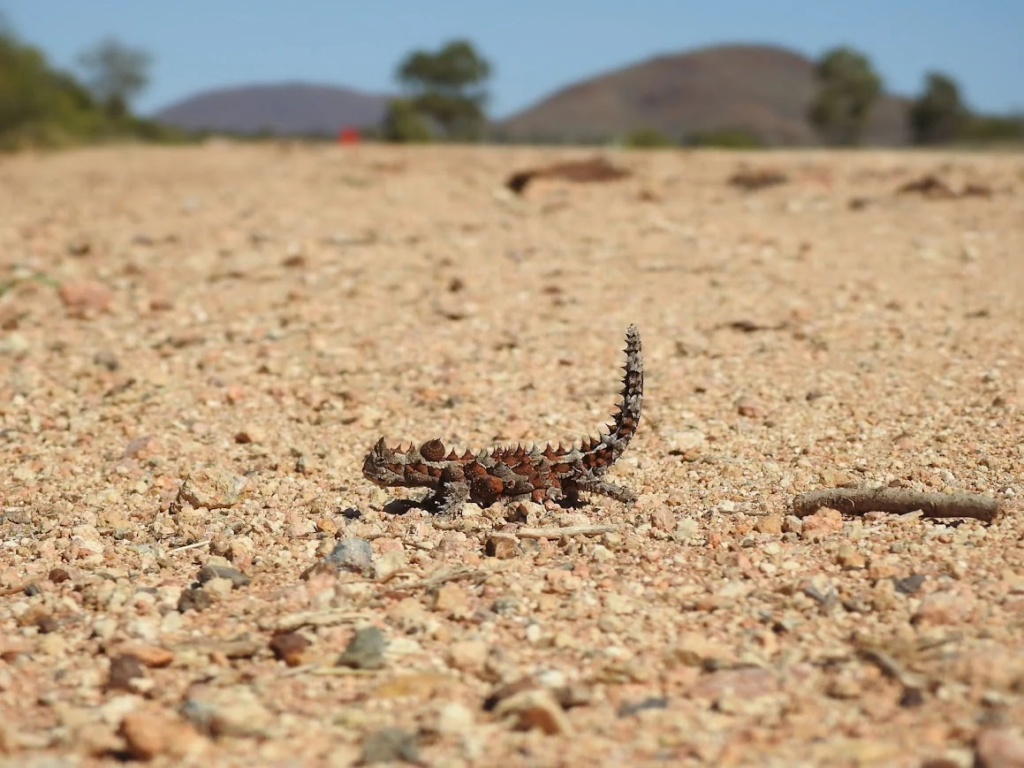
On those drives I saw herds of camels and some reptiles: a perentie (Australia’s largest lizard) and a thorny devil – tiny, strange-looking. I never saw any kangaroos out there, though locals occasionally hunted them.
There was also a small hill about an hour’s walk from the community. From the top you could see the vast landscape in every direction. This desert is unlike anything in Europe and I really miss it.
For one month, I was sent on assignment to Pipalyatjara – about 200 km west of Amata, with nothing in between, right on the Western Australia border. Even more remote than Amata. Officially home to about 150 people, with the population dropping seasonally.
Maningrida, NT
Maningrida sits right on the coast in northern Australia. Temperatures stay fairly constant year-round (30–35°C max daily) – seasons here are defined by precipitation, not temperature: an overwhelmingly humid wet season and a pleasant, mostly rain-free dry season.
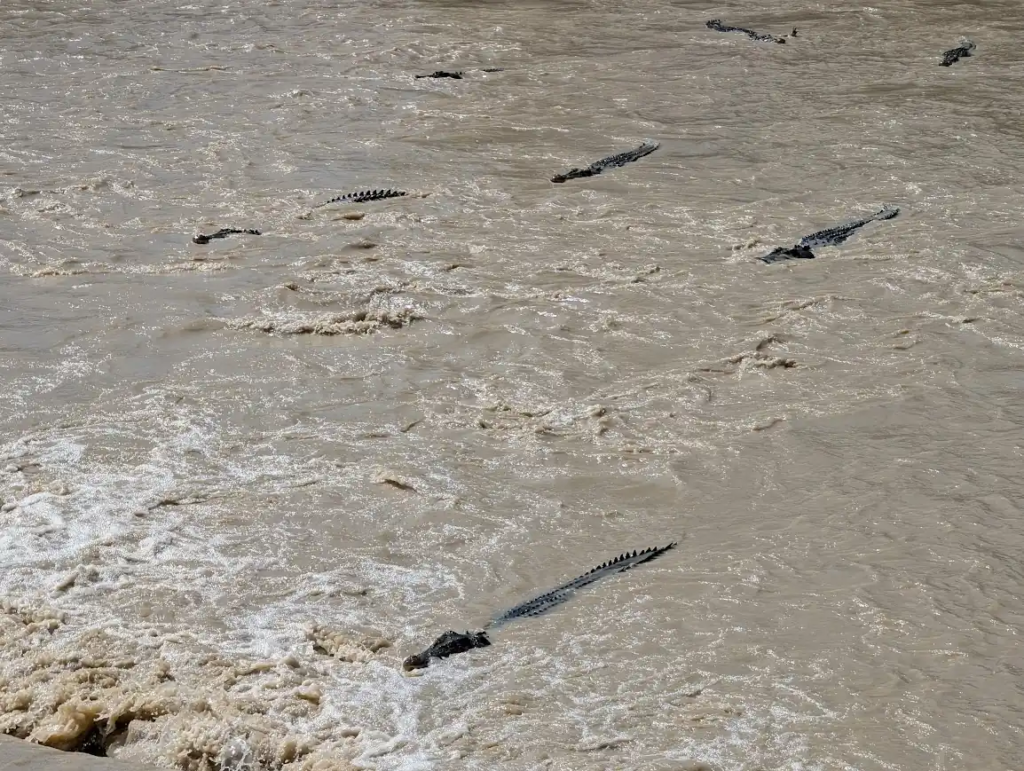
There’s a sea, but swimming is not an option because of crocodiles. Drive around 200 km west and you reach Kakadu National Park, with plenty of hiking and swimming in its rivers and waterfalls. Getting there means crossing the famous Cahill’s Crossing, where dozens of crocodiles gather to fish at high tide – numbers peak around September.

Maningrida is less remote than Amata. Airnorth runs regular flights using 30-seat planes, while Amata was served only by government services and charter flights. Population is around 2,500 – several language groups, three shops, more like a small town than a remote community. Access is still restricted and requires authorization, but there are significantly more workers and outside staff there.
How to Find These Jobs
I didn’t plan to end up in remote community retail. I was open and found the first job through a Facebook post from Mai Wiru. I sent a CV and got a call the same day. The second role came through connections made at the first job.
Where to look:
- Facebook: Search “remote community jobs Australia”, “Aboriginal community store jobs”, “outback work Australia” – groups change, so search terms are more reliable than specific groups.
- Job Boards: Visit Gumtree, SEEK or Indeed. Search “remote community”, “community store”, “outback retail”.
- Direct: Outback Stores, Mai Wiru, ALPA – all major remote store operators. Check their websites or contact them directly by email.
What they want:
No qualifications are needed for entry-level retail. A driver’s license is a plus.
How much to bring:
The working holiday visa has a minimum funds requirement of $5,000 – more than enough if you’re planning to work. You won’t be spending much once you’re there. We bought a car in Sydney – $7,500 across the two of us for a 2008 Nissan X-Trail – and drove it all around Australia before settling into work. It gave us a lot of freedom both on the road and once we were working remote. Our coworkers didn’t have one and managed fine – it’s not a requirement, just a different experience.
Remote Retail vs. Other WHV Jobs
Most WHV advice you hear points to mining, solar farms or roadhouses. Here’s how these actually compare:
| Job Type | Estimated 3-Month Savings |
|---|---|
| Mining (FIFO) | $15,000 – $25,000 |
| Solar Farms | $12,000 – $20,000 |
| Remote Retail | $10,000 – $20,000 |
| Outback Roadhouses | $8,000 – $14,000 |
| Hospitality (Remote) | $6,000 – $12,000 |
| Cattle Stations | $6,000 – $12,000 |
| Farm Work | $5,000 – $10,000 |
| Hospitality (City) | $0 – $3,000 |
Mining (FIFO)
High wages. The entry point with no experience is getting a White Card (basic construction safety course, half a day) and applying for utility and support roles – camp cleaner, kitchen hand, trade assistant. More competitive than remote retail. A friend of mine got in as a trade assistant after doing Working at Heights and Confined Space certifications before to improve his odds. The roster is typically two weeks on, one week off. That week off is usually Perth (as Western Australia is a big mining hub), but could be Adelaide or another city. What you actually save depends a lot on the off weeks. Usually you get a flat rate – no overtime. Realistic savings over three months: $15,000–$25,000+.
Solar Farms
Solar farms come up a lot in backpacker circles, almost a legend at this point – everyone’s heard of them, few actually get in. I sent plenty of emails, but never heard back. Entry-level laborers and cleaners earn $30–40/h. Accommodation often covered. White Card required. Realistic savings over three months: $12,000–$20,000.
Remote Retail
Less well known, less competition. Accommodation subsidized or free. Nowhere to spend money and very remote – once you’re there, you probably won’t go anywhere as long as you have the job. It suited me, but it won’t suit everyone. The isolation is real and it’s a long commitment. Realistic savings over three months: $10,000–$20,000 depending on the hours.
Outback Roadhouses
Often overlooked. Roadhouses are the petrol stations/pubs that keep the remote highways running. You’ll be helping at the bar, making food, or cleaning. Accommodation is usually included, and you are literally in the middle of nowhere. The work is straightforward, and on casual contracts you should get the high penalty rates for working weekends, public holidays and overtime. Realistic savings over three months: $8,000–$14,000.
Hospitality
Social and the least remote of the lot. Also the worst financially – high rent, irregular hours, easy to spend money. Realistic savings over three months: $0–$3,000 in the cities. $6,000–$12,000 if you get a remote resort job with subsidized housing.
Cattle Stations
Remote and physically demanding, but usually it counts toward your visa extension. You work with cattle, sheep, or farm machinery. The hourly pay isn’t the highest, but it typically comes with free accommodation and food. Because you are on a remote property, your expenses drop to zero. Realistic savings over three months: $6,000–$12,000.
Farm Work
The go-to for visa extension (88 days of regional work toward a second year). Pay around $30–35/h casual. Piece-rate picking jobs may pay more if you’re fast, and thanks to recent laws, there is now a minimum wage guarantee – meaning you legally can’t earn below the hourly minimum even if you have a slow day. Accommodation often provided at a subsidized rate. Some farms can get pretty social with plenty of backpackers in the busy season. Realistic savings over 88 days: around $5,000–$10,000 depending on hours.
Tax Optimization
Many WHV workers leave money on the table. These are the five things I did:
- Zone Tax Offset: Working in a remote zone adds $1,173 per tax year to your return. Source: ATO.
- Salary Sacrifice: Some not-for-profit remote employers offer salary sacrifice. It makes up to $15,900 of annual income tax-free, effectively saving you up to $5,088 in tax. Not automatic – set it up with HR.
- Medicare Levy Exemption: As a foreigner not entitled to Medicare, apply for a Medicare Entitlement Statement (MES) and get a 2% levy exemption on your tax return.
- Starting Mid-Year: Starting in the middle of a tax year (1 July – 30 June) can help you avoid the 30% bracket while taking full advantage of the tax-free threshold – if you are a tax resident from an eligible NDA country.
- Superannuation Payout: Employers pay 12% super on top of your wages. When you leave permanently, you claim it back via a DASP on the ATO website. WHV holders are taxed at 65% on the payout.
Before you leave Australia: Get a $15 Amaysim SIM card with a 365-day expiry. Useful for online banking and ATO access after you’re gone.
My visa note: I arrived from New Zealand during Covid and applied for a 408 (Covid) visa (now discontinued) instead of a standard WHV. It was free, had no 6-month work limit, no 88-day regional requirement, and the DASP (Super Payout) tax rate was 35% instead of 65% (which allowed me to get back $7,492).
That visa’s gone now – if you’re going today, you’d be on a Working Holiday visa: subclass 417 or 462 depending on your passport. That covers most of Europe, the UK, US, Canada, Japan, South Korea, China, and dozens more. Ages 18–30, 35 for some nationalities.
Summary of My Savings
| Mai Wiru (wages after tax) | $65,110 |
| Outback Stores (after tax + salary sacrifice) | $43,689 |
| Tax return 2022/23 | $4,325 |
| Tax return 2023/24 | $3,733 |
| Tax return 2024/25 | $3,581 |
| Super payout (DASP) | $7,492 |
| Spent | –$6,010 |
| Total saved | $121,920 |
One week of travel in Europe can cost less than a day of work in Australia:
The Budget System
I keep daily travel costs under €30 using two methods:
● €3/Day Rental Car Guide
● Sleeping in Rental Cars
Wow, great trick on the zone tax offset! I might be eligible and will look into in more, thanks so much for writing that up 🙂