Lithuania, Latvia and Estonia on €18/Day: 3 Baltic Capitals
Three Baltic countries, one week each. Here’s what it cost:
TRIP STATS
- DAILY RATE: €18.40 (per person)
- SLEEP: Private Rooms in Hostels
- BY: Bus, Train
- PEOPLE: 2
- DAYS: 20
- TOTAL: €736.00
- CURRENCY: Euro (€)
- DATE: March 2026
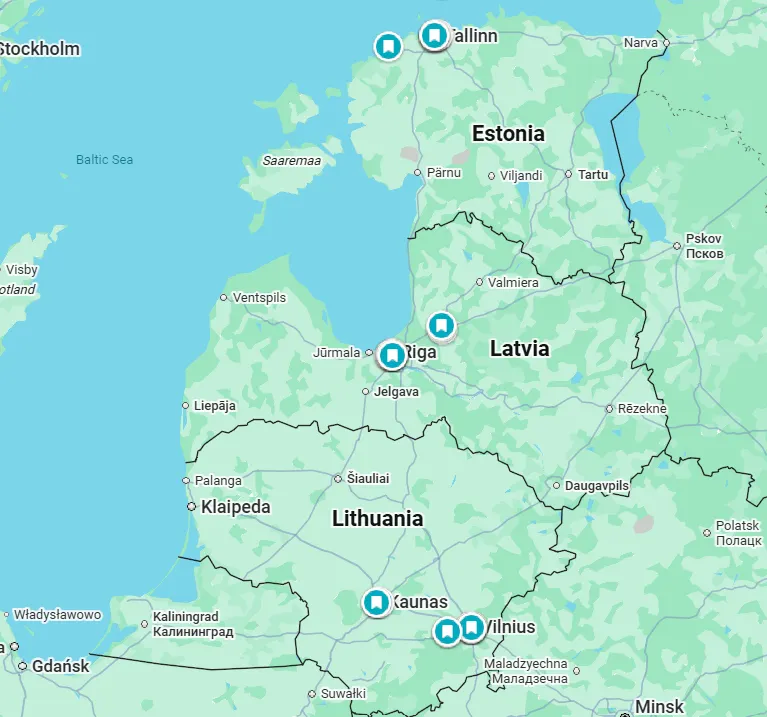
- ROUTE: Kaunas → Vilnius → Riga → Tallinn
- TOOLS: Booking.com, Omio, FlixBus, Lidl
| ITEM | COST (2P) | NOTES |
|---|---|---|
| Stay | €408.00 | Per double room: Kaunas 2×€25, Vilnius 3×€24, Riga 7×€20.86, Tallinn 8×€17.50 |
| Travel | €66.00 | Per person: Kaunas – Vilnius: €5 – LTG Link Vilnius – Riga: €5 – Ecolines Riga – Tallinn: €5 – Ecolines Day trips: €18 for all return trips on local trains |
| Food | €262.00 | €6.55/day per person, shopped at Lidl, cooked. |
| Activity | €0.00 | Free museums, free sights. |
| TOTAL | €736.00 | 20 days at €18.40/day per person |
Getting There
Ryanair and Wizz Air both cover Vilnius, Riga and Tallinn. If you’re flexible and flying without a bigger carry-on, you can get €15–€20 tickets. Check Skyscanner with flexible dates.
If you’re coming from Warsaw to Lithuania, check Omio for bus connections and LTG Link (Lithuanian Railways) for trains – it doesn’t appear on Omio and is frequently the cheapest option. Warsaw–Vilnius starts at €12.
Getting Around – Buses
FlixBus and Ecolines cover routes across the Baltic capitals. Ecolines often runs €5 flash sales on routes between Riga, Vilnius and Tallinn. Check Omio to compare different operators, but book directly – you’ll save €1–€2 per ticket.
Always search for a promo code before paying. 10% off is common, occasionally more – I got 25% through Allegro Smart, a Polish loyalty program. One code applies to multiple passengers in a single booking and covers return legs too. You can use a single 25% code to discount a return itinerary for two or more passengers.
We paid:
- Kaunas – Vilnius: LTG Link (train), €5
- Vilnius – Riga: Ecolines (bus), €5
- Riga – Tallinn: Ecolines (bus), €5
Day trips:
- Vilnius – Trakai – Vilnius: LTG Link, €5
- Riga – Sigulda – Riga: local train, €5
- Tallinn – Paldiski – Tallinn: local train, €8
Accommodation
We used Booking.com for all stays – manually sort by “Price (lowest first)” and filter “Good: 7+” to remove the bad listings.
Room prices across four cities, twenty nights:
- Kaunas – 2 nights, €25/room per night
- Vilnius – 3 nights, €24/room per night
- Riga – 7 nights, €20.86/room per night
- Tallinn – 8 nights, €17.50/room per night. Long-stay discount applied.

Food
€6.55/day per person. We shopped at Lidl throughout and cooked in hostel kitchens for most of the trip.
Route
The trip was meant to be a slow one – roughly a week in each country, moving north. Three capitals plus day trips to Trakai, Sigulda and Paldiski. We started by taking a train from Warsaw to Kaunas.
Kaunas
Right after crossing the border, we had to swap trains (on the same ticket) – Poland and Lithuania use different railway track gauges, a Soviet-era relic. No border checks.
Kaunas still had snow in early March after a cold winter, noticeably more than Warsaw. It’s not a heavily touristic place and we were there well off-season.

We visited Kaunas Castle and the Nemunas and Neris Confluence Park right next to it, the rivers were half-frozen. On the way out to the train station before boarding Vilnius train, we passed Christ’s Resurrection Basilica – part of UNESCO’s Modernist Kaunas designation – and the Church of St. Michael the Archangel, formerly Orthodox. Both quite different than usual Catholic churches.
Vilnius
Vilnius ended up being our favorite of the three Baltic capitals. It felt the most authentic and livable, while still being old and charming. The old town is expansive – our accommodation was in the middle of it.
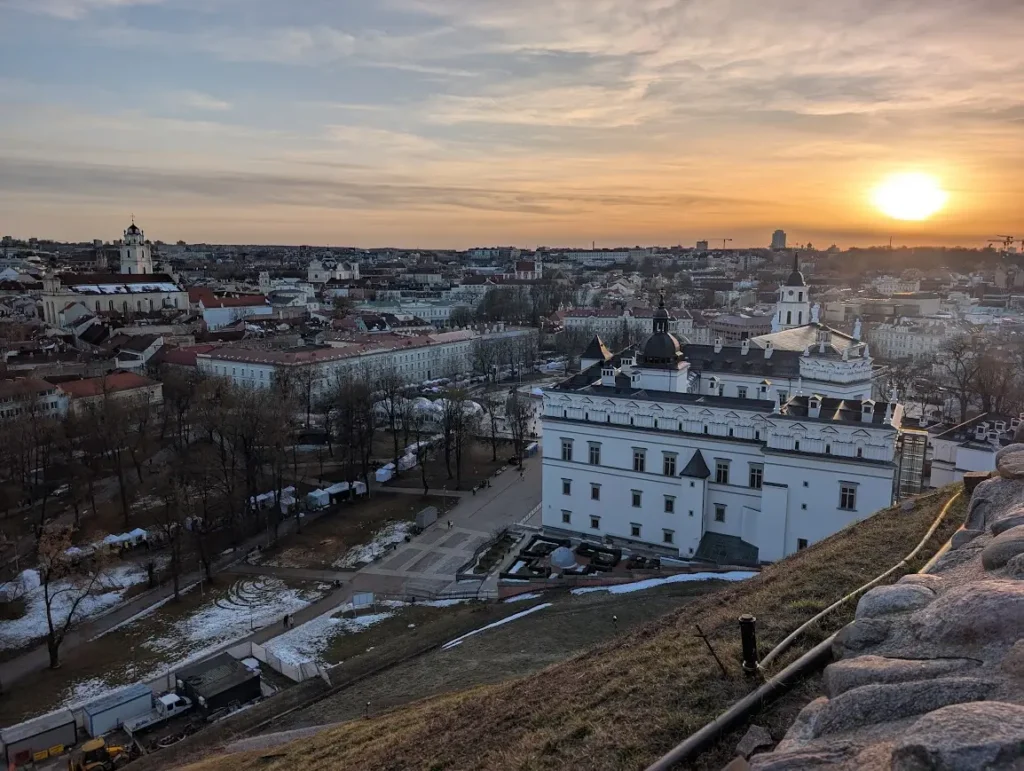
The Three Crosses Monument sits in a park above the city and is a pleasant walk with views over the old town – free, beautiful at sunset. Gediminas Castle is another viewpoint. The Republic of Užupis is a self-proclaimed autonomous district with its constitution on the wall in 23 languages, plenty of bars and a distinct atmosphere.
Gates of Dawn – a famous icon of the Virgin Mary sits in the chapel above the city gate. We were nearly alone there. Vilnius Cathedral is a bit more modern-looking. There are churches on almost every corner, both Catholic and Orthodox, in so many different styles. The old town is easy to walk – not big, lots to explore.
In front of the city hall, there is a public installation called the Teleport – a large circular screen that streams live video of people in other cities (Poland, Ireland, the UK, the USA, the Philippines). Pretty cool.
Day Trip – Trakai
Trakai is a popular day trip from Vilnius – 20 minutes by train. Even though temperatures had been above zero for a few days, the lake was still frozen when we arrived. Local people were walking on it – I wouldn’t risk it, but they probably knew better.
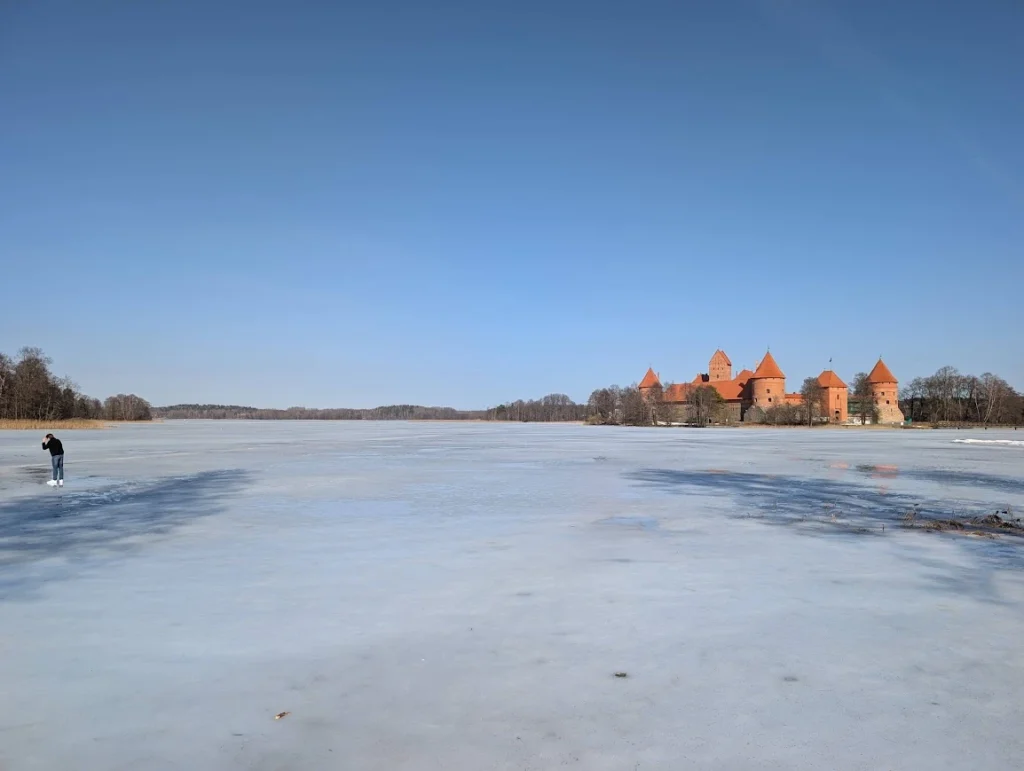
The castle is a 14th-century structure (recently renovated) – landmark of the region, once the primary residence of the Grand Dukes of Lithuania. Closed on Mondays – we couldn’t go inside.
Trakai town is also home to a small community of Karaims – a unique ethnic minority of Turkic origin who practise Karaite Judaism. They arrived in Lithuania in the 14th century following an invitation from Grand Duke Vytautas the Great. They still live in the town today, though their language is critically endangered.

Riga
We spent a week in Riga. The old town is beautiful but less people-friendly than Vilnius – many cars parked around there.
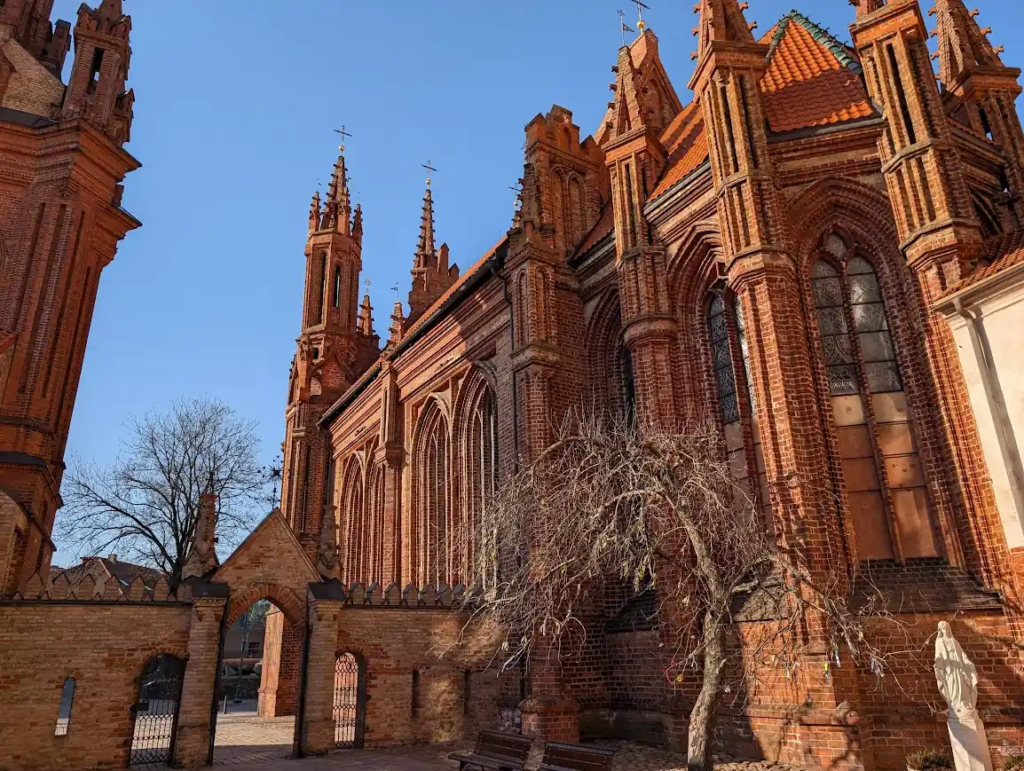
Main sights: House of the Black Heads (newly renovated), Riga Cathedral, and St. Peter’s Church, where we caught a free concert one evening. Check svpetera.lv for upcoming concerts. The prevalence of Lutheran churches reflects the long history of a ruling German class in the city.

The Corner House – former headquarters of the local KGB during the Soviet period – is free to visit and worth an hour. It lets you understand the Soviet repression period better. Other free museums: Latvian War Museum (closed on Mondays and Tuesdays), Latvian Museum of Architecture (closed on the weekend). Another free sight worth a visit is National Library of Latvia on the other side of the river – you can take an elevator all the way up to get a view of the whole city.
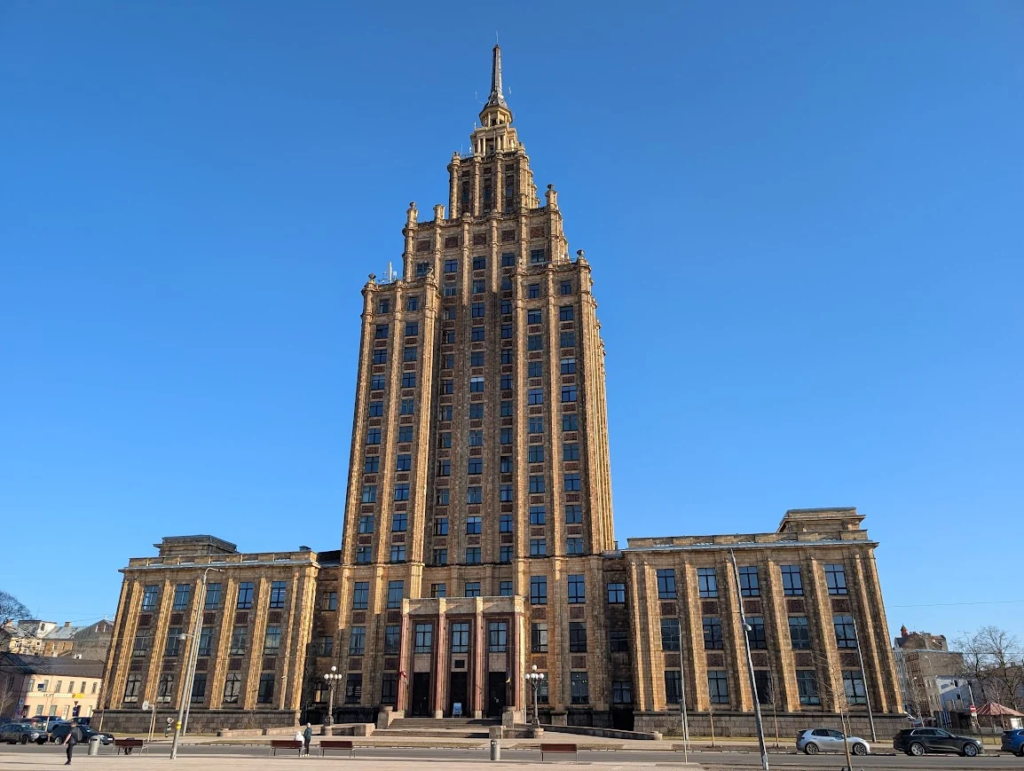
Riga Central Market is worth a walk-through. The Latvian Academy of Sciences next to it is a Soviet-era building that looks like a direct copy of the Palace of Culture and Science in Warsaw.
The Riga Nativity of Christ Cathedral – a Russian Orthodox cathedral in a park – for us was one of the visual highlights of the city. Very different from the Lutheran churches that dominate the old town.
Day Trip – Sigulda
We took a day trip to Sigulda by train (there’s also bus at the same price). It takes about an hour. There’s hiking in the area and two castles: the Castle of the Livonian Order and Turaida Castle. Not much to see inside them, worth having a look from the outside.
Tallinn
We passed through Tallinn first before taking a ferry to Helsinki (here’s a report from our stay in Finland including Rovaniemi with northern lights). After coming back we spent a full week in Tallinn. Our accommodation had a beautiful, well-kept garden (also some camping spots for vans) – a great place to relax and take it easy. It was around 30 minutes’ walk from the old town.
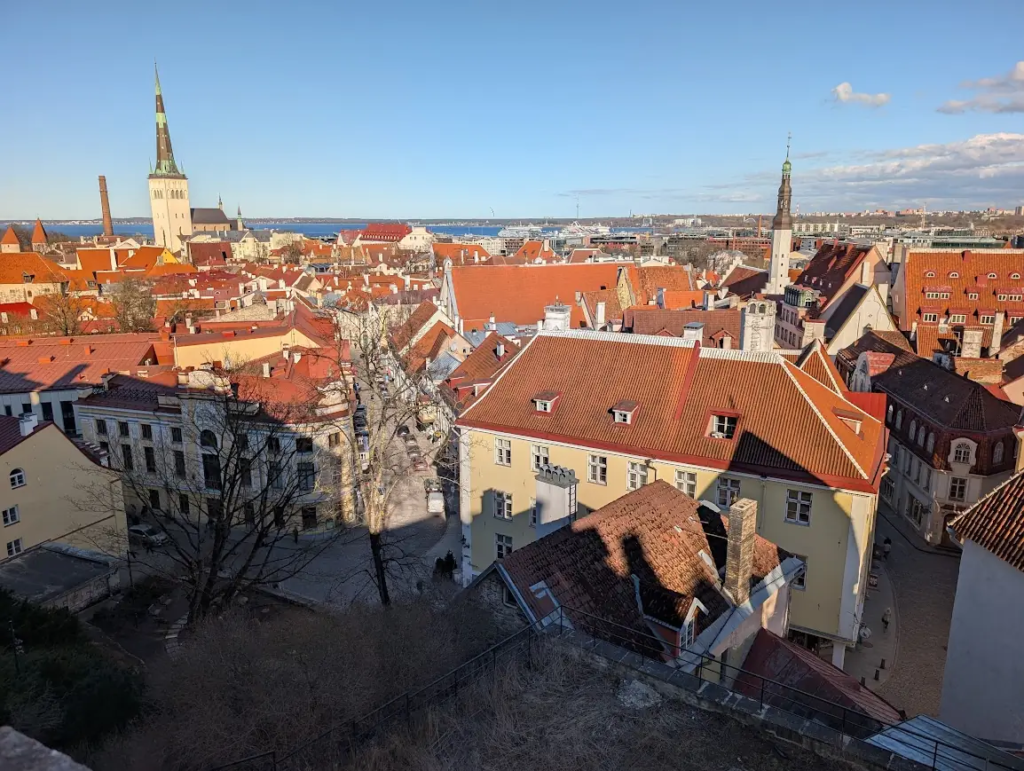
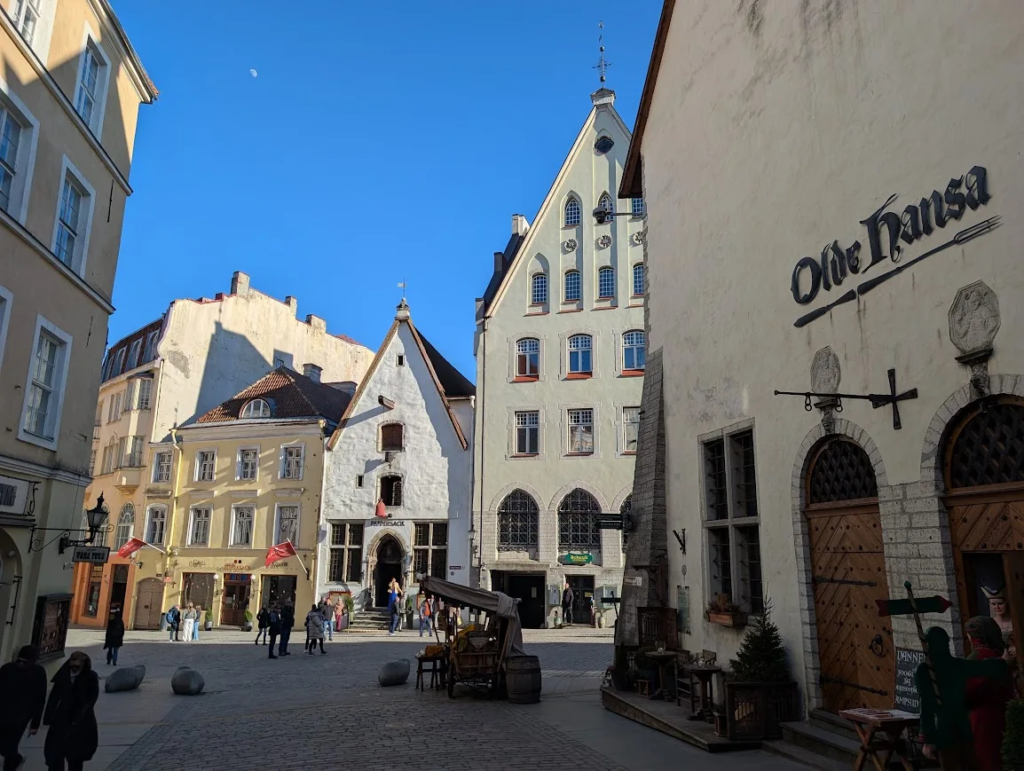
The main landmarks in the old town are: Alexander Nevsky Cathedral, Viru Gate (the medieval entrance to the old town), Tallinn Town Hall, Kohtuotsa viewing platform, Vabaduse väljak and Kadriorg Park.
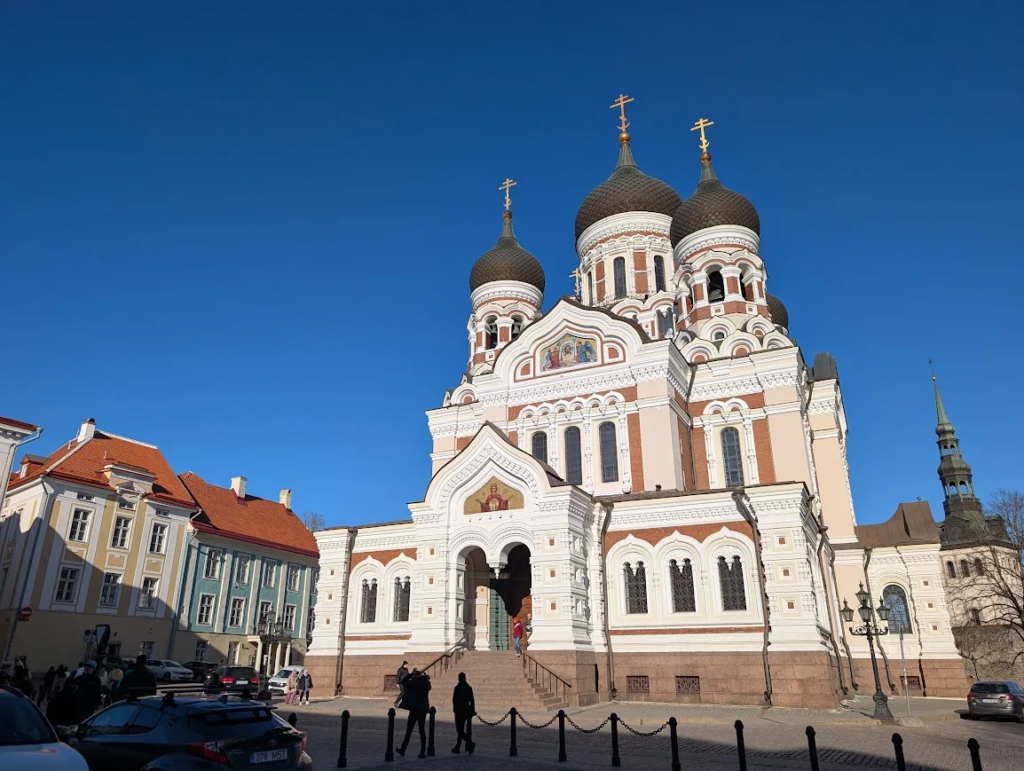
Tallinn’s old town is well-preserved and picturesque. It’s very beautiful and absolutely worth a visit, but it didn’t feel as alive as Vilnius.
Day Trip – Paldiski
We took a day trip west of Tallinn to Paldiski, a former top-secret Soviet military base. The old gray residential blocks are still there, you can hear Russian everywhere. The seaside was pleasant – we hiked for a few hours in a loop back to the train station. The train from Tallinn takes about 45 minutes.
Season
March is off-season across all three countries. Fewer tourists, lower accommodation prices.
The main downside is cold. Lakes can still be frozen solid in mid-March – Trakai’s was completely frozen when we were there – cool experience. We still got many sunny days and it never got colder than 0°C.
Practical
Currency
All three Baltic states use the euro. We didn’t need to carry any cash, accommodation bookings were prepaid online. If you come from a non-euro country Revolut card works well. Note the 1% weekend markup on currency conversion.
SIM
All three Baltic states are EU members, if you have a EU-based SIM card, you will have data under Roam Like at Home scheme without roaming charges. Otherwise check eSIMDB for eSIM deals, sort by country, amount of data and duration of your trip.
Language
English gets you through day-to-day without issue in all three capitals. Lithuanian and Latvian are Baltic languages. Estonian is unrelated to them, part of the Finno-Ugric group. There’s a significant Russian speaking minority in the three countries, the biggest one in Riga and Tallinn.
Useful phrases in all three languages with links to pronunciation:
- Lithuanian: sveiki – hello, ačiū – thank you
- Latvian: sveiki – hello, paldies – thank you
- Estonian: tere – hello, aitäh – thank you
Tips Summary
- Book Direct: Check for cheapest connections on Omio, but book direct – €1–2 cheaper per ticket.
- Promo Codes: Always check for them before paying. One code works for multiple passengers and covers return legs.
- Ecolines €5 Routes: Flash sales between the three capitals. Check their site, not aggregators.
- LTG Link: Not on Omio. Cheapest train option for Warsaw–Lithuania.
- Booking.com: Sort by lowest price and filter 7.0+.
- Trakai: Castle closed Mondays.
- St. Peter’s, Riga: Free concerts most evenings. svpetera.lv has the schedule.
- Corner House, Riga: Free. KGB history, Soviet repression.
- National Library of Latvia: Free. Elevator to the roof, full city view. Closed Sundays.
- Latvian War Museum: Free. Closed Mon–Tue.
- Latvian Museum of Architecture: Free. Closed on weekends.
- Full Trip: We continued to Finland after Tallinn – 25 days total across five countries at €23.10/day. Full overview.
The Budget System
I keep daily travel costs under €20–€30 using two methods:
● €3/Day Rental Car Guide
● Sleeping in Rental Cars
One week of travel cost me less than a day of work in Australia.