Málaga, Ronda & Caminito del Rey on €15/Day: Sleeping in Car
On Sunday, every major sight in Málaga is free. 4 days in inland Andalusia sleeping in a car – add €3/day to the number if renting:
TRIP STATS
- DAILY RATE: €14.75 (per person)
- SLEEP: Sleeping in Car
- BY: Car
- PEOPLE: 2
- DAYS: 4
- TOTAL: €118.00
- CURRENCY: Euro (€)
- DATE: October 2025
- ROUTE: Málaga → Ronda → Caminito del Rey → Antequera → El Torcal → Córdoba
- TOOLS: DiscoverCars, park4night, Revolut, Lidl
| ITEM | COST (2P) | NOTES |
|---|---|---|
| Stay | €0.00 | Slept in the car. |
| Fuel | €26.00 | €6.50/day. |
| Food | €51.00 | €6.38/day per person. Shopped at Lidl. |
| Sights | €41.00 | Per person: €18 – Caminito del Rey (+€2.50 – shuttle bus) |
| TOTAL | €118.00 | 4 days at €14.75/day per person |

Getting There
We drove into Andalusia from Portugal (starting in Lisbon) and then carried on east towards the rest of Andalusia, Catalonia and eventually to France.
If you’re flying in, Málaga is the cheapest entry point, served by Ryanair, Wizz Air and easyJet. If you’re flying with a small carry-on and are flexible with your dates, there are deals under €20 on Skyscanner for Italy, UK, Morocco, Germany, Switzerland, France, Poland, and more.
Car Rental at Málaga Airport
We did this trip in our own car, so I can’t comment on rental providers. If you’re flying into Spain, these are the current prices and things worth knowing:
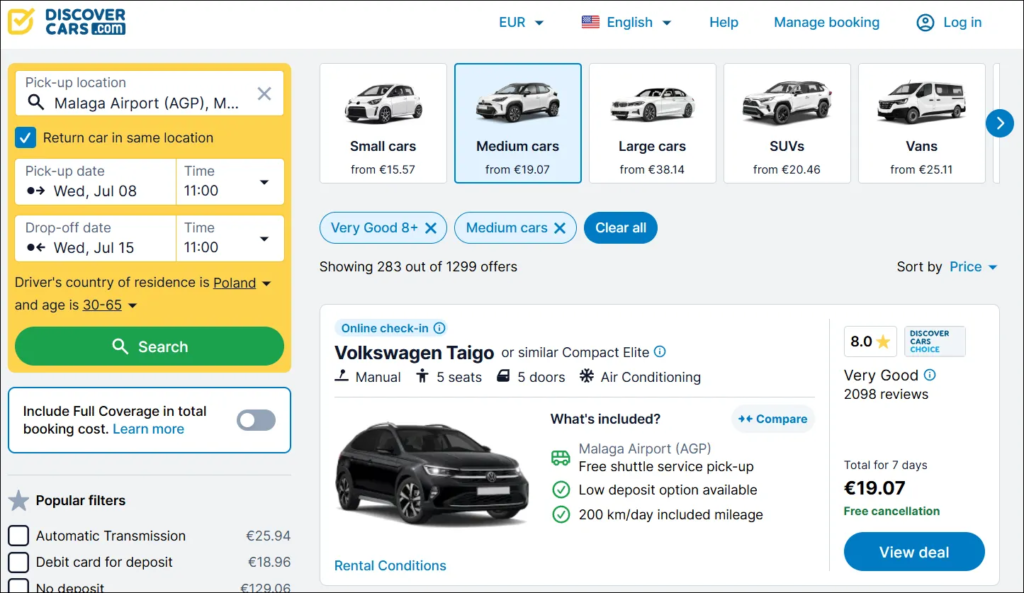
- Current Prices: Small cars in Málaga from €20/week (€3/day) at the time of writing via DiscoverCars (my review). Full European rental comparison.
- Excess: Decline the desk insurance. Cover it with an independent policy like Cover4Rentals instead: €3/Day Rental Car Guide.
- Tolls: We stuck to free roads throughout – the right call for sightseeing. Most of the roads in Spain are free with a few exceptions.
- Fuel: Diesel was as low as €1.20/L during our October 2025 trip, although prices fluctuate. Spain’s fuel is much cheaper than Portugal (€1.55/L in the same month) and consistently one of the cheapest in the EU. Unstaffed stations (like Plenoil or Ballenoil) offer significantly cheaper fuel than the big brands like BP and Shell. Google Maps didn’t show real-time fuel prices in Spain reliably for us. We used Gasall app.
- Parking: We always managed to find free parking using Google Maps search. In big cities like Málaga we had to walk quite a bit from the parking spot, but it was manageable. Curb lines are color-coded in Spain and mean the following: white – free and unlimited parking, blue – paid parking, green – residents only, yellow – no parking (although you’ll see locals breaking this rule all the time).
Sleeping in a Car in Spain
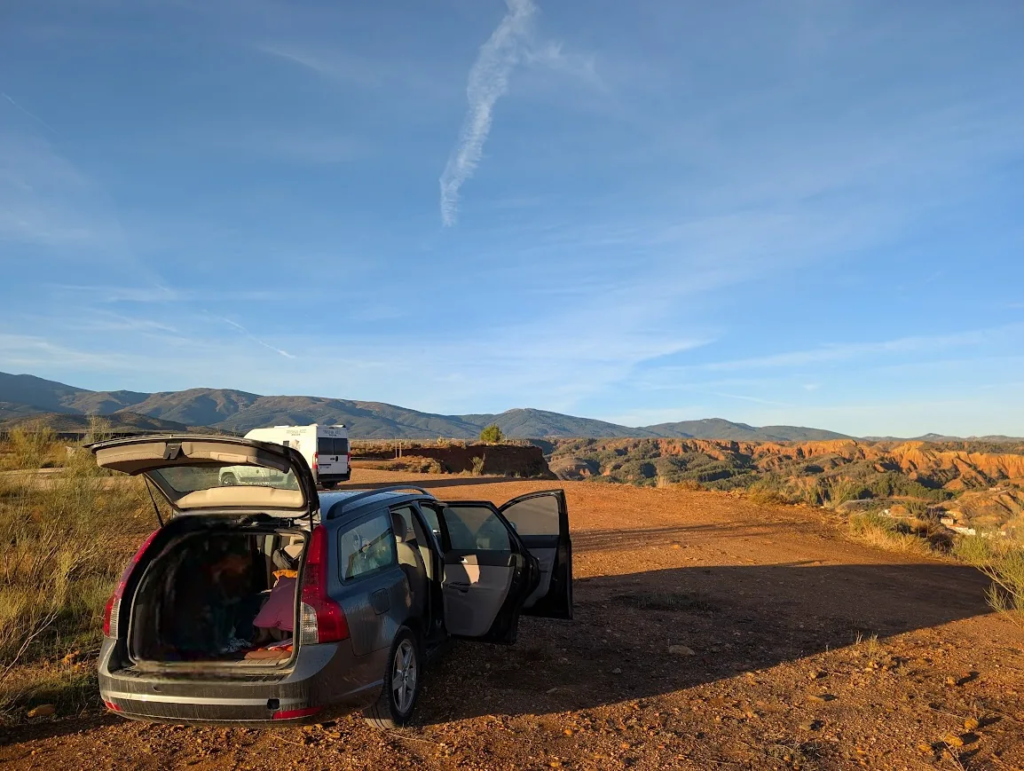
Volvo V50. 4/5. Spacious.
Long car, plenty of room for two. Rear seats folded fully flat – no step. One issue: a fixed metal bar ran the full width at the top of the folded seatback. At 190 cm, it pushed my feet up slightly. An inflatable mat mostly fixed it.
Full sleeping audit: Best Rental Cars to Sleep In.
- Legality: Legal to sleep in your car in Spain as long as you are legally parked and don’t display any “camping” behavior (no tables or chairs outside the car). According to the Spanish Traffic Authority (DGT), you are considered legally parked if all activity stays strictly inside the vehicle. Local bylaws sometimes ban overnight stays, particularly in natural parks and directly on coastal beaches. Full guide: Sleeping in Rental Cars.
- Facilities: Public toilets are sparse and unreliable in Spain. Supermarkets (mainly Lidl) were the most reliable option throughout the route – free toilets, easy to find. Some beaches have outdoor showers.
- Overnight Spots: Search park4night for marked spots. I’ve linked to the spots I stayed at in the Route section below.
- Backup Accommodation: Booking.com has the widest (and usually the cheapest) selection in Spain. Sort by lowest price, filter to 7.0+ to get rid of bad listings.
Food
€51 for two people over 4 days. €6.38/day per person.
We shopped at Lidl – consistently the cheapest supermarket option across Europe. When there isn’t one nearby, Aldi is the next best alternative in Spain. Mercadona is slightly more expensive but sometimes the only option. We also shopped at Alcampo and Carrefour a couple of times for more variety, although prices were higher.
We cooked dinners and coffee on a gas stove. In Andalusia, outdoor cooking is banned in or near forested areas from June 1 to October 15 – our trip was just after this period. Never use a stove near rural areas, forests, or protected zones during this time. Check current fire risk before cooking outdoors: aemet.es.
Route
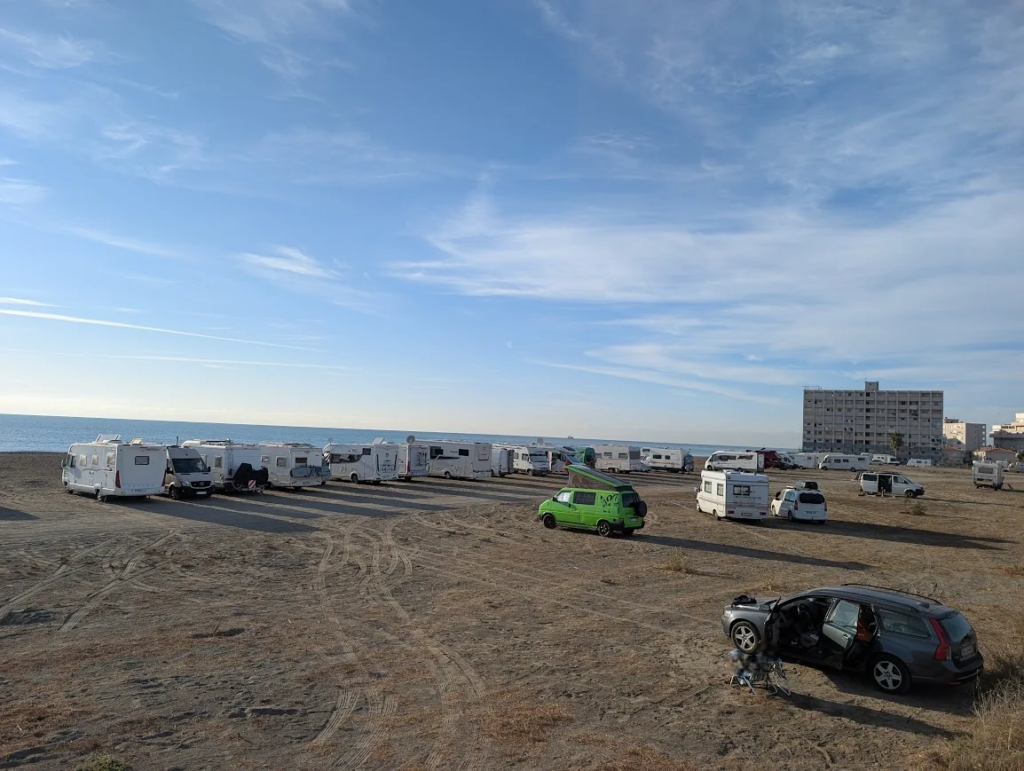
We parked overnight right next to the beach on the outskirts of Málaga in a spot with plenty of other caravans – around 20 or so – which made us feel extra safe and legitimate.
Day 1 – Málaga
We found a free parking spot 20 minutes from the center – it was a Sunday, which we had planned for, as we knew all the sights would be free that day.
The city was very empty in the morning and it gave us a special feel. First stop was the Cathedral of Málaga – free every day 8:30–9:00AM, on Sundays until 9:30AM. The Renaissance interior is beautiful, but after visiting a few cathedrals on this trip, they were starting to blend together. When we were heading out, a mass was starting.
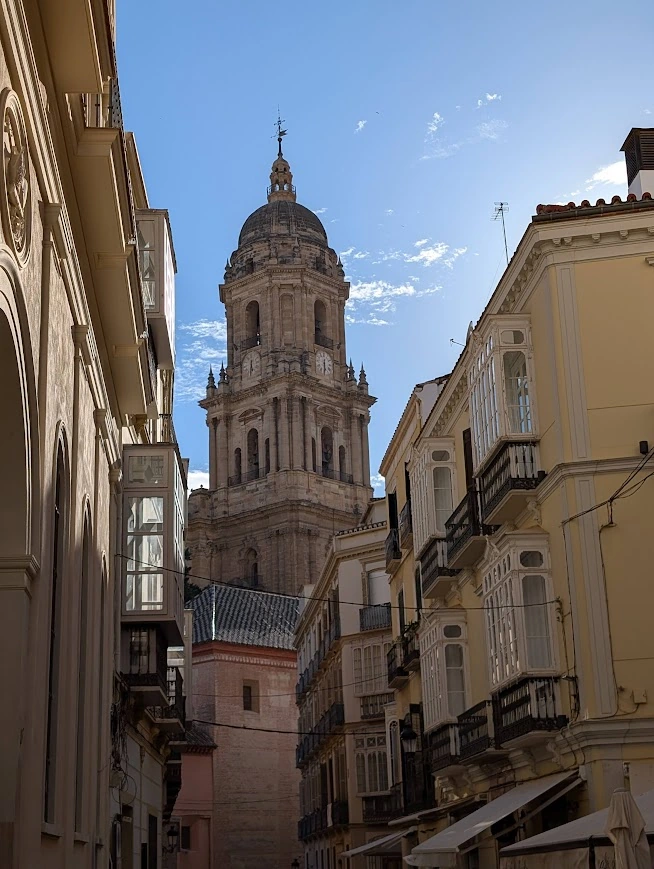
We had some time to explore the city – and it got so much busier than in the morning, incomparably so. The streets are pretty, but the city felt much more modern than Seville – full of shops and resort tourists (the nearby coast is a big beach destination). We also caught a procession of locals carrying a figure of the Virgin Mary to the cathedral.
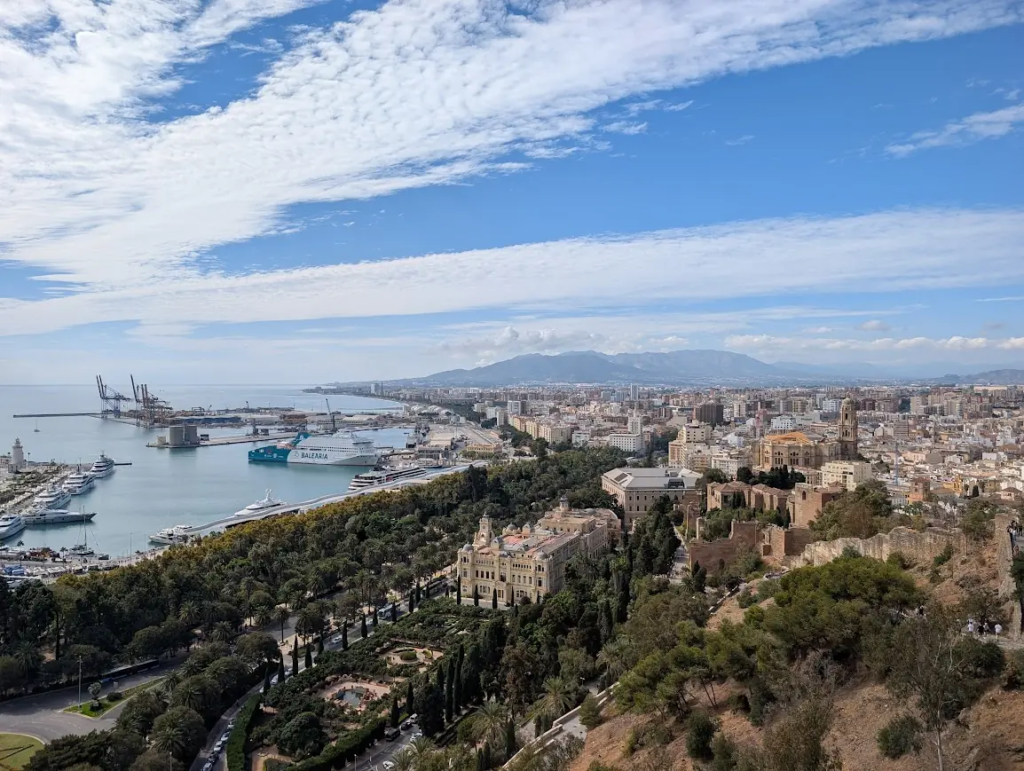
After 2PM on Sundays, Castillo de Gibralfaro and Alcazaba are free. It’s quite a walk up the stairs – the views are great. At Gibralfaro you can walk along the walls – that’s about it. The lower part, Alcazaba, has some nice art and courtyards, but nowhere near as much as the Alcázar in Seville. There’s a free audioguide app – a bit chaotic.
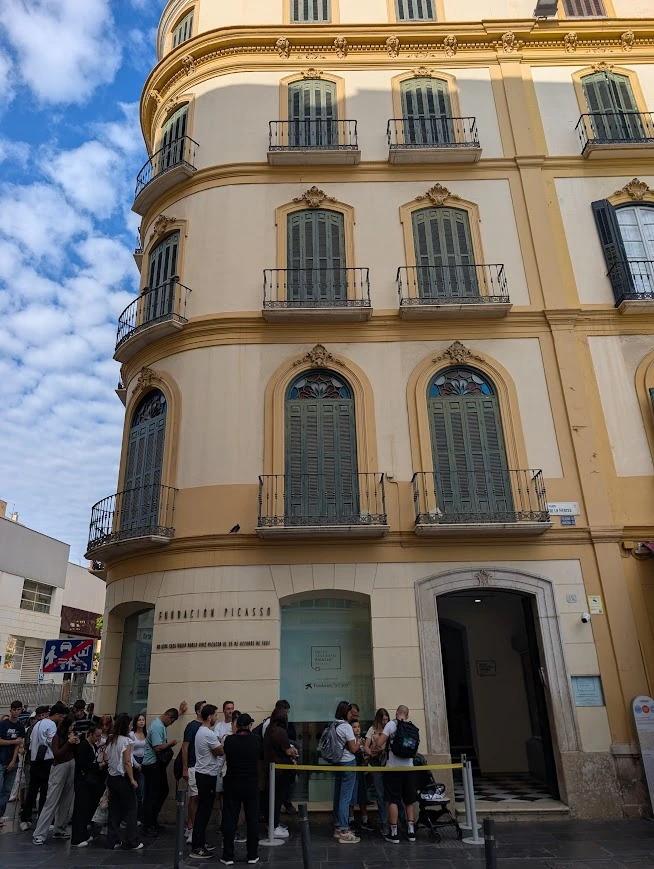
Next stop was the Picasso Birthplace Museum (Casa Natal de Picasso) – free every Sunday 4–8PM. We arrived just after 4PM, queued up and waited about 30 minutes to enter. The place isn’t very big – some art, some information. An interesting stop, but 1 hour inside is more than enough.
Last up was Museo Picasso Málaga. Málaga is Picasso’s birthplace and there are a lot of his paintings here. Every Sunday the museum is free during the last two hours of opening – in October that’s 5–7PM, summer 6–8PM, winter 4–6PM. The queue seemed extremely long, almost all the way up to the cathedral, but moved reasonably fast. We waited just under an hour, which left us a bit more than an hour and a half inside. Just enough to see everything – we did have to mind the time though.
We headed back to the car and spent another night at the spot by the beach.
Day 2 – Ronda, Pico del Convento
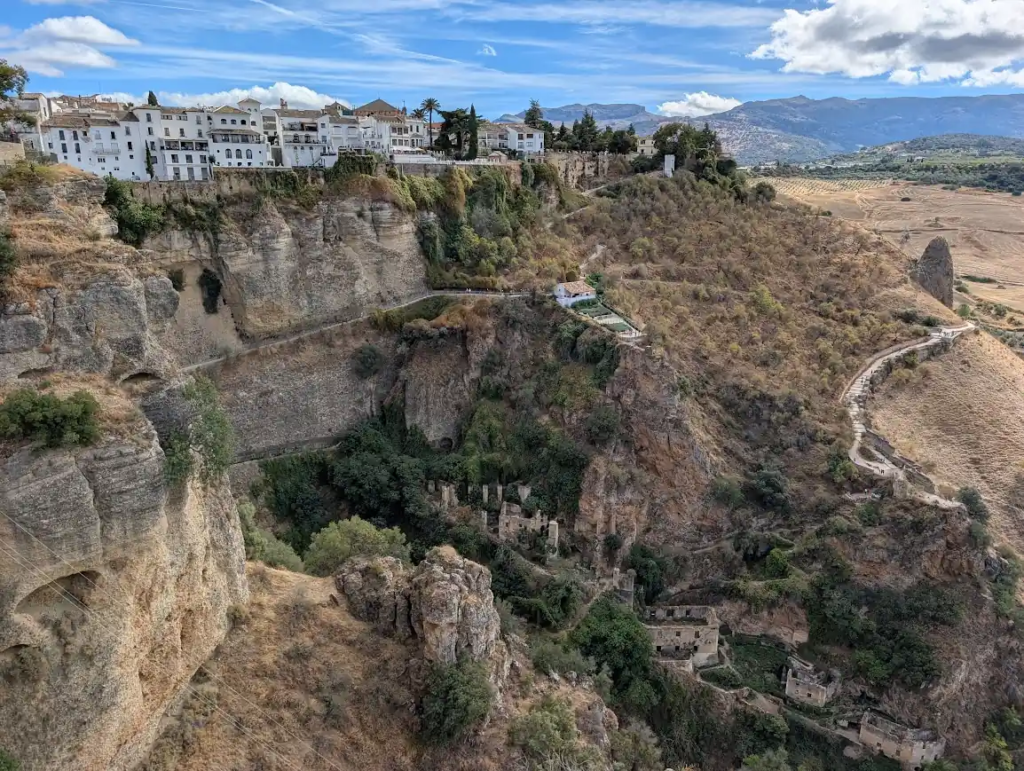
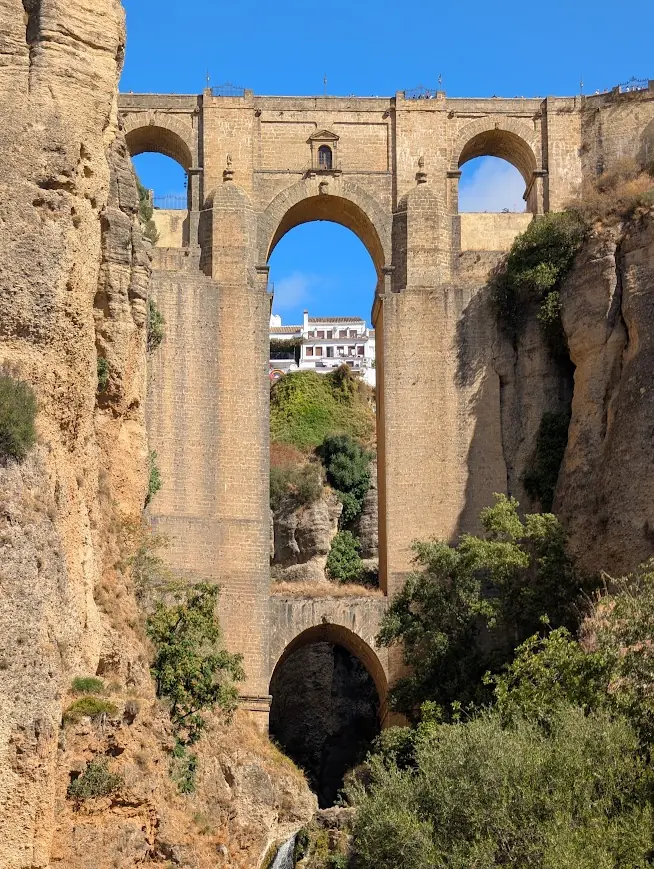
We headed to Ronda with its famous Puente Nuevo bridge spanning a deep ravine. First we checked out a viewpoint below it, then hiked up and explored the city itself. Still full of tourists in late October. A worthy stop though – the bridge is a big landmark.
In the afternoon we drove out and hiked Pico del Convento, which took us about 2.5 hours. It’s quite steep with beautiful views of the nearby lakes and mountains. On the way up, looking down the cliffs, you can see eagles flying around.
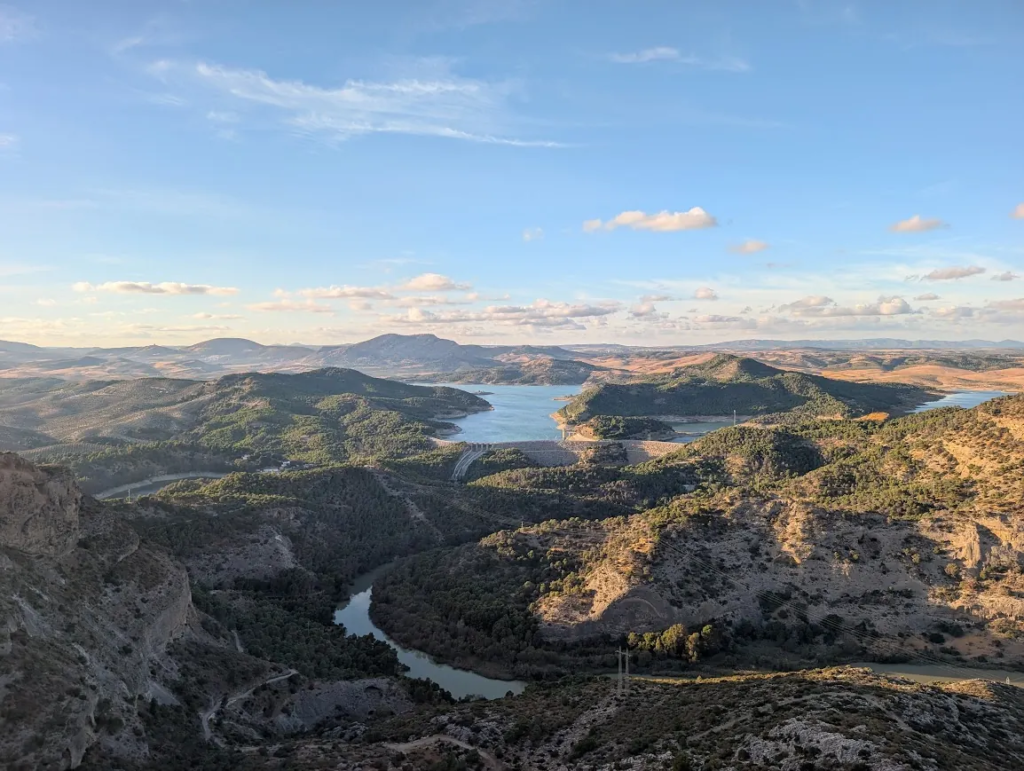
We slept not far away at a parking lot next to a dam. There were other people with proper campervans there as well.
Day 3 – Caminito del Rey, Antequera, Dolmens, El Torcal
We’d slept close to the starting point of Caminito del Rey and just walked over. We didn’t have tickets – self-guided tickets at €10 sell out months in advance, and guided tour tickets at €18 sell out weeks in advance.
Fortunately there are last-minute tickets available if you show up early. You can only get the €18 guided tour ones on the spot, but you can go by yourself once you have the ticket, which is what we did.
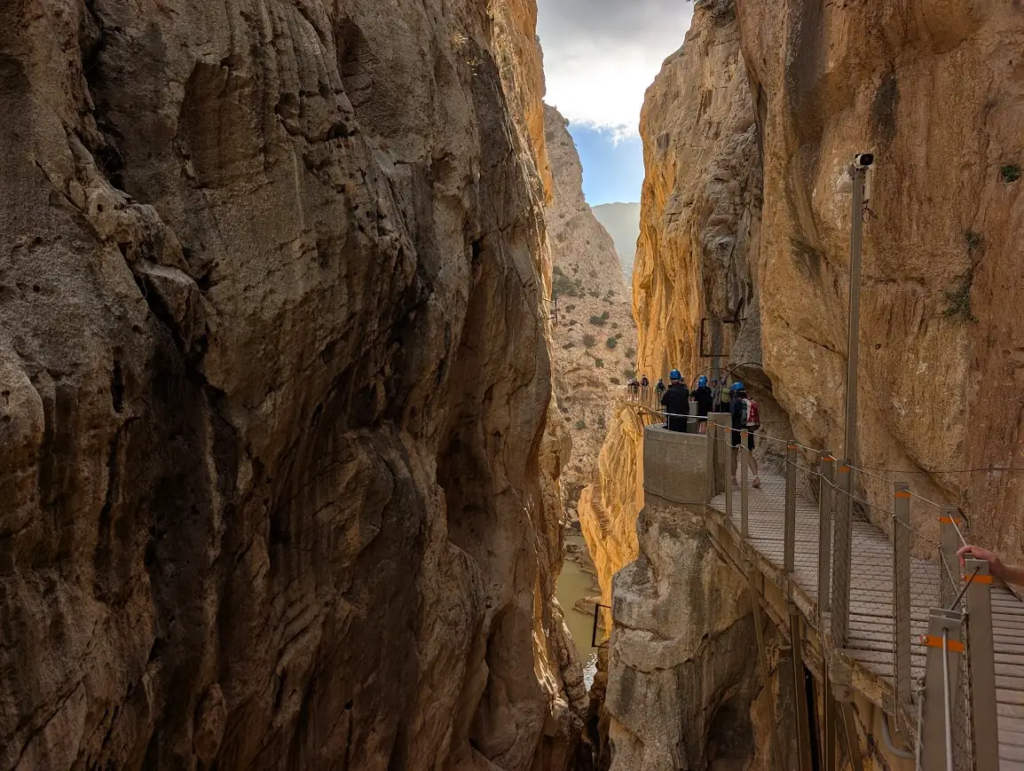
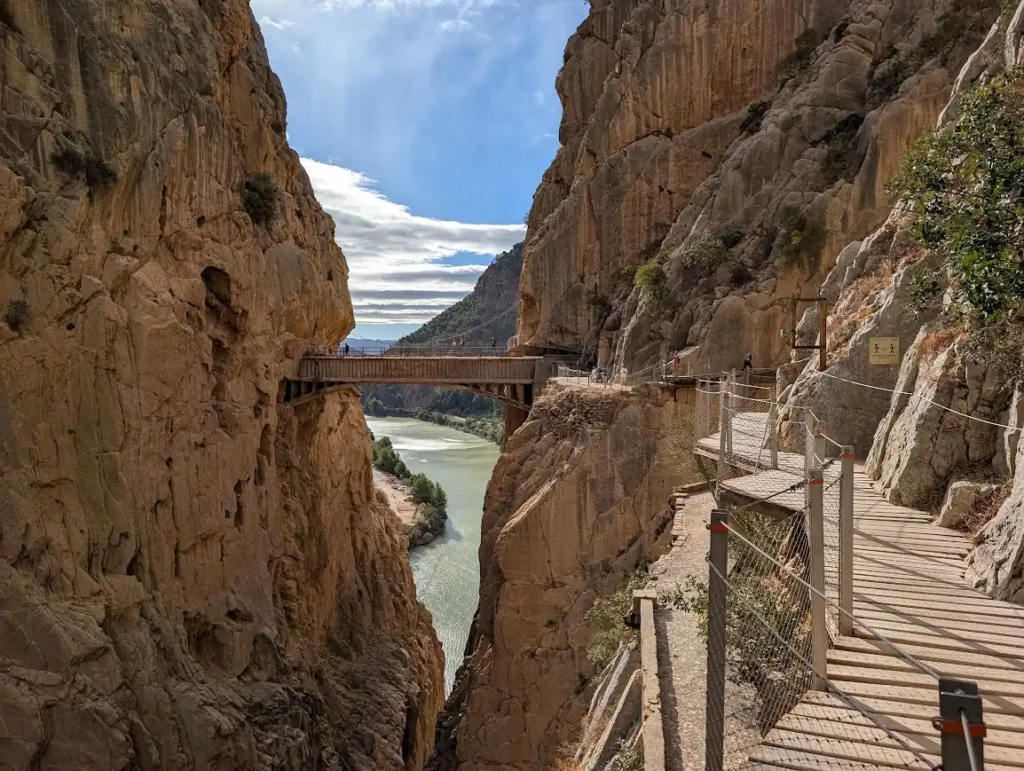
The hike is amazing – tricky if you have a fear of heights. Boardwalks carved into the side of the mountain, bridges over the deep canyon. It took us about 2 hours to cover 8km, taking it easy. The trail is one way only, so afterwards you take the shuttle bus back – €2.50 per person, runs every 30 minutes, paid cash to the driver. It drops you back at the entrance area. We took it, then had a refreshing swim in the lake (nobody else doing it) and walked back to our car.
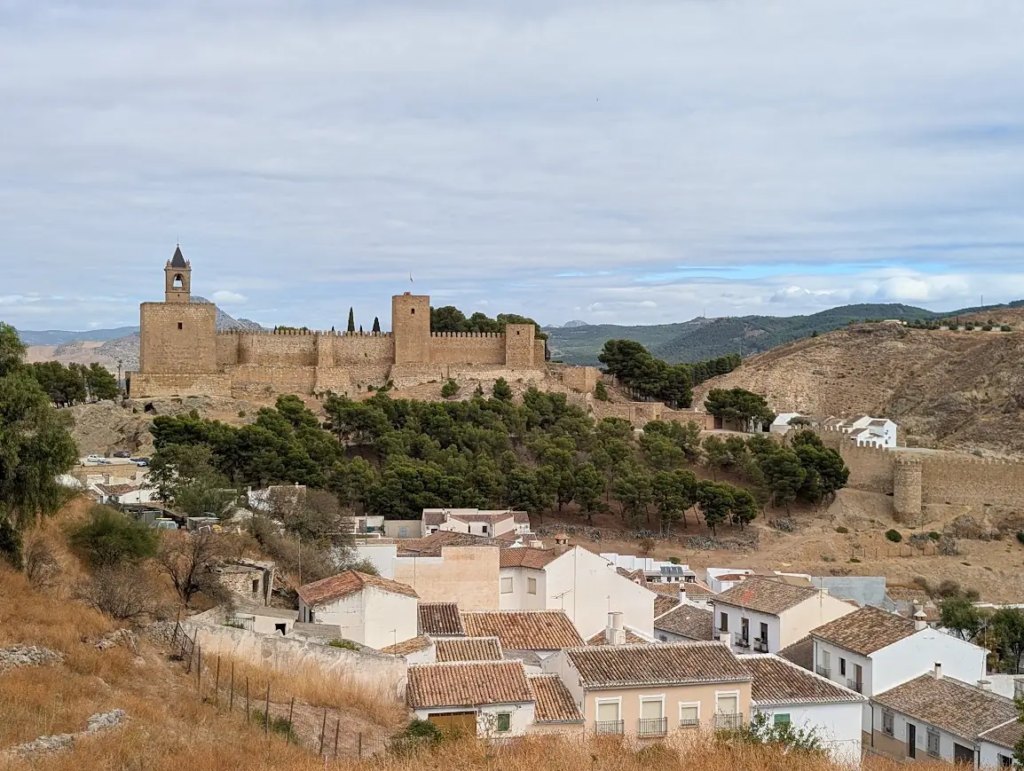
We drove on to Antequera and stopped at a beautiful viewpoint of the city and its castle – where incidentally many campervans were parked for the night.
From there we went to visit Dolmen de Menga (5,600–5,800 years old), which we had just learned about. Free for EU citizens, €1.50 otherwise. There are actually three dolmens nearby – megalithic tombs, absolutely worth seeing. There’s a small museum as well, but we found it a bit chaotic.

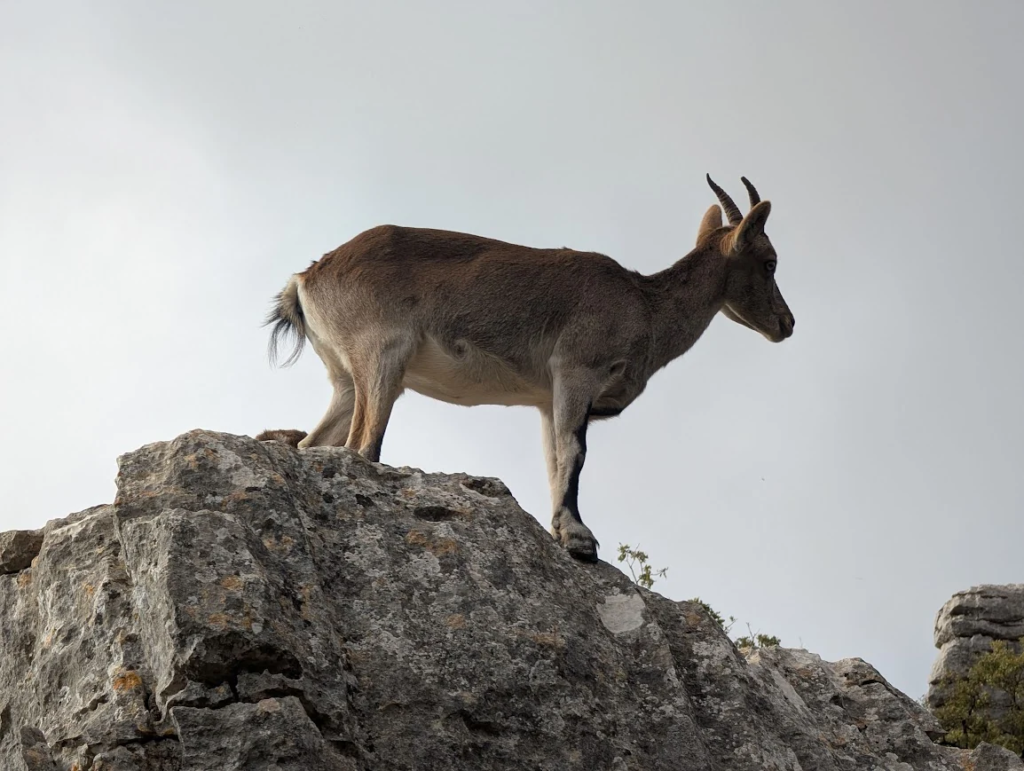
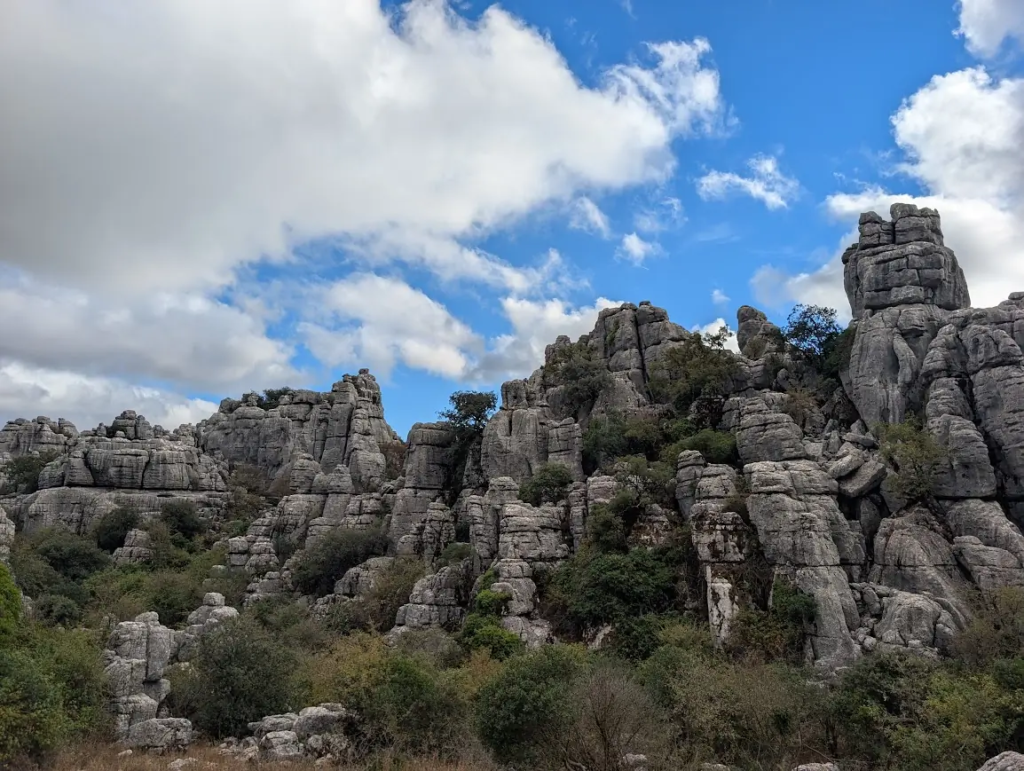
In the late afternoon we headed to El Torcal de Antequera, a national park with towers of limestone rocks and great hiking – you’ll see plenty of ibex goats.
We did a 3-hour hike before heading to a nearby picnic site we found on park4night. Nobody else there, super peaceful night.
Day 4 – Towards Córdoba
The next day we started driving towards Córdoba, which is covered in the next post.
Season
End of October was a great time to visit. It was still very warm – what many Europeans would consider summer weather – but not unbearably hot, as it can be during peak summer months. Andalusia is one of the hottest regions in the country and is prone to wildfires.
October still sees fairly high tourist numbers, especially in bigger cities. For a quieter trip, go in November.
Practical
Currency
Euro. Cards are accepted almost everywhere, but carry some cash for parking attendants or street vendors. If you’re coming from a non-euro country, use Revolut to avoid conversion fees. There’s a 1% weekend markup, but you can avoid it by exchanging currencies in the app beforehand.
SIM
Any EU SIM works under Roam Like at Home – no need to buy a local one. If you don’t have one, check eSIMDB, filter by the amount of data you need and your trip length, then sort by price.
Language
Spanish. English is widely spoken in hospitality and tourism, but not reliably outside of it. Learn at least a few phrases:
- hola – hello
- buenos días – good morning/good day
- buenas tardes – good afternoon
- buenas noches – good evening/good night
- gracias – thank you
- por favor – please
Tips Summary
- Cheap Rentals: Small cars at Málaga Airport from €20/week (€3/day) at the time of writing via DiscoverCars.
- Sleeping in a Car: Legal in Spain as long as you’re legally parked and all activity stays inside the vehicle. No tables or chairs outside. Local bylaws vary – check national parks and coastal areas.
- Cheap Fuel: Use Plenoil or Ballenoil instead of BP or Shell. Diesel was €1.20/L in October 2025. Google Maps doesn’t show real-time fuel prices in Spain reliably – use the Gasall app instead.
- Málaga on a Sunday: All major sights are free – Cathedral, Gibralfaro, Alcazaba, Picasso Birthplace Museum, Museo Picasso Málaga. Plan the Málaga visit on Sunday to pay nothing in entry fees.
- Málaga Cathedral: Free every day 8:30–9:00AM, Sundays until 9:30AM. Go first thing.
- Gibralfaro and Alcazaba: Free after 2PM on Sundays. It’s a steep walk up – the views are the main draw.
- Picasso Birthplace Museum: Free every Sunday 4–8PM. Queue outside from 4PM – wait was around 30 minutes when we visited. 1 hour inside is enough.
- Museo Picasso Málaga: Free during the last two hours of opening on Sundays. In October that’s 5–7PM, summer 6–8PM, winter 4–6PM. The queue is long but moves fast.
- Málaga Parking: Free spots within 20 minutes of the center. Search Google Maps. Plan for Sunday when the city is emptier and spots are easier to find.
- Caminito del Rey: Self-guided tickets (€10) sell out months ahead. Guided tour tickets (€18) sell out weeks ahead. Last-minute guided tickets are available on the day – show up early and queue. You can walk unguided once inside. Budget €2.50 per person for the shuttle bus to take you back to the entrance area.
- Dolmen de Menga: Free for EU citizens, €1.50 otherwise. Three dolmens in the same area – all worth seeing.
- El Torcal: Free entry. Plenty of hiking and ibex goats on the trails.
The Budget System
I keep daily travel costs under €20–€30 using two methods:
● €3/Day Rental Car Guide
● Sleeping in Rental Cars
One week of travel cost me less than a day of work in Australia.