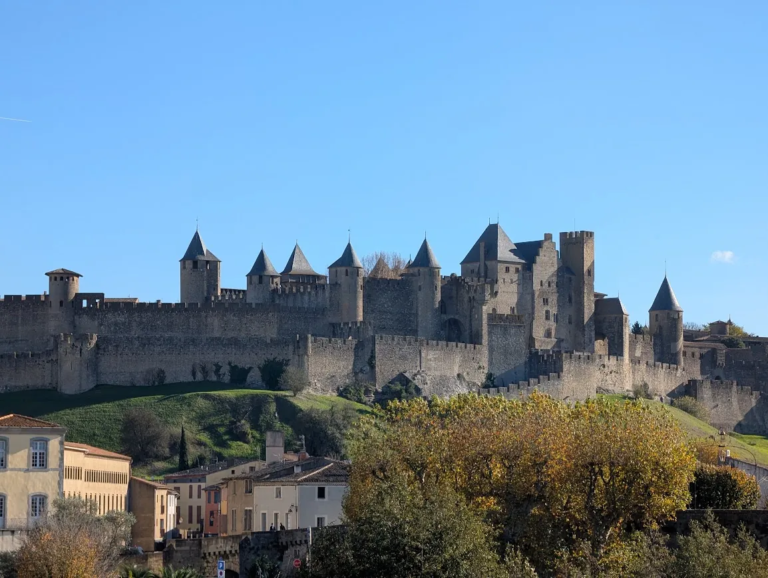
Northeastern Poland on €24/Day: Sleeping in an €8 Rental Car
Malbork Castle, Wolf’s Lair, bison searches, a kayak trip, and a beach 2km from the Russian border. 10 days in northeastern Poland at €24/day:
TRIP STATS
- DAILY RATE: €24.49 (per person)
- SLEEP: Sleeping in Rental Car
- BY: Rental Car
- PEOPLE: 2
- DAYS: 10
- TOTAL: €489.72
- CURRENCY: Polish złoty / zł (€1 = ~4.20 PLN)
- DATE: September 2025
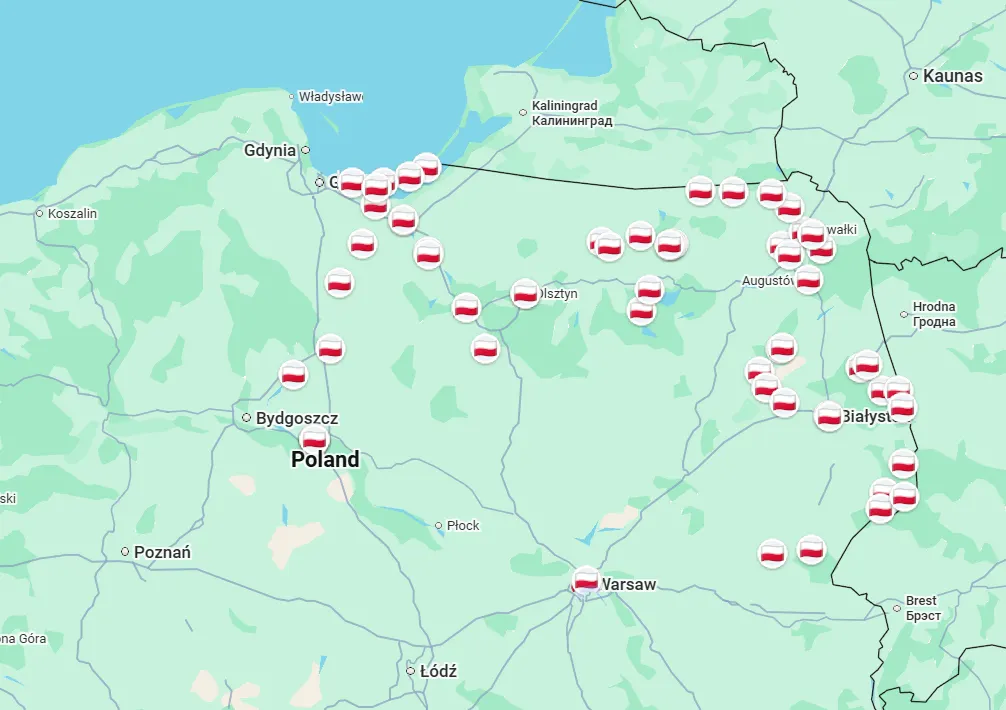
- ROUTE: Warsaw → Podlasie → Masuria → Pomerania → Warsaw
- TOOLS: DiscoverCars, Cover4Rentals, park4night, Biedronka, Lidl
| ITEM | COST (2P) | NOTES |
|---|---|---|
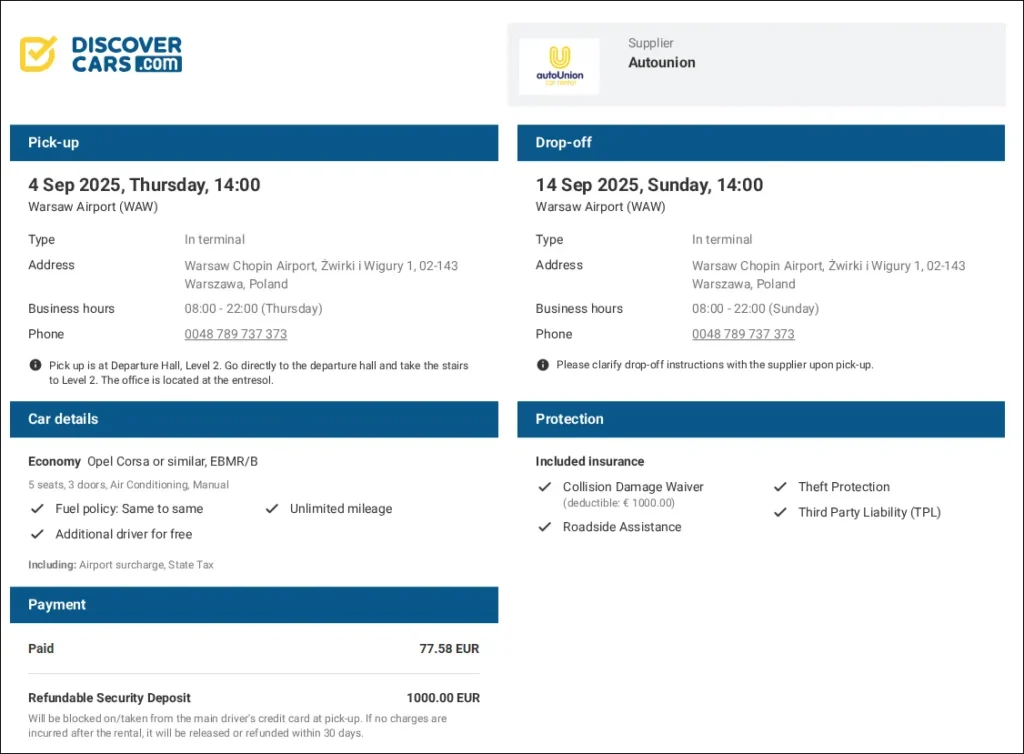
| Car Rental | €77.58 | €7.76/day. €3/Day Rental Car Guide AutoUnion via DiscoverCars |
| Fuel | €161.90 (680 PLN) | €16.19/day |
| Stay | €0.00 | Slept in the rental car |
| Food | €104.76 (440 PLN) | €5.24/day per person. Shopped at Biedronka and Lidl. Cooked on our stove. |
| Sights | €95.48 (401 PLN) | Per person: 15 PLN – Kruszyniany Mosque 25 PLN – Tykocin Synagogue 10 PLN – Biebrza NP 8 PLN – Wigry NP (+15 PLN – parking) 10 PLN – Stańczyki Bridges 30 PLN – Wolf’s Lair (+15 PLN – parking) 15 PLN – Stutthof (parking) 80 PLN – Malbork Castle |
| Activity | €50.00 (210 PLN) | 90 PLN/day – 2 person kayak 60 PLN/day – 1 bicycle |
| TOTAL | €489.72 | 10 days at €24.49/day per person |
How €24.49/day per person compares to my other trips: Budget Travel Cost per Day.
Getting There
Both Ryanair and Wizz Air fly extensively to Warsaw at low rates if booked in advance. Without a big carry-on, tickets under €20 are available to, among others: Italy, the UK, Spain, France, Greece, Sweden and more. Carry-on limits by airline: Sleeping in a Rental Car Packing List.
Two main airports:
- Warsaw Chopin Airport (WAW) – 20-minute bus or train ride to the center, 4.40 PLN (~€1.00).
- Warsaw Modlin Airport (WMI) – further out, but flights are cheaper. Train from Warsaw + short bus from Modlin station to the airport. Combined ticket is 22.40 PLN (~€5.30) – buy it on the Koleo website. Includes a single 75-minute Warsaw transit ticket – choose its validity period on the website and validate online. Journey takes around 1h 15min. FlixBus also runs the route.
More flight tricks: Budget Travel Tips.
Both airports offer car rental at comparable prices.
Car Rental at Warsaw Chopin Airport
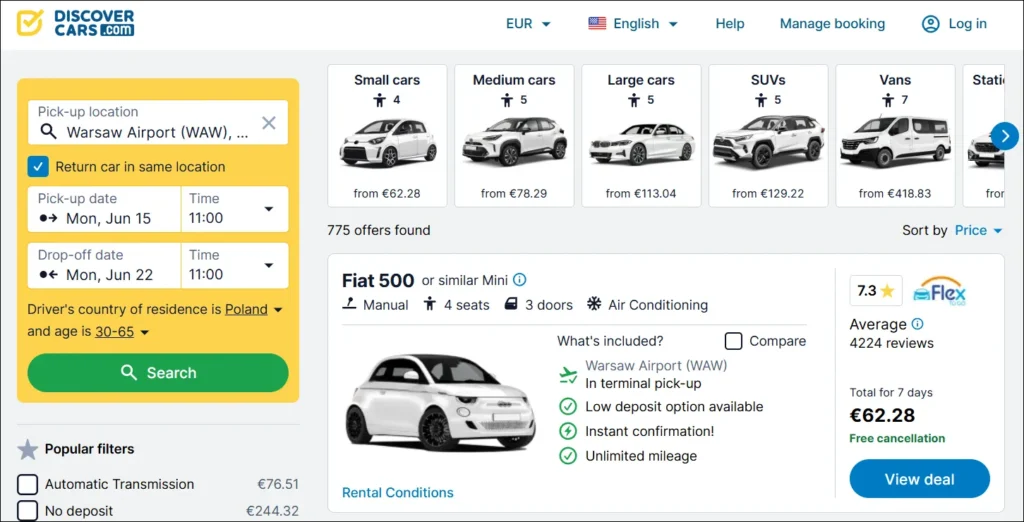
- Cost: €77.58 for 10 days (€7.76/day) via DiscoverCars (my review). Off-season Economy class pricing.
- Current Prices: Cheapest small cars from €62.28/week (€8.90/day) at the time of writing. Warsaw is one of the cheapest cities in Europe to rent from – European Car Rental Price Comparison.
- Provider: AutoUnion. 5/5. Low Google Maps score, no issues for us. Smooth pickup, no hard upselling. Returned the car after hours – took photos, dropped the key. Closing contract arrived the next day confirming no charges.
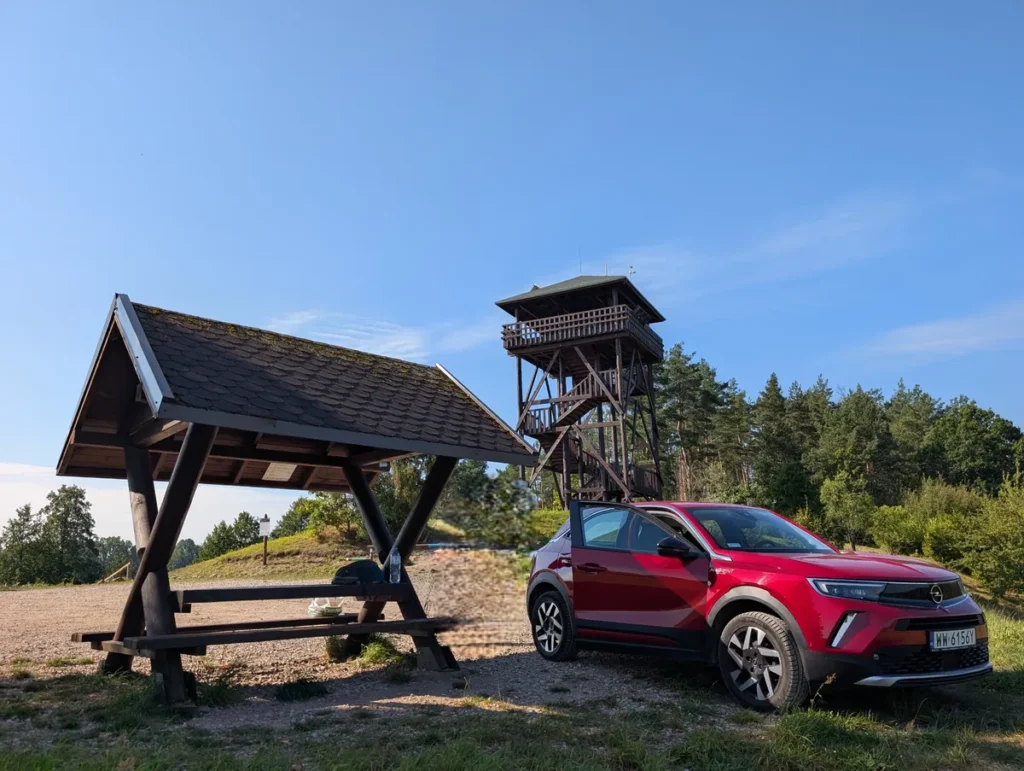
- Vehicle: Opel Mokka. Booked: Economy class (Opel Corsa or similar). Upgraded by provider.
- Excess: €1,000. Deposit: €1,000. We were covered by independent annual policy from Cover4Rentals and declined the desk insurance. Full process: €3/Day Rental Car Guide.
- Tolls: None. All roads free, including motorways. Few roads in Poland are paid.
- Fuel: Use Google Maps or Waze for real-time prices.
Sleeping in a Rental Car in Poland
Opel Mokka. 5/5. Excellent. They gave us a slightly bigger car than booked – turned out to be ideal for sleeping. Seats fold completely flat, plenty of space for two. One quirk: locking the car from the inside using the key triggers the alarm when you move. Had to use the lock button by the driver’s seat instead. Full sleeping audit: Best Rental Cars to Sleep In.
- Legality: Poland is very good for car sleeping, and no law prohibits it in a legal parking spot. The catch is the forest: leaving a vehicle in a forest outside a designated spot is a fined offense (Petty Offenses Code, article 161), and national parks allow overnight stays only at campsites. Standard practice wherever you go: don’t put chairs outside, don’t cook beside the car unless you’ve confirmed it’s allowed, don’t make it obvious you’re staying overnight. Country by country: Is It Legal to Sleep in a Rental Car in Europe? Full guide: Sleeping in Rental Cars.
- Facilities: Decent public toilet coverage across the region. Some paid. No public showers. Lots of picnic tables.
- Overnight Spots: Use park4night app to find well-rated ones. The app works well in Poland.
- Backup Accommodation: If you need a night indoors: Booking.com – sort by lowest price, filter to 7.0+ to get rid of junk listings. Poland’s quite affordable.
Food
The two cheapest supermarket chains in Poland are Biedronka and Lidl. Biedronka is almost everywhere, including small towns. Lidl only in busier places, but shops are generally bigger and better stocked. Both have loyalty programs with occasional discounts – worth signing up. We shopped at both and used a mobile stove to cook.
Route
Day 1 – Drohiczyn, Grabarka
Picked up the car at Warsaw Chopin Airport. Headed east on A2. First stop: Góra Zamkowa in Drohiczyn, a viewpoint over the Bug River. Free. We saw caravans down by the river, people relaxing and fishing. Already in Podlasie.
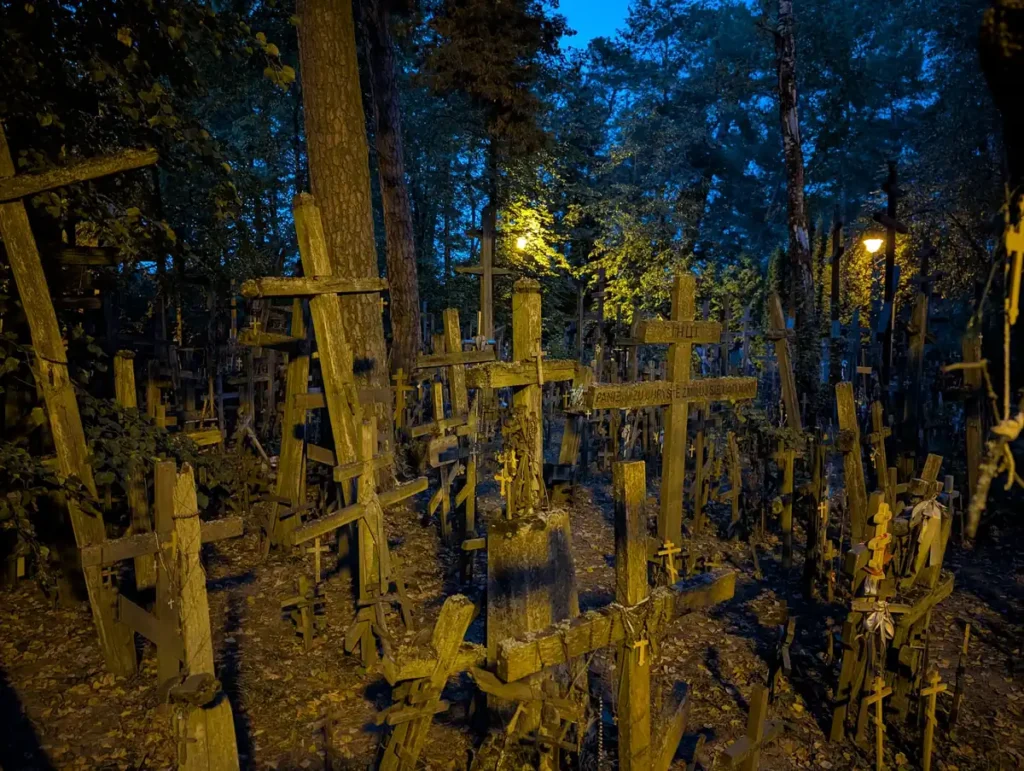
Second stop, around 30 minutes away: Święta Góra Grabarka. An Orthodox holy site covered in hundreds of crosses brought by pilgrims over centuries. Still an active religious site. Free. Eastern Poland has a long Orthodox history – you’ll see it the whole way through.
Slept at an official State Forests parking lot, 3km from the Belarusian border. Due to border tensions, we half-expected to see border guards, but nobody showed up.
Day 2 – Białowieża, Kruszyniany
We woke up before sunrise to search for European bison (żubr). No luck. They are most active at dusk and dawn, most visible December through March – the contrast against snow helps. Unfortunately, wrong season.
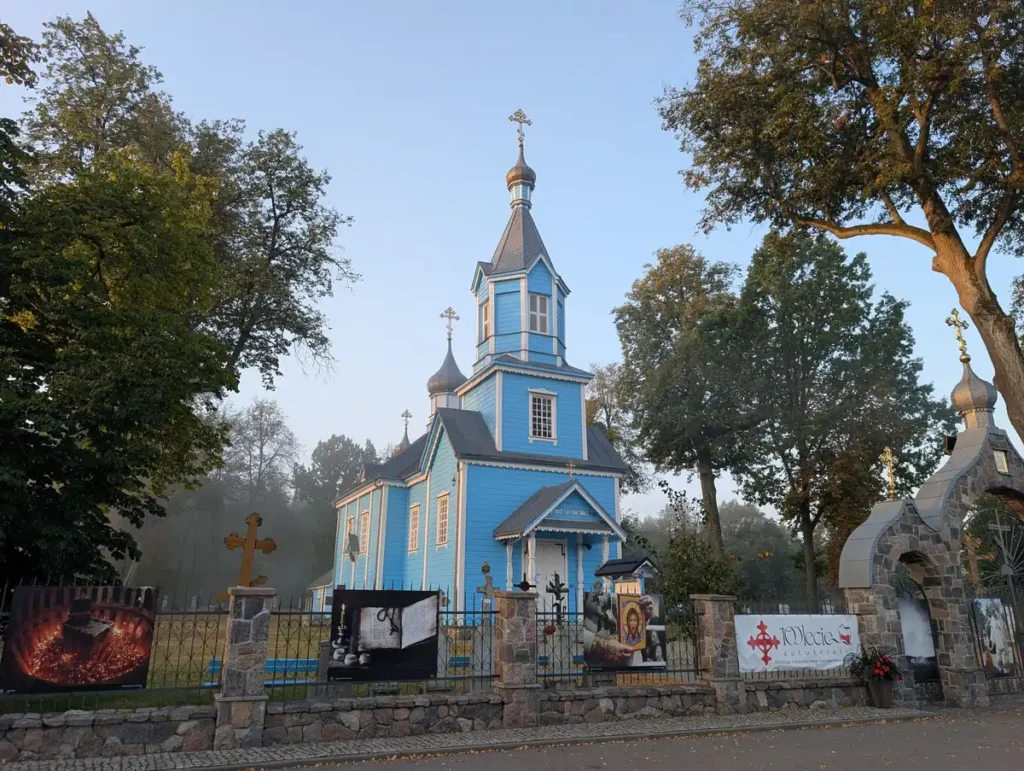
Still, that morning we got to drive through small villages along the Belarusian border in the early morning fog. We could see Orthodox churches every few kilometers.
Had a hike in a deep forest (Puszcza Białowieska). There is a place where you can pay to see enclosed bison, but we prefer to look for wild ones.
Then the wooden mosque in Kruszyniany. It belongs to the Polish Tatars. Muslim minority, settled here centuries ago in exchange for military service for the Polish-Lithuanian Commonwealth. A local guide tells their story, only in Polish.
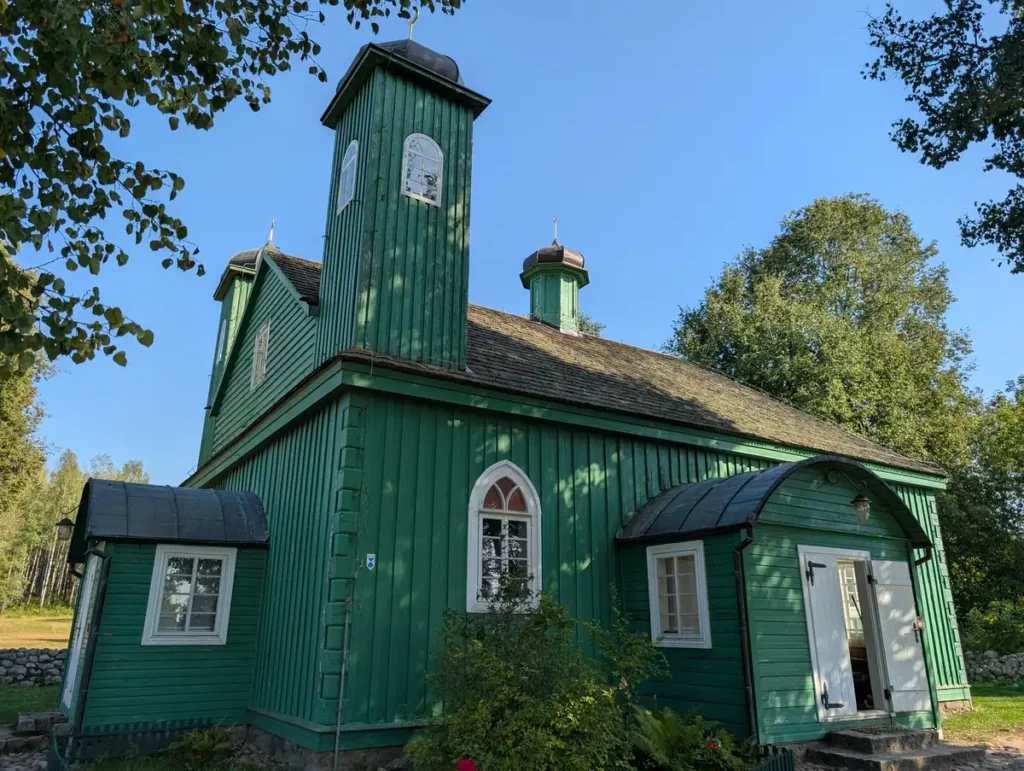
Entry 15 PLN. We forgot cash. There are no ATMs or shops nearby, just street vendors. One of them accepted card and offered cashback: we bought a small souvenir, got 100 PLN back.
Day 3 – Białystok, Tykocin
Up at 4am for another bison search on dirt roads. No bison, but we saw a wolf to compensate and plenty of deer.
Quick stop in Sokółka. Nothing memorable. On to Białystok – two hours there – a church and the gardens of Branicki Palace. Both free. Parking was free as well due to the weekend.
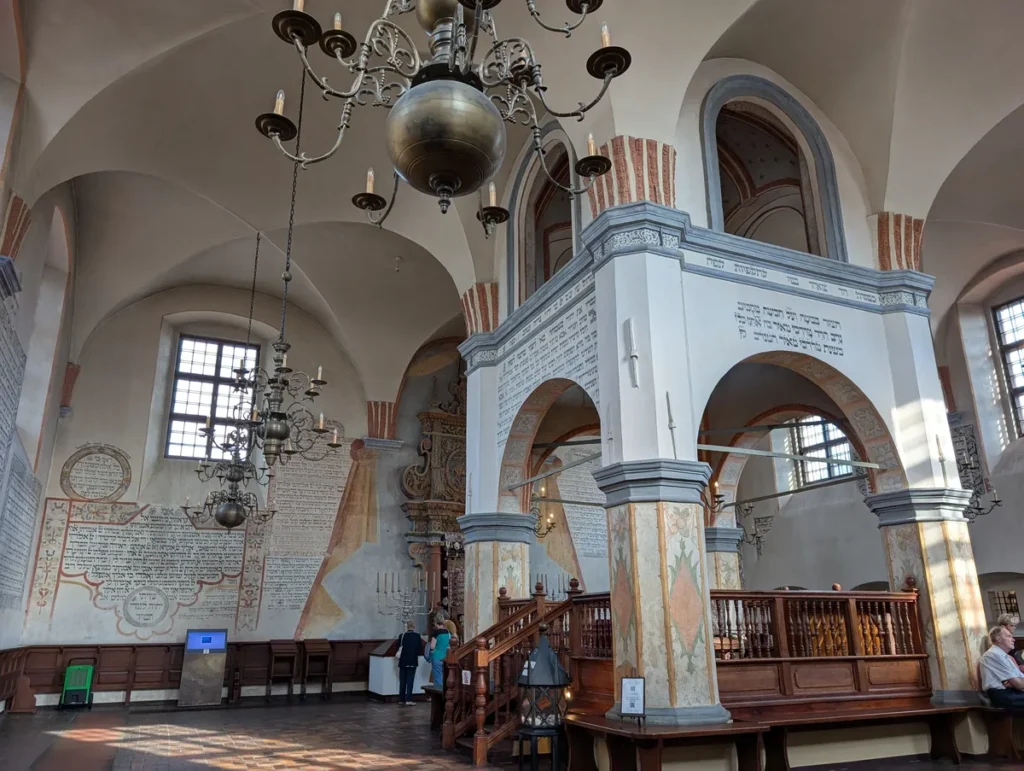
Last stop of the day was Tykocin with its 17th-century synagogue. It survived WW2, but was heavily looted. Entry is 25 PLN (free on Thursdays). The audioguide is included and very helpful.
Day 4 – Biebrza NP, Augustów
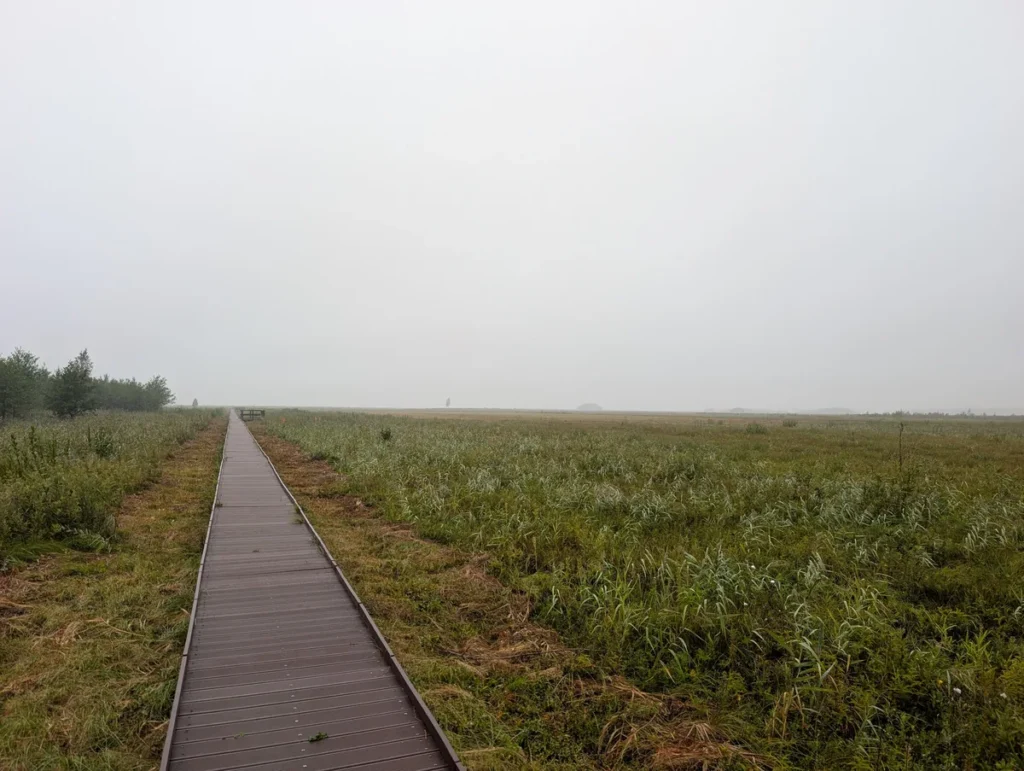
Biebrza National Park (10 PLN entry). Hiking through the swamps, trying to spot moose. Unfortunately, wrong season.
Take Carska Droga (Tsar’s Road) – a 35km road running right through the park. Very green, road signs everywhere warning about moose. Built by the Russian Empire in the late 19th century to supply military fortresses at its borders (like Osowiec fortress nearby). Lots of boardwalk trails and viewpoint towers throughout.
We came across a man who had left Warsaw and moved to the forest. Now he has around 20 cows (as pets, sort of) and walks them to the grazing area every day.
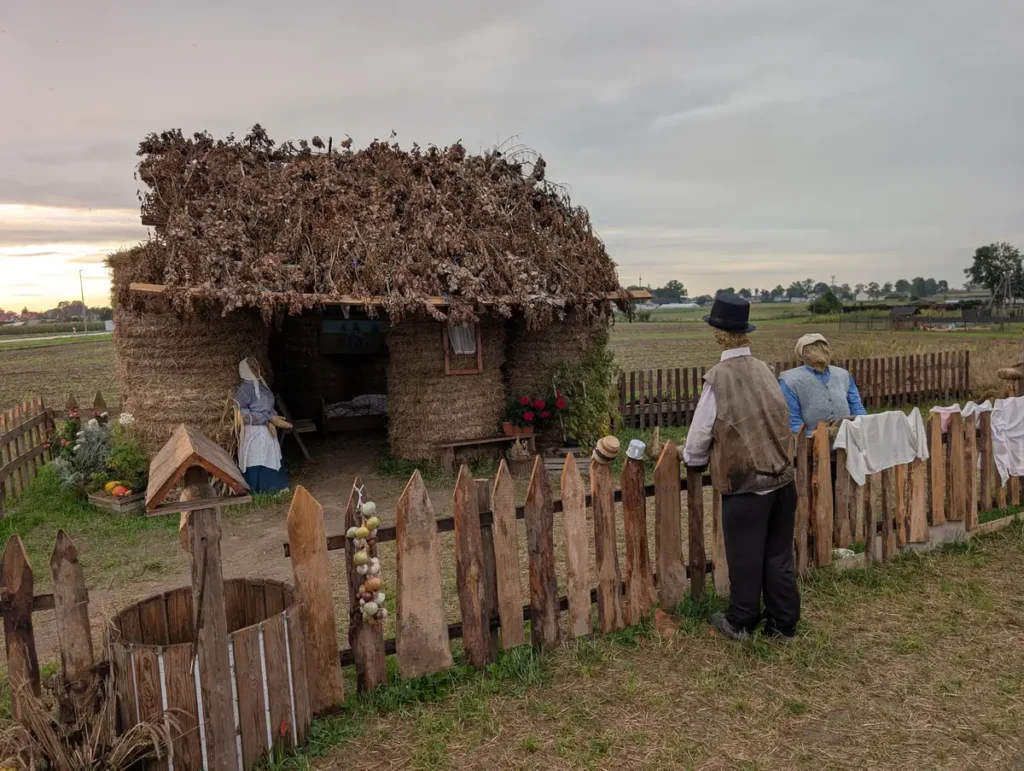
Later, a swim in Augustów – very popular with Polish families in summer, quieter in September. In the evening we found a Dożynki (Polish harvest festival, held in August or September depending on the place) in a nearby village. Slept by the river Rospuda.
Day 5 – Wigry NP, Suwałki, Stańczyki
Stupidly, we ran out of fuel and the car stopped. The 40km estimated on the dashboard turned out not to be true. We parked on the shoulder, walked 2km to the nearest station, bought a jerry can, filled it with petrol, walked back. Got off cheaply. Don’t trust the dashboard in rental cars.
Wigry NP (8 PLN entry). Beautiful hiking – beavers active at dusk and dawn on the Suchary trail. Parking is hourly. Quick stop in Suwałki – Poland’s coldest city, not much to see. We hiked and swam by Hańcza lake, Poland’s deepest.
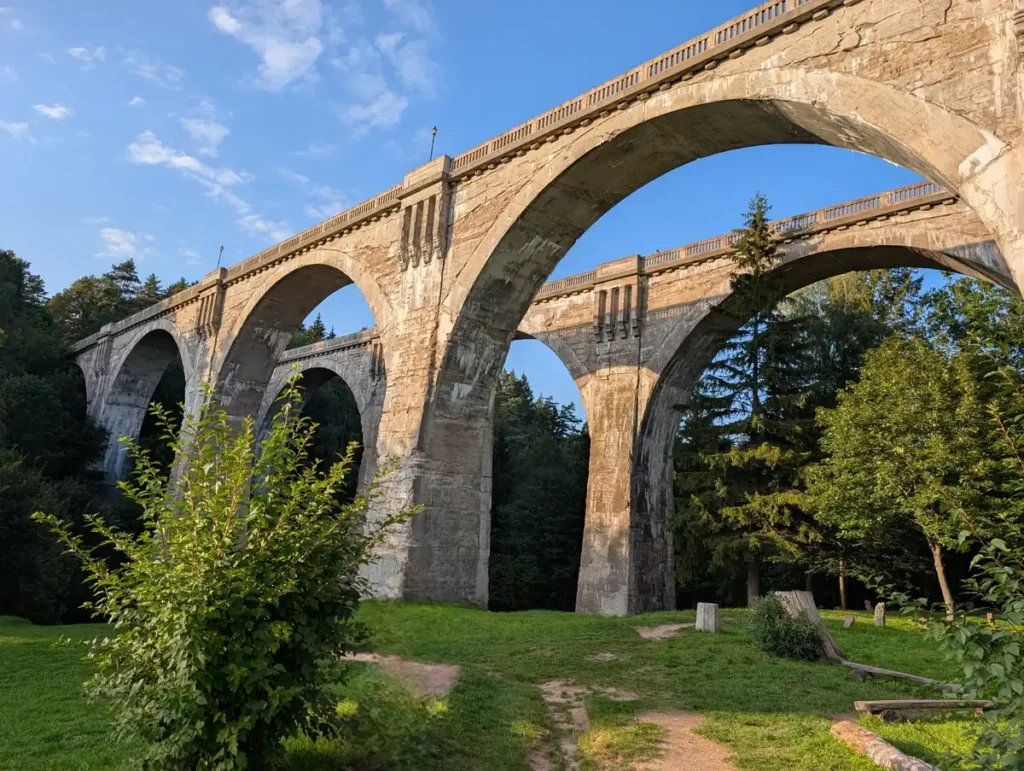
In the evening, the viaducts at Stańczyki – a highlight. Very picturesque disused railway bridges built by the Germans when the region was part of East Prussia. Entry 10 PLN.
On the way west we passed through Gołdap, then the Pyramid in Rapa (a couple of locals offered a tour for beer money, we politely refused). This part of Poland (just 2km from the Russian border) felt very remote in a way I hadn’t experienced in Poland before. Totally empty and visibly poorer.
That night we parked in Giżycko – our base for the next three nights.
Day 6 – Krutynia (Kayaking), Śniardwy
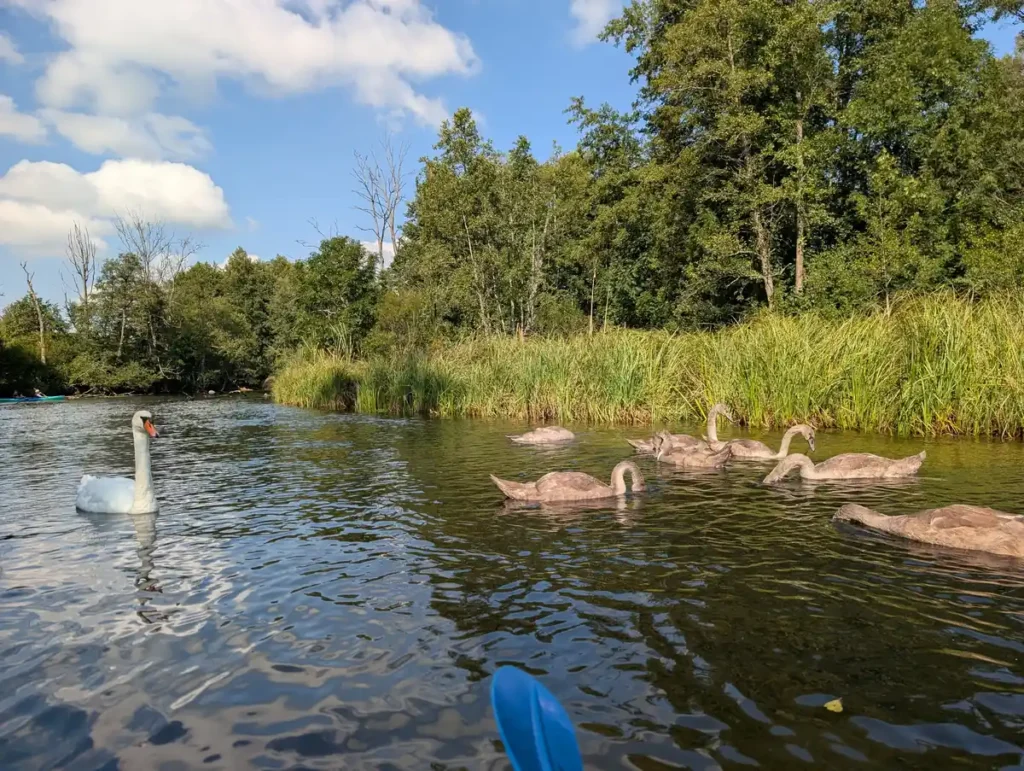
Kayaking on Krutynia. Lots of providers – ours was 90 PLN for a 2-person kayak including transport. Very popular in July/August, season slows down by late September. We started in Krutyń, paddled briefly upstream to a small lake, then floated back down to Ukta. The river is knee-deep in most places. There’s one place where you have to carry a kayak overland – a local will offer to carry it for beer money. Krutynia–Ukta is around 15km – right pace for beginners. Clean water, untouched forest, many swans.
On the way back we passed through Mikołajki (packed with tourists, nothing memorable for us) and stopped at Śniardwy, the biggest lake in Poland.
Day 7 – Giżycko (Cycling)
Rented bikes in Giżycko – 60 PLN each for the day. Rode past Boyen Fortress (19th-century star-shaped Prussian fortification, entry 25 PLN, we skipped it) and cycled around Lake Dargin. Some sections were bumpy and rough. Around 70km total – we’re not regular cyclists and it left us sore. You can see traditional Mazurian houses from the German-Prussian period along the route.
In the evening – a walk around Giżycko town.
Day 8 – Wolf’s Lair, Święta Lipka, Olsztyn, Grunwald
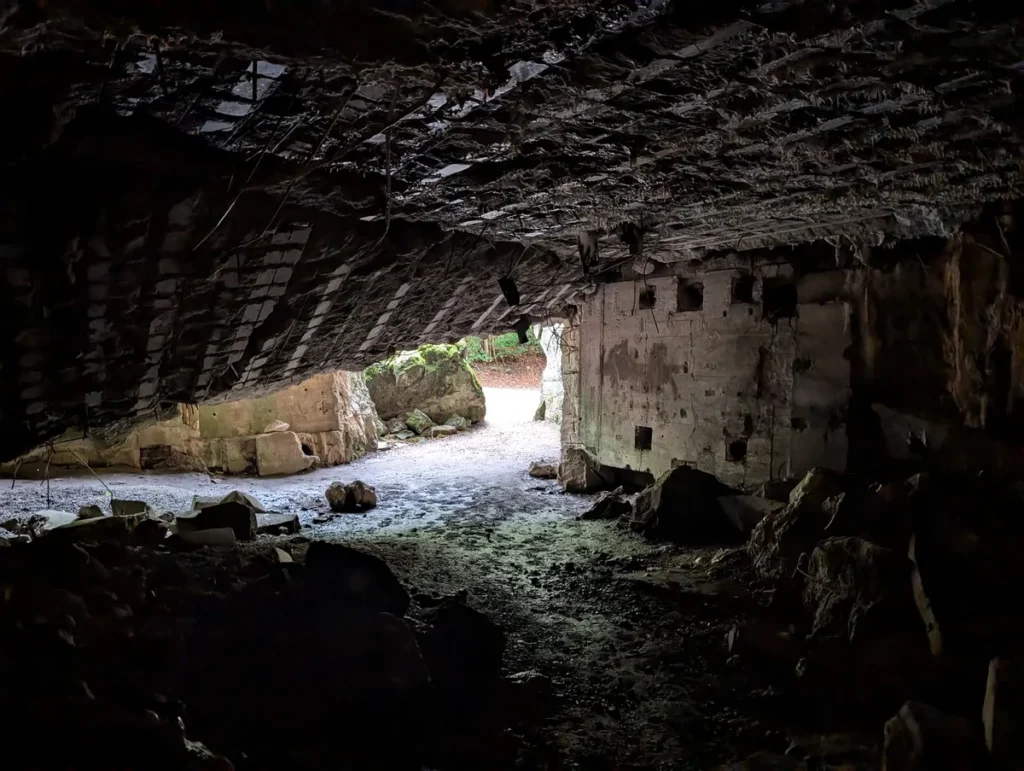
Wolf’s Lair (Wilczy Szaniec). Hitler’s heavily fortified military headquarters, hidden deep in the Mazurian forest. The place where the 1944 assassination attempt took place. Millions of tons of concrete, blown up by the retreating Germans.
- Entry: 30 PLN per person
- Parking: 15 PLN (campervans 20 PLN)
- Showers on-site, clean – useful if you’re sleeping in the car
- Plan a few hours.
Afternoon: Święta Lipka Sanctuary. Free 15-minute organ recitals daily.
Evening through Olsztyn – smaller city, medieval old town. After that – the Grunwald battlefield, where Poland and Lithuania defeated the Teutonic Order in 1410. Free.
Day 9 – Elbląg Canal, Elbląg, Stutthof, Vistula Spit
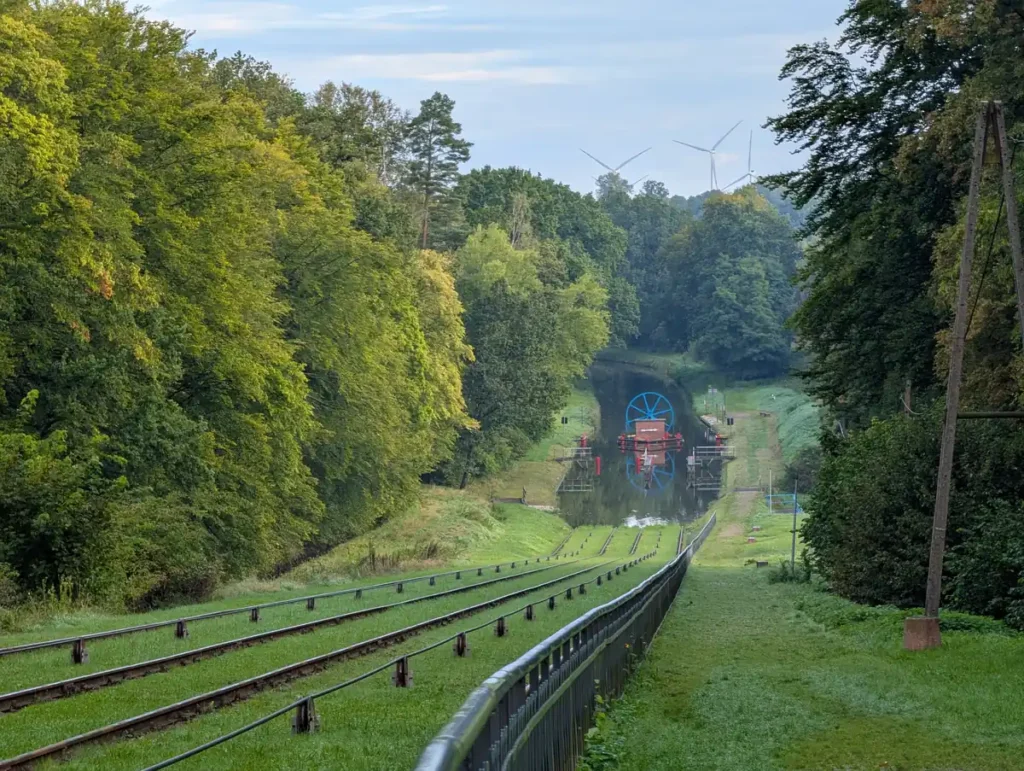
Elbląg Canal first, in Buczyniec. The canal covers 80km and handles a 100m change in water levels using a system of locks. Built by the Prussians, now used for recreational boat trips. We watched a boat get floated onto a submerged rail carriage and hauled up the slope. Unusual setup. You can go on a cruise, but watching from the shore was enough for us.
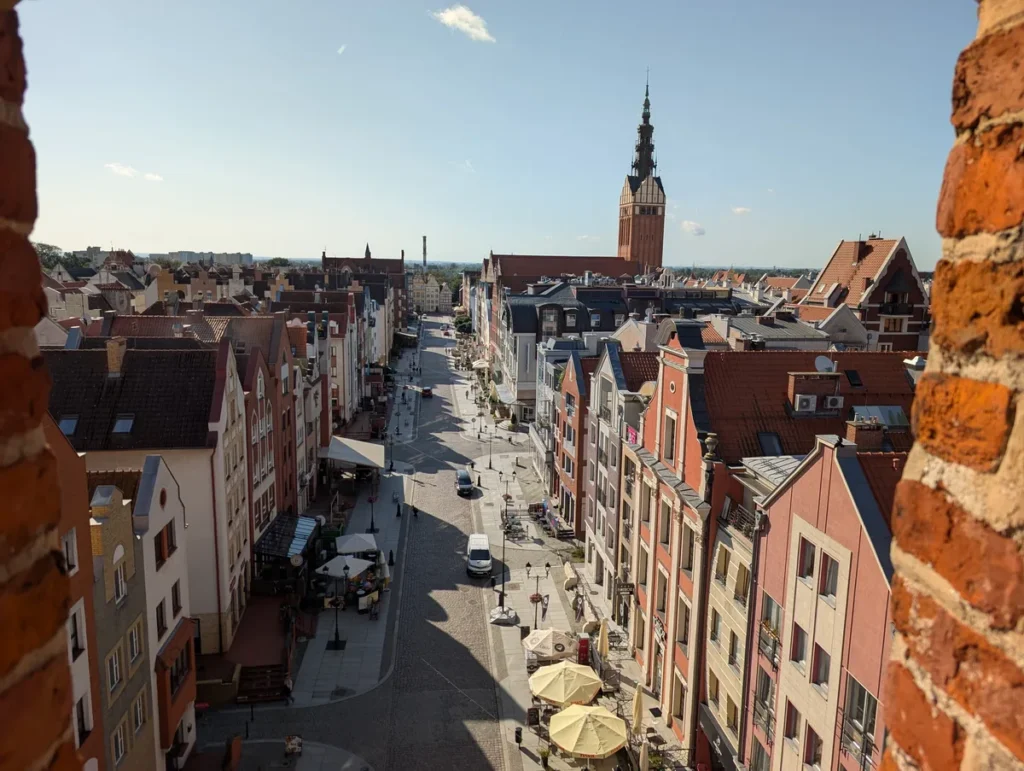
Elbląg is another medieval old town and we actually preferred it to Olsztyn. The gate tower (Brama Targowa) is free to climb and gives a decent view over the town.
After that, Stutthof. A German Nazi concentration camp. Somber experience. Free entry, parking is 15 PLN for the first 3 hours.
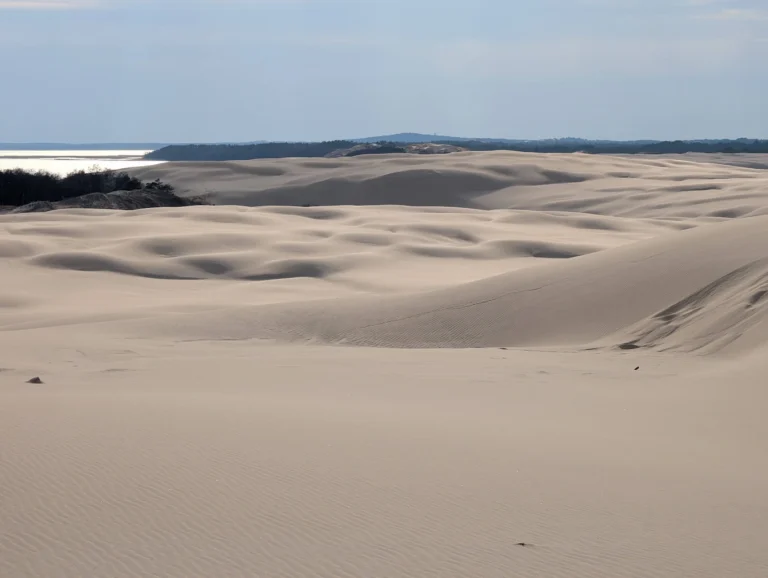
Then we drove the Vistula Spit (Mierzeja Wiślana) out to the last beach where you can swim, roughly 1-2km from the Russian border. Worth noting: if your phone picks up a Russian cellular signal, you’ll get hit with roaming charges. The spit is mostly forest and sand with the Baltic Sea on one side and the Vistula Lagoon (Zalew Wiślany) on the other. On the way back we stopped at the spot where the Vistula meets the Baltic. Wild seals can be spotted there, though we didn’t see one. Lots of campervans parked up along the area.
Busy day.
Day 10 – Malbork, Gniew, Grudziądz, Chełmno
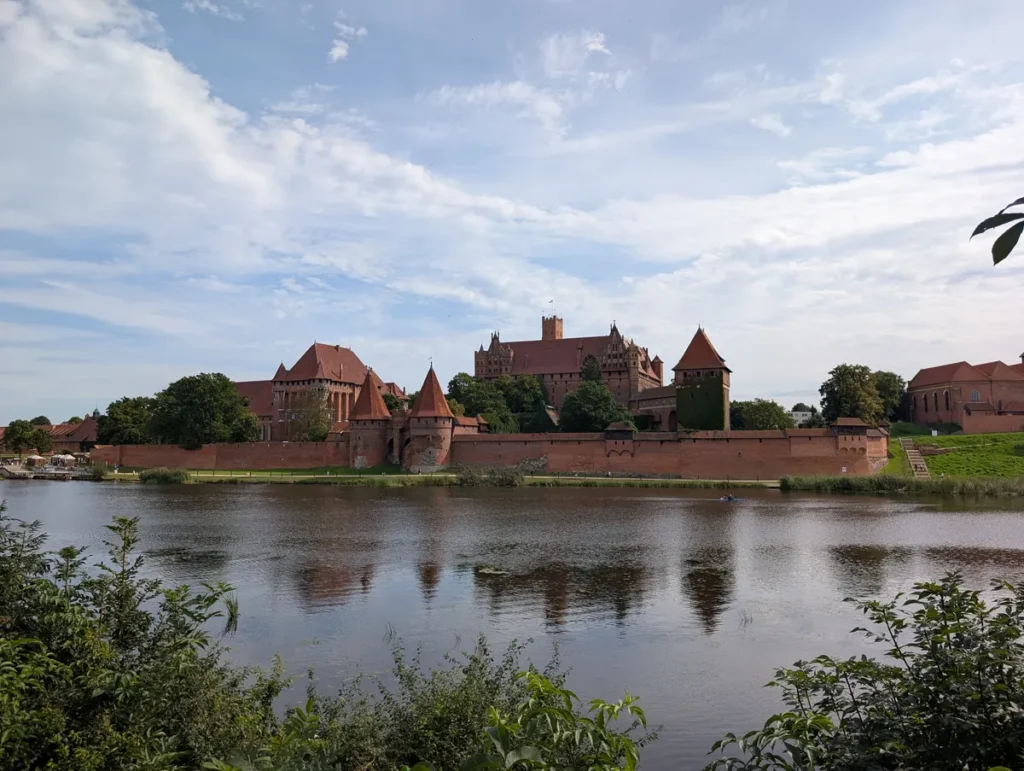
Malbork. The Teutonic Castle is the world’s largest brick castle by land area. Originally built in the 13th century and heavily reconstructed in the 20th century after WW2. Entry is 80 PLN (pricier than most attractions on the trip, but worth it). The audioguide is included in the price and is exceptional. It automatically detects your location inside the castle and plays the corresponding track. It moved us back in time. Plan a full morning.
On Mondays you can walk the grounds for free, but the interior is closed.
On the way south we had a quick look at another Teutonic castle in Gniew and stopped briefly in Grudziądz and Chełmno.
Day 11 – Toruń, Żelazowa Wola
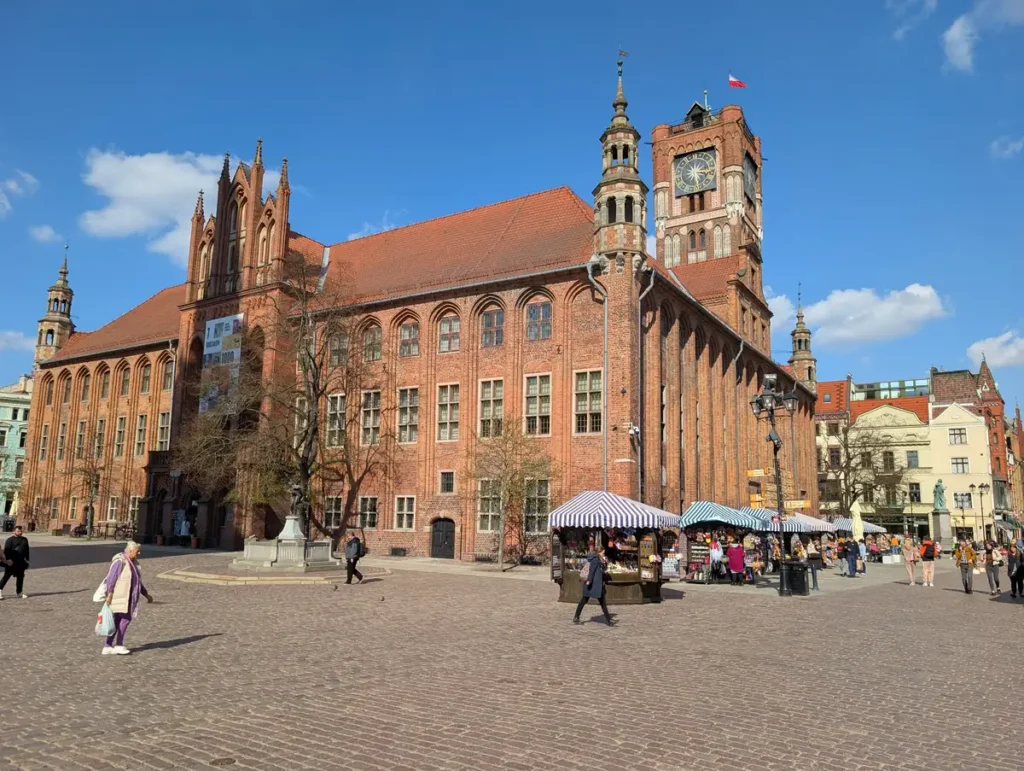
Toruń is a well-preserved medieval town, best known as the birthplace of Nicolaus Copernicus. You can visit his house (31 PLN, free on Thursdays). The town is also known for its gingerbread (pierniki).
Before returning to Warsaw and dropping off the car at the airport, we stopped at Żelazowa Wola, the birthplace of Fryderyk Chopin. Entry is 25 PLN, free on Mondays.
Season
Early September worked well. Good weather, noticeably quieter after school holidays ended. Early June would be just as good, plus very long days.
May and October can work for sleeping in the car, but check the forecast. Cold and rainy stretches are common. November through April is low season – cold, short days.
June through August is busy in the more touristic spots, but a lot of these places are off the beaten path anyway.
Practical
Currency
Polish złoty (zł / PLN). Around €1 = 4.20 PLN at the time of writing. Use a Revolut card for best rates – within 1% of the official rate. There’s a 1% weekend markup – you can pre-exchange in the app beforehand to avoid it.
Most places take card, but carry some cash. Street vendors, local parking attendants, and smaller spots (like the mosque in Kruszyniany) are sometimes cash only. Check Wikivoyage for commission free ATM withdrawals.
SIM
If you’re coming from an EU country, you’ll get a data quota under Roam Like at Home. No extra SIM needed.
Otherwise, check eSIMDB database for a cheap eSIM. Filter by GB and trip duration.
Language
Polish. English is limited outside cities and main tourist sites – especially in rural Podlasie and small Mazury towns. Script is obviously Latin, so no navigation issues.
Useful phrases: dzień dobry – good morning/good day, dziękuję – thank you.
Tips Summary
- DiscoverCars: Gathers best offers from multiple providers. We paid €7.76/day in September. It’s cheapest to use independent insurance, such as Cover4Rentals.
- Overnight Parking: Generally legal in a legal parking spot. Don’t leave the car in a forest outside a designated parking area. Use park4night to find good overnight spots.
- Wolf’s Lair: Clean showers on-site. Useful if you’re sleeping in the car.
- Kruszyniany Mosque: Cash only, 15 PLN entry.
- Tykocin Synagogue: Free on Thursdays. Saves 25 PLN. Audioguide included.
- Copernicus House, Toruń: Free on Thursdays. Saves 31 PLN.
- Żelazowa Wola: Free on Mondays. Saves 25 PLN.
- Malbork: Free on Mondays, but interior closed. Only if you’re skipping the inside.
- Bison: December through March gives the best chance. Dusk and dawn.
- Vistula Spit: Switch to airplane mode near the end. You’re 1-2km from Russia and the phone could pick up their signal.
- Weekend Parking: Polish cities offer free parking on weekends.
The Budget System
I keep daily travel costs under €30 using two methods:
● €3/Day Rental Car Guide
● Sleeping in Rental Cars
One week of travel cost me less than a day of work in Australia.