Granada and Almería on €22/Day: Alhambra and Sleeping in Car
We drove our own car, but renting one for this route would’ve added just €4.80/day. Granada to the Murcia border, Alhambra included:
TRIP STATS
- DAILY RATE: €22.44 (per person)
- SLEEP: Hostel (5 nights), Sleeping in Car (2 nights)
- BY: Car
- PEOPLE: 2
- DAYS: 7
- TOTAL: €314.14
- CURRENCY: Euro (€)
- DATE: October 2025
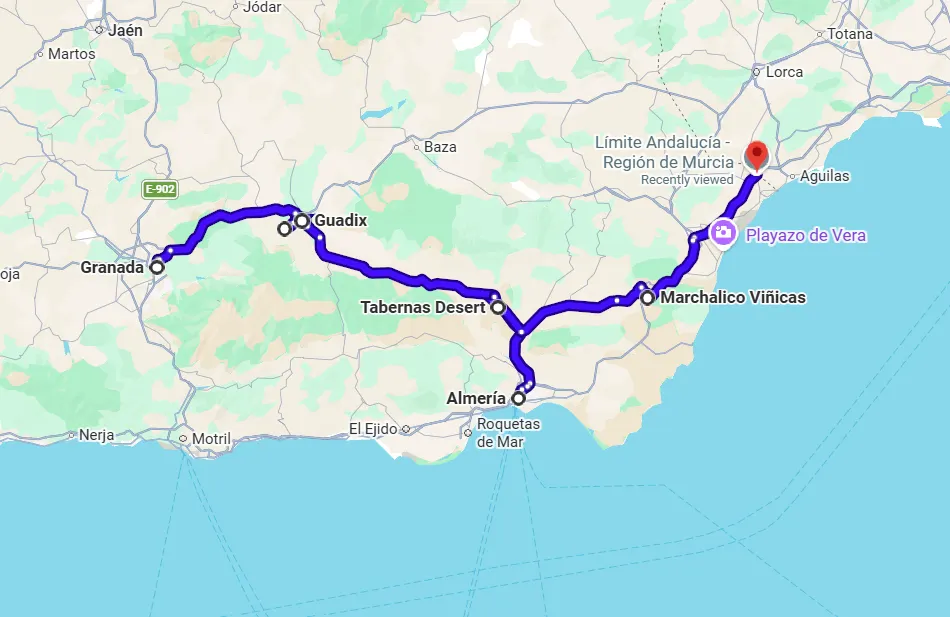
- ROUTE: Granada → Guadix → Almería → Tabernas Desert
- TOOLS: DiscoverCars, park4night, Revolut, Lidl
| ITEM | COST (2P) | NOTES |
|---|---|---|
| Stay | €124.00 | 5 nights: Granada room (€24.80/night) 2 nights: Slept in the car (€0/night) |
| Fuel | €23.00 | 5 days parked in Granada. |
| Food | €92.00 | €6.57/day per person. Shopped at Lidl, cooked at the hostel. |
| Activity | €75.14 | Per person: €15.30 – Flamenco show, Granada €22.27 – Alhambra & Nasrid Palaces |
| TOTAL | €314.14 | 7 days at €22.44/day per person. |
Getting There
We drove into Andalusia from Portugal (starting in Lisbon) and carried on east towards Catalonia and eventually France.
If you’re flying in for this leg, your entry point would be Granada Airport (GRX) – however it operates almost entirely as a domestic airport. If you’re flexible with dates and travel with a small carry-on, Iberia and Vueling offer €20–€30 flights from Madrid or Barcelona, where you can connect to €20 Ryanair or Wizz Air flights to Italy, the UK, France, Portugal, or Germany. These deals are mostly possible with open-date searches on Skyscanner.
Car Rental at Granada Airport
We did this trip in our own car, so I can’t comment on rental providers. If you’re flying into Spain, these are the current prices and things worth knowing:

- Current Prices: Small cars in Granada from €33.65/week (€4.81/day) at the time of writing via DiscoverCars (my review). Full European Car Rental Price Comparison.
- Excess: Decline the desk insurance. Cover it with an independent policy like Cover4Rentals instead: €3/Day Rental Car Guide.
- Tolls: We stuck to free roads throughout – the right call for sightseeing. Most of the roads in Spain are free with a few exceptions, none of them around Granada. There’s a paid road to watch out for starting in Vera, going to Cartagena and Elche (AP-7).
- Fuel: Diesel was as low as €1.20/L during our October 2025 trip, although prices fluctuate. Spain’s fuel is much cheaper than Portugal (€1.55/L in the same month) and consistently one of the cheapest in the EU. Unstaffed stations (like Plenoil or Ballenoil) offer significantly cheaper fuel than the big brands like BP and Shell. Google Maps didn’t show real-time fuel prices in Spain reliably for us. We used the Gasall app.
- Parking: We always managed to find free parking using Google Maps. In cities like Granada we had to park further out and walk, but it was manageable. Curb lines are color-coded in Spain and mean the following: white – free and unlimited parking, blue – paid parking, green – usually residents only, yellow – no parking (although you’ll see locals breaking this rule all the time).
Sleeping in a Car in Spain
Volvo V50. 4/5. Spacious.
Long car, plenty of room for two. Rear seats folded fully flat – no step. One issue: a fixed metal bar ran the full width at the top of the folded seatback. At 190 cm, the bar pushed my feet up slightly. An inflatable mat mostly fixed it.
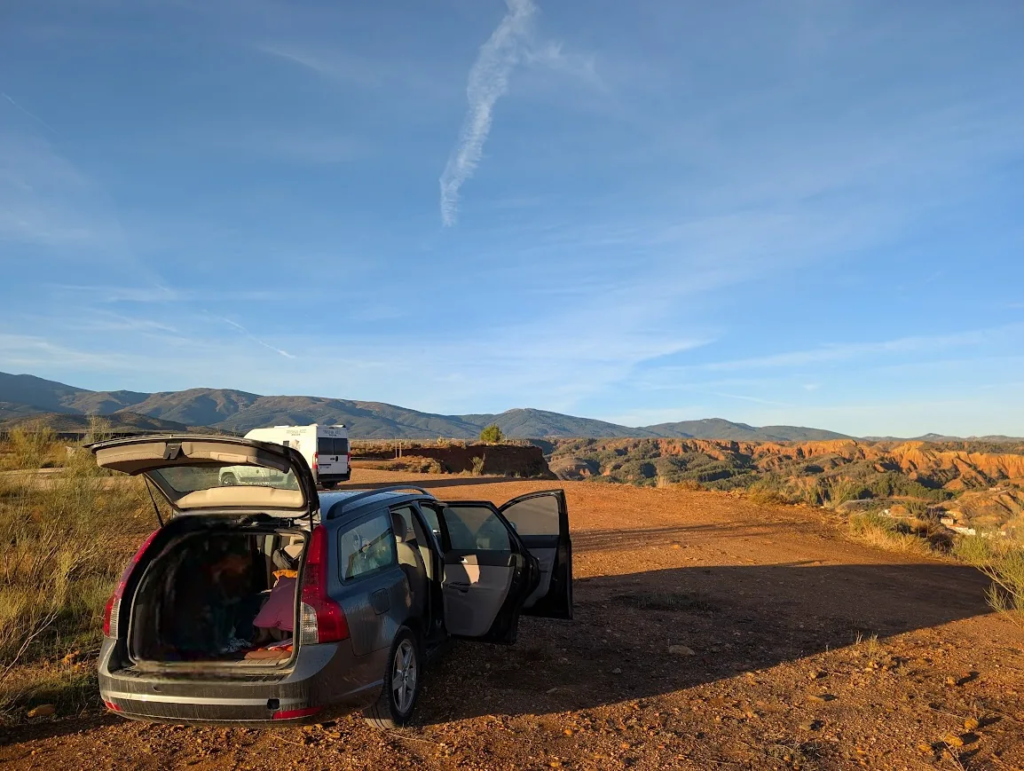
Full sleeping audit: Best Rental Cars to Sleep In.
- Legality: Legal to sleep in your car in Spain as long as you are legally parked and don’t display any “camping” behavior (no tables or chairs outside the car). According to the Spanish Traffic Authority (DGT), you are considered legally parked if all activity stays strictly inside the vehicle. Local bylaws sometimes ban overnight stays, particularly in natural parks and on coastal beaches. Full guide: Sleeping in Rental Cars.
- Facilities: Public toilets are sparse and unreliable in Spain. Supermarkets (mainly Lidl) were the most reliable option throughout the route – free toilets, easy to find.
- Overnight Spots: Search park4night for marked spots. I’ve linked to the spots I stayed at in the Route section below.
- Backup Accommodation: Booking.com has the widest (and usually the cheapest) selection in Spain. Sort by lowest price, filter to 7.0+ to get rid of bad listings.
Food
€92 for two people over 7 days. €6.57/day per person.
We shopped at Lidl – consistently the cheapest supermarket option across Europe. When there isn’t a Lidl nearby, Aldi is the next best alternative in Spain. Mercadona is slightly more expensive but sometimes the only option. We also shopped at Alcampo and Carrefour a couple of times on this trip for more variety, although prices were higher.
In Granada we used the hostel kitchen, otherwise we cooked meals and made coffee on a gas stove. In Andalusia, outdoor cooking is banned in or near forested areas from June 1 to October 15 – our trip was just after this period. Be cautious with a stove near rural areas, forests, or protected zones. Check current fire risk before cooking outdoors: aemet.es.
Route
Granada
We spent 5 nights in Granada, taking it easy and relaxing after having slept in a car for 3 weeks.
The city has a very cool vibe with old architecture and narrow streets throughout. The Albaicín is the oldest neighborhood, heavily Islamic-style. Its popular viewpoint Mirador de San Nicolás features views of Alhambra and Sierra Nevada. We got lucky and caught two Gitano street musicians playing guitar and singing flamenco. They might be a common sight there, as we saw them more than once. At sunset it gets very busy.
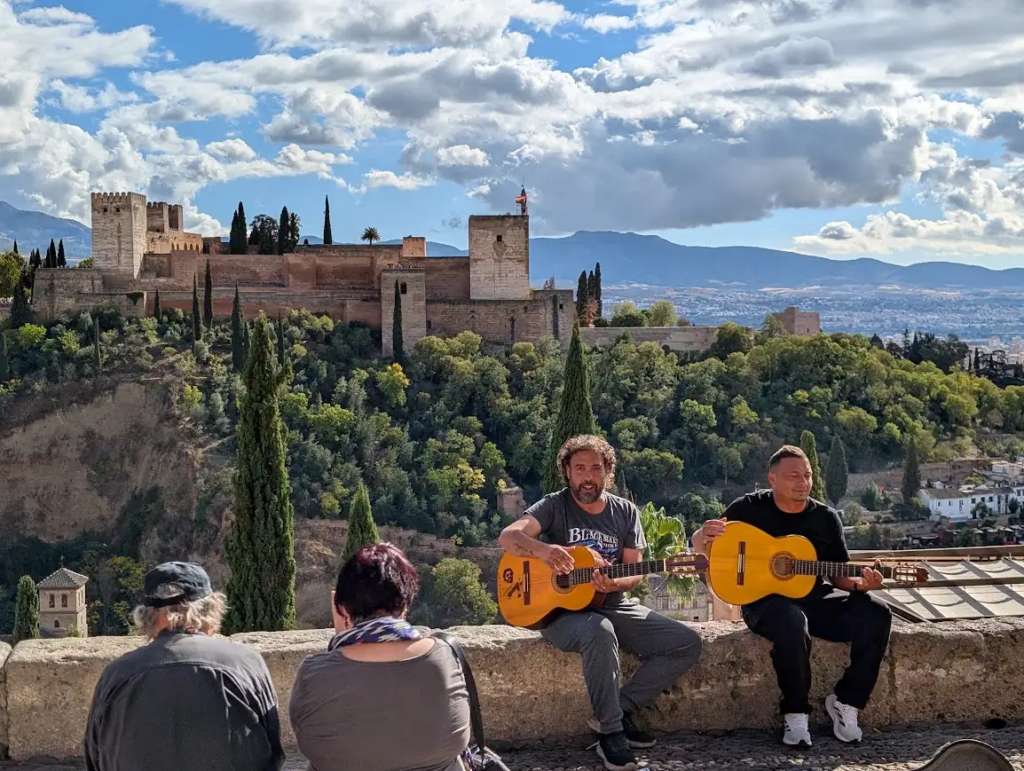
The other old traditional neighborhood is Sacromonte, known as the gypsy (Gitano) quarter. A bit off the center, with fewer visitors, but just as charming.
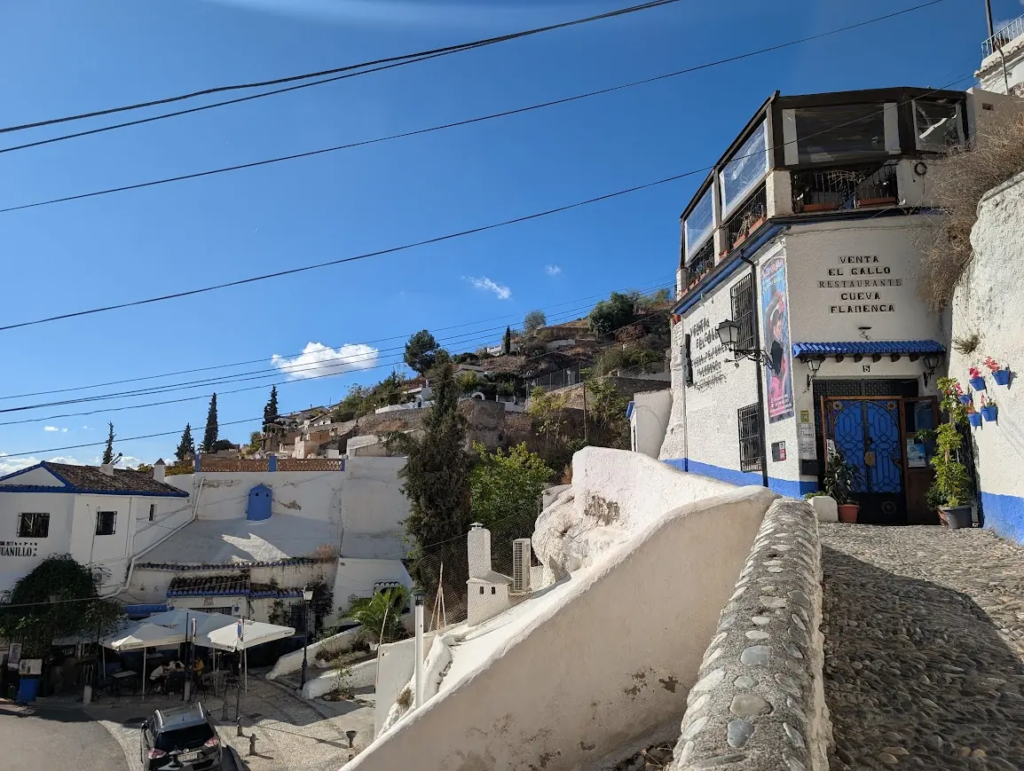
Our accommodation (Arc House Granada) was in a more modern part of the city, full of local bars and noise until late hours, about 30 minutes away from the old quarter. On the way you’d pass Catedral de Granada (free entry on Tuesday afternoons if booked well in advance via their website, otherwise €7).
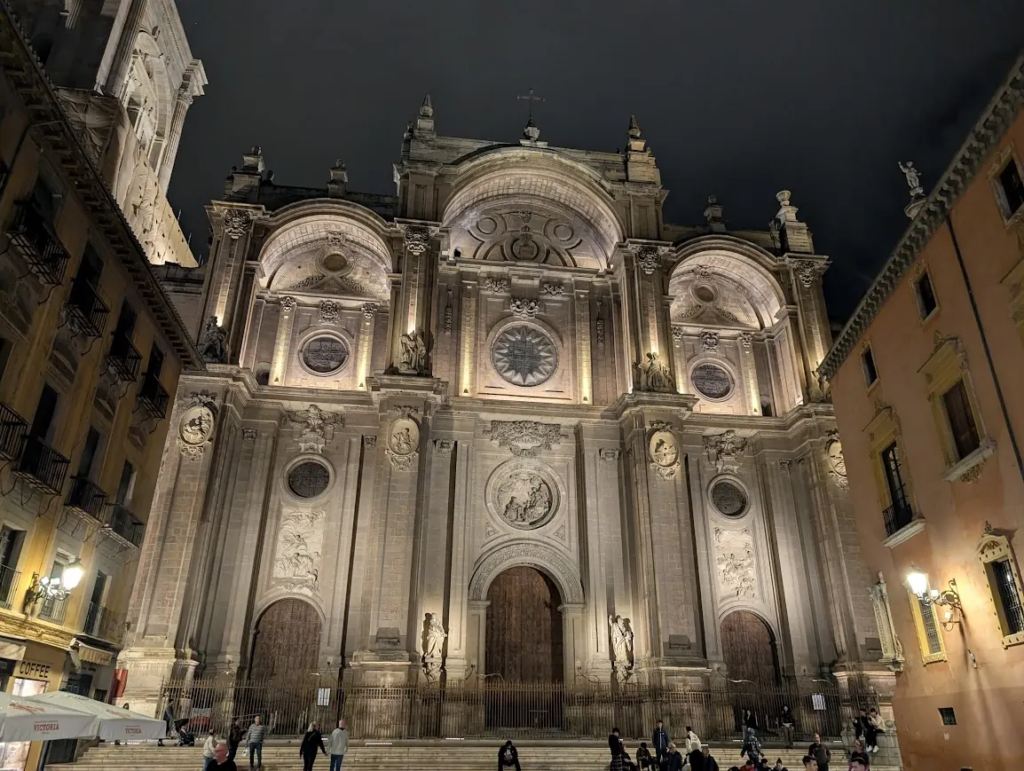
Close to the cathedral there’s an Alcaicería, a market street on the site of a former bazaar. There are plenty of souvenir shops within its narrow streets, and it’s a beautiful place to walk around.
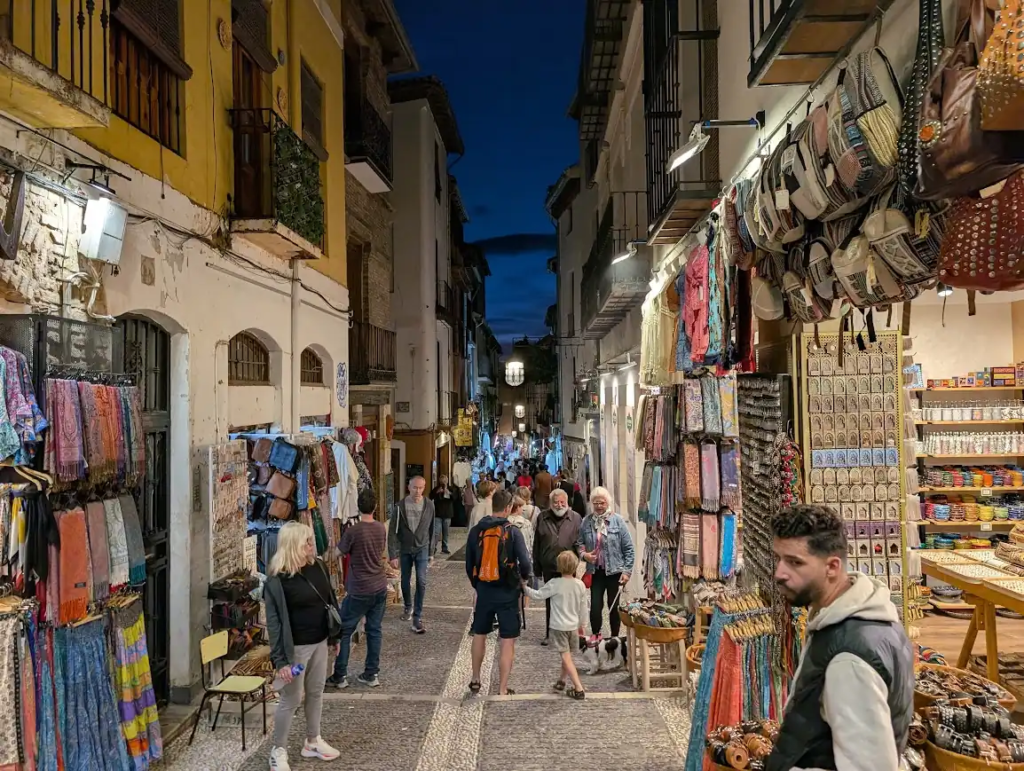
Inspired by the street musicians on Mirador de San Nicolás, we decided to go for a flamenco show. I browsed some deals and ended up getting a 1-hour show with Flamenco en Palacio Granada via GetYourGuide for €15.30 per person (discounted from €25 to €17 on the website, then we used their 10% welcome voucher). Great show. It wasn’t overly crowded, around 20 people in the audience. While inside, you can get a beer at the bar.

We spent much of our time in Granada just walking around and relaxing. It’s a beautiful city to do so, and our hostel was cheap at €24.80 for the room.
Alhambra
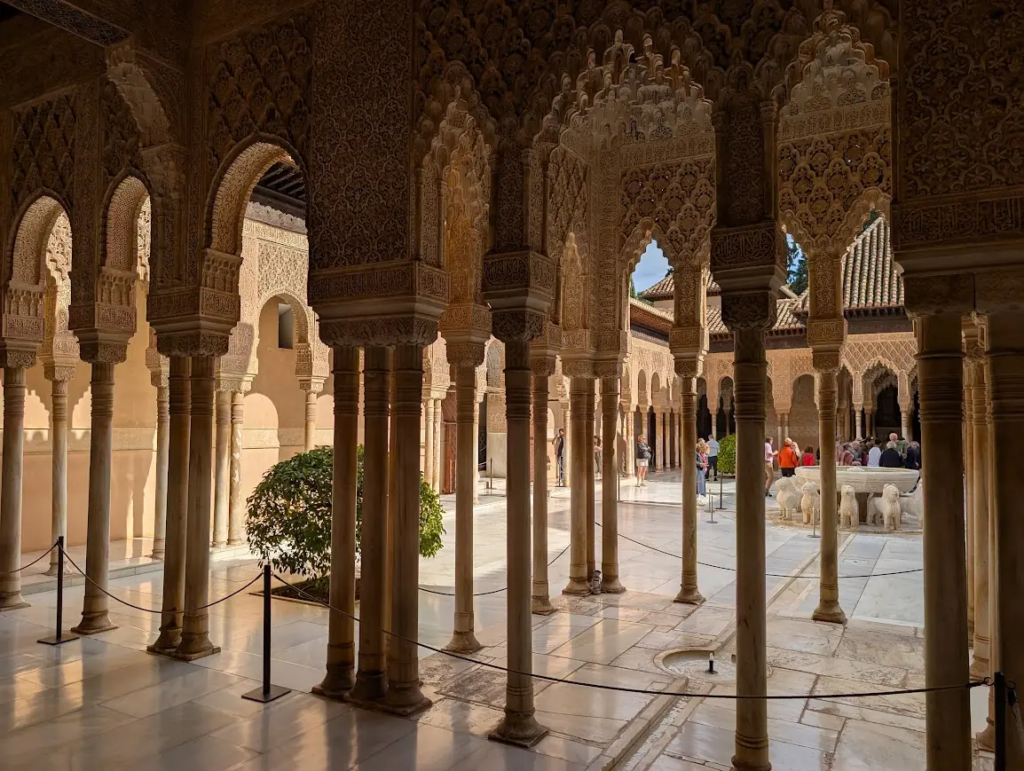
The main attraction of Granada is the Alhambra. It’s actually one of the most visited sights in Spain altogether, and one of the most famous and best-preserved examples of Islamic architecture in Europe.
Getting tickets is hard. The ticket you want is Alhambra General with the Nasrid Palaces being the most impressive bit. The easiest way is to book in advance, if you already know your dates. I recommend as much as 2–3 months in advance in the highest season, in the low season you might get away with 1 month. If you manage to book in advance, you’re good. We didn’t know our dates beforehand, so we had to figure it out while in Granada already.
One of the last-minute options is getting a ticket via a third-party reseller, but that increases the original price from €20 to €50–€100+. We read that some last-minute tickets get released periodically on their website and counted on that. Some sources say tickets are released at midnight local time, so I tried that every night, but was unsuccessful. I ended up refreshing the page probably upwards of 50 times during our stay in Granada, every hour or so. Eventually, on what was supposed to be our last day, I saw an opening for two and managed to grab them. It was a totally random time, around 6pm. Within a couple of minutes the tickets were gone. In the end, we paid the official rate of €22.27, but it was a lot of work.
Alhambra was amazing. As always, I recommend using the included audioguide – staff will tell you which app to download. We took it very slow and had a thorough look, ended up taking 4–5 hours with some breaks included.
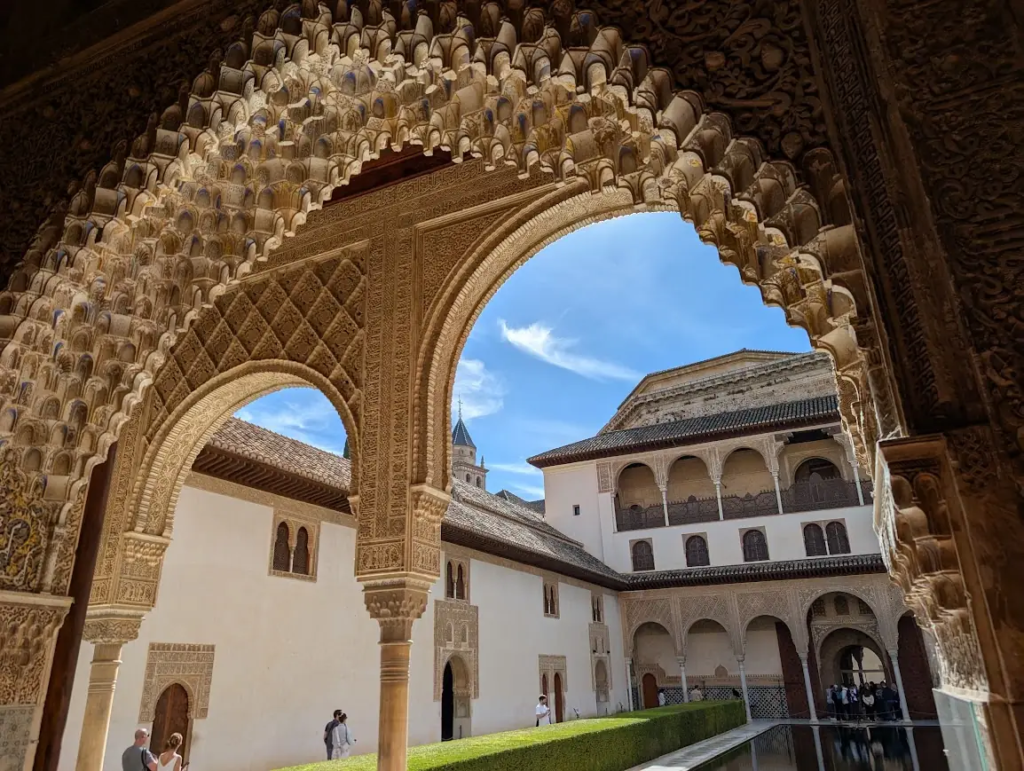
We actually had to extend our stay by 1 day to accommodate the visit. After seeing Alhambra we headed back to our car, parked in the suburbs of Granada (1-hour walk from the palace), and drove out. We took the motorway north of Sierra Nevada and found a sleeping spot on a viewpoint, Mirador del Fin del Mundo. The last stretch of the road was dirt with some puddles, but no issues. There were two more campervans there. A police car passed in the evening and stopped for a few minutes, but didn’t even talk to us.
Guadix, Almería, and Tabernas Desert
We spent the morning around Guadix, famous for its hundreds of cave dwellings (Barrio de Cuevas) and a badlands landscape.
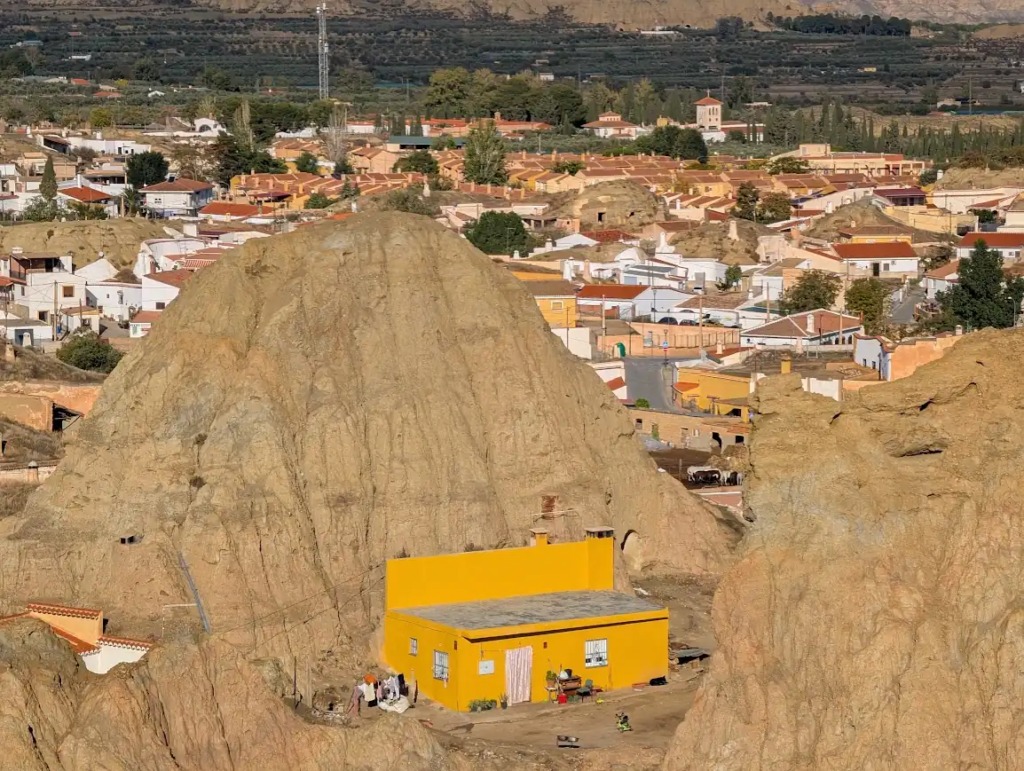
Afterwards we headed to Almería, where we managed to find a free parking spot and explored the city for a couple of hours. There’s a cathedral, which we didn’t go into (€7 ticket), and a free-to-visit Alcazaba fortress (€1.50 if you’re not from the EU). It’s a 10th-century Moorish citadel, though heavily reconstructed. It offers cool views of the city and the sea.
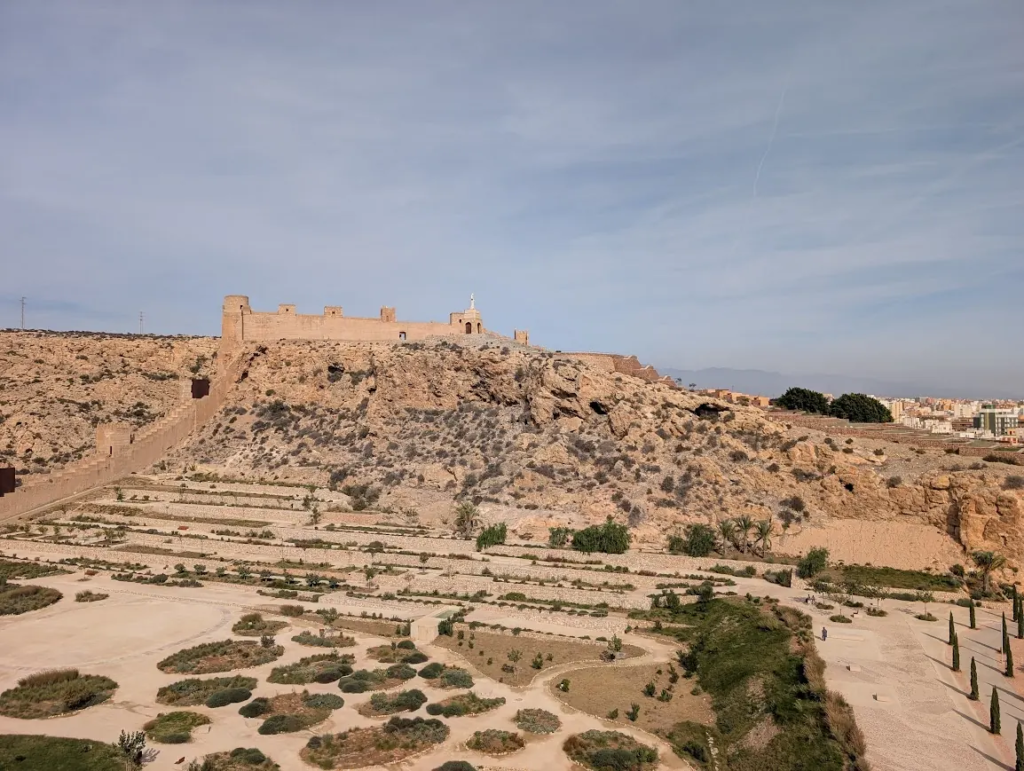
To be honest, right after Granada, Almería felt underwhelming.
In the afternoon we headed to the Tabernas Desert, one of the few deserts in mainland Europe. It was used as a filming location for many movies, especially spaghetti westerns like The Good, the Bad and the Ugly. There’s a theme park there too, but we opted to just hike around, a 5km loop. It was totally empty.

Onward to Cartagena
In the evening we drove on eastward and used park4night to find a sleeping spot in the middle of nowhere, after turning onto a dirt road off the main highway. It was next to a desert ghost village, Marchalico Viñicas. Nobody around, just ibex goats.
Next morning we woke up and started driving towards Cartagena, officially leaving the autonomous region of Andalusia.
Season
End of October was a great time for this route. Granada was still very warm, t-shirt weather during the day. It was mostly sunny with a couple of rainy days.
November marks the start of low season in Granada, but you’ll still see plenty of visitors and will have to book Alhambra well in advance. Almería and other towns were already very quiet.
Practical
Currency
Euro. Cards are accepted almost everywhere, but carry some cash for parking attendants or street vendors. If you’re coming from a non-euro country, use Revolut to avoid conversion fees. There’s a 1% weekend markup, but you can avoid it by exchanging currencies in the app beforehand.
SIM
Any EU SIM works under Roam Like at Home – no need to buy a local one. If you don’t have one, check eSIMDB, filter by the amount of data you need and your trip length, then sort by price.
Language
Spanish. English is widely spoken in hospitality and tourism, but not reliably outside of it. Learn at least a few phrases:
- hola – hello
- buenos días – good morning/good day
- buenas tardes – good afternoon
- buenas noches – good evening/good night
- gracias – thank you
- por favor – please
Tips Summary
- Cheapest Rentals: Search via DiscoverCars – small cars from €33.65/week (€4.81/day) at Granada Airport at the time of writing.
- Sleeping in a Car: Legal in Spain as long as you’re legally parked and all activity stays inside the vehicle. No tables or chairs outside. Local bylaws vary – check national parks and coastal areas.
- Cheap Fuel: Use Plenoil or Ballenoil instead of BP or Shell. Diesel was €1.20/L in October 2025. Use the Gasall app – Google Maps doesn’t show real-time fuel prices in Spain reliably.
- Parking: Free spots exist all over Granada, Guadix, and Almería. Expect a walk to the center in Granada. Search Google Maps for free parking. White curb = free, blue = paid, green = usually residents only, yellow = no parking.
- Catedral de Granada: Free entry on Tuesday afternoons if booked in advance online, otherwise €7.
- Flamenco Show: Book via GetYourGuide and stack any welcome voucher on top of the site discount – we paid €15.30/person for Flamenco en Palacio Granada, down from €25.
- Alhambra Tickets: Book 2–3 months ahead in high season if your dates are fixed. If not, watch the official site for released slots. Third-party resellers charge €50–€100+ vs. the official €22.27.
- Guadix: Cave dwellings (Barrio de Cuevas) and badlands, free to walk around.
- Almería Alcazaba: Free for EU residents, €1.50 otherwise.
- Outdoor Cooking Ban: June 1–Oct 15 in or near forested and protected areas in Andalusia. Check aemet.es before cooking outside.
- Season: Late October is warm and mostly sunny in Granada. By November, Granada quiets down but Alhambra still needs advance booking. Almería and the smaller towns go very quiet.
The Budget System
I keep daily travel costs under €20–€30 using two methods:
● €3/Day Rental Car Guide
● Sleeping in Rental Cars
One week of travel cost me less than a day of work in Australia.