North and Central Portugal on €21/Day: Sleeping in a Car
Peneda-Gerês, Braga, Guimarães, Passadiços do Paiva, Aveiro, Coimbra, Serra da Estrela and Évora in 6 days, sleeping in our own car. Renting a small car for this route starts at €7.50/day:
TRIP STATS
- DAILY RATE: €21.33 (per person)
- SLEEP: Sleeping in Car
- BY: Car
- PEOPLE: 2
- DAYS: 6
- TOTAL: €256.00
- CURRENCY: Euro (€)
- DATE: December 2025
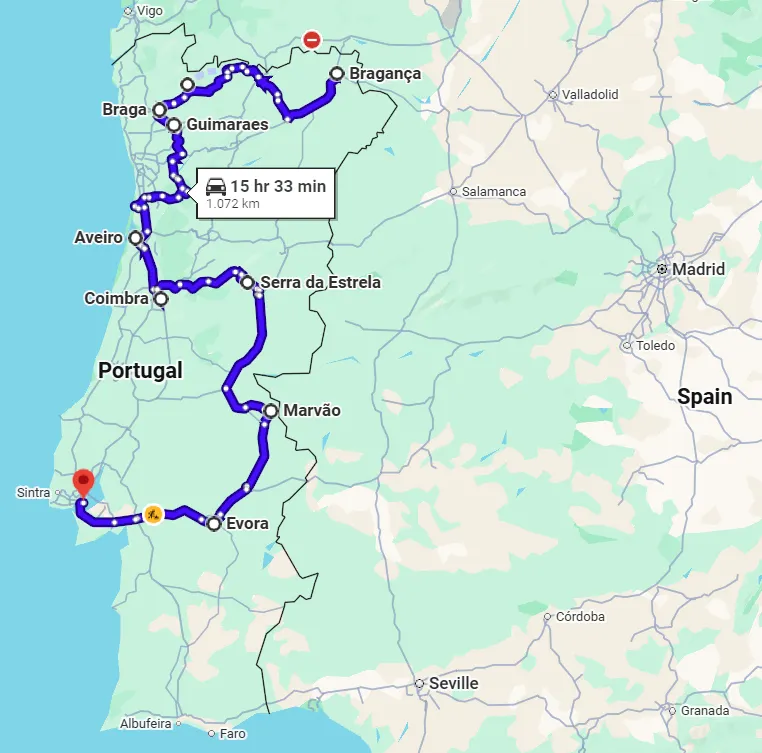
- ROUTE: (Spain →) Bragança → Peneda-Gerês NP → Braga → Guimarães → Arouca → Aveiro → Coimbra → Serra da Estrela → Marvão → Évora (→ Lisbon)
- TOOLS: DiscoverCars, park4night, Revolut, Lidl
| ITEM | COST (2P) | NOTES |
|---|---|---|
| Stay | €0.00 | Slept in the car. |
| Fuel | €136.00 | €21/day for fuel. €10 – flat tire patch |
| Food | €86.00 | €7.17/person per day. Shopped at Lidl. |
| Sights | €34.00 | Per person: €2 – Braga Cathedral €8 – Guimarães Castle + Palace of the Dukes of Braganza €1 – Passadiços do Paiva €6 – Chapel of Bones (Évora) |
| TOTAL | €256.00 | 6 days at €21.33/day per person |
How €21.33/day per person compares to my other trips: Budget Travel Cost per Day.
Getting There
We entered Portugal from Spain (having come from Madrid, Salamanca and Zamora as a part of a bigger trip).
- Previous leg: Central Spain on €18/Day: Madrid & 5 Nights Sleeping in Car
- Full trip: Spain, Portugal & France on €19/Day
Flying In
If you’re flying in, both Ryanair and Wizz Air offer cheap flights to Lisbon and Porto Airports. If you travel with a small carry-on and are flexible, tickets under €20 are possible to Spain, Morocco, France, the UK and more. Search Skyscanner with flexible date filters.
Full list of what I pack and more carry-on rules: Sleeping in a Rental Car Packing List.
Car Rental in Portugal
We did this trip in our own car, so I can’t comment on rental providers. If you’re flying into Portugal instead, these are the current prices and things worth knowing:
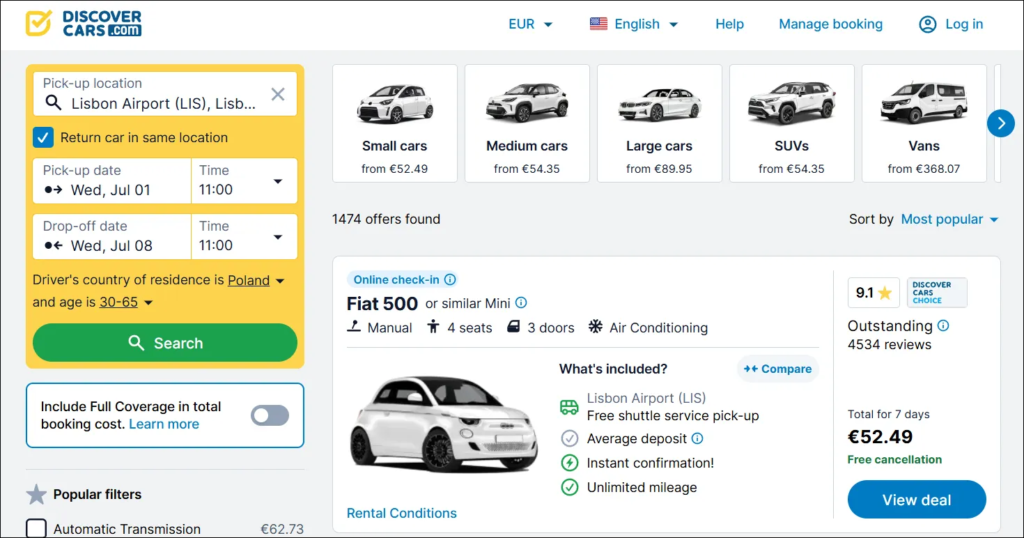
- Current Prices: Small cars in Lisbon from €52.49/7 days (€7.50/day) at the time of writing via DiscoverCars (my review). Full European rental comparison.
- Porto: Porto Airport is another hub for super cheap rentals. Check the current prices here.
- Excess: Decline the desk insurance. Cover it with an independent policy like Cover4Rentals instead: €3/Day Rental Car Guide.
- Tolls: We stuck to free national roads for sightseeing. If you take Portuguese motorways (like the A24, A25, or A6), tolls apply via electronic gantries or standard toll booths. Under Portuguese law, all rental cars come equipped with a mandatory Via Verde transponder. Rental companies charge a daily device fee of roughly €1.50–€5.00 plus actual toll usage billed directly to your card.
- Fuel: Diesel was around €1.55/l during our December 2025 trip, although prices fluctuate. Auchan and Intermarché are among the cheapest stations. Use Waze or Google Maps for real-time prices.
- Parking: We always managed to find free parking using Google Maps search. More free parking tricks: Budget Travel Tips.
Sleeping in a Car in Portugal
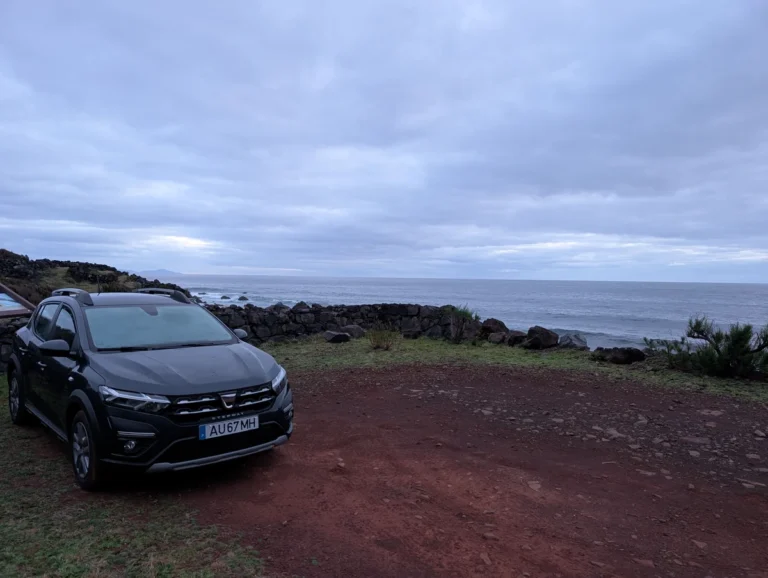
Volvo V50. 4/5. Spacious.
Long car, plenty of room for two. Rear seats folded fully flat – no step. One issue: a fixed metal bar ran the full width at the top of the folded seatback. At 190 cm, it pushed my feet up slightly. An inflatable mat mostly fixed it.
Full sleeping audit: Best Rental Cars to Sleep In.
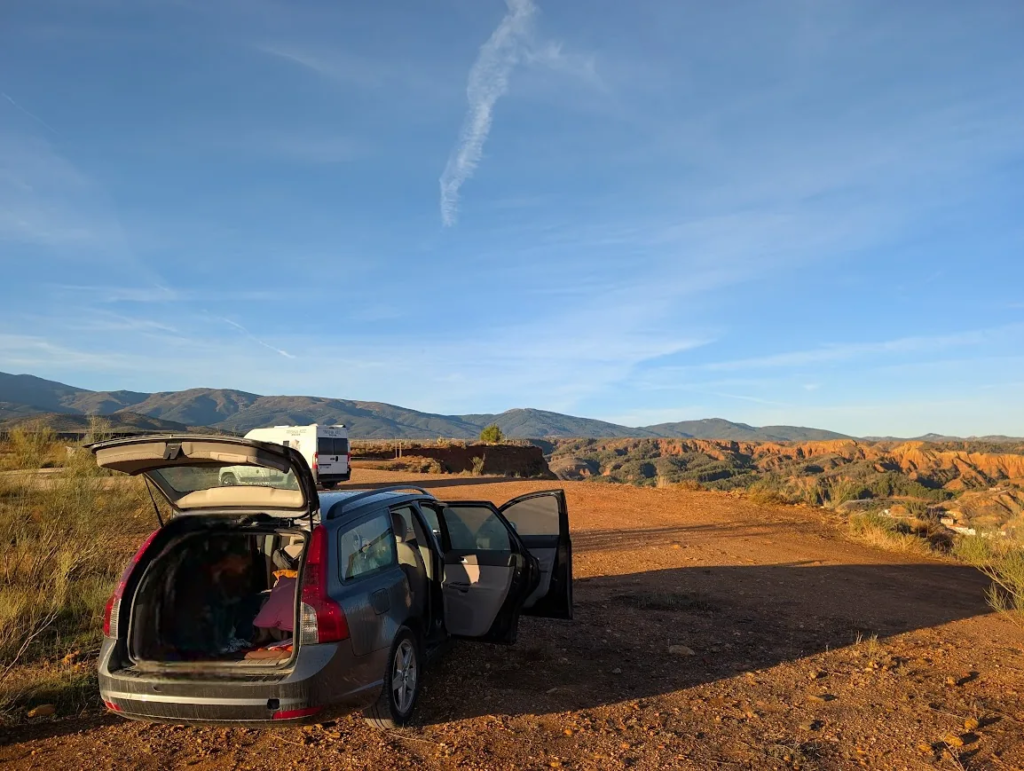
- Legality: Gray area, generally tolerated if you keep a low profile and avoid camping behavior (no chairs, tables or gear outside the car). The Highway Code rules on overnight stays (Law 66/2021, articles 48 and 50-A) are written for “motorhomes or similar.” They ban overnight stays in Natura 2000 areas, protected areas and coastal planning zones, except in authorized places. The law doesn’t define “similar,” so it’s unclear whether a regular car counts. Fines are €60–€300, or €120–€600 in protected zones. Inside parks, the GNR said in 2020 that camping, caravanning and any form of overnight stay outside designated places is an environmental offense, with fines of €200–€36,000. On this route, that applies to Peneda-Gerês National Park, Serra da Estrela and protected Atlantic beaches. Country by country: Is It Legal to Sleep in a Rental Car in Europe? Full guide: Sleeping in Rental Cars.
- Facilities: Public toilets in towns, sparse outside. Lidl was the most reliable option throughout the route – free toilets, easy to find. Some beaches have outdoor showers.
- Overnight Spots: Search park4night for marked spots. I’ve linked my actual sleeping spots in the Route section below.
- Backup Accommodation: Booking.com has the widest (and usually the cheapest) selection in Portugal. Sort by lowest price, filter to 7.0+ to get rid of bad listings.
Food
€86 for two people over 6 days. €7.17/day per person.
We shopped at Lidl – the cheapest supermarket chain in Portugal, present in most larger towns. In some cities in Portugal, Lidl’s parking lot can double up as an overnight spot (check on park4night) and has free toilets. Pingo Doce and Continente are the next cheapest alternatives.
We cooked dinners on a gas stove. Portugal’s official critical fire period runs July 1 – September 30 (though often extended into October), and rules tighten further on very high and maximum risk days. Never use a stove in or near rural areas, forests, or protected zones during this period. Check current risk before cooking outdoors: fogos.pt.
Route
Bragança, Chaves
After leaving Zamora we entered Portugal. The landscape switched from an open plateau to hillier, greener views.
You could also see the immediate change in the architecture: plenty of whitewashed houses with blue azulejos. The first city on the Portuguese side – Bragança – has much narrower and more winding streets than the open squares of Salamanca. We spent a couple of hours walking around the city and taking it all in, with a towering castle on the hill.
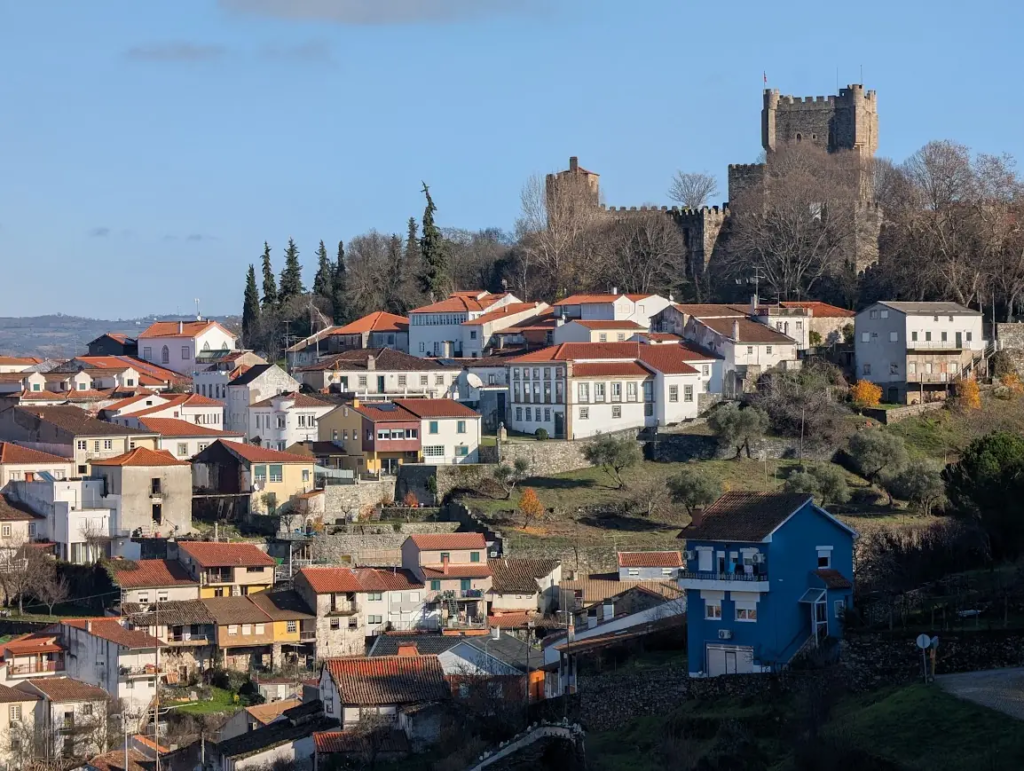
The rest of the day was spent driving west toward Peneda-Gerês National Park with a short stop in Chaves.
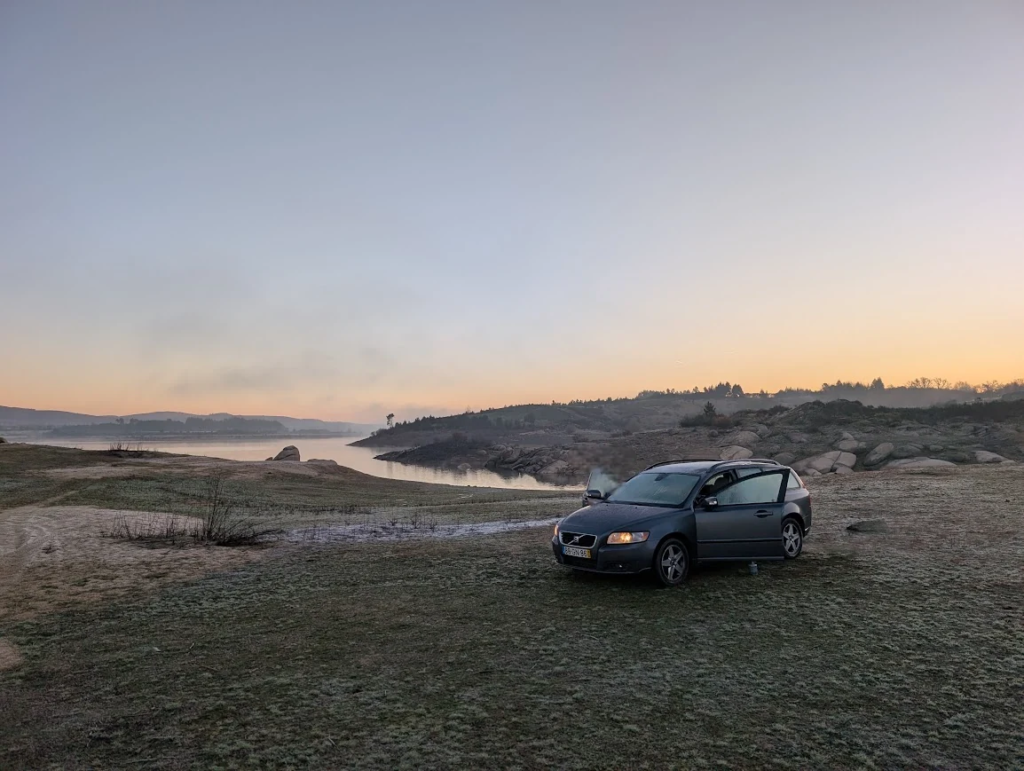
We parked for the night next to the lake in a very peaceful location – we didn’t see anybody around. The frost welcomed us in the morning.
Day 1 – Peneda-Gerês National Park
Most of the day we explored Peneda-Gerês National Park with its many waterfalls and viewpoints. Highlights included Miradouro da Pedra Bela, Cascata do Arado and Cascatas de Fecha de Barjas. We also did a couple-hour hike to Sete Lagoas. The place wasn’t crowded at all in December, even though the day was quite warm – very pleasant for hiking.
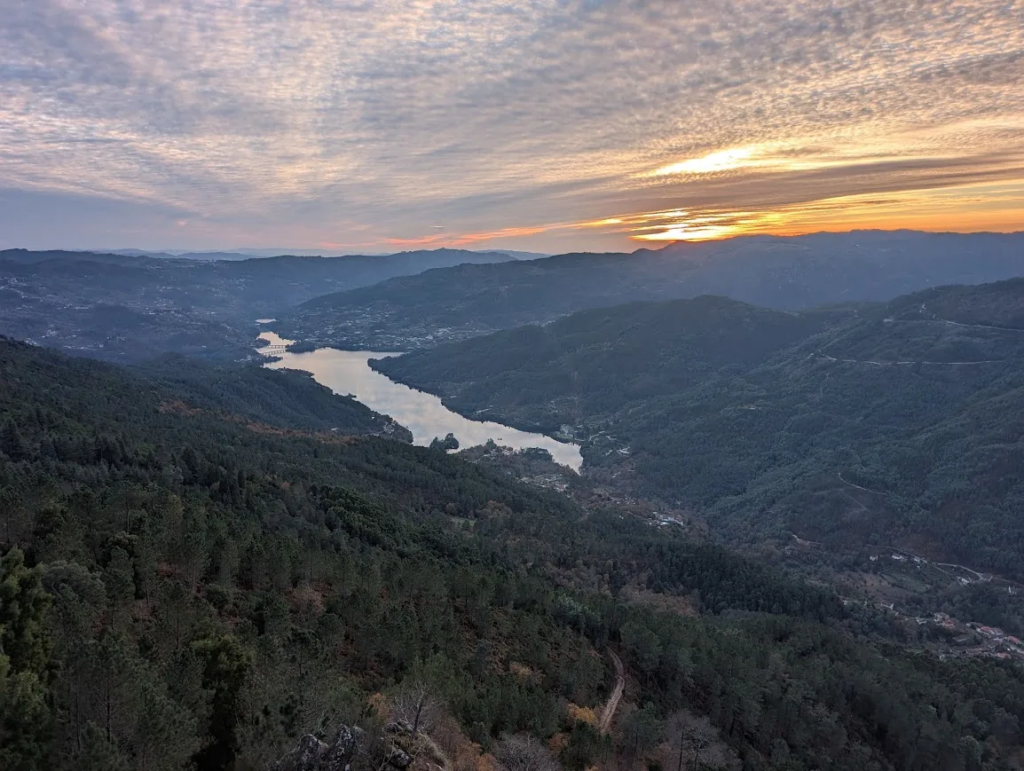
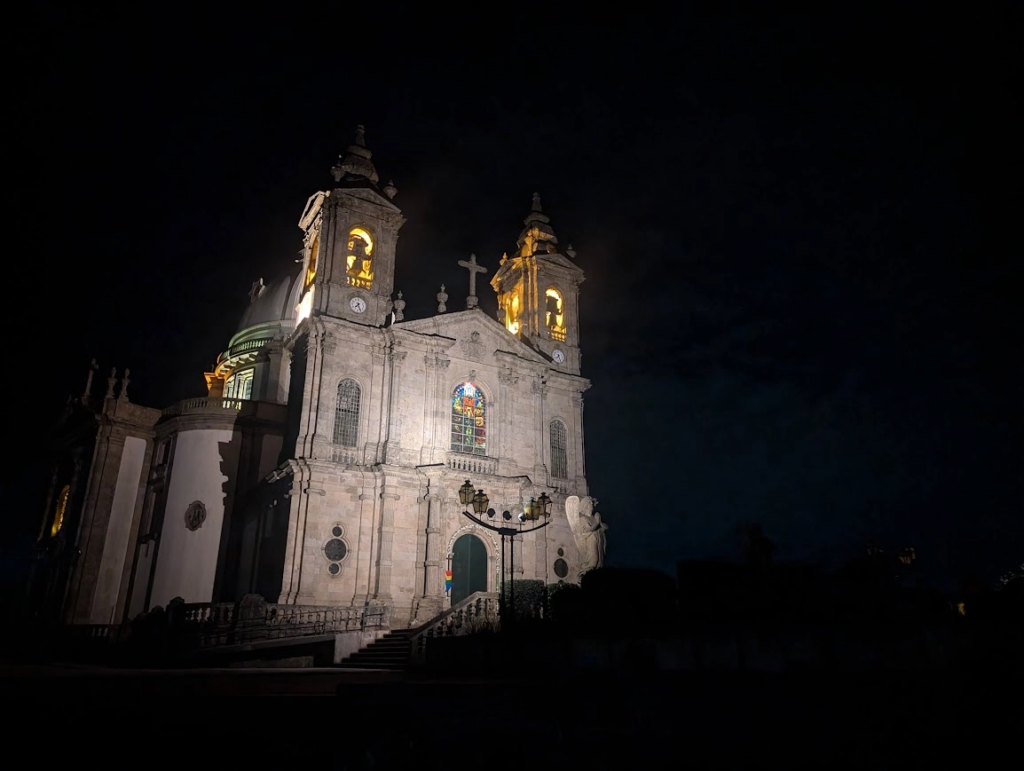
In the evening we drove south, visited the Sanctuary of Our Lady of Sameiro and tried to sleep in the parking lot next to it. Quite a few local cars were going around and hanging out there in the dark, so we got a bit spooked and headed down to another lot – with more lights and actually other campervans. It wasn’t an ideal spot – a bit noisy because of the nearby road – but it was safe.
Day 2 – Braga, Guimarães
Right next to our sleeping spot was Bom Jesus do Monte, a sanctuary on a hill with a famous zigzagging staircase. A UNESCO site and a big pilgrimage destination for the Portuguese. It’s free to visit.
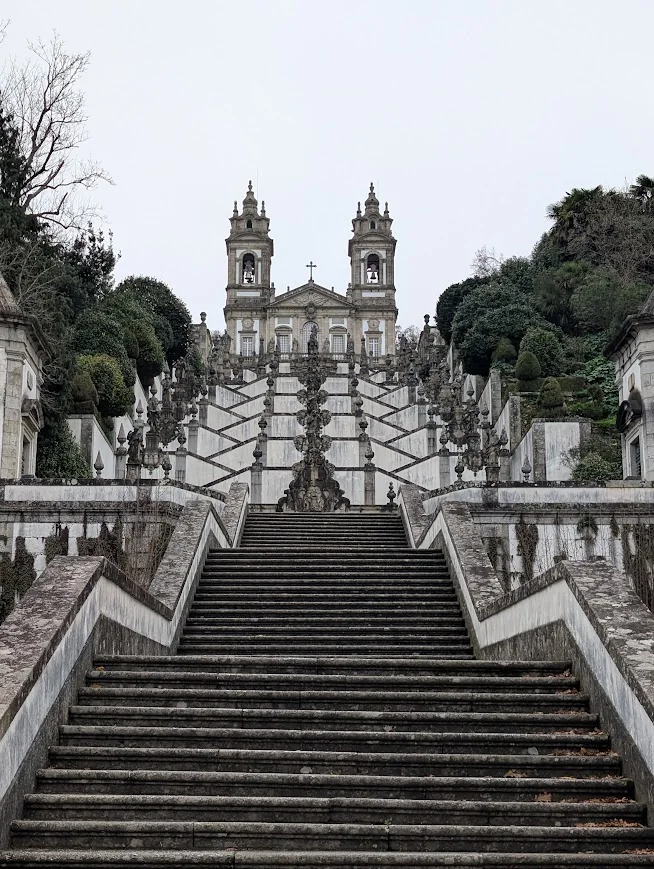
It rained a lot when we were in Braga. Unfortunately, the colder seasons in Portugal tend to get quite wet (lots of precipitation in October–April, peaking in the coldest months, November–January).
We had a bit of a walk around Braga, but didn’t find it to be that interesting. We visited its cathedral (€2 to go in) – much smaller and more modest than the ones we were used to seeing in Spain.
We found Guimarães much more charming than Braga. It has a medieval city center and lots of history. We walked its streets for a couple of hours and also visited Guimarães Castle (not much to see, but you can climb the walls) and the Palace of the Dukes of Braganza (on a combo ticket of €8, otherwise it’s €5 for the castle – not worth it). Tradition says the first king of Portugal was born here.
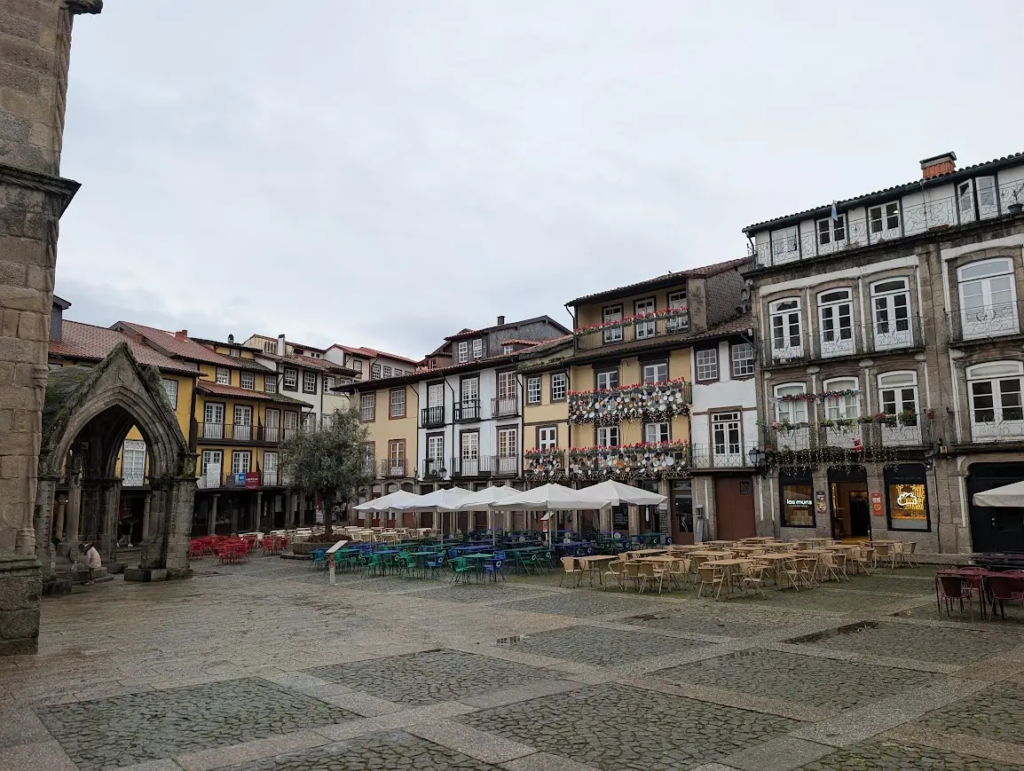
We spent the night at a peaceful pull-off next to a quiet road on our way to Alvarenga, where we wanted to hike a bit.
Day 3 – Alvarenga (Passadiços do Paiva), Furadouro
Our plan for the morning was to do the Passadiços do Paiva hike. If you book online, it’s only €1 for the ticket. Unfortunately, then (and at the time of writing) you could only walk about half of the trail, around 5.5km one way. Still, it was a beautiful boardwalk trail along the gorge of a river. Quite slippery.
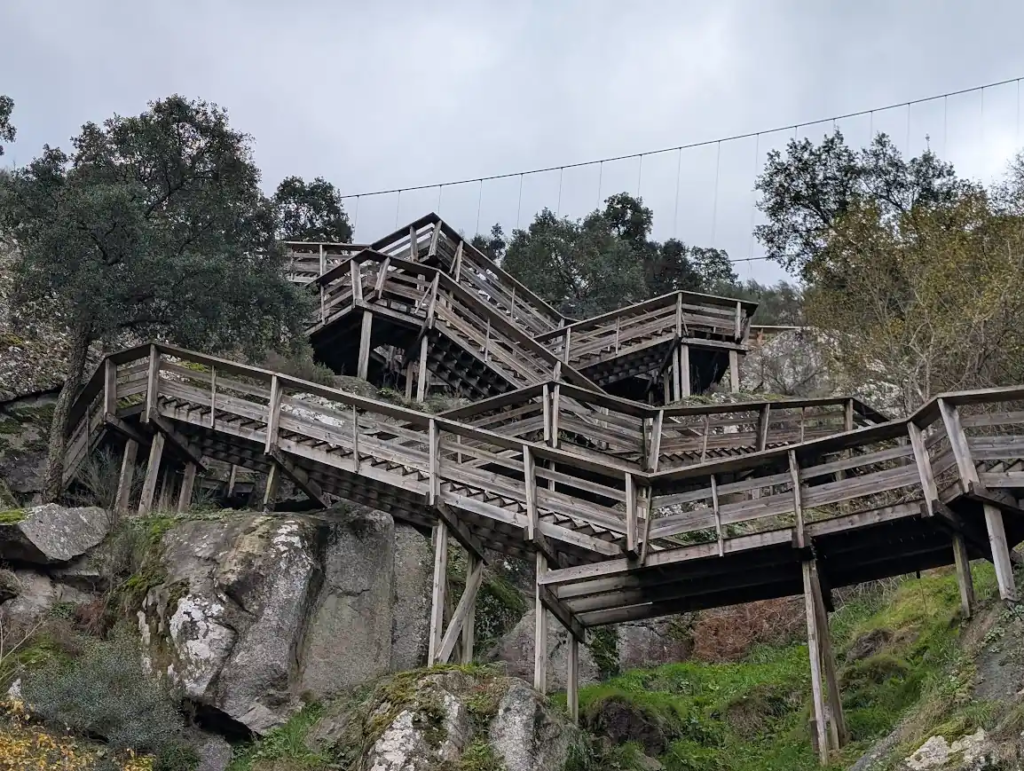
There is a 516m suspension bridge in there, which you can cross for €12. We didn’t, as we’d been on plenty of such bridges before, but it can be quite an experience if you’re not afraid of heights.
After that, we headed west again. We didn’t visit Porto on this trip, as we had been there recently, but this would be a good entry point if you want to go there.
We drove west toward the Atlantic Ocean, passing by Castle of Santa Maria da Feira, and reached Praia do Furadouro, hitting the coast.
We carried on south to Aveiro, where we found a very quiet parking lot without overnight bans (a few other campervans there too, as the Portuguese coast is very popular among them, especially in the warmer months).
Day 4 – Costa Nova, Aveiro, Coimbra, Serra da Lousã (Talasnal)
The next day was busy, and we started rushing a bit more as we already had arrangements made in Lisbon.
We spent the morning around Costa Nova, a coastal village whose colorful houses (Casas Típicas da Costa Nova) appear on a lot of Portugal’s brochures. We also checked out the lighthouse and local beach (Praia da Costa Nova) – very beautiful with all the sandy dunes.
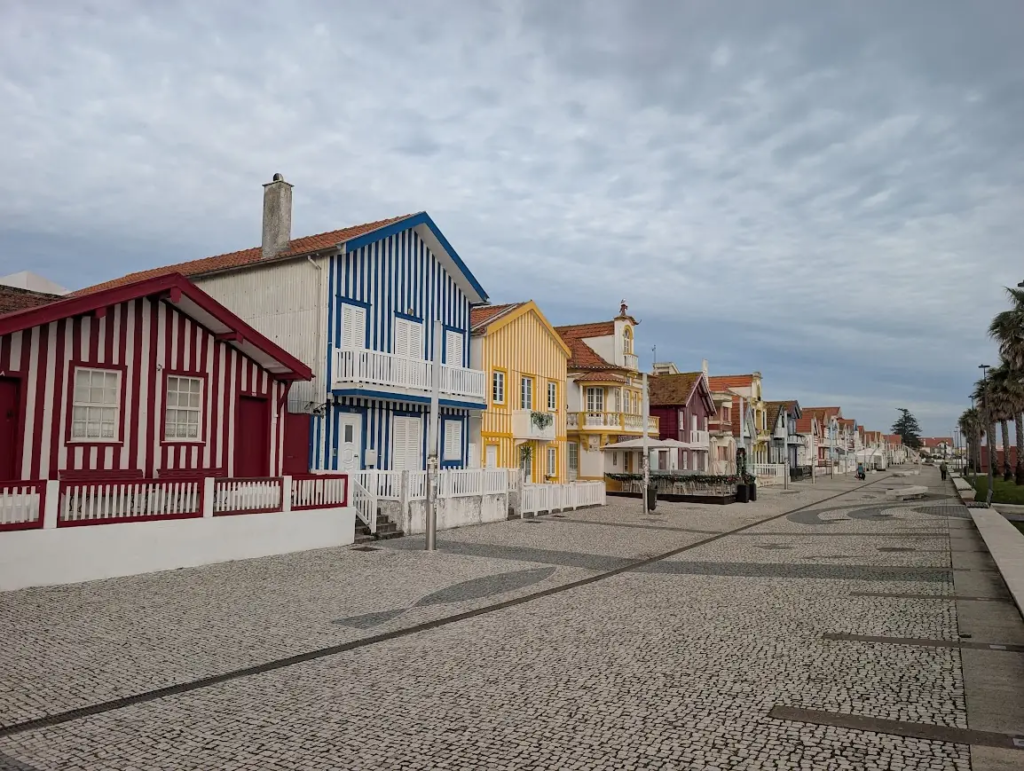
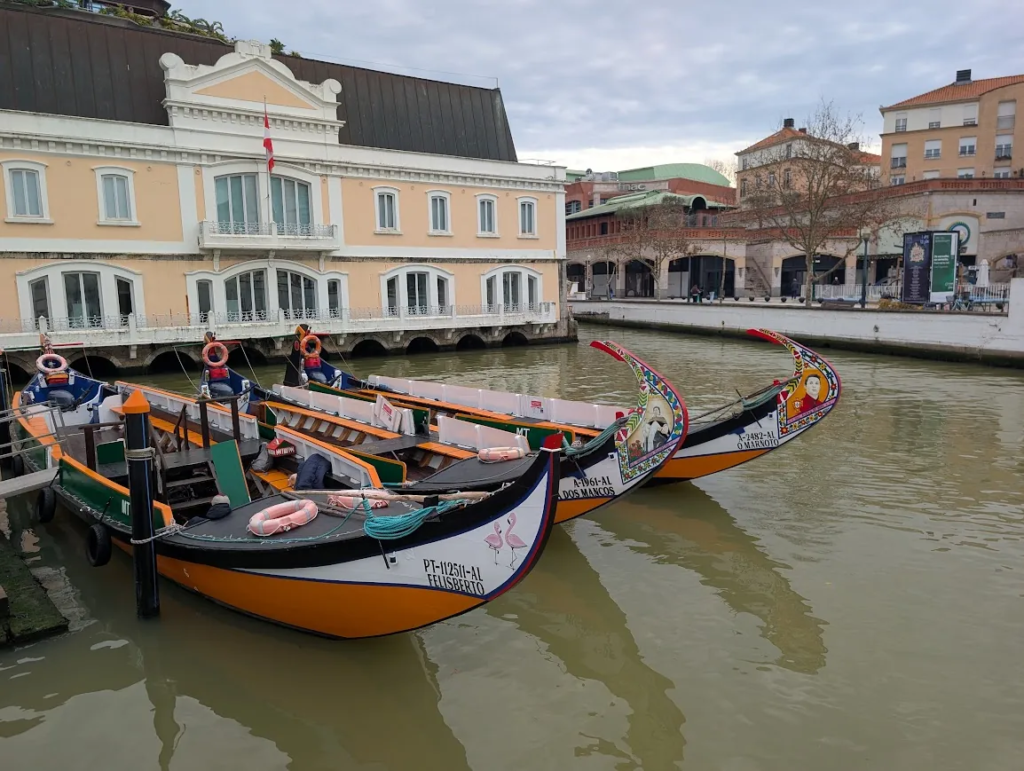
Coming out and driving back east we had a short stop in Aveiro – it’s meant to be the Portuguese Venice due to its canals, but that’s just marketing. You’ll see five main canals there and some gondolas, but obviously the comparison to Venice is a bit ridiculous. Nevertheless, we had a pleasant walk and afterwards started heading south to Coimbra.
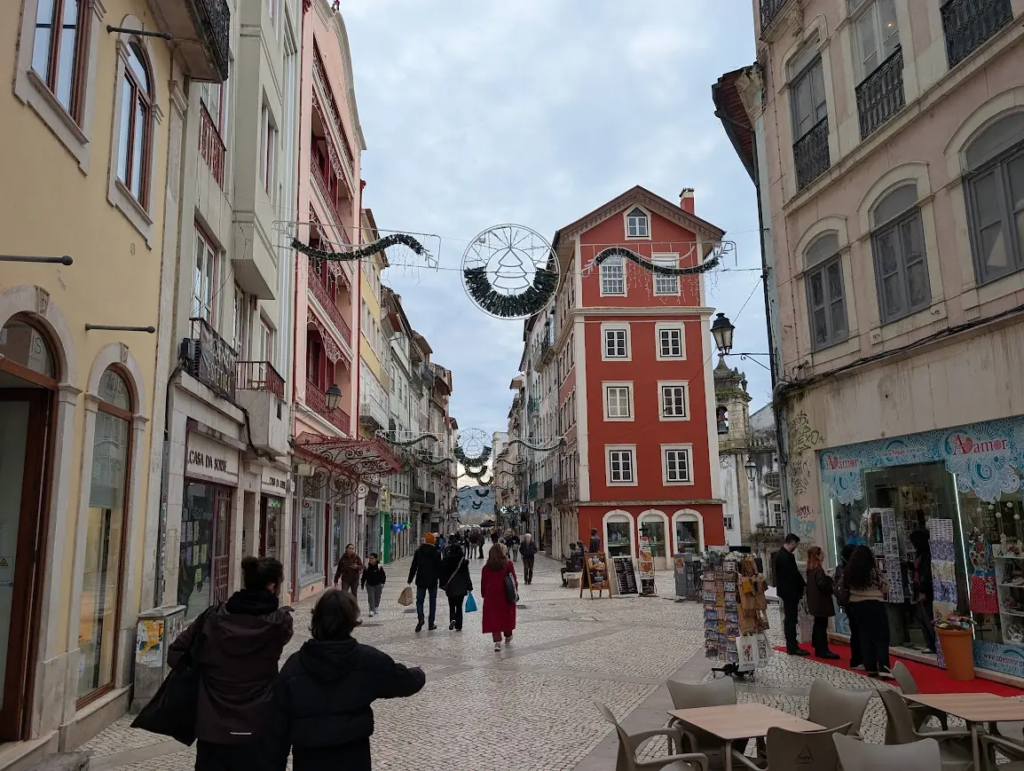
Coimbra might deserve a day on its own. It usually comes recommended right after Lisbon and Porto as far as Portuguese cities go, but we could only spare a few hours there. We saw the local university (Palace of Schools) – one of the oldest operating universities in the world.
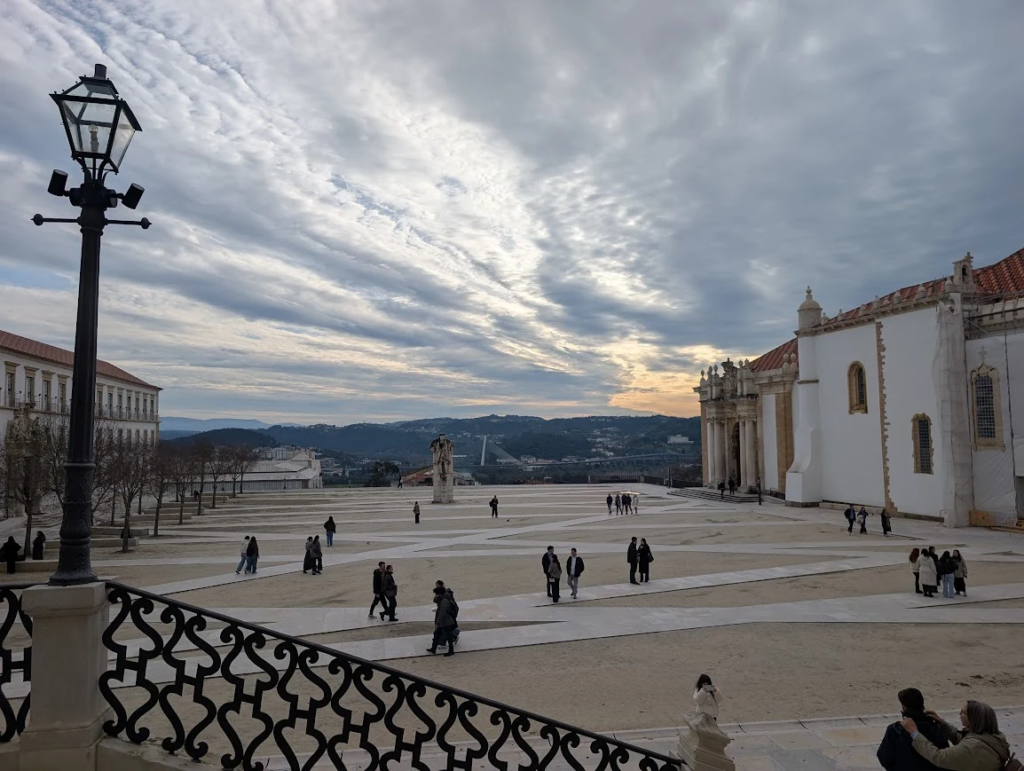
We peeked at the Old Cathedral (Sé Velha de Coimbra). It’s €3 to go inside. The Monastery of the Holy Cross, another important church, is free.
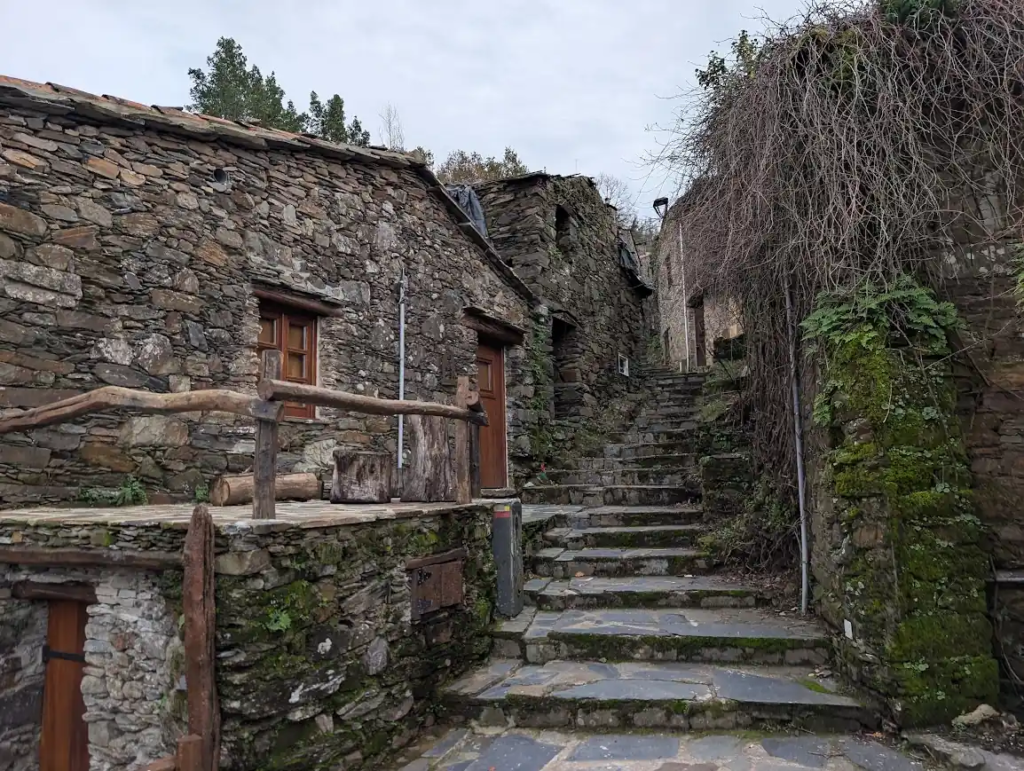
After leaving Coimbra we headed to the mountains of Serra da Lousã, not too far away. They are known for traditional dark stone (schist) villages. We visited a couple – Talasnal and Catarredor. One of them had a big party going on in a restaurant, and there were plenty of Christmas decorations on the narrow streets – you could see the locals put a lot of effort into them. The other village was totally empty, but just as charming.
While in the Serra, we noticed our tire had lost a lot of air. We drove down to Lousã, pumped it up at the gas station and decided to spend the night in the parking lot of the Continente supermarket (as recommended by park4night) and have a look at the tire again in the morning.
Day 5 – Piódão, Serra da Estrela
We woke up to a totally flat tire and had to search for a mechanic. We were afraid it would take a large portion of our day, but the experience was so smooth and cheap. We found a tire shop that could take us in right away. After 20 minutes all was done, and the bill was only €10. We were quite amazed.
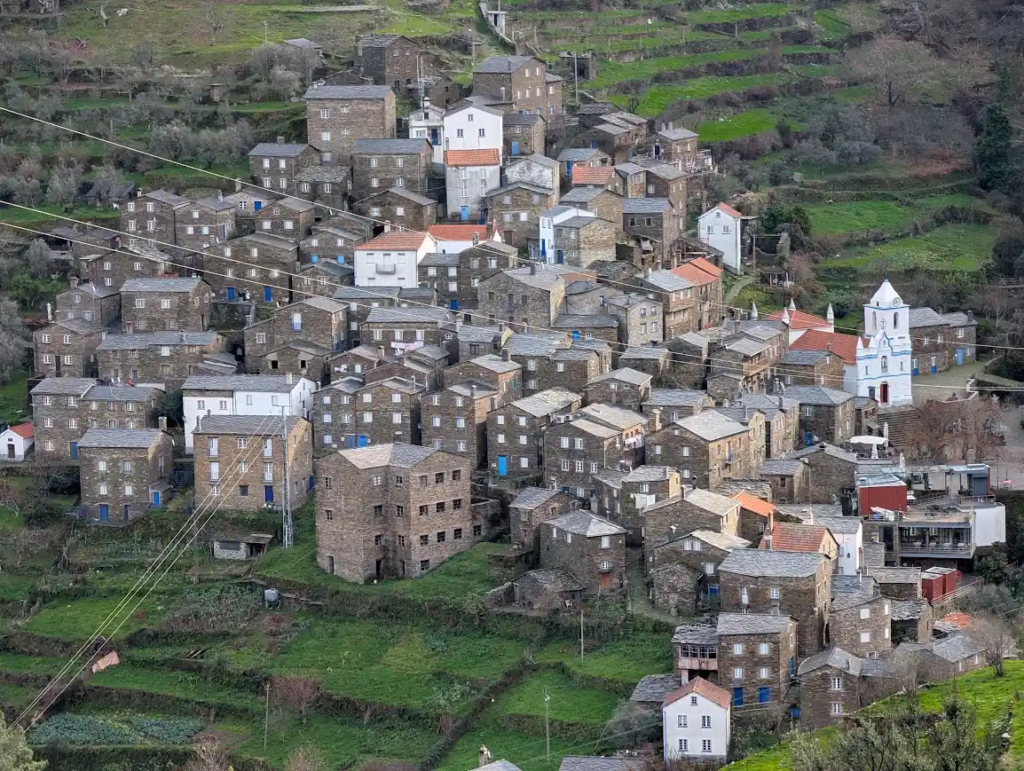
So on we drove, eastward, again. We stopped in Piódão, a mountain village known for its terraced houses, which look like a life-size nativity scene as you approach. The landscape around there is mountainous and beautiful.
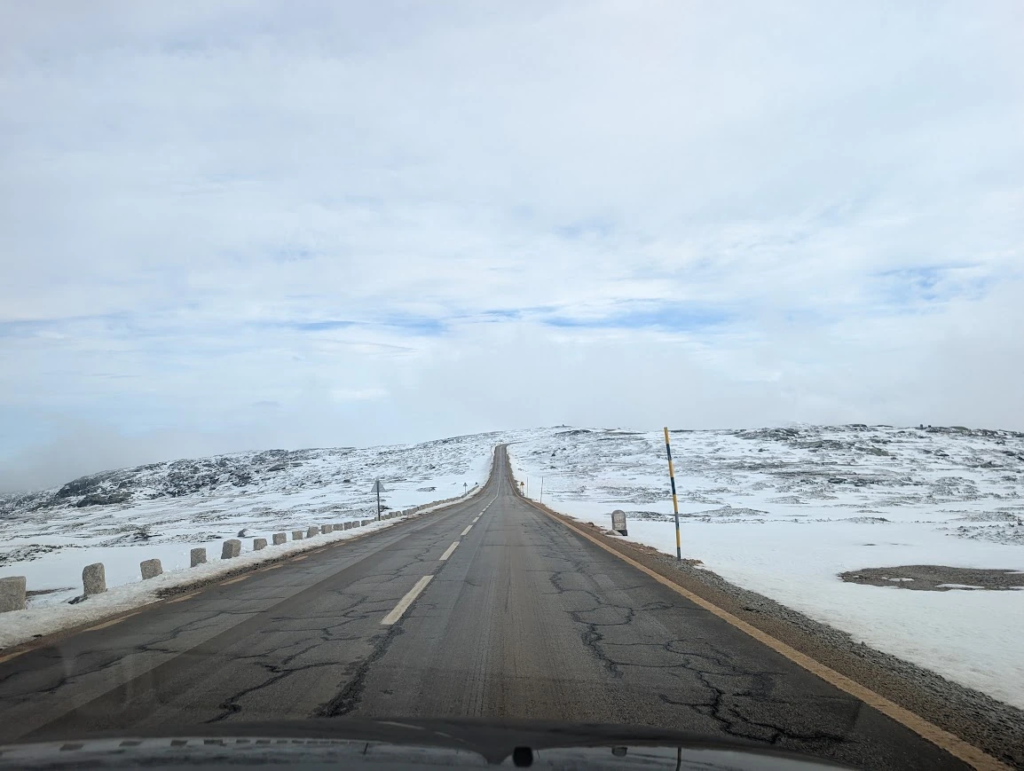
Our main destination for the day (apart from a lot of driving) was Serra da Estrela (the tallest mountain range in Portugal), whose roads were still passable (later in the season they get closed). We drove up through the snow (you don’t see much of that in Portugal), and we really loved how it looked. We tried to do a hike around Lagoa Comprida, but it was so wet that we gave up, not wanting to get our feet soaked in the cold.
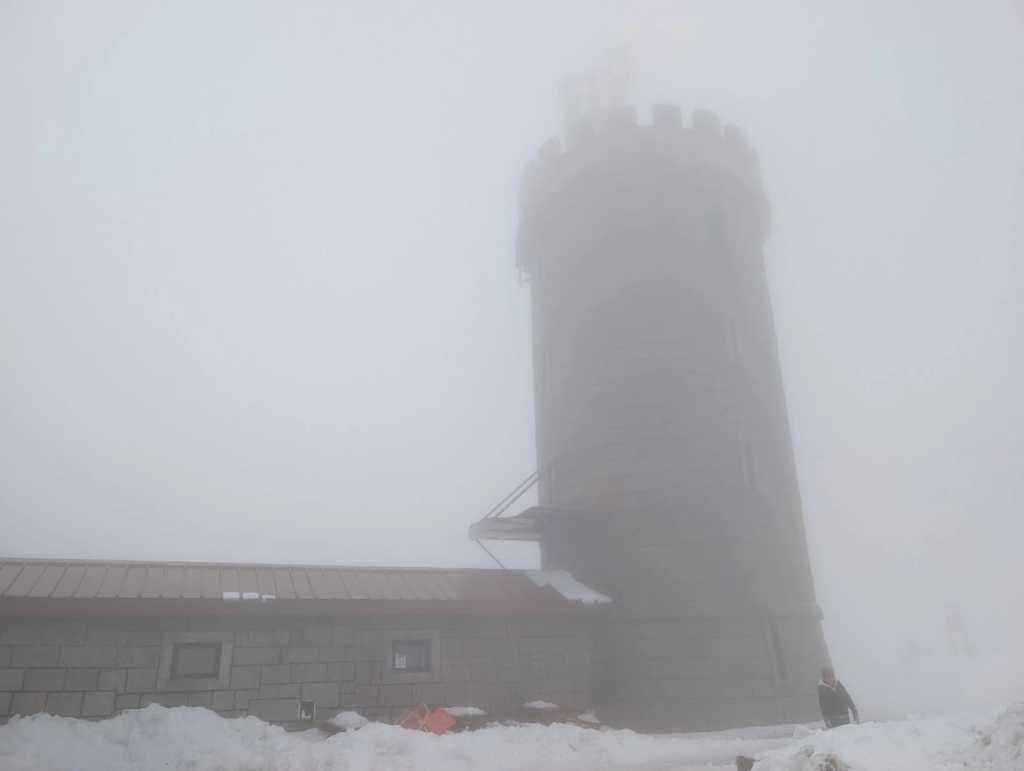
It was a sunny day, and then suddenly, as we kept driving up, we entered the cloud. It got totally foggy and all the views were gone. We reached the highest point of mainland Portugal (Torre at 1,993m), which is essentially on the plateau, not a distinctive mountain summit. There were plenty of local tourists around, but you couldn’t see more than 10–20m away.
After a short hike around there, we started heading south and drove all the way to Marvão, where we spent the night with a couple of other caravans in a parking lot just before the entrance to the town.
Day 6 – Marvão, Évora, Almendres Cromlech
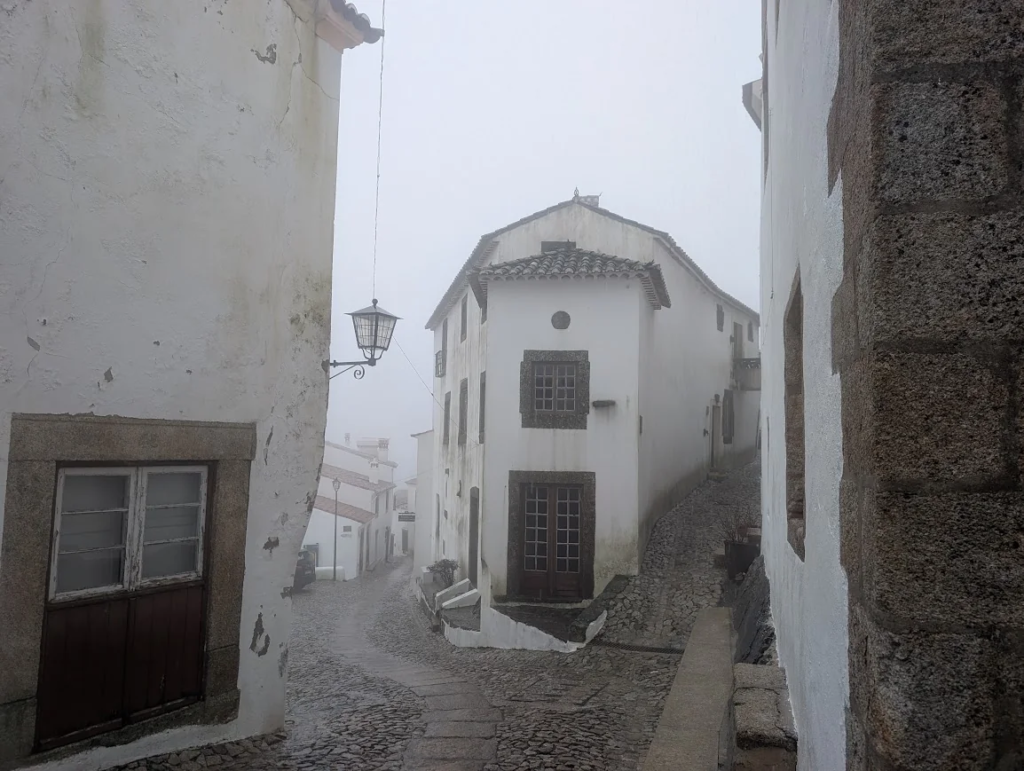
We woke up to total fog. We headed in to explore Marvão, but the weather was miserable and we could barely see its castle. The town seems really pretty with its narrow whitewashed streets, but we couldn’t experience much of it.
Trying to escape the bad weather, we headed down to Évora, and it worked.
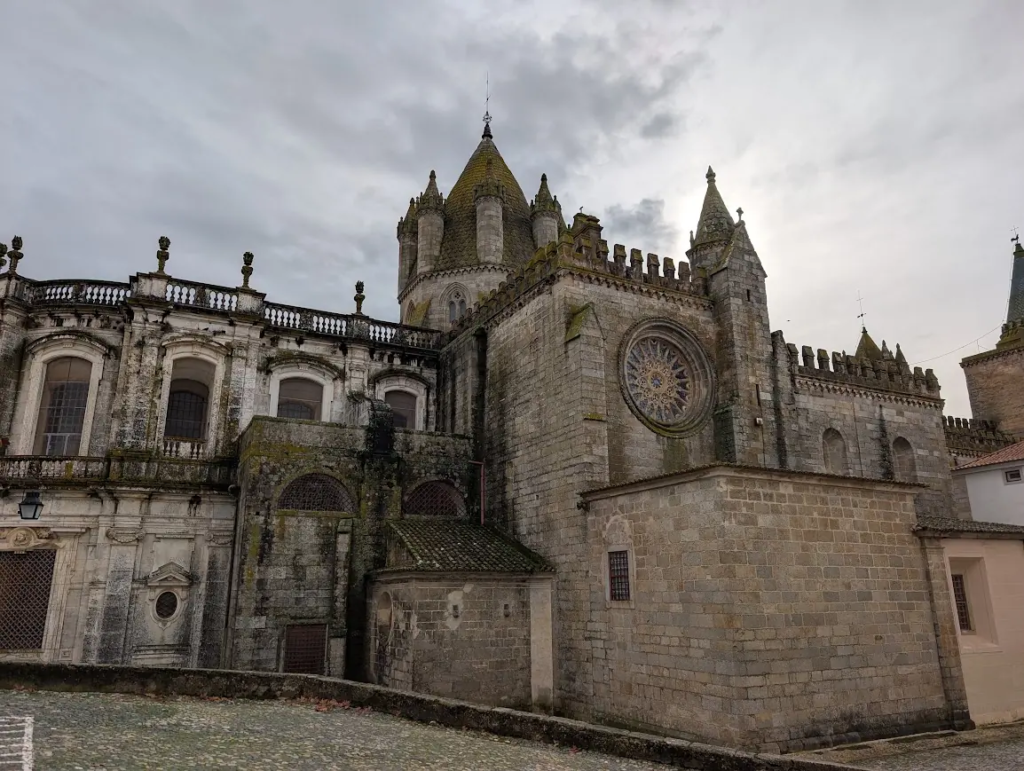
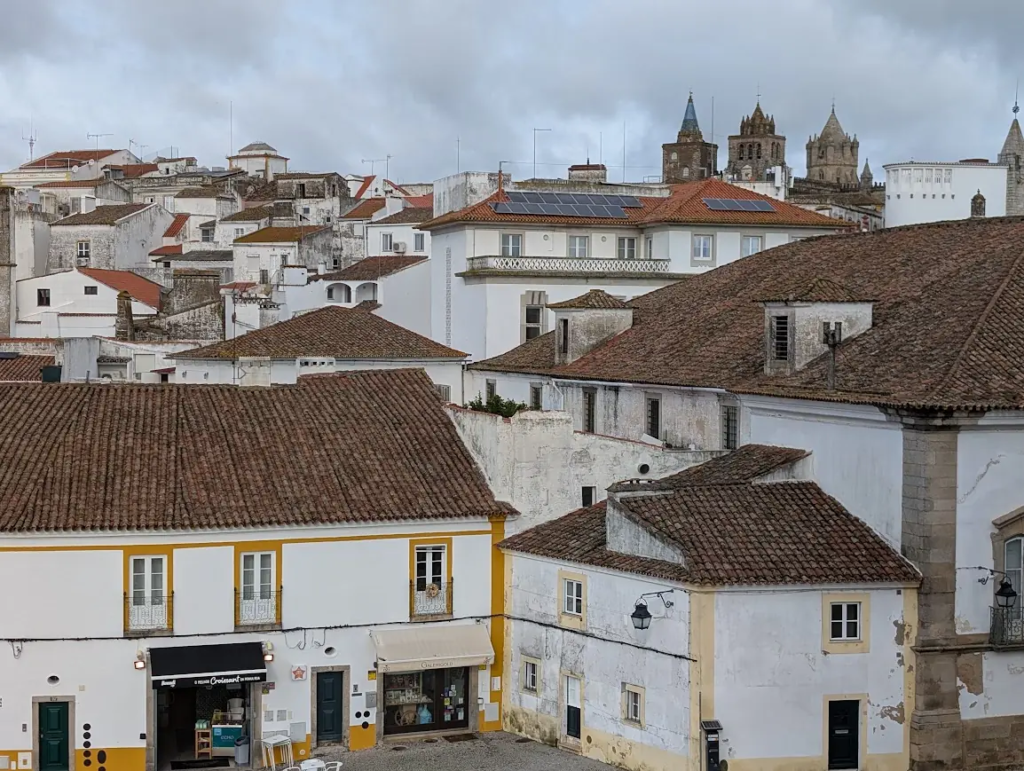
We spent a few hours in the city, with the landmarks including the Roman Temple of Évora (or what’s left of it – a piece of a monument on the square) and Chapel of Bones (€6 to enter) – very interesting if you hadn’t seen one of these before. Évora, dominated by white limewashed houses, is a very typical Portuguese city.
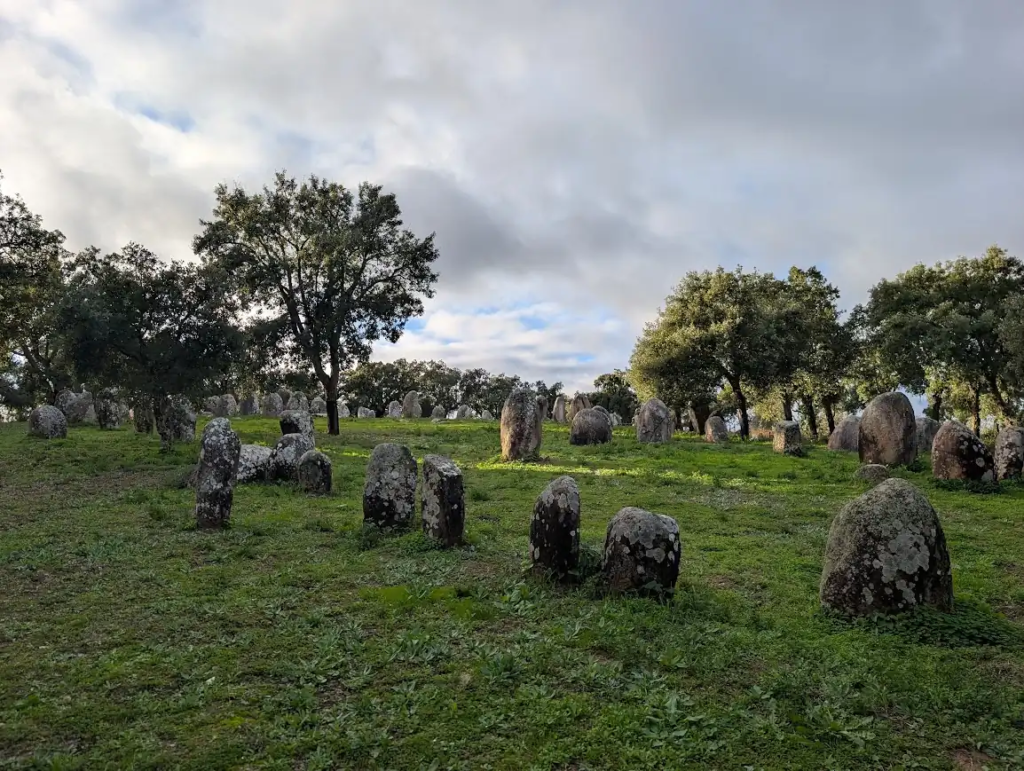
After Évora, we headed west toward Lisbon. The only things left for us to check out were the megalithic monuments, which are plentiful in the area. The main one is Almendres Cromlech, around 8,000 years old, one of the largest and oldest megalithic stone circles in Europe. It’s free to get to, but the road is in a very bad condition. It’s about 4km of dirt road with massive potholes and water puddles when it rains. We were fine in our car, but had to take it super slow (10–20km/h). We saw some people stopping midway and walking the rest of the way.
Later we also stopped to check out another megalithic monument – Great Dolmen of Zambujeiro. The access is much easier – you have to walk through some private fields, but they let you.
In the evening we headed to Lisbon, where our 2–3 month trip ended.
Season
We visited in December, in the middle of the wet season. Precipitation in Portugal runs October–April and peaks November–January. Unfortunately, it showed: rain in Braga, and fog on top of Serra da Estrela (visibility 10–20m) and again in Marvão, where we could barely see the castle.
The upside was the lack of crowds. Peneda-Gerês wasn’t crowded at all, and the day was warm enough for hiking. Nights were cold, with frost by the lake on the first morning. Serra da Estrela had snow, and its roads were still passable (they get closed later in the season). The villages in Serra da Lousã already had their Christmas decorations up.
Low season suited us: empty trails and free parking everywhere. Expect a couple of wet days. I’d avoid July–August for peak crowds and heat.
Practical
Currency
Euro. Cards are accepted almost everywhere, but carry some cash for parking attendants or street vendors. If you’re coming from a non-euro country, use Revolut to avoid conversion fees. There’s a 1% weekend markup, but you can avoid it by exchanging currencies in the app beforehand.
SIM
Any EU SIM works under Roam Like at Home – no need to buy a local one. If you don’t have one, check eSIMDB, filter by the amount of data you need and your trip length, then sort by price.
Lyca Mobile Portugal periodically runs a 50GB for €4/month promo – worth checking before buying anything else.
Language
Portuguese. English is widely spoken in hospitality and tourism, but not reliably outside of it. Learn a few basics: bom dia – good morning, boa tarde – good afternoon, olá – hello, obrigado/obrigada – thanks (male/female).
Tips Summary
- Cheapest Car Rentals: Search via DiscoverCars. Small cars at Lisbon Airport from €52.49/7 days (€7.50/day) at the time of writing.
- Sleeping in a Car: Tolerated in Portugal as long as you keep a low profile. No chairs, tables or gear outside the car.
- Protected Areas: Overnight stays are banned in national parks, nature reserves and coastal protection zones. That covers Peneda-Gerês, Serra da Estrela and protected Atlantic beaches. Fines start at €200 as an environmental offense, and at €120 under the road code for motorhomes or similar.
- Overnight Spots: Pick lit parking lots with other campervans over empty ones. We left a dark lot near Sameiro after local cars kept circling, and the second one was safe.
- Tolls: Stick to free national roads. In a rental car, expect a Via Verde device fee of €1.50–€5.00 per day on top of actual toll usage.
- Cheap Fuel: Use Auchan and Intermarché stations. Diesel was around €1.55/l in December 2025. Check prices in Waze or Google Maps.
- Food: Shop at Lidl. We spent €7.17/person per day, and the toilets are free.
- Passadiços do Paiva: Book online for €1. Only around half of the trail (5.5km one way) was open at the time of writing. The 516m suspension bridge costs another €12.
- Almendres Cromlech: Free, but the last 4km is a dirt road with massive potholes. Drive 10–20km/h.
- Flat Tire: We paid €10 for a patch at a tire shop in Lousã, done in 20 minutes.
- Season: December is wet, with fog in the mountains. Serra da Estrela roads were open in snow, but they close later in the season. Low season means empty trails.
The Budget System
I keep daily travel costs under €30 using two methods:
● €3/Day Rental Car Guide
● Sleeping in Rental Cars
One week of travel cost me less than a day of work in Australia.