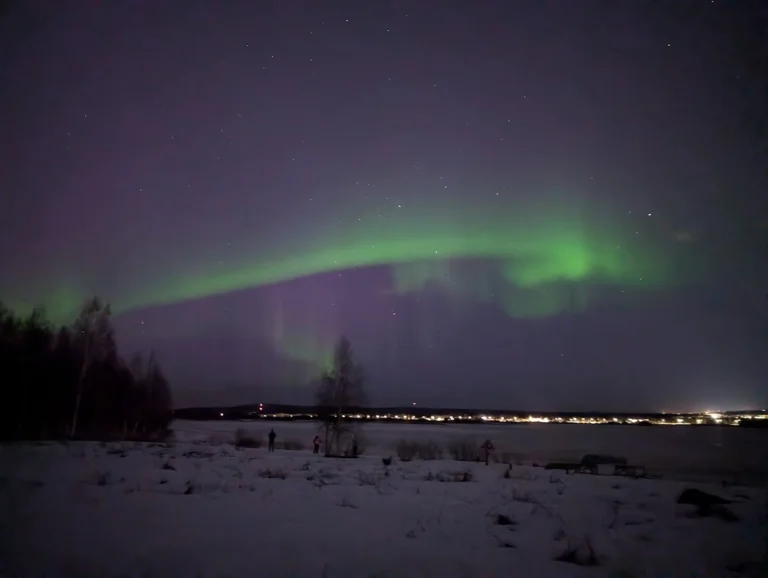
Southern France & Andorra on €24/Day: Sleeping in the Car
Carcassonne, free hot springs in the Pyrenees, and a snowy mountain pass into Andorra. Four days in southern France at €24.23/day:
TRIP STATS
- DAILY RATE: €24.23 (per person)
- SLEEP: Sleeping in Car (3 nights), Hotel (1 night)
- BY: Car
- PEOPLE: 2
- DAYS: 4
- TOTAL: €193.81
- CURRENCY: Euro (€)
- DATE: November 2025
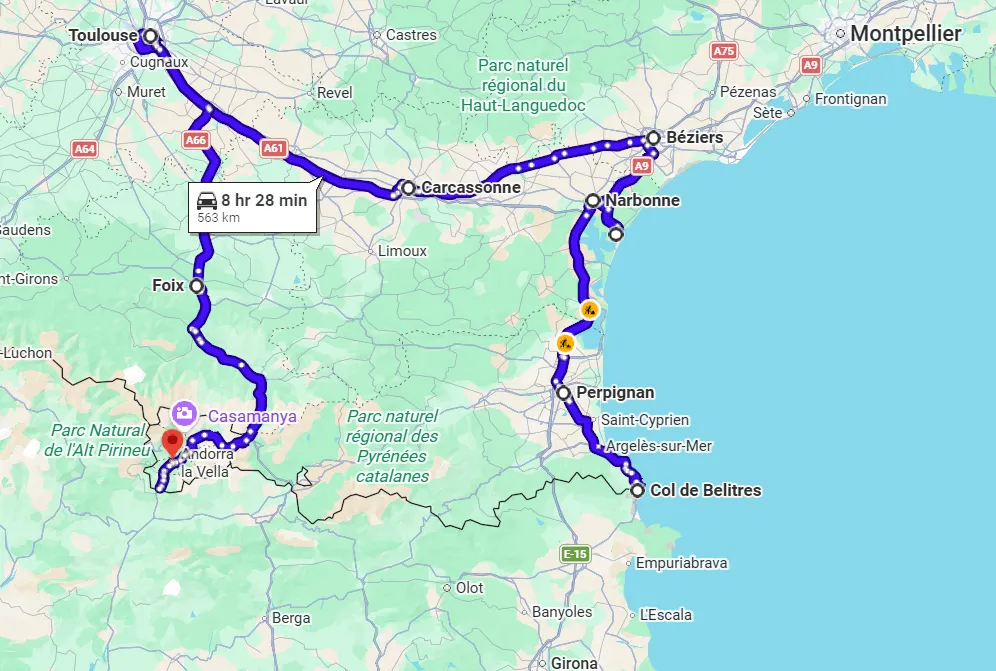
- ROUTE: Perpignan → Narbonne → Béziers → Carcassonne → Toulouse → Foix → Andorra
- TOOLS: DiscoverCars, park4night, Revolut, Lidl
| ITEM | COST (2P) | NOTES |
|---|---|---|
| Stay | €38.81 | 3 nights: Slept in the car (€0/night) 1 night: Hotel in Andorra (~€39/night) |
| Fuel | €69.00 | €17.25/day. |
| Food | €52.00 | €6.50/person per day. Shopped at Lidl. |
| Sights | €34.00 | Per person: €13 – Cité de Carcassonne (low season) €4 – 2 metro tickets in Toulouse |
| TOTAL | €193.81 | 4 days at €24.23/day per person |
How €24.23/day per person compares to my other trips: Budget Travel Cost per Day.
Getting There
We drove into France (and later Andorra) from Catalonia (Barcelona and Girona), and later carried on back into Spain towards Lleida, Zaragoza and Madrid. This was part of our 52-day trip through Spain, Portugal and France.
- Previous leg: Barcelona & Catalonia on €22/Day: Free Montserrat Tickets
- Next leg: Central Spain on €18/Day: Madrid & 5 Nights Sleeping in Car
- Full trip: Spain, Portugal & France on €19/Day
Flying to Toulouse
If you’re flying in for this leg, your entry point would be Toulouse–Blagnac Airport (TLS). If you’re flexible with dates and travel with a small carry-on, Ryanair, easyJet, and Volotea offer flights under €20 to Italy, Spain, the UK, Belgium, Morocco, Portugal. You can fly under €50 to most European countries. These deals are mostly possible through open-date searches on Skyscanner.
Full list of what I pack and more carry-on rules: Sleeping in a Rental Car Packing List.
Car Rental at Toulouse Airport
We did this trip in our own car, so I can’t comment on rental providers. If you’re flying into France, these are the current prices and things worth knowing:

- Current Prices: Small cars at Toulouse Airport from €140.54/week (€20.08/day) at the time of writing via DiscoverCars (my review). Full European Car Rental Price Comparison.
- Excess: Decline the desk insurance. Cover it with an independent policy like Cover4Rentals instead: €3/Day Rental Car Guide.
- Tolls: We stuck to free roads throughout, same as always – slower than the autoroutes, but better for actually seeing the country instead of going past it. French autoroutes are tolled by distance (roughly €0.10/km), but a free national/départementale road runs parallel to almost every one.
- Fuel: Load up in Spain before crossing into France, then top off again in Andorra – you don’t need to fill up in France at all if your tank’s big enough. In November 2025, diesel in France averaged around €1.65–1.70/L, while Andorra ran about €1.20–1.30/L, roughly 25–30% cheaper. For checking prices while driving, use France’s official government tool, prix-carburants.gouv.fr – every station above a certain sales volume is legally required to report, so it’s the most reliable source, not crowdsourced. Waze also shows fuel prices, but those are entered by users, so they’re less reliable. More fuel tricks: Budget Travel Tips.
- Parking: We skipped driving into Toulouse entirely. Parked at the Ramonville Park & Ride, the end of metro Line B (the closest one coming from Carcassonne), and took the metro in. Parking there is free for up to 24 hours as long as you validate a transit ticket within the hour before you exit – so the ride in effectively covers the parking too.
- Parking lines work differently than in Spain. France marks the rules with painted lines on the road or kerb edge, plus signs. Blue lines here mean the opposite of Spain: free parking, but time-limited. Display a disque de stationnement (a cheap cardboard disc from any tabac) set to your arrival time, and you get 1–2 hours free, per the limit on the zone’s sign. Outside the enforced hours (commonly 9am–6pm on weekdays, varies by town), no disc needed. A solid yellow line means no stopping or parking, a dashed yellow line means no parking (short stops are allowed). White bays or unmarked spaces aren’t automatically free like in Spain – check for a “Payant” sign and a meter.
- Low Emission Zone: Toulouse has one (ZFE). Since January 2023, passenger cars with a Crit’Air 4 or 5 sticker, or no sticker at all, are banned from driving and parking inside it. At the time of our trip, Crit’Air 1–3 cars could still enter. Every vehicle technically needs a Crit’Air sticker to enter (€3.77, ordered online), but parking at Ramonville and taking the metro in meant we never needed one.
- Winter Equipment (Nov–May): Andorra legally requires winter tires (or snow chains present in the car) on every vehicle, every road, from November 1 to May 15 – regardless of whether it’s actually snowing that day. Winter tires need the M+S or 3PMSF (mountain/snowflake) marking. Chains are the fallback if you’re on summer tires (you can get them for €30 at Carrefour). Checkpoints are common at the border crossings from both Spain and France, and fines for passenger cars start around €180. Conditions and active restrictions (Andorra uses a color-coded alert system – green/yellow/red per road) are published live at mobilitat.ad – worth checking before you cross.
Sleeping in a Car in France
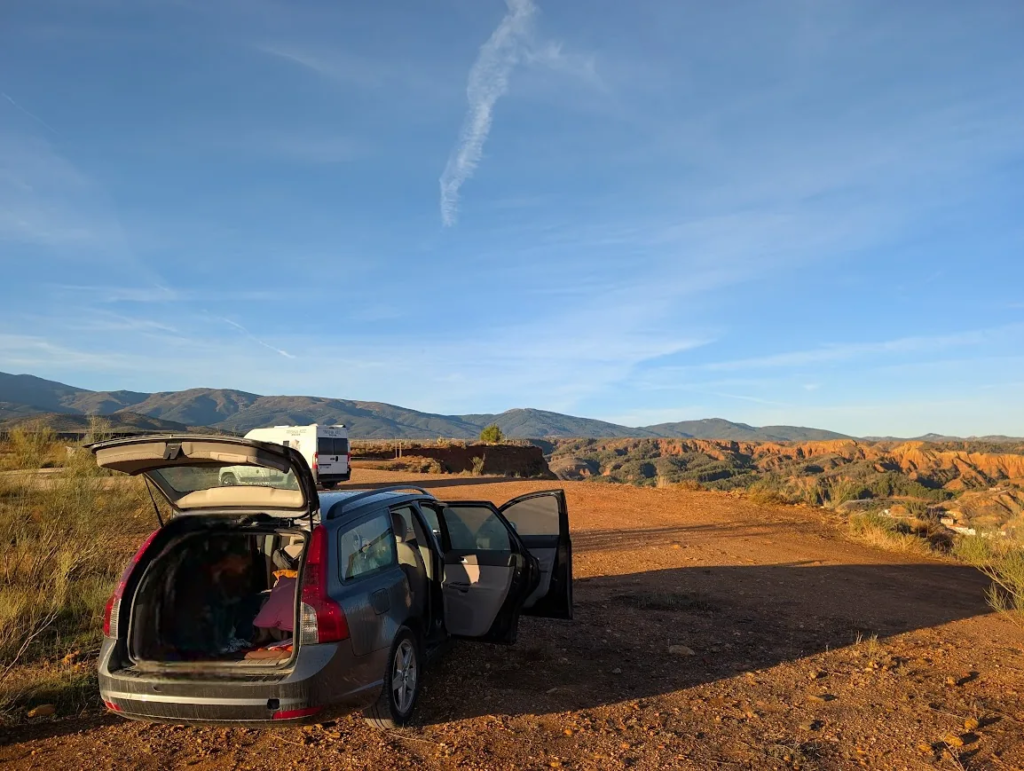
Volvo V50. 4/5. Spacious.
Long car, plenty of room for two. Rear seats folded fully flat – no step. One issue: a fixed metal bar ran across the top of the folded seatback. At 190 cm, the bar pushed my feet up slightly. An inflatable mat mostly fixed it.
Full sleeping audit: Best Rental Cars to Sleep In.
- Legality: Sleeping inside a legally parked car in France counts as parking, not camping, so it’s fine. Setting anything up outside the car (table, chairs, stove, awning) turns it into wild camping. Code de la route art. R.417-12 caps parking in one spot at 7 consecutive days, though most municipalities cut that down to 24 hours by local order. Mayors can also restrict overnight car-sleeping by municipal decree – Paris, Nice, Lyon and Biarritz are the cities most often named – so check the signs. Several French guides also say sleeping in a car inside national and regional parks is treated as wild camping. Country by country: Is It Legal to Sleep in a Rental Car in Europe? Full guide: Sleeping in Rental Cars.
- Facilities: Better than Spain on this front. French autoroutes are required to have a rest area (aire de repos) roughly every 15–20 km. Off the autoroute, supermarkets (Lidl, Intermarché, Carrefour, E.Leclerc) work the same way they did in Spain – free, easy to find, open during business hours.
- Overnight Spots: Same tool as Spain – park4night, which is actually a French company (founded 2011), so unsurprisingly it has the best spot coverage here of anywhere in Europe. I’ve linked to the ones we stayed at in the Route section below.
- Backup Accommodation: Booking.com still has the widest selection in France, including smaller establishments that don’t run their own booking sites. Sort by lowest price, filter to 7.0+ to cut the bad listings.
Food
€52 for two people over 4 days. €6.50/day per person.
Supermarket rankings work differently than Spain. Lidl and E.Leclerc are the two real contenders for cheapest in France – independent price comparisons put them within 2–4% of each other depending on region and product mix, so which one wins varies by store. Aldi is present too. Intermarché sits close behind. Carrefour and Auchan are bigger but pricier. Monoprix is the one to actively avoid if budget’s the goal.
We cooked meals and made coffee on a gas stove. France restricts outdoor fires and open flames within 200 m of forests year-round in most departments, with tighter préfecture-issued bans kicking in during high-risk periods, commonly mid-March to end of September. Check the current risk before cooking outdoors: Météo des Forêts (Météo-France’s official daily fire-risk map, color-coded green to red).
Route
Day 1 – Collioure, Perpignan
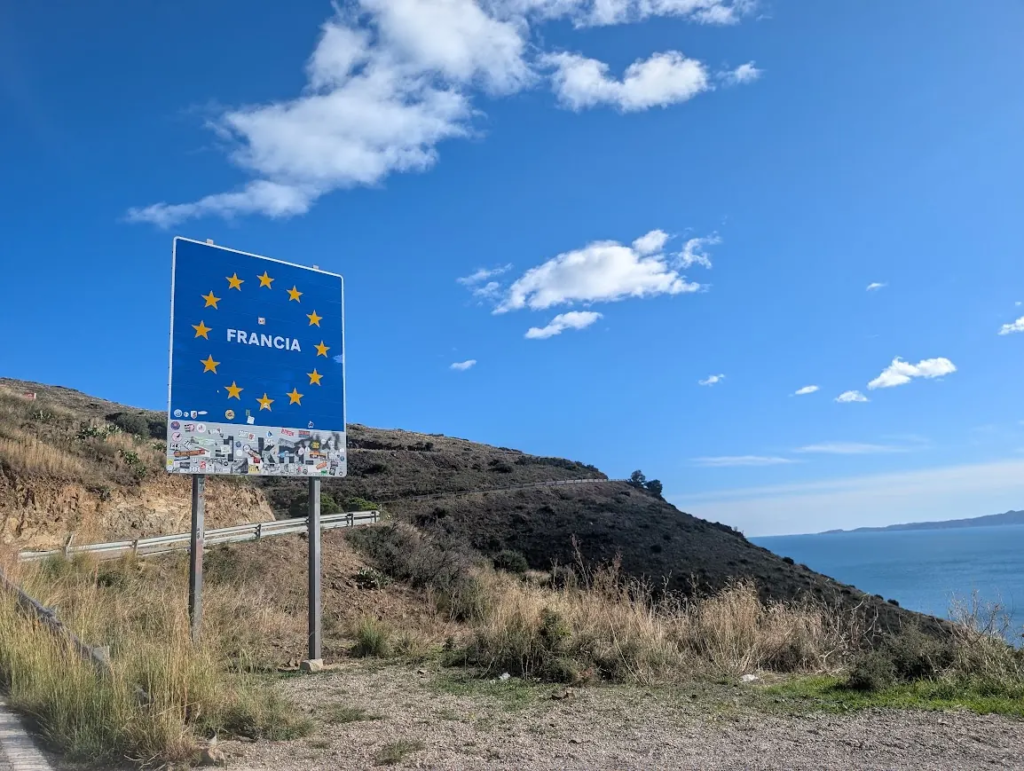
We drove into France’s southwest from Catalonia, where our last stop before the border was Figueres, the birthplace of Salvador Dalí. The route we took was the coastal N-260, very empty and winding, but beautiful.
Our first stop in France was Collioure, and we could definitely feel the change of architecture styles already. We had a pleasant walk among its colorful streets and around the castle – there are plenty of castles in the area.

The other stop of the day, before our first night in the car in France, was Perpignan with its Palace of the Kings of Majorca – you can have a walk around for free, and if you want to go in, it’s €9. Another landmark in the area worth considering is Salses Fortress.
Most publicly run French sights are free for EU residents aged under 26.
Day 2 – Narbonne, Gruissan, Béziers
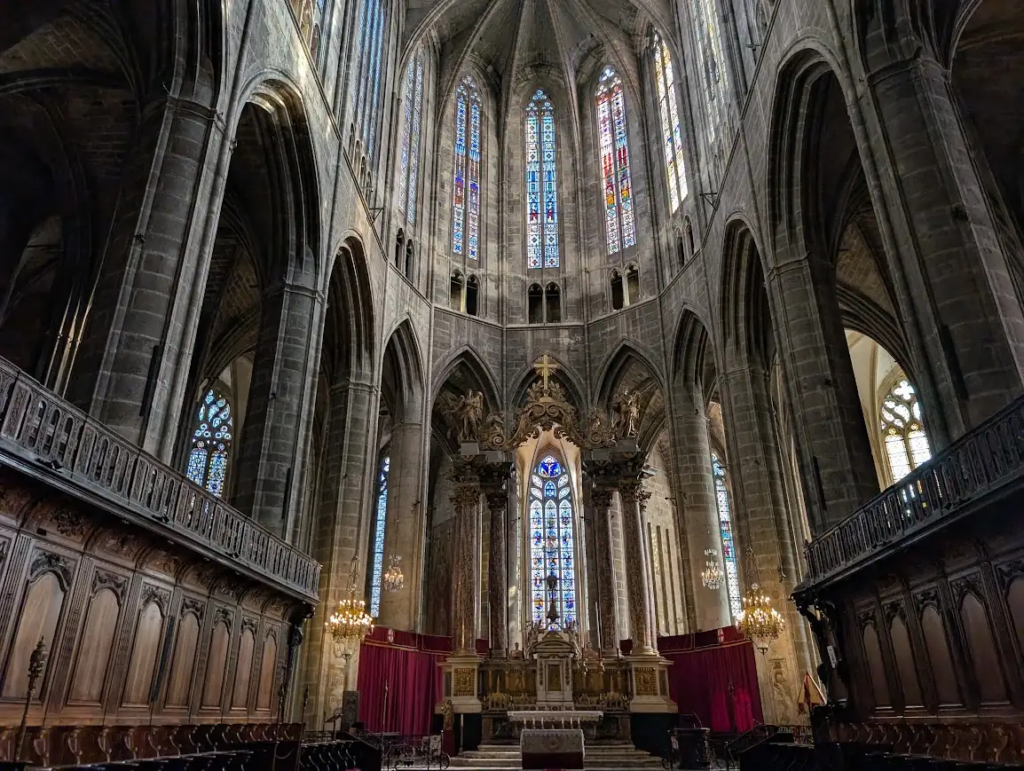
After sleeping in the car, the next morning we headed to Narbonne. There’s a beautiful cathedral there, in High Gothic style. Most of the French cathedrals are free to visit (including the ones in this area), but be careful with timing as they also close for 1–2 hours at lunch.
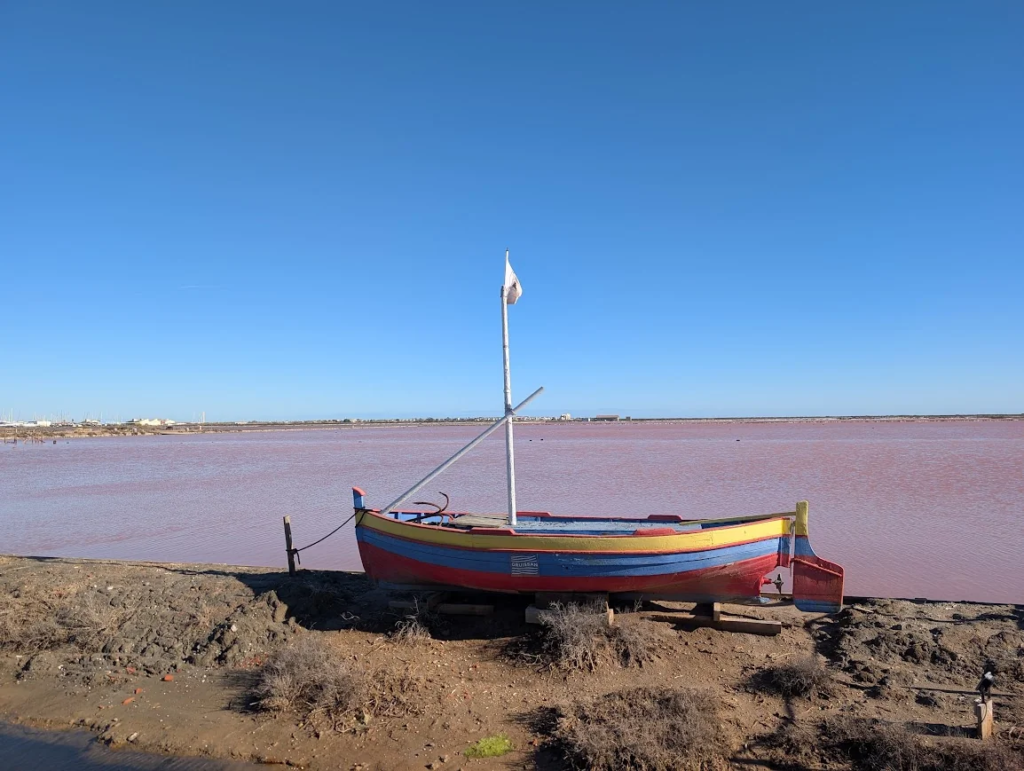
Just by Narbonne lie Salins de Gruissan, active salt marshes, which turn into a vivid pink color. You can hike around and see lots of birds, including flamingos, which are actually born white and take their pink color from eating the same algae that is responsible for how the lake looks.
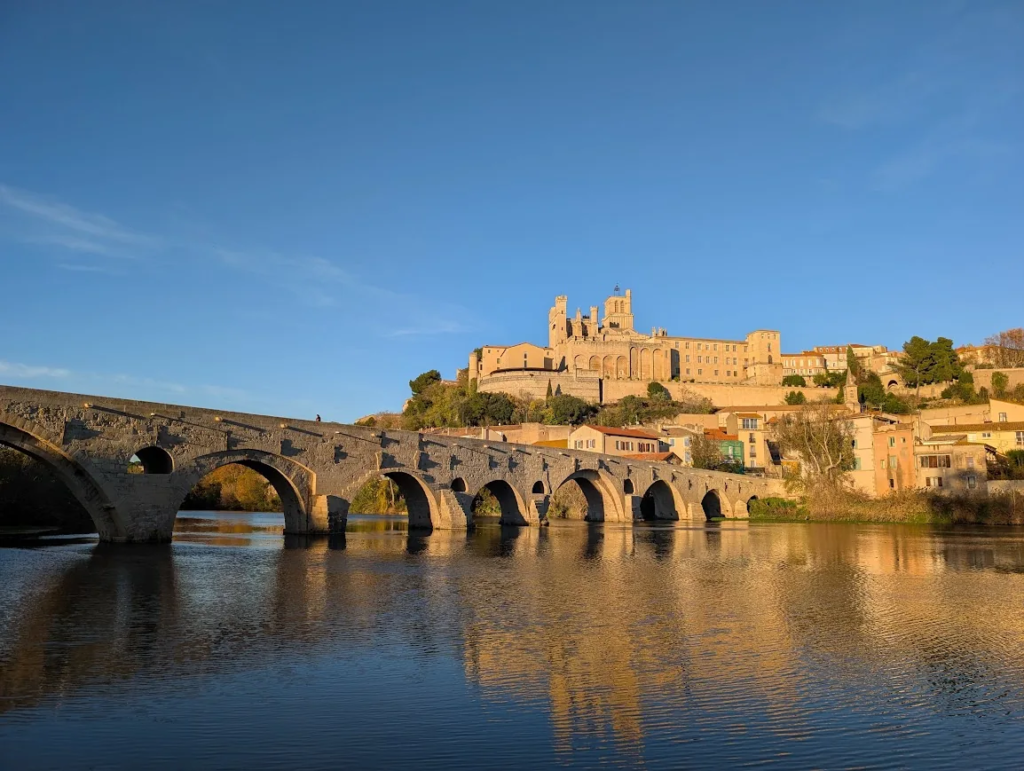
We spent the evening in Béziers, one of the oldest cities in France. From the riverside you can climb or take the free elevators up to the city. The view over the cathedral is amazing. Also, there is a medieval stone bridge from the 12th century, Pont Vieux.
The Canal du Midi, a UNESCO-inscribed 241km waterway, runs through the city, and you can see the series of nine locks (Les 9 Écluses de Fonseranes) which allow boats to descend a big height over a short distance.
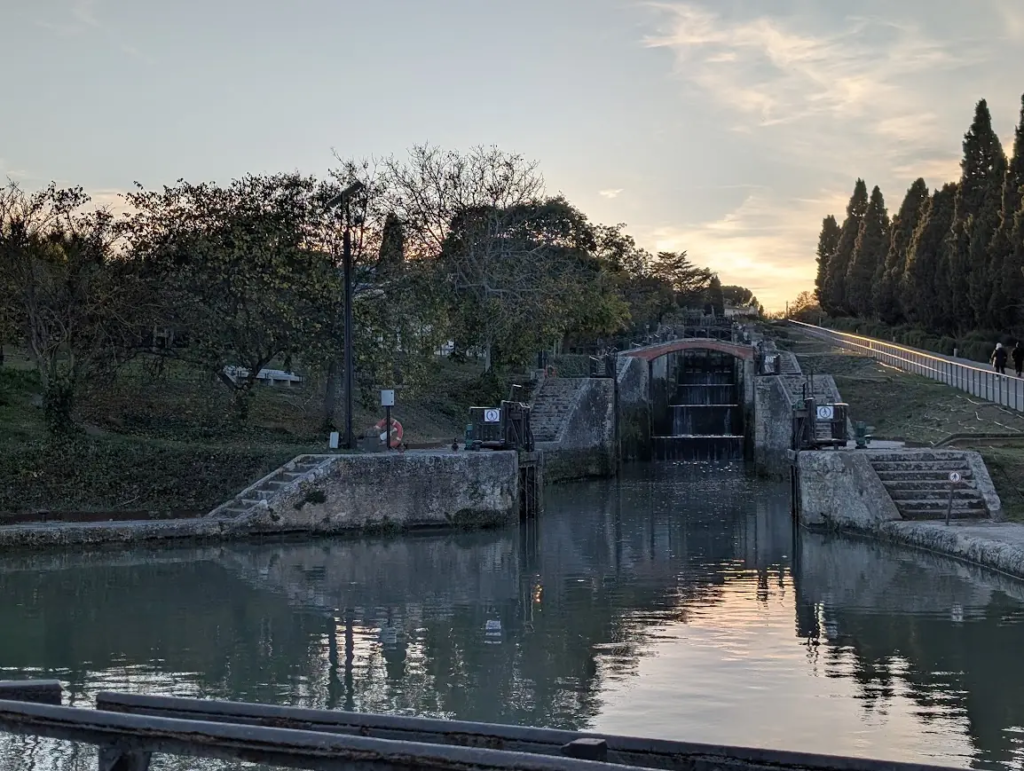
Later we drove out, following the free route along the canal, and spent the night in a peaceful place just by the water, accompanied by a couple of other campervans.
After leaving Catalonia and with November well established, we started feeling quite cold at night, especially away from the coast.
Day 3 – Carcassonne, Toulouse
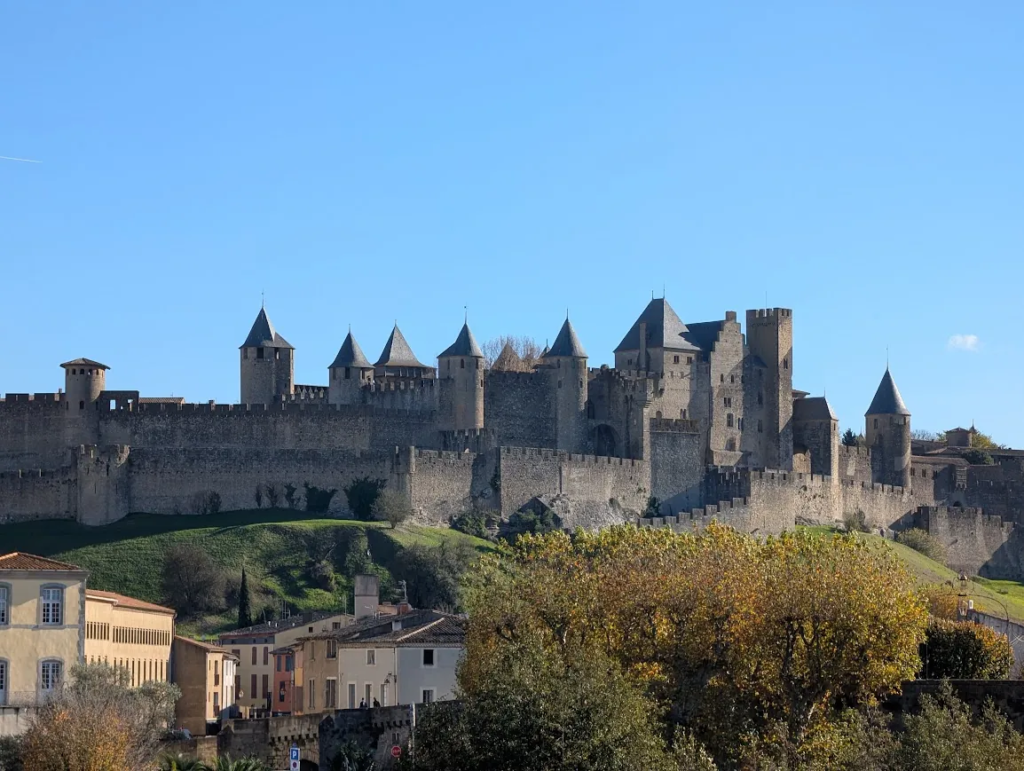
After visiting a supermarket for resupplies, we arrived at Carcassonne, one of the best-preserved medieval cities in Europe (heavily reconstructed though, which caused a big debate about its authenticity), made extra famous by the board game named after it.
You can walk around the fortified city for free and visit its cathedral, but to see the castle, you need to get a ticket – €13 in low season (Oct–Mar), €19 in high season (Apr–Sep). You can also take out an audioguide, which we did and recommend, as it’s very well made. It took us about 2 hours to cover the castle.
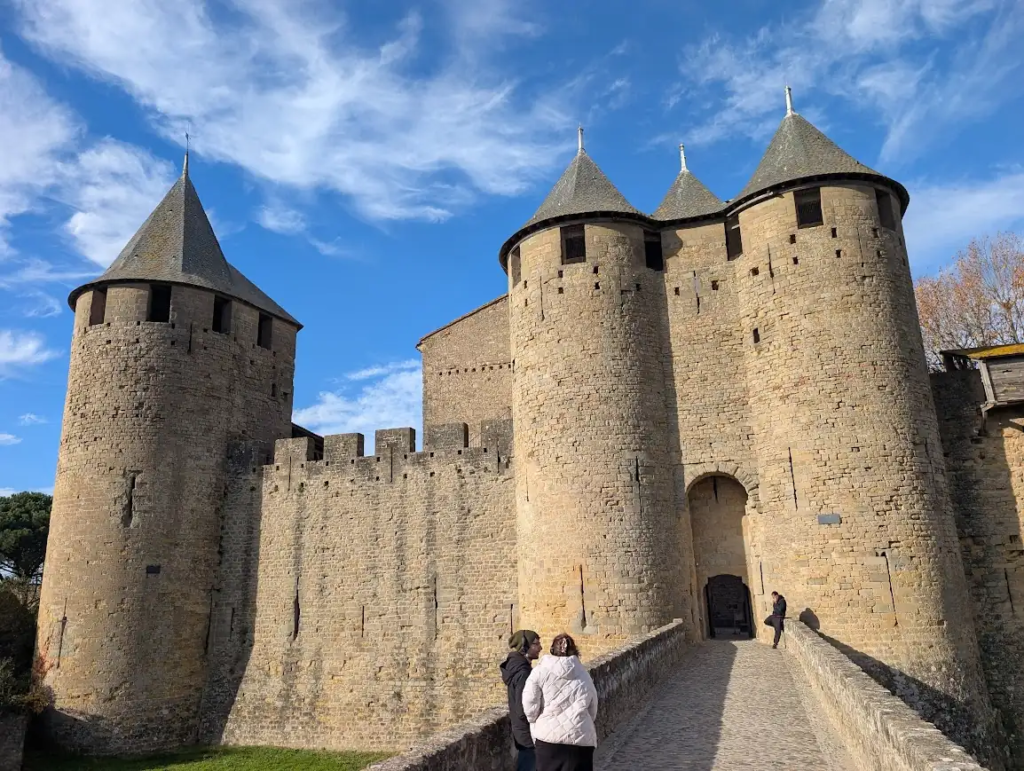
Carcassonne was the most touristic spot of the whole route.
In the afternoon we drove off to Toulouse, where we parked at a free P+R parking at the end of the metro line (Ramonville – you need to validate the parking ticket with your metro ticket).
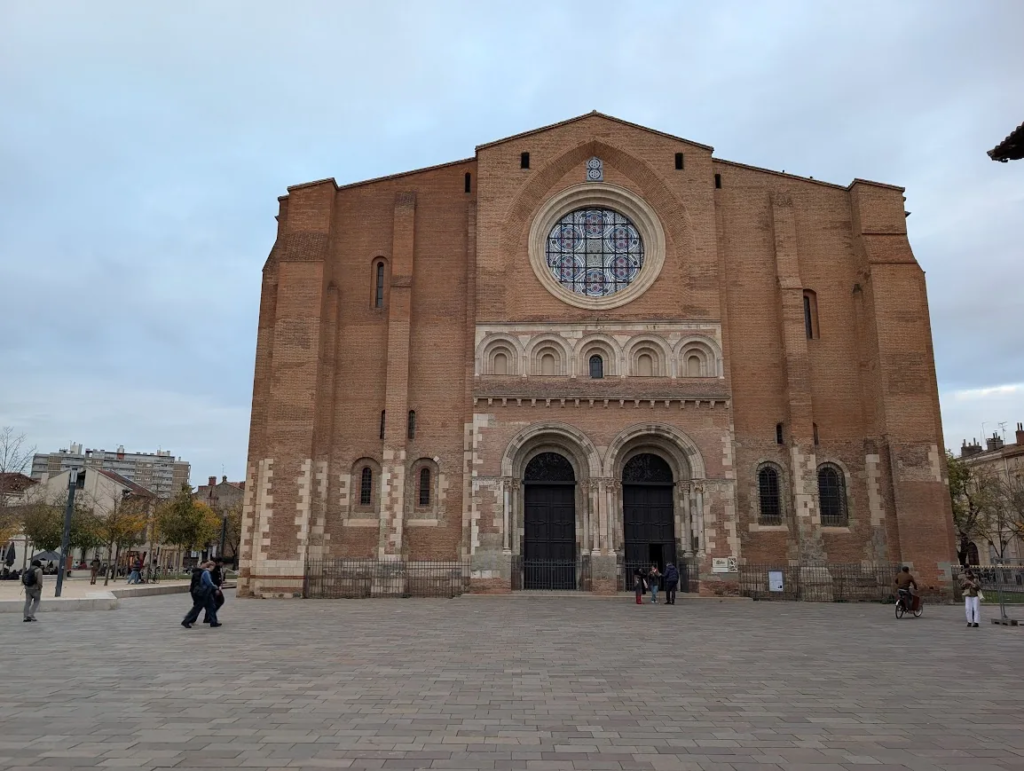
We took the metro in and spent a few hours of the evening in Toulouse. There are quite a few churches you can see, and the city feels very pleasant, but it lacks a defining landmark. The riverside at night is very beautiful.
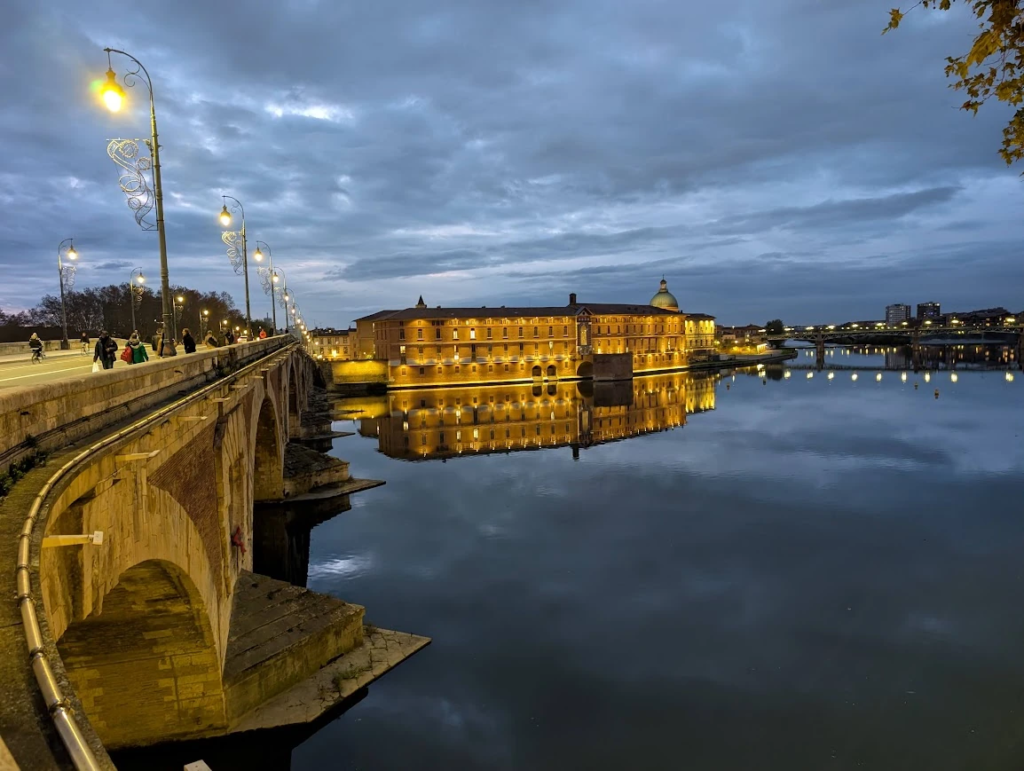
After taking the metro back to our car, we started driving south toward the mountains and found a quiet pull-off to spend the night not too far from Toulouse.
Day 4 – Foix, Merens Hot Springs, Andorra
We woke up the next morning and kept driving and gaining elevation. We had a stopover in Foix with its castle and some narrow streets, a very peaceful place, especially out of season.
We also had a very short stop in Ax-les-Thermes, as we noticed some public hot springs there, where we managed to put our feet in, but the water wasn’t that hot and attractive.
We kept googling and found a hike not far off where you can reach hot springs in the forest by walking less than a kilometer – Merens Hot Springs – totally free. It was a lovely experience as it was cold and in the forest you could already see a bit of snow. As we reached the place, there were a few Catalans in the water, but not too crowded – I think in higher season it might be packed as the place is not that big. Still, the contrast between the water and air temperature made it worth it.
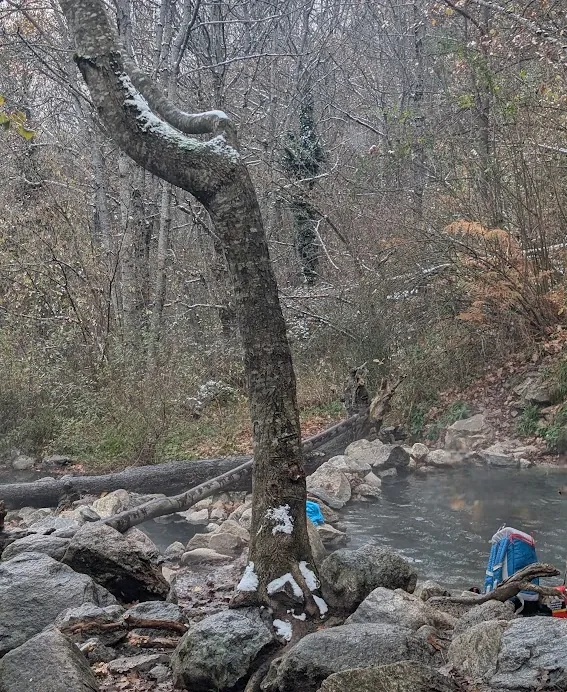
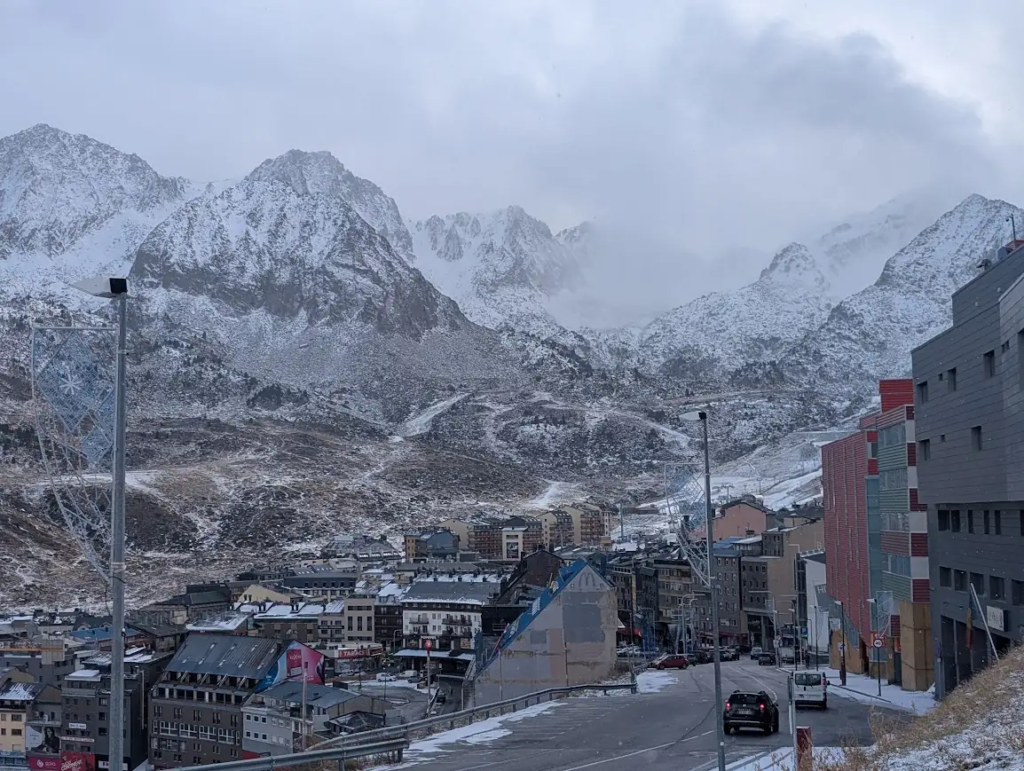
After leaving the hot springs, we headed up to El Pas de la Casa, a small Andorran town just by the French border, sitting at 2,100m. We checked the forecast and Andorran road conditions, and it was meant to be snowing, with snow chains (or winter tires) required. We had them in the car, which met the requirement in case of police checks, but the conditions never warranted putting them on – the road had already been cleared. It was a lovely drive in the snow – we took it slow and safe with our summer tires, and there was never an issue.
Once up there we took advantage of the cheap tax-free Andorran fuel in the middle of the mountains and filled up, while chatting to an Uruguayan worker. To head further into Andorra you either need to take a tunnel (€8.10 at the time of writing) or drive up and down over a mountain pass, which we decided to do. The views were breathtaking and at times it was snowing a lot.
Our first stop in Andorra was Sanctuary Basilica of Our Lady of Meritxell, the most important religious site of Andorra, nowadays a mix of a modern basilica and some of the salvaged ruins after a big fire. It’s totally free to visit and you can get a free audioguide in many languages (including English, French, Spanish and Catalan), which was a nice introduction to the Andorran culture/history. Andorra is the only country in the world where Catalan is the sole official language.
We decided to spend a night in a hotel, as up in the mountains it was already very cold. We chose the cheapest option, Hotel Sant Eloi Andorra, at around €39 for a room for the night.
Andorra la Vella, Crossing into Spain
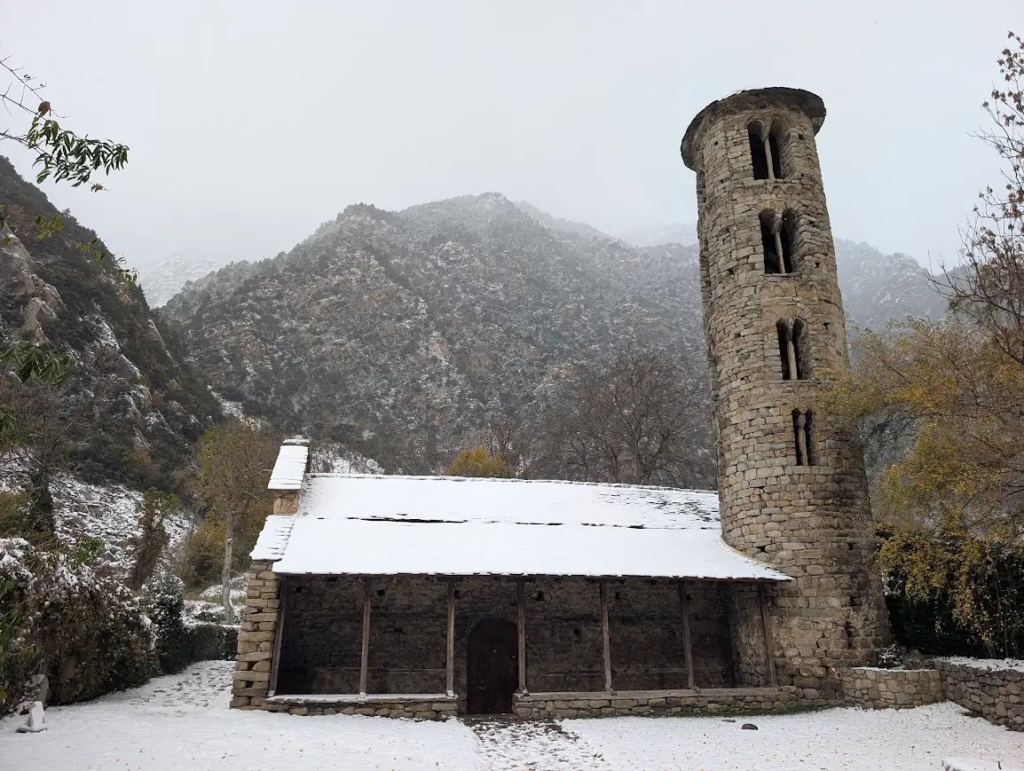
The night was quite snowy, and when we went back to the car, it was all covered in snow. We spent half a day in Andorra, walking around the snowy capital – Andorra la Vella, known mostly as a shopping destination for its tax-free status (cigarettes and alcohol are especially cheap there, but the amount you can bring to Spain or France is limited).

We also did a short hike in the forest to Mirador de Les Fonts and then headed on to Spain. Upon crossing the border, the Spanish border patrol did a quick random check of our car.
Season
We did this leg in late November, straight after Catalonia. Lowland stops (Perpignan, Narbonne, Béziers, Carcassonne, Toulouse) were mild, with daytime highs around 14–16°C (57–61°F) and nights around 5–8°C (41–46°F). Carcassonne was the only busy stop on the route. Everywhere else, including Foix and the Merens hot springs, was quiet.
Andorra was a different climate. Andorra la Vella averages around 8°C for highs and 0°C for lows in November, and Pas de la Casa (2,100 m) sits around 3°C and -3°C, with snow likely. We drove up in snow. The ski resorts hadn’t opened yet, so it stayed quiet. Andorra gets busier once the slopes open, roughly December to April. Winter tires or chains are required on all Andorran roads from November 1 to May 15, and live road conditions are at mobilitat.ad. The French equivalent runs November 1 to March 31 in designated mountain communes.
Low season runs November to March, and the Carcassonne castle ticket costs €13 then versus €19 from April. I’d avoid July–August in the lowlands – highs around 28–30°C, plus Carcassonne at its most crowded.
Practical
Currency
Euro. Cards are accepted almost everywhere, but carry some cash for parking attendants and street vendors. If you’re coming from a non-euro country, use Revolut to avoid conversion fees. There’s a 1% weekend markup, but you can avoid it by exchanging currencies in the app beforehand.
SIM
Any EU SIM works under Roam Like at Home in France – no need to buy a local one.
Exception: Andorra. It isn’t in the EU, so Roam Like at Home doesn’t apply there, and roaming charges on many plans are very high unless your provider includes Andorra or sells a specific package. Check your plan before crossing, and switch off data roaming if it doesn’t name Andorra. If you need data there, check eSIMDB, filter by the amount of data and your trip length, make sure Andorra is listed, then sort by price. Andorra Telecom, the only local operator, also sells its own eSIM.
Language
French is the main language throughout this leg. Andorra’s official language is Catalan, though Spanish and French are also commonly used there. English is reliable in hotels and hospitality, not much beyond that.
Some French phrases:
And Catalan:
Tips Summary
- Cheapest Rentals: Search via DiscoverCars – small cars from €140.54/week (€20.08/day) at Toulouse Airport at the time of writing.
- Sleeping in a Car: Legal in France as long as you’re legally parked and nothing is set up outside – no table, chairs or awning. Some cities restrict overnight parking by municipal decree (Paris, Nice, Lyon and Biarritz are the ones most often named), so check the signs.
- Free Roads Instead of Autoroutes: Autoroutes charge roughly €0.10/km. A free national road runs parallel to almost all of them – slower, but you see more.
- Cheap Fuel: Fill up in Spain, then top off in Andorra. Diesel was around €1.25/L there versus €1.65–1.70/L in France in November 2025. Check prices on prix-carburants.gouv.fr – stations are legally required to report.
- Toulouse Park & Ride: Park at Ramonville (end of metro Line B). Parking is free for up to 24 hours if you validate a metro ticket within the hour before exit. Skips city parking and the Crit’Air sticker.
- Blue Parking Zones: Blue lines on the road in France mean free but time-limited, the opposite of Spain. Set a paper parking disc (from any tabac) to your arrival time for 1–2 hours free.
- Andorra Winter Equipment: Winter tires or snow chains are required on all Andorran roads from November 1 to May 15, snow or not. Fines start around €180. Check live conditions at mobilitat.ad.
- Envalira Tunnel Toll: The Envalira Tunnel costs €8.10 at the time of writing. The mountain pass over it is free – we drove it in snow, slowly, and the road was already cleared.
- Free Sights for Under 26: Most publicly run French sights are free for EU residents under 26. Carry ID.
- Cathedral Lunch Closures: Most French cathedrals are free, but many close for 1–2 hours at lunch.
- Carcassonne: The fortified city is free to walk. Castle tickets are €13 in low season (Oct–Mar) and €19 in high season (Apr–Sep).
- Merens Hot Springs: Free hot springs in the forest, under a kilometer’s walk. The pool is small – it wasn’t crowded out of season.
- Meritxell Basilica: Free entry, plus a free audioguide in English, French, Spanish and Catalan.
- Andorra Duty-Free Limits: Alcohol and cigarettes are cheap, but limits apply on how much you can bring into Spain or France. We got a random car check at the Spanish border.
- Outdoor Cooking: Many départements ban open fires within 200 m of forests. Check Météo des Forêts before cooking outside.
- Andorra Roaming: Andorra isn’t in the EU, so Roam Like at Home doesn’t apply. Check that your plan covers Andorra or switch off data roaming before the border. An Andorra or Europe eSIM from eSIMDB avoids the charges.
- Season: Late November was quiet everywhere except Carcassonne, mild in the lowlands and snowy in Andorra before the ski resorts opened. Avoid July–August for heat and crowds.
The Budget System
I keep daily travel costs under €30 using two methods:
● €3/Day Rental Car Guide
● Sleeping in Rental Cars
One week of travel cost me less than a day of work in Australia.