Norway on €50/Day: Trolltunga and Sleeping in a Rental Car
note: [Total pending toll charges.]
Trolltunga, Stegastein, the Snow Road, and a stave church from 1180. 4 days in the Norwegian fjords out of Bergen, sleeping in a rental car:
TRIP STATS
- DAILY RATE: €[X] (per person)
- SLEEP: Sleeping in Rental Car
- BY: Rental Car
- PEOPLE: 2
- DAYS: 4
- TOTAL: €[X]
- CURRENCY: Norwegian krone (€1 = ~10.8 NOK)
- DATE: September 2026
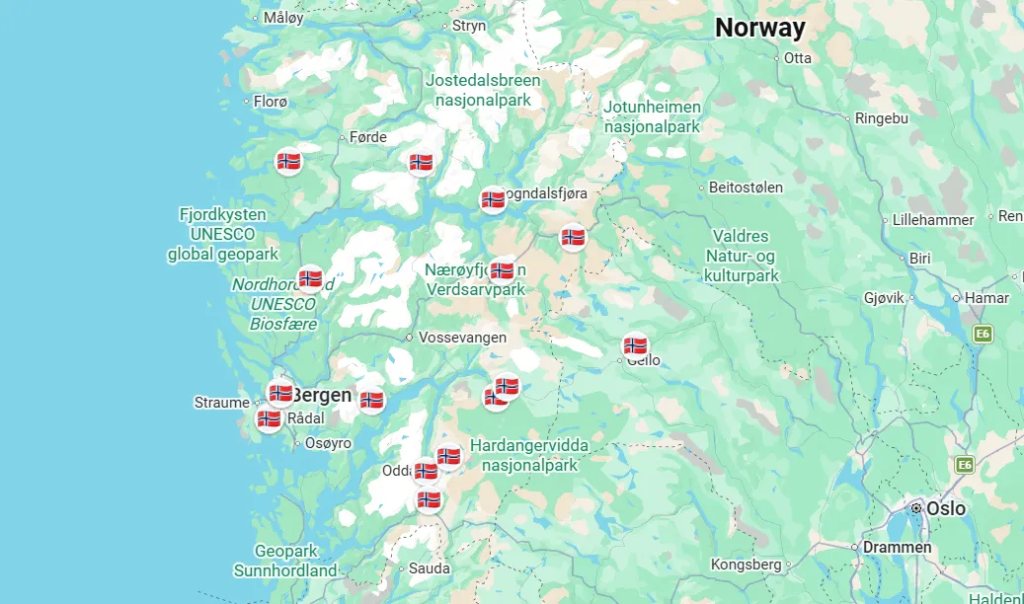
- ROUTE: Bergen → Odda → Aurland → Lærdal → Gaularfjellet → Bergen
- TOOLS: DiscoverCars, Cover4Rentals, park4night, Revolut
| ITEM | COST (2P) | NOTES |
|---|---|---|
| Car Rental | €184.34 | €46.09/day with Budget via DiscoverCars. €3/Day Rental Car Guide |
| Stay | €0.00 | Slept in the car. |
| Car Charging | €94.00 | €23.50/day. Charged three times, usually from 20% to 80%. |
| Parking (Sights) | €61.00 | ~€51 Trolltunga P2 (1 day) ~€10 Bergen (2 hours) |
| Tolls & Ferries | [X] | [Still waiting for the bill]. |
| Food | €60.00 | Brought all food (~€56) on plane from Poland. + €4 gas canister |
| TOTAL | €[X] | 4 days at €[X] per person |
How €X.XX/day per person compares to my other trips: Budget Travel Cost per Day.
Getting There
I flew from Gdańsk with Wizz Air for €20, plus €16 for priority boarding, which includes a larger carry-on – I filled it up with camping gear and food. Full list of what I pack and more carry-on rules: Sleeping in a Rental Car Packing List.
Wizz Air and Ryanair offer low-cost flights to Bergen Airport. Flights to and from Poland are usually the cheapest. For the best deals, I use Skyscanner‘s flexible date search. More flight tricks: Budget Travel Tips.
Car Rental at Bergen Flesland Airport (BGO)
- Cost: Norway is not a €3/day destination. We paid €184.34 for 4 days (€46.09/day) via DiscoverCars (my review), although our options were limited due to the lack of a credit card (debit only).
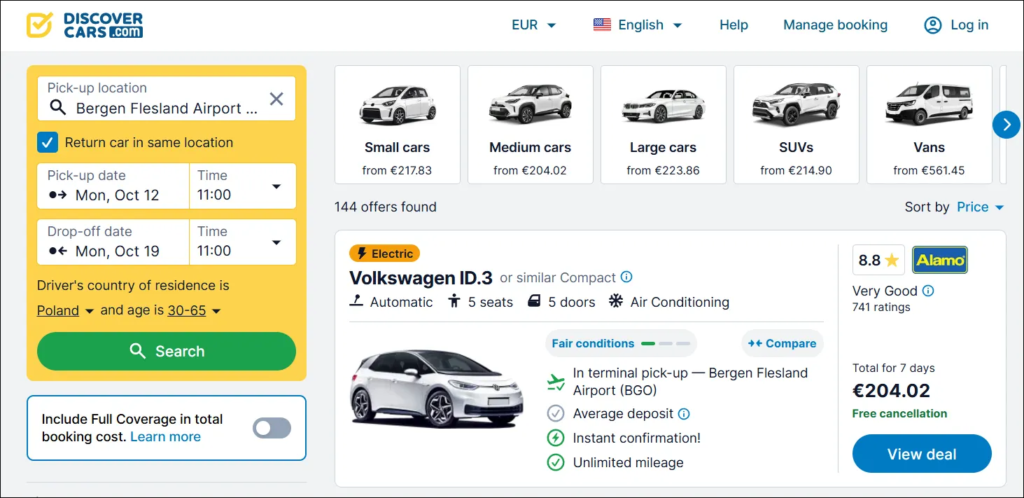
- Current Prices: The cheapest car is an electric VW ID.3 at €204.02/7 days (€29.15/day) at the time of writing. Most available cars are electric. For comparison with the cheapest European destinations see: European Car Rental Price Comparison.
- Provider: Budget. 5/5. Smooth. Pickup was in the terminal. No upsell – the desk didn’t even ask about insurance. Rated 8+/10 on DiscoverCars. Return was at the same terminal.
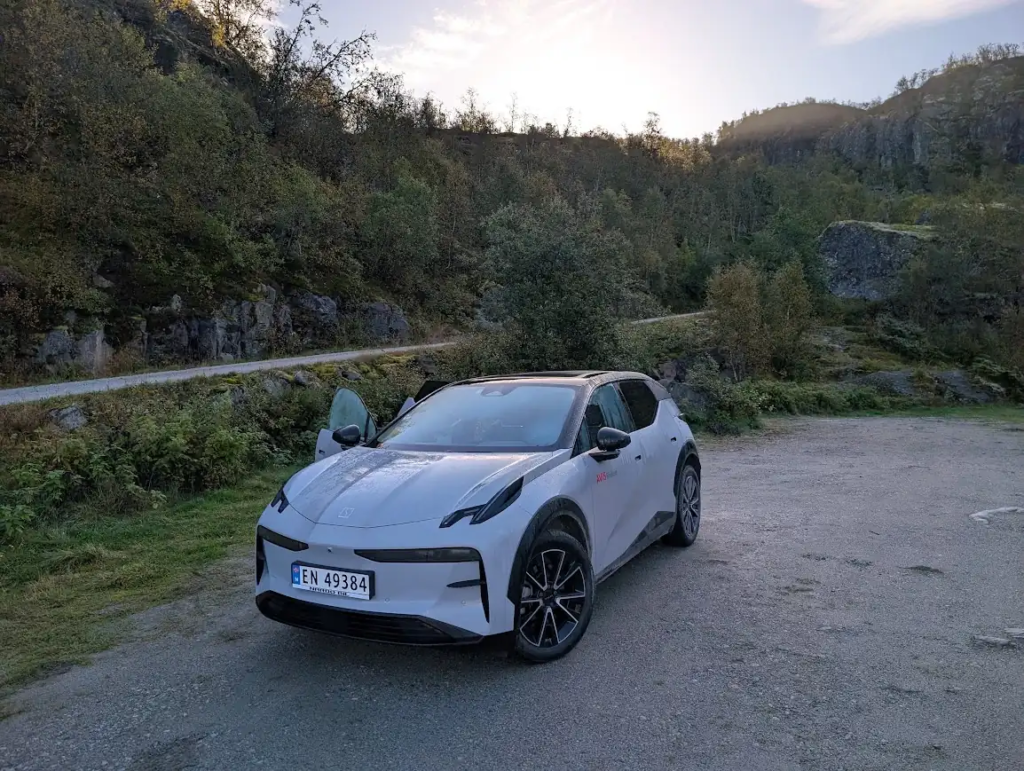
- Vehicle: Volkswagen ID.3 or similar (booked: Compact Elite). Got: Zeekr X. It was my first time driving an electric car, and I was surprised how powerful it was. It had some funky features, like seats with a massage option and party lights, a bit of fun to play around with.
- Excess: ~€1,835. Deposit: 4,500 NOK (~€415), held on my debit card and released a few days after we returned the car. We covered it with our annual policy from Cover4Rentals, while not taking out the expensive insurance offered by Budget. Full process: €3/Day Rental Car Guide. Debit cards are accepted, but not prepaid cards, virtual cards (Apple Pay, Google Pay), or cards from online-only banks, and the number must be printed on the card.
- Tolls in Norway: Electronic only, no booths. The rental company gets the bill and charges your card after the trip (it could take weeks), sometimes with an admin fee.
- Charging: Electric cars are everywhere in Norway – 95.9% of new cars registered in 2025 were electric. We used the Elton app to find chargers, but then paid directly at the charger, since paying through the app adds a commission. Around half of chargers in Norway accept bank cards, according to Elton. Charging from 20% to 80% on a fast charger took around 30–40 minutes, which we used to eat and use the toilet. We charged three times during our 4-day trip and drove around 300km on each charge.
- Battery on Return: Budget required at least 70%. Below that, they charge an admin fee plus the missing kWh. We picked up at around 85% and returned at around 75%, so no charge. Other providers use similar thresholds (Enterprise Norway’s site says 80%).
- Parking: Very expensive at popular hikes and in Bergen. P2 Skjeggedal, the main Trolltunga car park, was NOK 550 for one day (~€51). In Bergen we parked at KlosterGarasjen for NOK 56/h (~€5).
Sleeping in a Rental Car in Norway
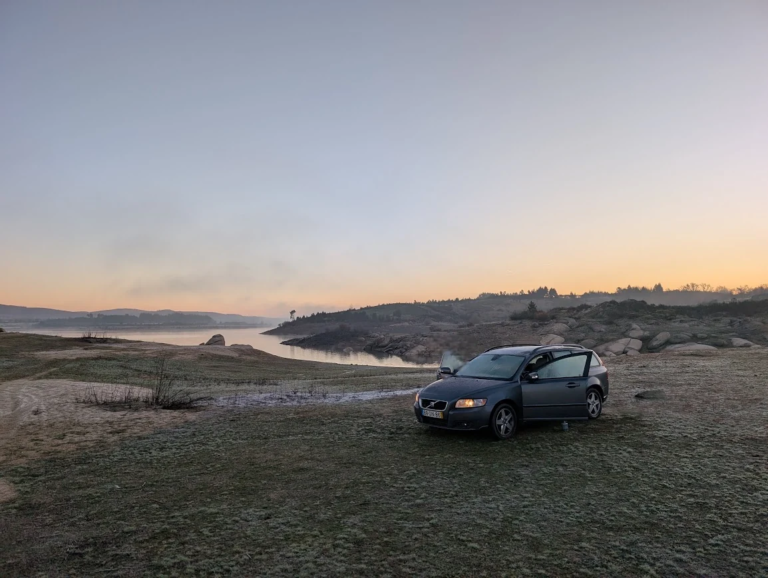
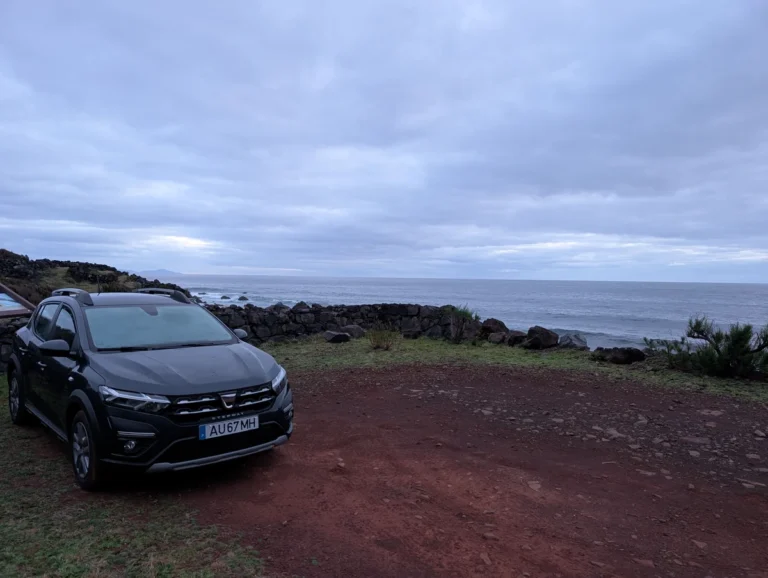
Zeekr X. 3/5. Workable – tight for two.
It was a pretty small car, and two people would have been a squeeze. I slept in it on my own, while my friend took a tent. At 190 cm, I fit diagonally. The rear folded totally flat. I used my inflatable mat and warm sleeping bag, as the nights were getting cold.
Full sleeping audit: Best Rental Cars to Sleep In.
- Legality: Gray area, tolerated. Sleeping in a car is not a legal right in Norway, but there is no national ban either. If parking is allowed, you can sleep there. Cars are excluded from the right to roam (explained below), so you can’t drive onto grass, beaches, or forest tracks. Parking signs apply even while you sit in the car. Some busy tourist car parks ban overnight stays outright (Geiranger and Preikestolen both do), and landowners put up camping forbudt (no camping) signs. Stay inside the car, no chairs or tables outside. Country by country: Is It Legal to Sleep in a Rental Car in Europe? Full guide: Sleeping in Rental Cars.
- Right to Roam: Norway’s allemannsretten lets anyone pitch a tent on uncultivated land (forest, mountains, most of the coastline) for free. You must stay at least 150 m from the nearest inhabited house or cabin. In lowland areas the limit is two nights in one spot, and longer needs the landowner’s permission. Remote mountain areas are more relaxed. Fields, meadows, pastures, and gardens don’t count. It covers tents and hammocks, not cars.
- Facilities: Public toilets were plentiful across Norway.
- Overnight Spots: Use park4night for marked spots and Organic Maps for offline navigation. Check for Camping forbudt and Parkering forbudt (no parking) signs before settling in – we saw quite a few of them around, mostly in the popular touristic areas. I’ve also linked to a couple of my actual sleeping spots in the Route section below.
- Backup Accommodation: Booking.com has the widest selection. Sort by lowest price and filter to 7.0+.
Food
I brought all of our food from Poland, mainly premade meals and dry stuff. Wizz Air priority boarding gave me a bigger carry-on allowance, so it all fit. We cooked on a camping stove. Gas canisters can’t go on a plane, so I bought one in Bergen: 230 g for €4.
- Norway vs. Poland: Eurostat’s 2024 food index (EU average = 100) has Norway at 130.6 and Poland at 85.6. That makes the same groceries around 53% more expensive in Norway.
- Cheapest Supermarkets in Norway: Rema 1000, Kiwi, and Coop Extra. Very small differences between them. I also shopped at Rema 1000 in Oslo, see my Scandinavia on €32/Day: Copenhagen, Oslo & Stockholm trip report.
- Lidl: Lidl pulled out of Norway in 2008 after four years, the only market it has ever abandoned. It sold its 50 stores to Rema 1000, which rebranded them.
Route
Day 1 – Bergen, Steinsdalsfossen, Låtefossen
We picked up the car in the morning at Bergen Airport. Our first stop of the day was, surprise, Bergen. We parked at KlosterGarasjen for NOK 56/h (~€5).

It was a bit of a rainy day, but we had a good time walking around Bryggen – the UNESCO-listed harbor district, famous for its row of colorful wooden buildings. It dates back to the 11th century and has a long history as a major port of the Hanseatic League.

Apart from Bryggen, we visited Bergenhus Fortress and the Fish Market. We had plans to check out the Fløyen viewpoint, but it looked so cloudy up there that we skipped it.
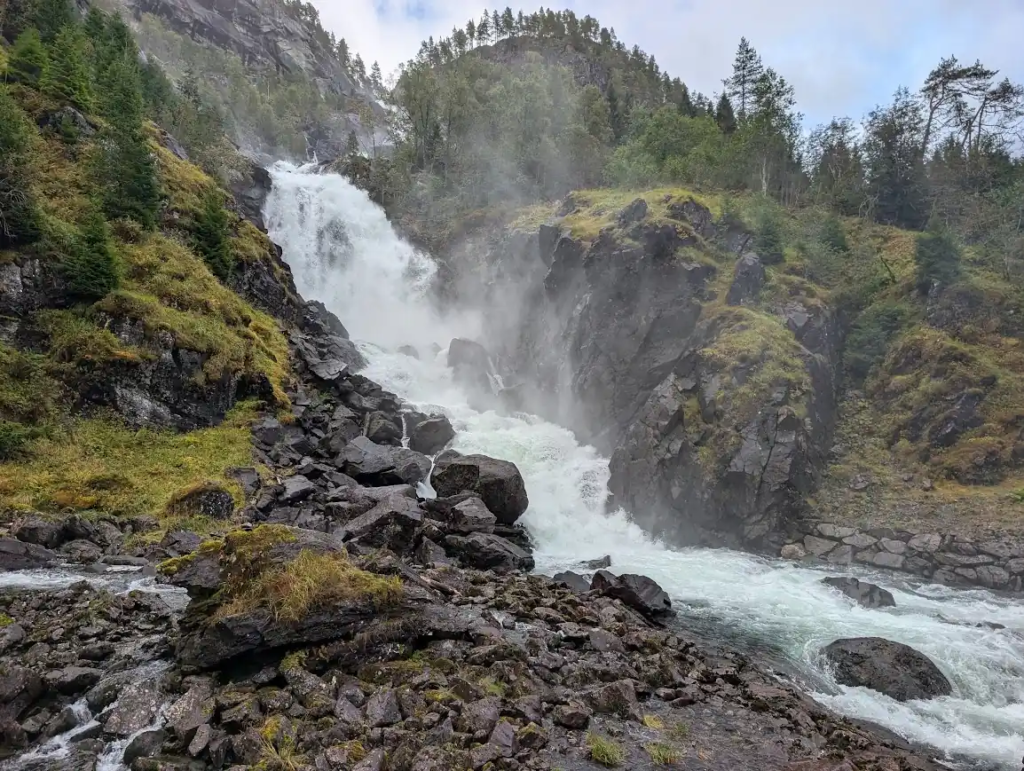
After Bergen we headed east, stopping at two popular waterfalls, Steinsdalsfossen and Låtefossen (Norwegian fjords seem to be full of them), before finding a spot to sleep not too far from Odda.
Day 2 – Trolltunga, Eidfjord
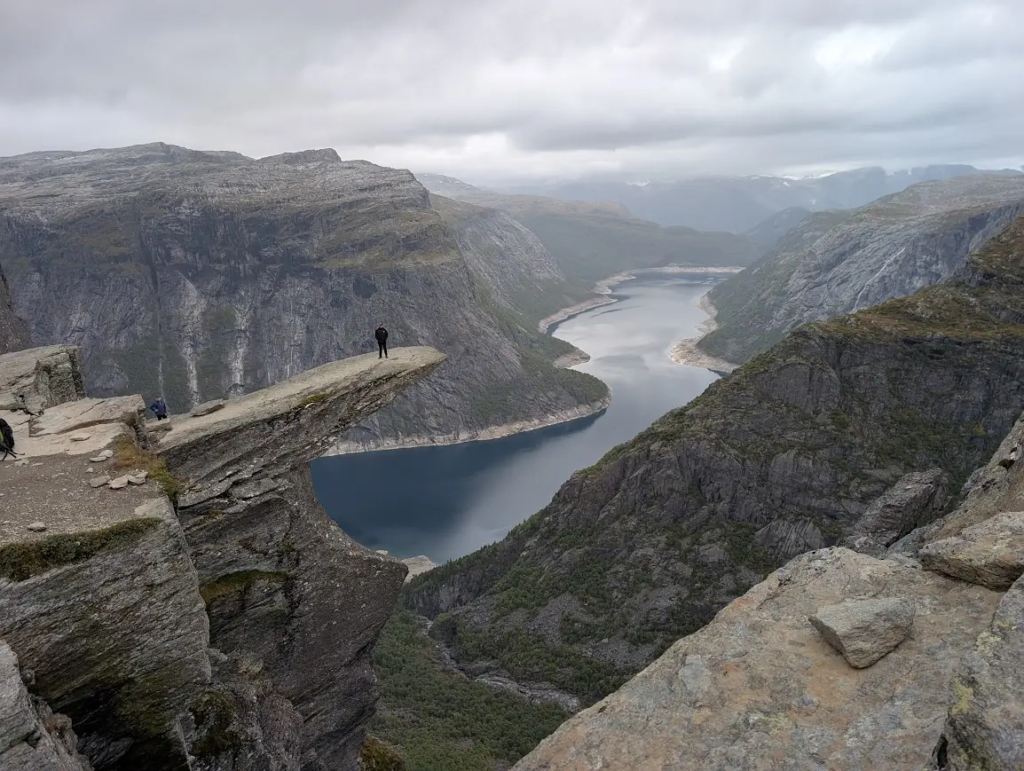
Odda was the base for our plan for the next day: hiking to the famous Trolltunga (Troll’s Tongue rock formation). There are three parking options, and none of them require booking except P3 (prices are 2026 rates):
- P1 Tyssedal: NOK 330 (~€31). 227 spaces, no booking. 38km return hike. Shuttle to P2 available for NOK 150 (~€14) one way.
- P2 Skjeggedal: NOK 550 (~€51), toll road included. 229 spaces, no booking. 27km return hike. Shuttle to P3 available: NOK 150 (~€14) going up, NOK 100 (~€9) going down.
- P3 Mågelitopp: NOK 600 plus a NOK 220 toll paid at P2 (~€76 total). 30 spaces, pre-booked only until August 31. In September, spots can also be bought on arrival at P2 (entry 7–11am). 20km return hike.
Overnight sleeping and camping are not allowed at any of the car parks.
We used P2 Skjeggedal. We didn’t want to pay NOK 250 (~€23) for the return trip on the shuttle to P3, so we hiked the extra 2×3.5km on the paved road going up. Apart from that 7km, the rest of the trail is 20km, so we totaled 27km. It was a pretty big hike, especially as our first one in Norway, and we could feel it in our legs on the way back.
The hike itself is very beautiful, but a bit crowded. You can see people pretty much all the time (and that was already in September – shoulder season – I can imagine how busy the summer would get).
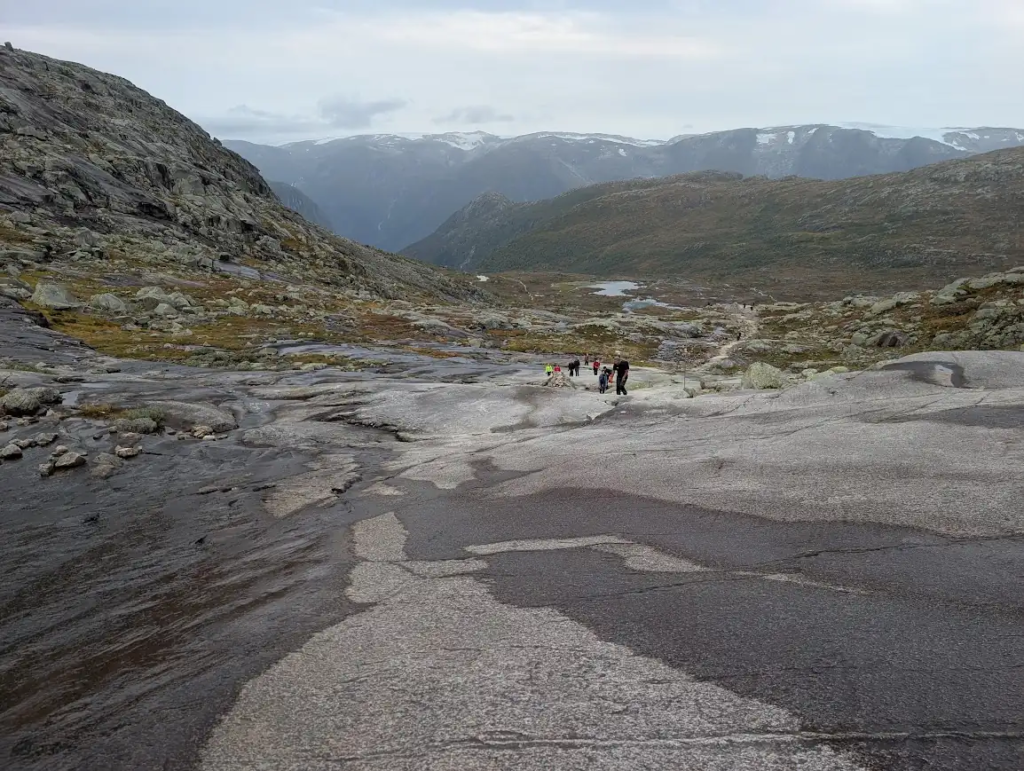
Trolltunga itself is an amazing spot, as you can see in many pictures. We arrived quite early, after passing most of the hikers, so it wasn’t that crowded, but later we saw a queue for pictures starting to form.
In the afternoon we drove to Eidfjord, where we figured out how to charge the car. It was the first time either of us had driven an electric car. It wasn’t that hard, but it took a bit. It was raining, so we were happy to chill in the car for a bit and use the nearby toilet.
Afterwards, we went up into the mountains nearby to camp at a spot next to a waterfall. We found it on park4night. It was a beautiful place, super peaceful.
Day 3 – Vøringsfossen, Stegastein, Borgund Stave Church
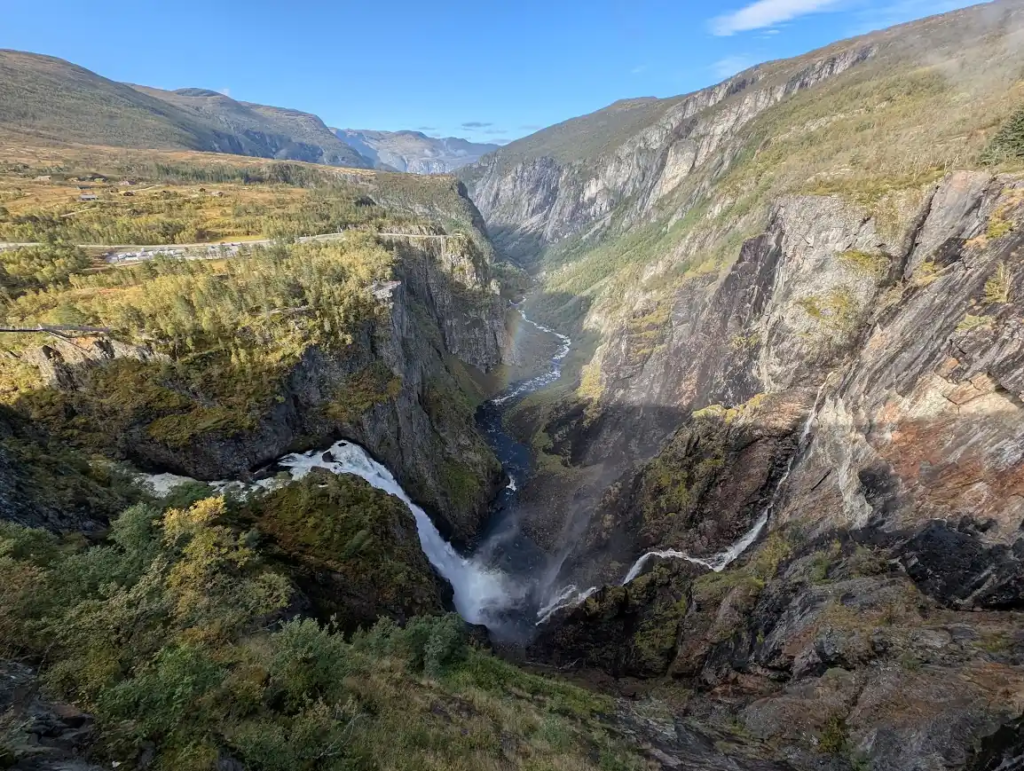
We started the day by visiting the super impressive Vøringsfossen waterfall.
Then we drove a scenic road to Aurlandsvangen through Hol. It was a beautiful plateau, and very empty.
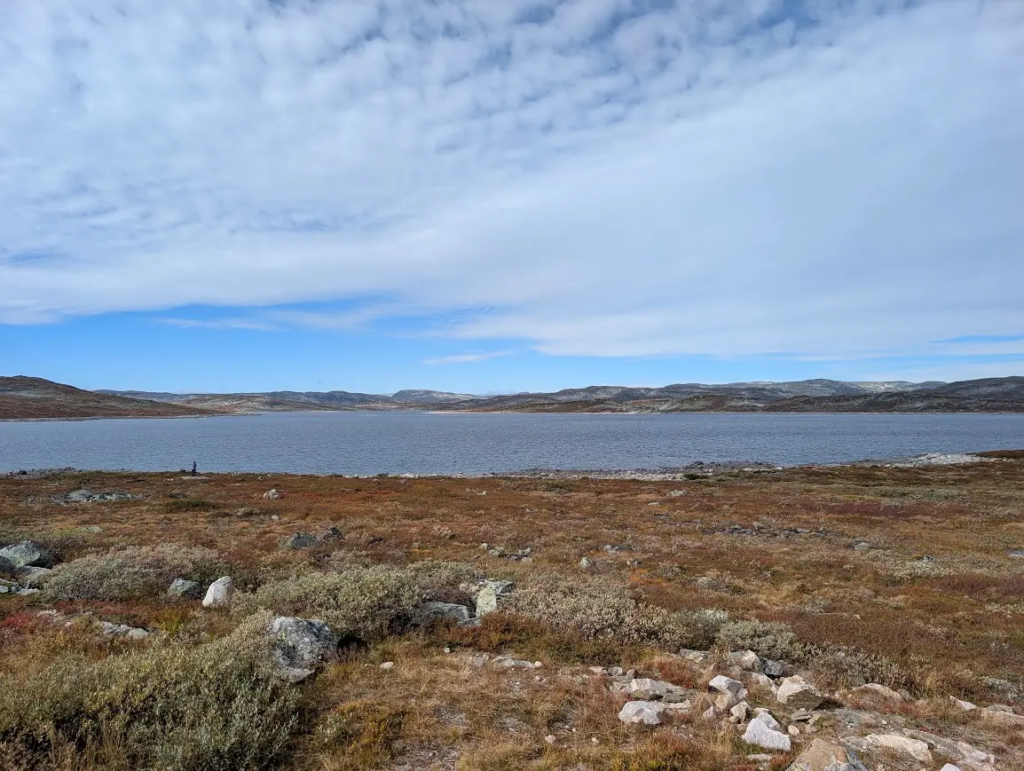
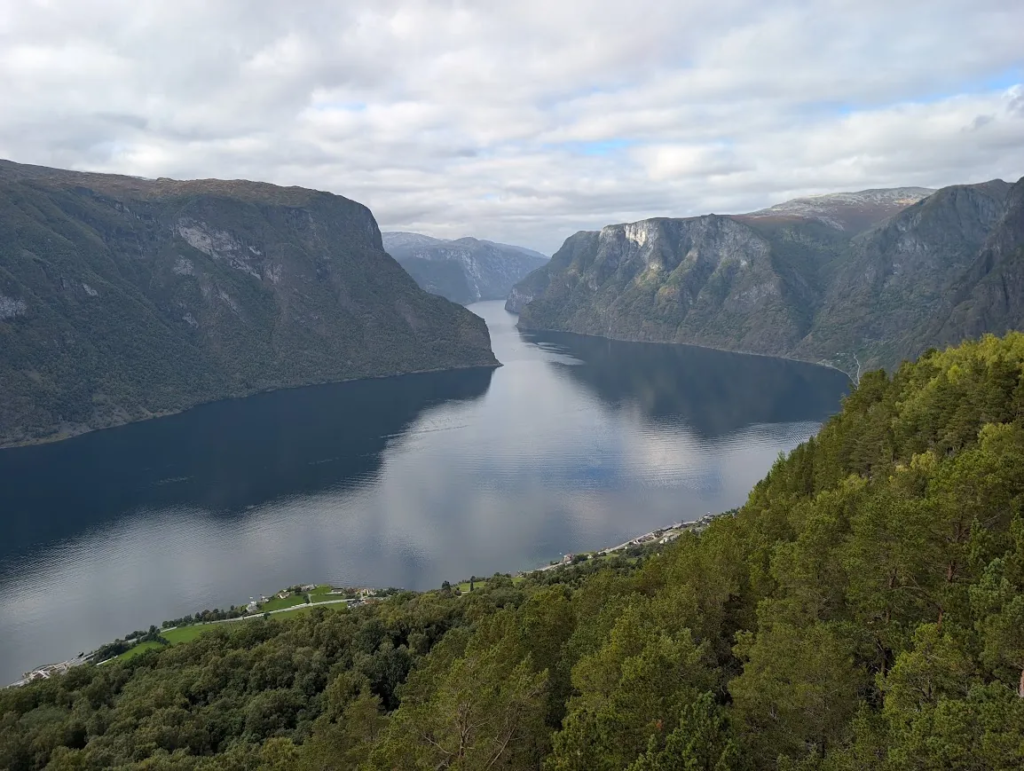
From Aurlandsvangen we went up a narrow winding road to the very popular Stegastein viewpoint overlooking a fjord.
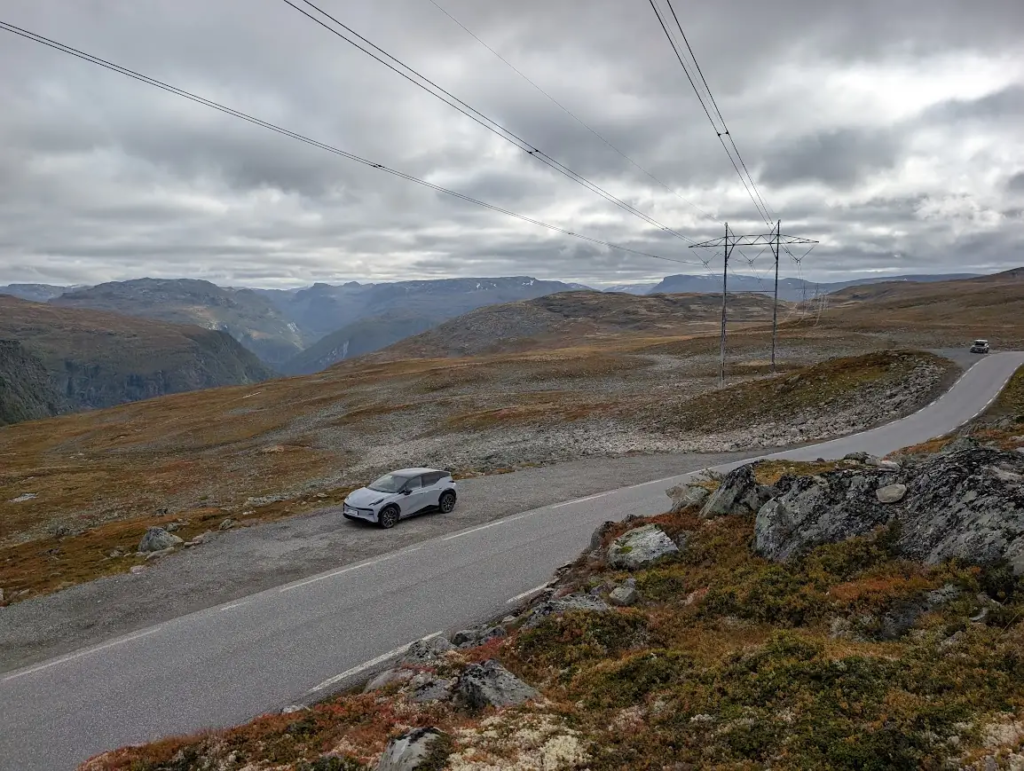
Then, instead of coming back down like most people do, we carried on over the mountain to Lærdalsøyri, another super scenic drive. This is the Snow Road (Aurlandsfjellet) – the Lærdal Tunnel bypasses it, and at 24.5km it is the longest road tunnel in the world.
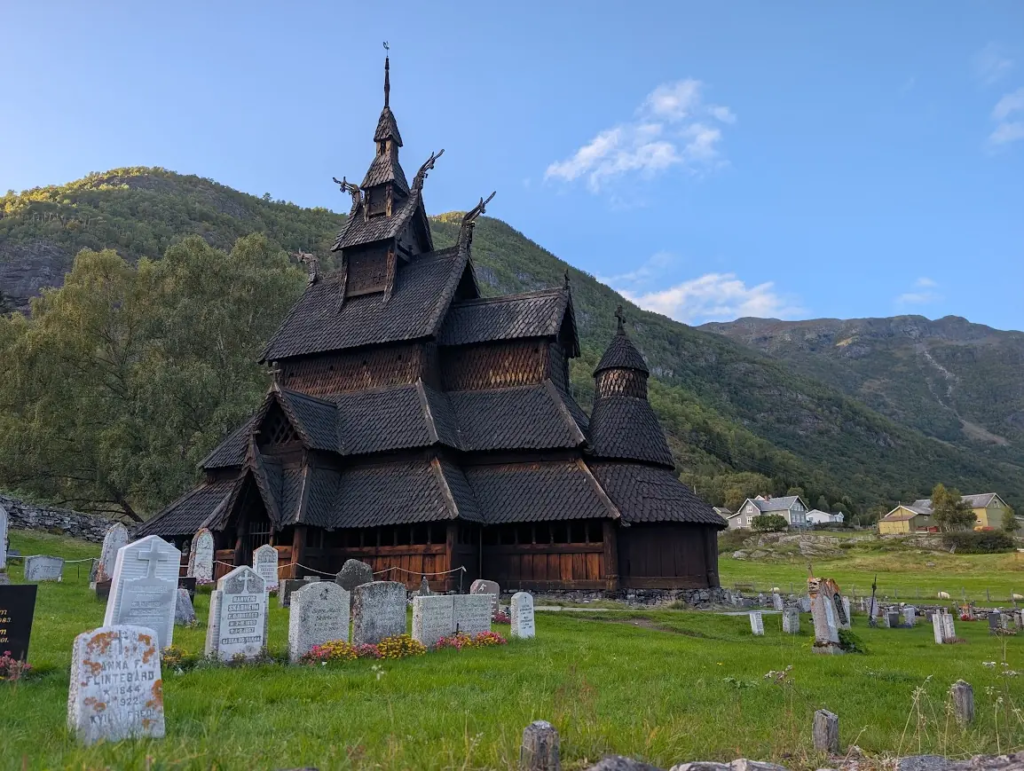
After descending, we had a look at Borgund Stave Church. Stave churches are medieval wooden churches built on load-bearing posts (staves), and Borgund, built around 1180, is considered the best preserved of them in Norway. It looked very interesting and unique. It was already closed (hours are 9:30–17:00 daily in 2026), and anyway we didn’t think the NOK 150 (~€14) ticket justified going in. What was most impressive was the architecture.
We carried on west and crossed the Sognefjord to Kaupanger. Road ferries in Norway are part of the public road network, with no ticket booth and no barrier. Payment runs through the AutoPASS system, and with a rental car the rental company gets the bill and charges you afterwards. Ferries to islands with little traffic or no road connection are generally free. After the crossing, we went down a quiet road to stay at a pull-off. On the way in we saw some other caravans.
Day 4 – Gaularfjellet, Dale, Ulriken
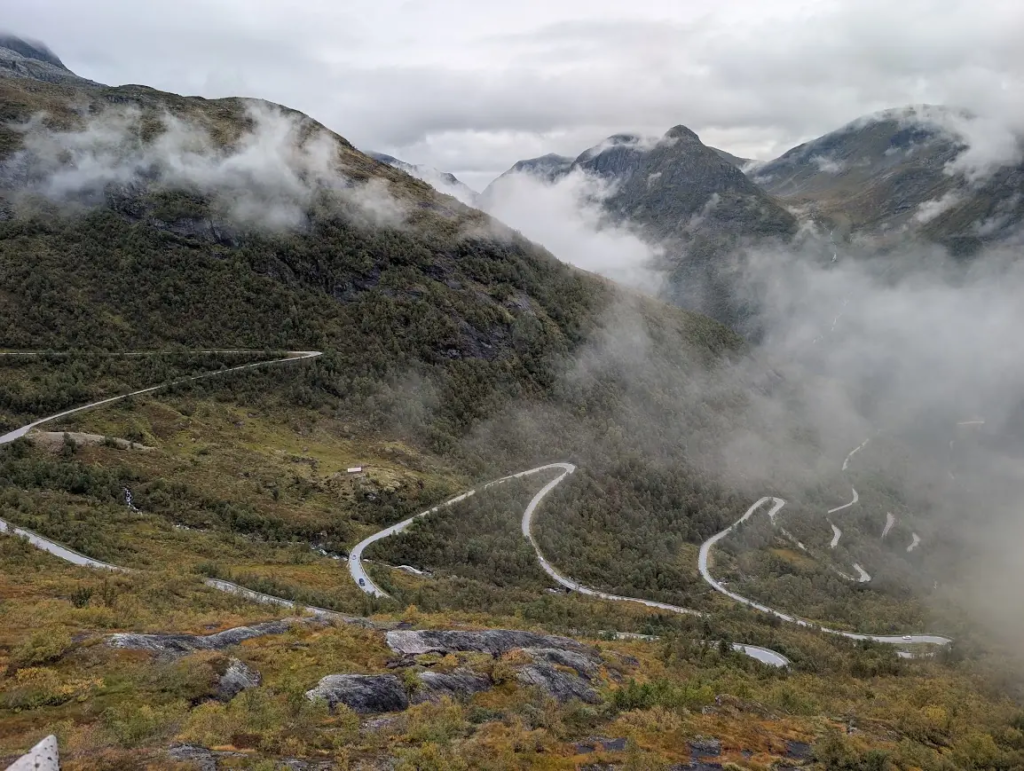
We drove a lot on the last day. We took a scenic road through Gaularfjellet Utsiktspunkt, then on to Dale to take in some Norwegian countryside, as we had lots of time, and down to a ferry in Lavik.
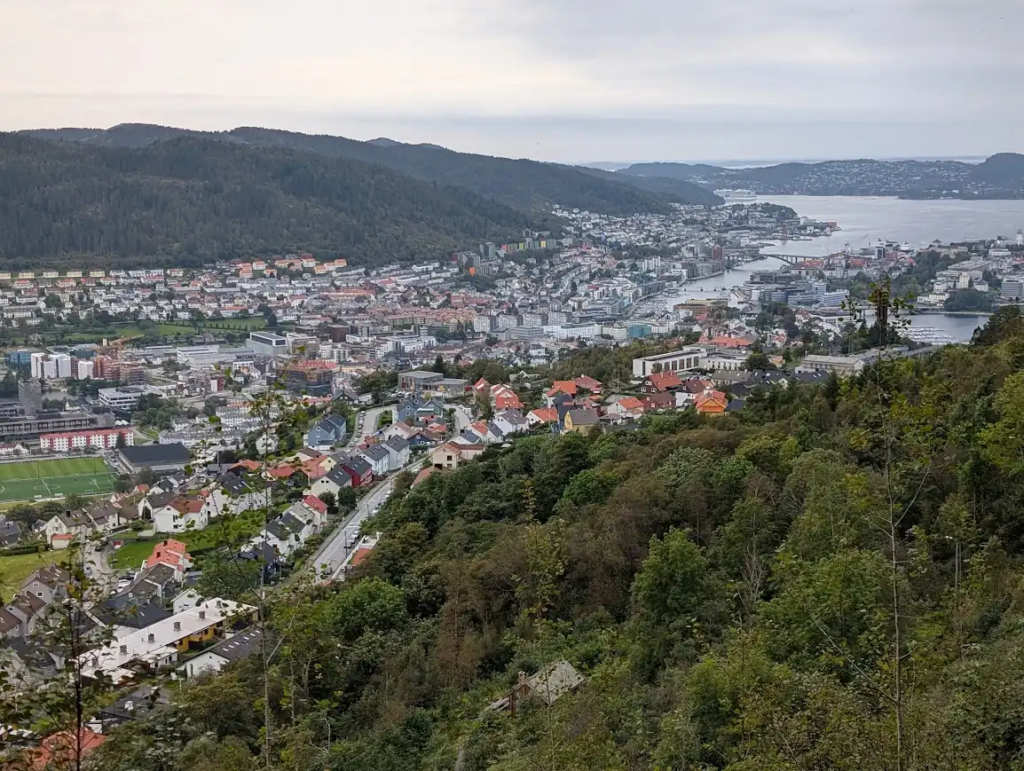
Before going back to Bergen, we did a short hike up Ulriken. You can actually park around there for free (limited spaces, first come first served).
Our car was booked until the next morning, but we decided to give it back a night early so we could camp in the tent in the forest close to the airport, as we had early plans for the next day. We were taking a bus to Stavanger to do a 5-day Lysefjorden Rundt trek, but that’s not part of this story.
Season
- Weather: Bergen has precipitation on around 239 days a year. Expect rain in any month and pack for it. We got rain on Day 1, 2 and 4, so 75% of the trip. Average temperatures are around 15°C in July and August and around 11°C in September.
- September (Our Trip): Shoulder season. Fewer people than summer, but Trolltunga was still busy. Bergen gets around 20 rainy days in September.
- Trolltunga Parking and Shuttles (2026): P3 Mågelitopp runs 8 June–30 September, and the Odda shuttle buses run 22 May–27 September. Late September cuts it close.
- Snow Road (Aurlandsfjellet): Opens early June and is usually closed again by mid-October. The road from Aurlandsvangen to Stegastein stays open all year. Gaularfjellet usually opens mid-May, and there is never a set opening date for these roads. Part of the Gaularfjellet road is closed in winter. If the Snow Road is shut, the Lærdal Tunnel is open all year and has no toll.
- Best Window: Mid-June to mid-September is when everything on this route is open at once.
Practical
Currency
Norway uses the Norwegian krone (NOK). It’s nearly cashless – cards are accepted everywhere, including small cafes, supermarkets, and transit. No need to exchange cash before you go.
I use a Revolut card for foreign currency payments. My expenses end up within 1% of the official rate for the whole trip. Note: 1% markup applies on weekends – pre-exchange in the app to avoid it. At my spending level, the difference would’ve been marginal.
SIM
Norway is an EEA member (not EU), but Roam Like at Home still applies. If you have an EU/EEA-based SIM, you’ll get data without roaming charges. Otherwise check eSIMDB for eSIM deals – sort by country, data amount, and trip duration.
Language
English is widely spoken, even among the older generations. I still like to learn a few basic words to be polite and immerse a little bit in the local culture: takk – thanks, hei – hi, god dag – good day.
Tips Summary
- Cheapest Car Rentals: Check DiscoverCars for the cheapest car rentals in Bergen. Compact cars from €29.15/day at the time of writing.
- Charging: Charge from 20% to 80% at fast chargers, around 30–40 minutes each. Pay directly at the charger, since paying through the Elton app adds a commission. Return the car at 70% or above. Budget and similar providers charge an admin fee plus the missing kWh below that.
- Trolltunga Start: Start early. We passed most hikers on the way up and reached the rock before the photo queue formed.
- Snow Road: Drive the Snow Road over Aurlandsfjellet instead of the Lærdal Tunnel when it’s open, from early June to mid-October. The tunnel is the toll-free backup, open all year.
- Ferries and Tolls: There are no ticket booths on either. AutoPASS handles both, and the rental company charges your card after the trip, sometimes with an admin fee.
- Overnight Signs: Check for Camping forbudt and Parkering forbudt signs before settling in. Overnight sleeping is banned at all Trolltunga car parks, so sleep elsewhere. Use park4night to find reviewed spots.
The Budget System
I keep daily travel costs under €30 using two methods:
● €3/Day Rental Car Guide
● Sleeping in Rental Cars
One week of travel cost me less than a day of work in Australia.