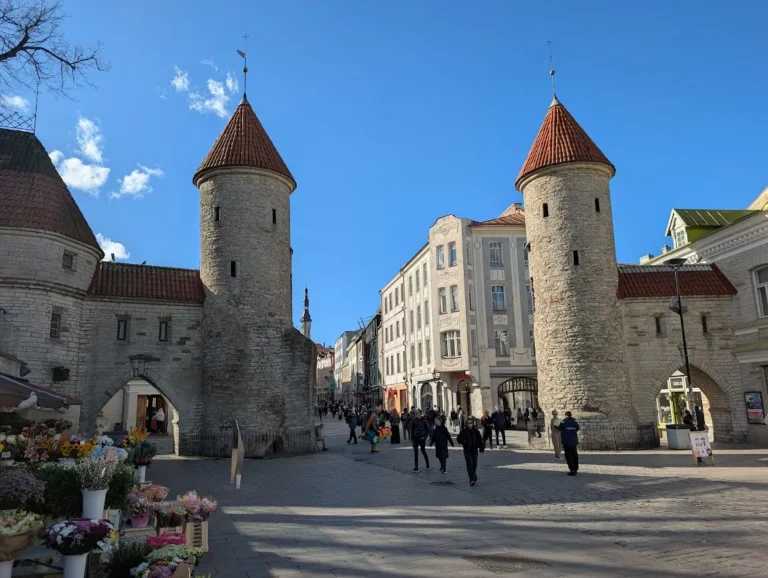
Scandinavia on €32/Day: Copenhagen, Oslo & Stockholm
Scandinavia has a reputation for being the most expensive region in Europe:
TRIP STATS
- DAILY RATE: €32.25 (per person)
- SLEEP: Hostels, Guesthouse
- BY: Bus
- PEOPLE: 2
- DAYS: 7
- TOTAL: €451.44
- CURRENCY: DKK / NOK / SEK (€ via Revolut)
- DATE: May 2026
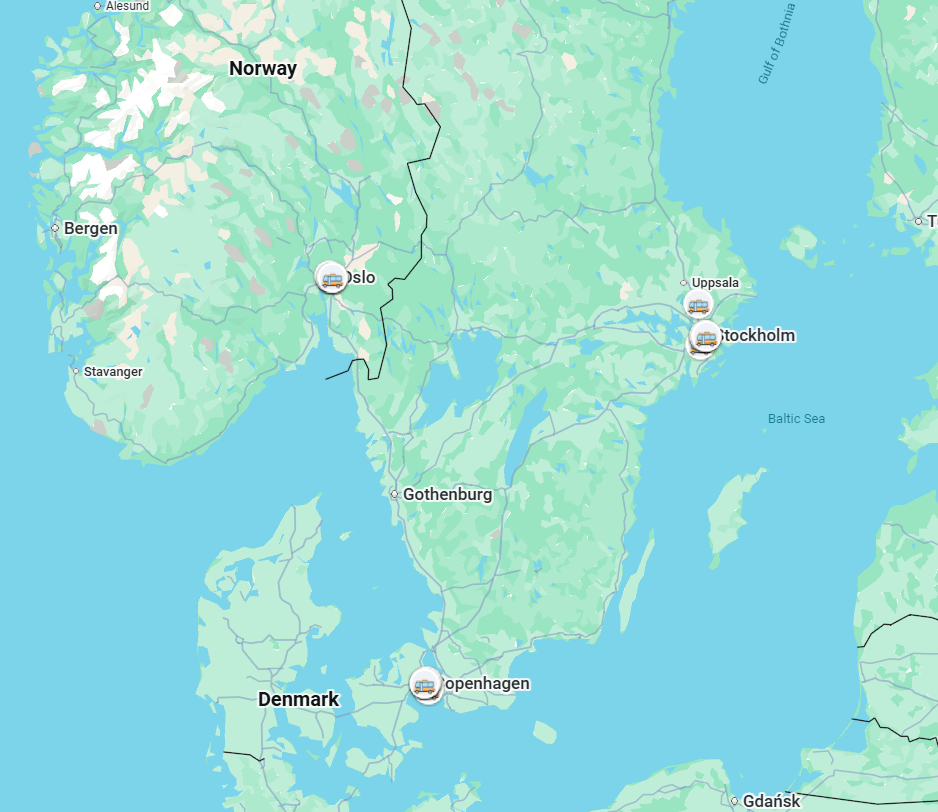
- ROUTE: Copenhagen → Oslo → Stockholm
- TOOLS: Booking.com, Agoda, FlixBus, Lidl
| ITEM | COST (2P) | NOTES |
|---|---|---|
| Stay | €203.00 | Per person: €17.50/bed a night – Copenhagen, Bedwood Hostel (Agoda). €24.00 a night – Oslo, Oslo Stay Guesthouse (Booking.com). €21.25/bed a night – Stockholm, Nomad Cave (Booking.com). |
| Buses | €82.44 | FlixBus, per person: €20.61 – Copenhagen-Oslo (overnight) €20.61 – Oslo-Stockholm |
| Food | €122.00 | €8.71/day per person Lidl (Denmark, Sweden). Rema 1000 (Norway). |
| Sights | €44.00 | Per person: €0 – Munch Museum (free Wednesday evening) €22 – Vasa Museum |
| TOTAL | €451.44 | 7 days at €32.25/day per person |
How €32.25/day per person compares to my other trips: Budget Travel Cost per Day.
Getting There
We flew Gdańsk–Copenhagen with Ryanair for €15, return from Stockholm Arlanda to Warsaw Modlin for €17 (small bag only).
Scandinavian airports are among the cheapest in Europe to fly into. Ryanair and Wizz Air regularly sell tickets below €20 from Poland, the UK, Italy, France, Spain, and Ireland. Check Skyscanner with flexible dates.
Transport from the center to airport varies – and can double the cost of a cheap fare. These are the cheapest fares combined:
- Copenhagen (CPH): €4.82 (36 DKK) – metro or regional train
- Stockholm Arlanda (ARN): €3.95 (43 SEK) – SL commuter train to Märsta, then Bus 583
- Stockholm Skavsta (NYO): €7.34 (80 SEK) – advance-booked FlixBus
- Oslo Gardermoen (OSL): €12.12 (134 NOK) – Vy regional train
- Sandefjord Torp (TRF): €17.90 (198 NOK) – Flyo minibus or advance Torp-Ekspressen
Flights are excluded from cost table – route-dependent.
Getting Around – Flixbus
Check Omio for bus connections, but book direct for best price. We did both routes with Flixbus:
- Copenhagen → Oslo: overnight, €20.61/person
- Oslo → Stockholm: €20.61/person
Booked a couple of weeks before. Prices were double closer to departure.
I found a promo code for 25% off. Base fare was around €28 – big savings. 25% is unusually high, but 10% codes are common.
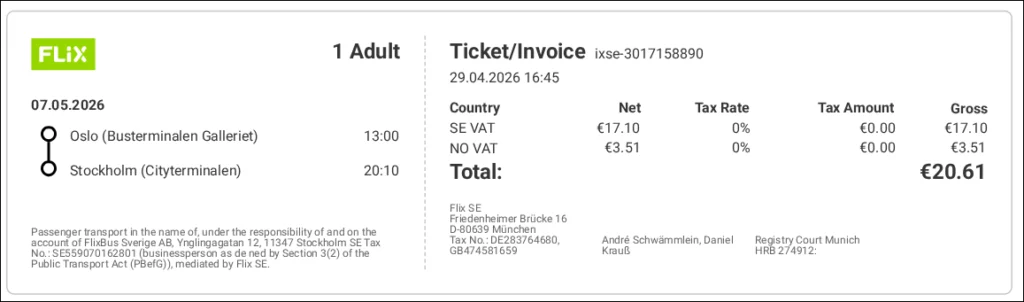
The overnight Copenhagen–Oslo bus mattered a lot here. One fewer hostel night to pay for.
Accommodation
Booking.com has the widest selection and usually the lowest prices. Manually sort by “Price (lowest first)” and filter “Good: 7+” to remove the bad listings. More hostel and booking tricks: Budget Travel Tips.
Prices on weekends are very high. A €20 hostel bed on Tuesday becomes €40 on Friday, or higher on some holiday season weekends.
We timed the trip to avoid that as much as possible. Paid per person:
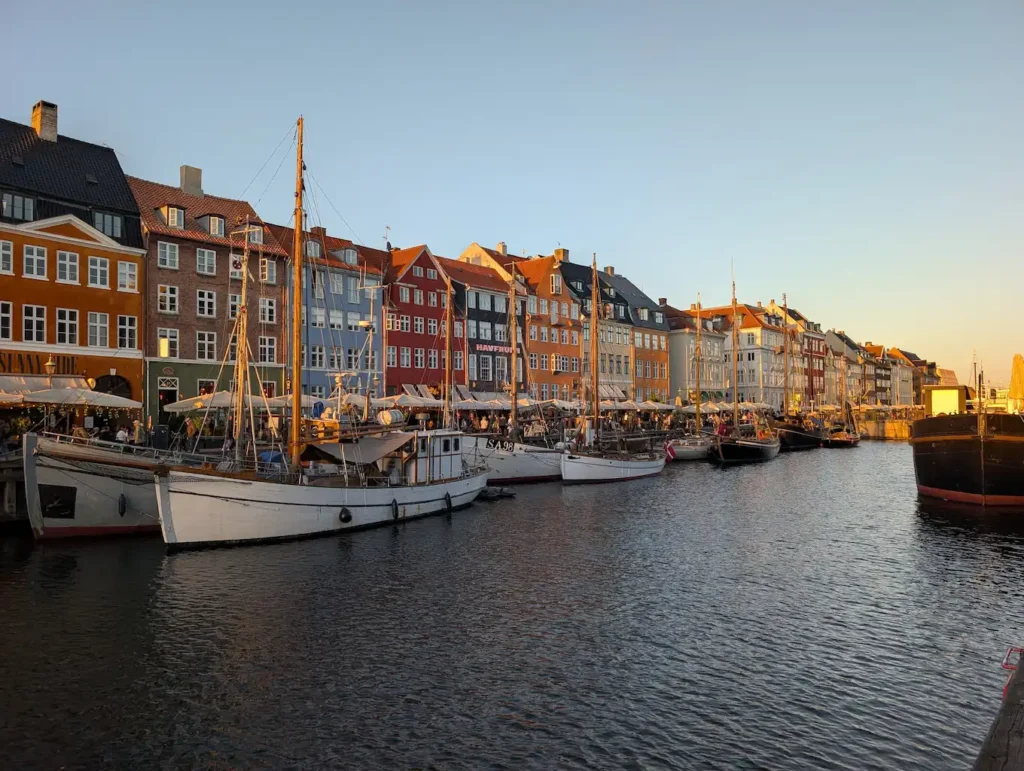
- Copenhagen: €17.50/night. Capsule Hotel Nyhavn63 (Bedwood Hostel is another name for the same place). 2 nights. Agoda offered a discount.
- Oslo: €24/night. Oslo Stay Guesthouse. Double room. Booking.com.
- Stockholm: €21.25/night. Nomad Cave, dorm. 2 nights. Booking.com.
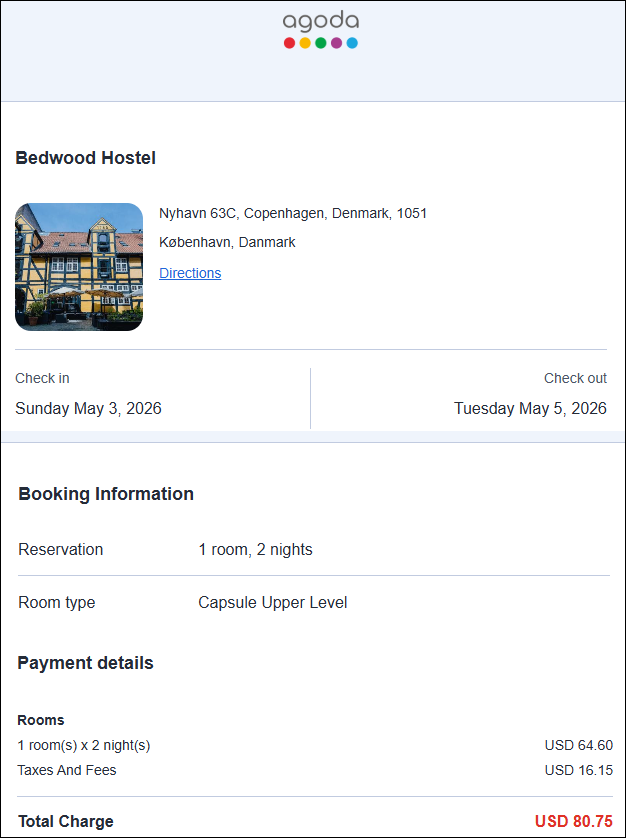
Five paid nights total. Night six was the overnight bus.
Airport Night: First night was technically free. Landed in Copenhagen around 1am and slept at the airport until morning. We saw many people doing the same. There are lots of comfy benches to sleep on. You don’t have to leave the airside (security area) when you land at Copenhagen Airport (an unusual set-up for Schengen airports).
Free Luggage Lockers: Det Kgl. Bibliotek in Copenhagen has free luggage lockers. Useful after checkout or if you arrive too early for check-in. Train station lockers were expensive.
Food
Averaged €8.71/person/day. Supermarkets for almost every meal:
- Denmark, Sweden: Lidl. Prices close to Central Europe.
- Norway: Lidl pulled out of the Norwegian market. Rema 1000 fills the gap. Basics, staples, jars.
Check the Too Good To Go app. Founded in Denmark, strong coverage across all three cities. Surplus food from restaurants and cafes at the end of day at a fraction of the normal price. Good option when you want something hot without paying full Scandinavian prices.
Route
I got the idea of visiting all three Scandinavian capitals on one trip when I found that FlixBus runs between these cities for around €20 if you book the right days in advance. I already knew the flights were super cheap.
Copenhagen
We arrived at the airport at 1am and slept there – see Accommodation section for details.
In the morning we walked from the airport to the center as we had lots of time and barely any luggage. Followed the coast, shopped at Lidl, had breakfast, relaxed in Amager Beachpark – beautiful place with a sandy beach and plenty of people exercising. Then walked through Christiania to the center to check in. The whole way from the airport was around 2 hours of walking.
In the evening we checked out the city landmark The Little Mermaid and Kastellet, a 17th-century star-shaped fortress – free and very peaceful, with a picturesque windmill.
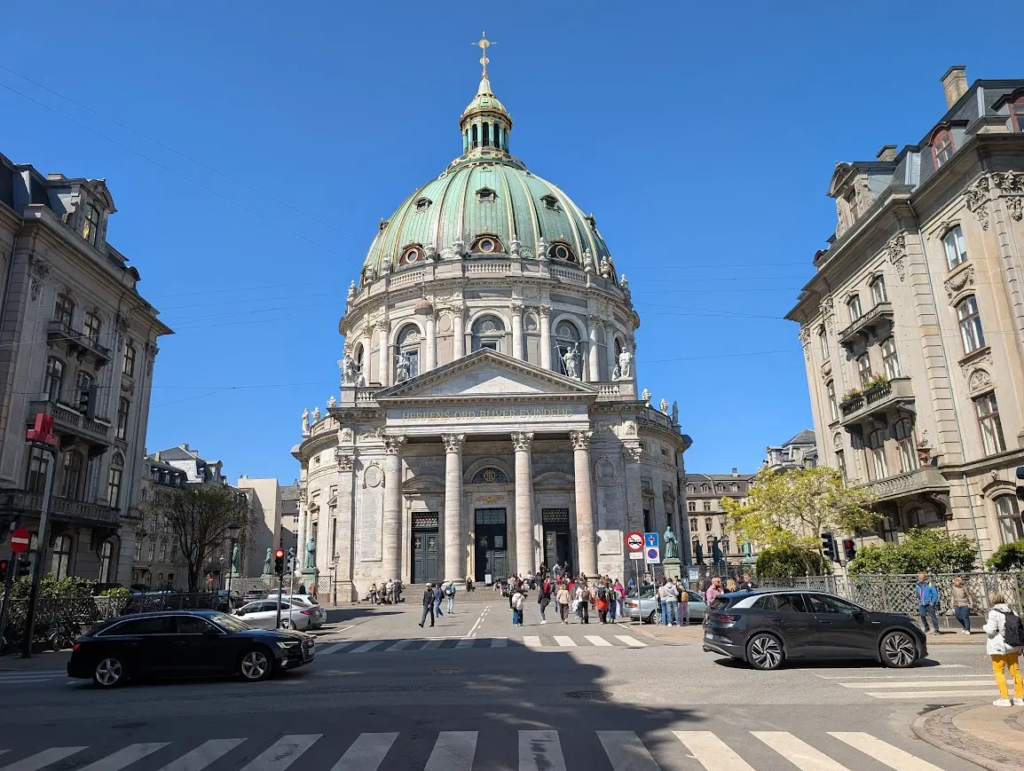
We started off the next day watching the changing of the guard at Amalienborg Palace – it left us unimpressed – crowded, but not comparable to the one in London. It lacked its own character. Not too far away we visited Frederik’s Church, a beautiful Lutheran church with the largest church dome in Scandinavia.
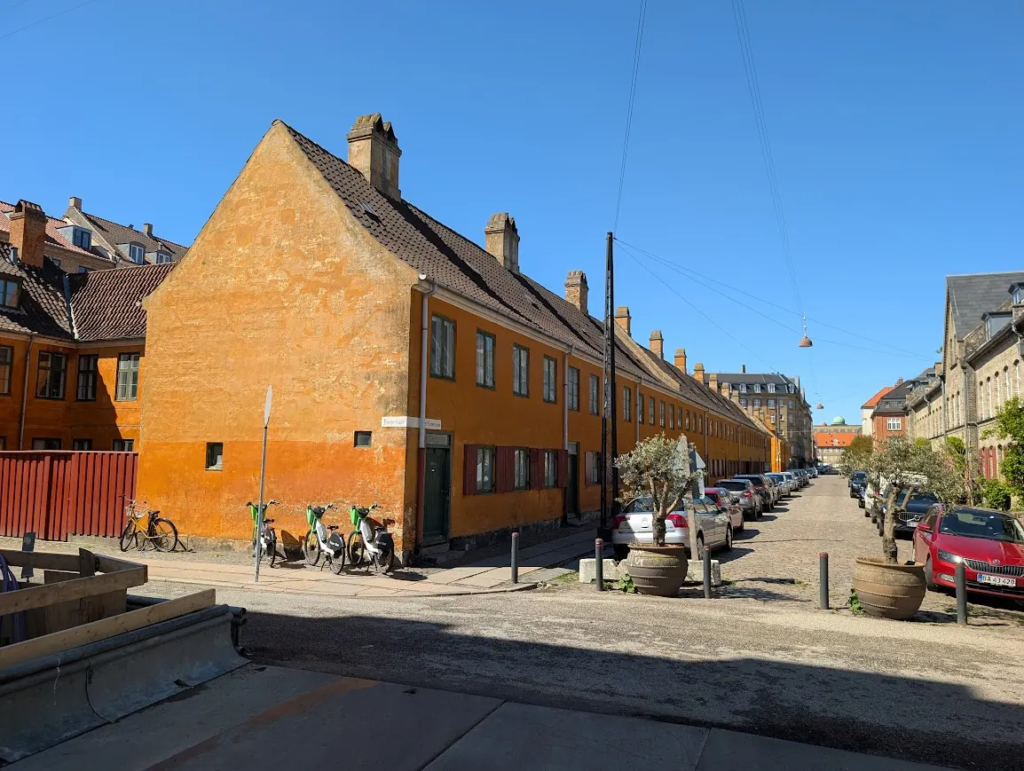
After that we checked out Nyboder, a historic district, but not touristic at all. Full of yellow, uniform-looking painted houses, formerly lodging of the royal navy and their families. Unlike anywhere else we visited in Copenhagen.
We walked around a lot, through the Botanical Garden and The King’s Garden, with great views of Rosenborg Castle. Heading west towards Tivoli Gardens you pass through a lot of old town, including the Round Tower, which you can pay to climb for views – we didn’t. We watched Tivoli Gardens through the fence. Entry was around 170 DKK (€23), and rides cost extra, so we skipped it.
We tried to visit the free viewpoint of Christiansborg’s Tower in Christiansborg Palace, but unfortunately it was closed without any notice due to elevator repair. They also couldn’t tell us when it would reopen.
We started our last day in Copenhagen by heading to CopenHill – a very interesting place, a waste-to-energy plant featuring an artificial ski slope. There’s a free elevator to the viewpoint on the very top. From there you can see all of Copenhagen and the Øresund Bridge connecting Denmark with Sweden.
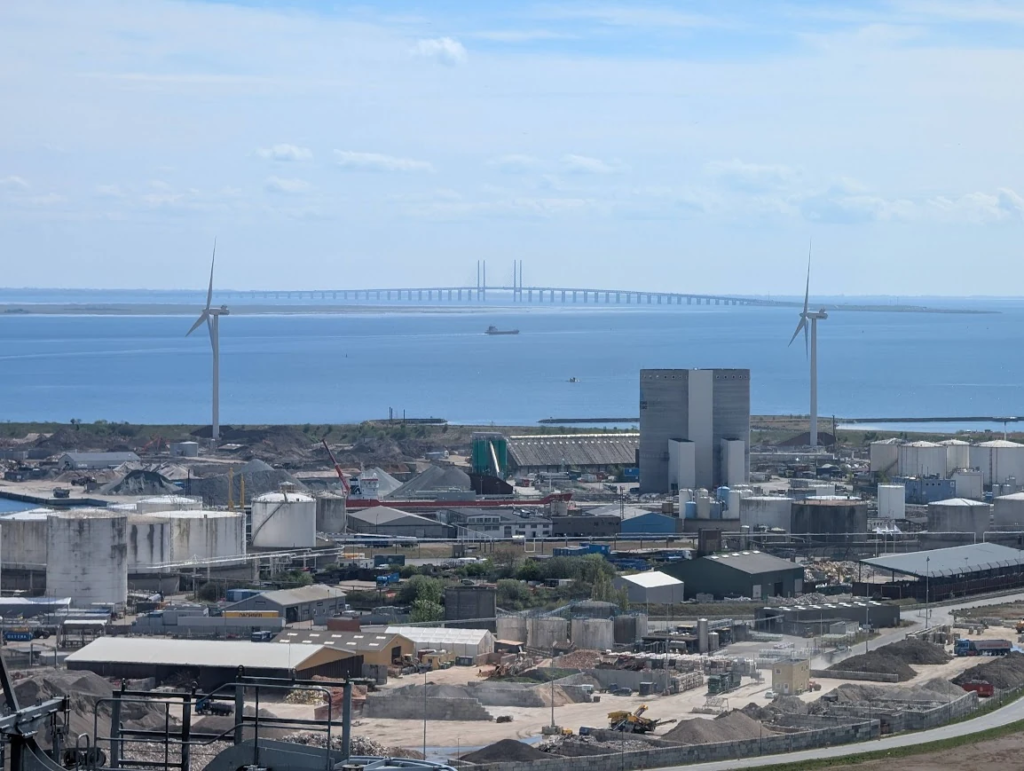
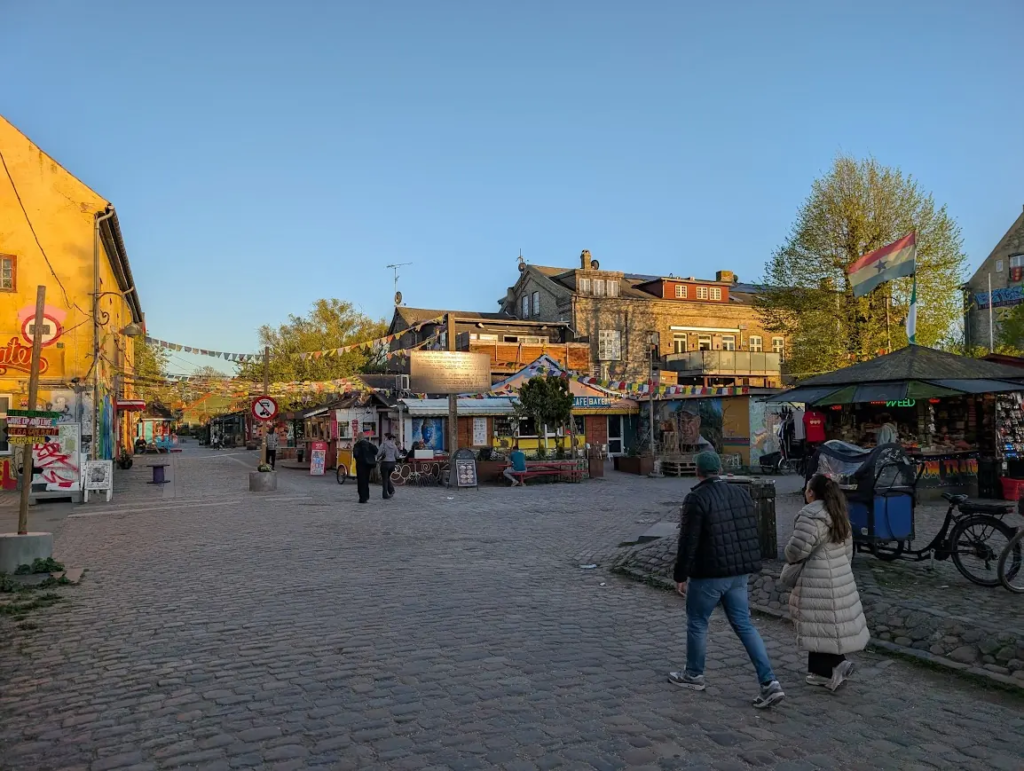
On the way back to the city we explored Freetown Christiania with its self-proclaimed independence. It feels more like a small town (and at times a village) than part of a capital city. I recommend hiking through it – just by the lake, there’s a lot of forest too. The Church of Our Saviour is another important church, located in Christiania.
Later we had a relaxed walk to the FlixBus station, which was a bit outside of the center. You could follow the coast of the canal – plenty of bicycle infrastructure, there was even a public sauna. Copenhagen is quite different from other Western European cities. It feels very clean, wealthy, and designed around people.
Green Kayak: Didn’t do it, but looked into it. Free kayak rental if you collect trash from the canals while paddling around. Good option on a sunny day.
Copenhagen ended up being our favorite city of the trip. Lots of old neighborhoods, the canals – especially the Nyhavn area is beautiful. There’s a lot of life, people exercise so much. It feels like a very livable city.
We took the overnight bus to Oslo to save on one night’s accommodation. After we crossed the bridge into Sweden, we were stopped by border guards, who checked documents of everybody on the bus. It took around 30 minutes.
Oslo
We arrived in Oslo early in the morning, having already decided to stay just one night. Before checking in, we had a walk to Vigeland Park – a unique park with over 200 sculptures made by one artist, Gustav Vigeland. It left a big impression on us.
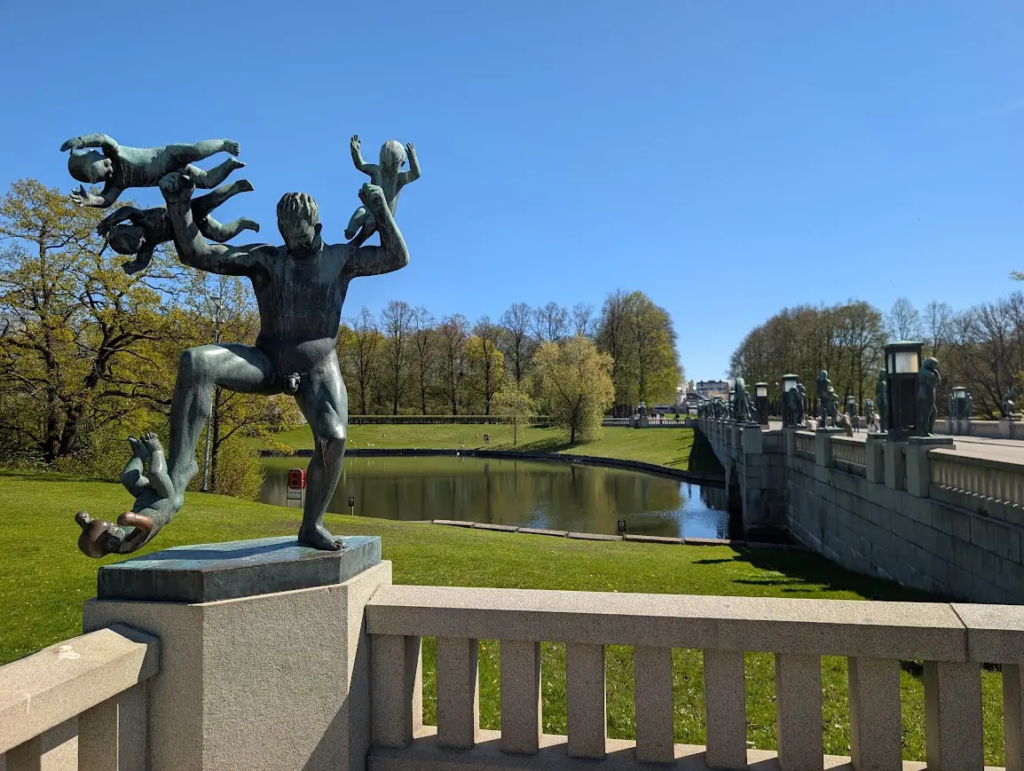
On the way there we checked out Akershus Fortress, the parliament building, and Oslo Cathedral. All free. We randomly witnessed the changing of the guard at the Royal Palace and really liked it – much more artistic than the one in Copenhagen, plenty of music and the way the soldiers were moving was almost like dancing. There was also some singing.
We checked into our guesthouse in a neighborhood not far from the center, cooked dinner, and relaxed for a bit. After that we went to visit Oslo Opera House whose roof you can climb – all free.
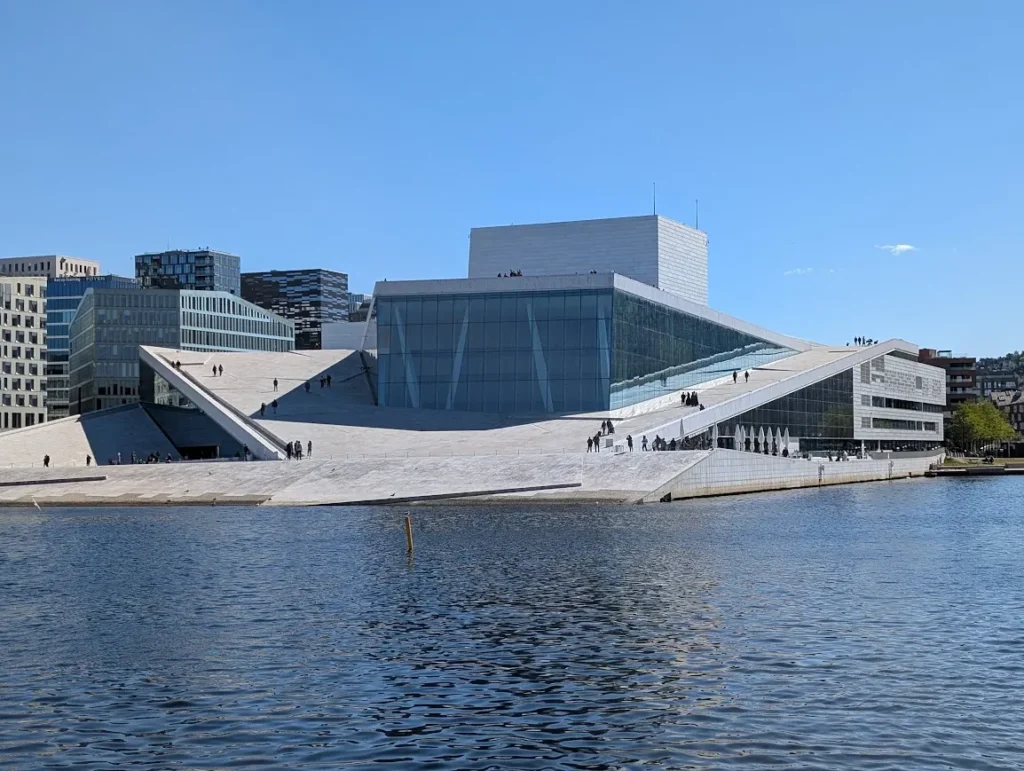
Afterwards, we headed to our main goal in Oslo – the Munch Museum with its famous The Scream painting. It’s free on Wednesday evenings (except for July and August). Around €20 (220 NOK) saved if you time it well.
Next day after waking up we went hiking through Old Oslo (where the city originally started, but not much is preserved) to Munchpunktet, where Edvard Munch allegedly got inspired to paint his famous painting.
Oslo felt noticeably more modern than Copenhagen and Stockholm. We liked it, but were happy with just one day. It’s not the main tourist destination in Norway (that’s the fjords, see my Bergen and Trolltunga trip report), but if passing through, why not stop.
At 1pm we boarded the bus to Sweden, this time during the day. The route to the border was quite picturesque, with lots of lakes and hills – no border checks this time.
Stockholm
We arrived in Stockholm in the evening and headed to our accommodation to sleep. Two nights, two days.
The Vasa Museum was the one expensive thing we paid for – 240 SEK (~€22). A warship that sank on its maiden voyage in 1628, salvaged in 1961 and almost completely intact. Hard to skip. We spent around 2 hours there and used their free audio guide.

Apart from that we visited Stockholm City Hall, Sergels torg (main public square), and explored lots of Gamla Stan.
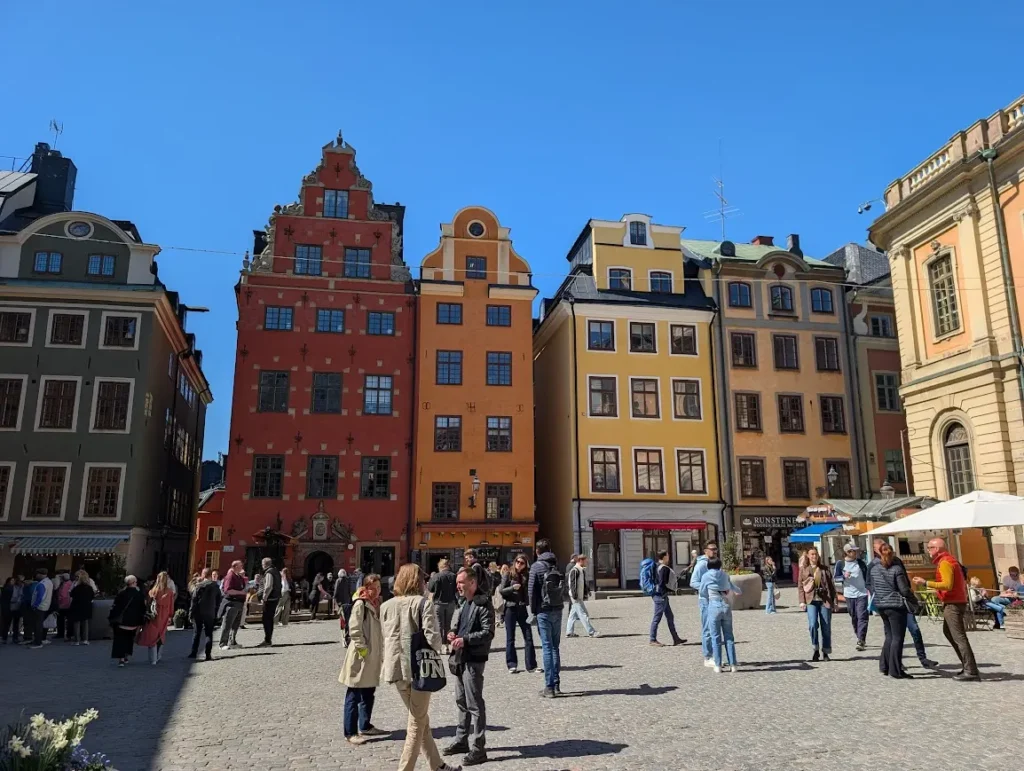
Last day we watched the changing of the guard – our third in a week. Soldiers on horses were a bit of a differentiator for this one. It was very crowded and hard to see the action unless you had come much earlier – we hadn’t. I’d say we liked this one a bit more than Copenhagen’s, but Oslo’s changing of the guard will stay our favorite by far.
Before heading to the airport we stopped at IKEA Restaurant – it’s a bit of a cultural experience, as IKEA is originally Swedish. Also very cheap. We paid 49 SEK (~€4.50) for plant-based meatballs with mashed potatoes and 20 SEK (less than €2) for a 5-pack of cinnamon buns.
Season
We visited in early May – still quite chilly, but we got sunny stretches and barely any rain. Days were long. It’s shoulder season, so there were no crowds.
Summer (June through August) is when most people visit. Major attractions can get packed.
Practical
Currency
Three countries, three currencies: DKK (Denmark), NOK (Norway), SEK (Sweden). All three are nearly cashless – cards accepted everywhere, including small cafes, supermarkets, and transit. No need to exchange cash before you go.
I use a Revolut card for foreign currency payments. My expenses end up within 1% of the official rate for the whole trip. Note: 1% markup applies on weekends – pre-exchange in the app to avoid it. At my spending level, the difference would’ve been cents.
SIM
Denmark, Sweden, and Norway are all EU/EEA members. If you have an EU/EEA-based SIM, you’ll get data under the Roam Like at Home scheme without roaming charges. Otherwise check eSIMDB for eSIM deals – sort by country, data amount, and trip duration.
Language
English is widely spoken, even among the older generations. I still like to learn a few basic words to be polite and immerse a little bit in the local culture:
- Danish: tak (thanks), hej (hi), goddag (good day)
- Norwegian: takk (thanks), hei (hi), god dag (good day)
- Swedish: tack (thanks), hej (hi), god dag (good day)
Tips Summary
- Overnight Bus: The Copenhagen–Oslo FlixBus is overnight. One fewer hostel night to pay for.
- Book Early: FlixBus prices were around double closer to departure. Book a couple of weeks out.
- Promo Codes: FlixBus promo codes exist – 10% is common, 25% occasionally. Search before booking.
- Check Omio: Use Omio to find connections, then book direct on FlixBus for best price.
- Weekday Timing: Hostel beds on weekends can be double the weekday price. Time the trip to hit weekdays where possible.
- Airport Night: Copenhagen Airport lets you stay airside after landing – no need to exit security. Lots of benches. One free night.
- Luggage Lockers: Det Kgl. Bibliotek in Copenhagen has free luggage lockers. Train station lockers are expensive.
- Munch Museum: Free on Wednesday evenings (except July and August). Around €20 (220 NOK) saved if you time it right.
- Vasa Museum: Audio guide is free and included.
- Too Good To Go: Founded in Denmark, strong coverage across all three cities. Surplus food at a fraction of normal price – good when you want something hot without paying full Scandinavian prices.
- Green Kayak: Didn’t do it, but looked into it. Free kayak rental in Copenhagen if you collect trash from the canals while paddling.
- Supermarkets: Lidl in Denmark and Sweden. Rema 1000 in Norway – Lidl pulled out of the Norwegian market.
- IKEA Restaurant: A meal under €5. Plant-based meatballs with mashed potatoes. Worth a stop before the airport.
- Accommodation: Sort by lowest price on Booking.com and filter to 7.0+. Agoda occasionally cheaper – worth checking both.
The Budget System
I keep daily travel costs under €30 using two methods:
● €3/Day Rental Car Guide
● Sleeping in Rental Cars
One week of travel cost me less than a day of work in Australia.