Portugal – Alentejo & Algarve on €13/Day: Sleeping in a Car
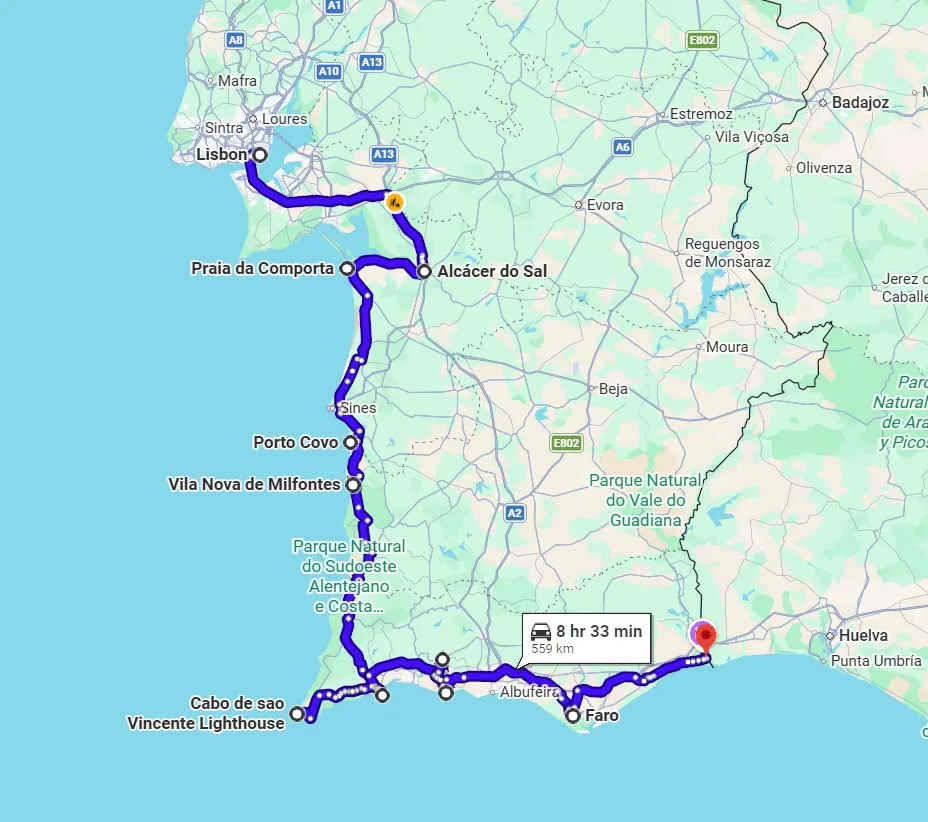
Most people fly into Faro and head straight to the Algarve. The protected coastline two hours north is almost empty. We did it in our own car – add €7/day for a rental. Four days from Lisbon to the Spanish border:
TRIP STATS
- DAILY RATE: €13.33 (per person)
- SLEEP: Sleeping in Car
- BY: Car
- PEOPLE: 2
- DAYS: 4
- TOTAL: €106.60
- CURRENCY: Euro (€)
- DATE: October 2025
- ROUTE: Lisbon → Alentejo Coast → Algarve → Spain
- TOOLS: DiscoverCars, park4night, Revolut, Lidl
| ITEM | COST (2P) | NOTES |
|---|---|---|
| Stay | €0.00 | Slept in the car. |
| Fuel | €51.00 | €12.75/day |
| Food | €50.00 | €6.25/day per person. Shopped at Lidl. |
| Sights | €5.60 | Castelo de Silves – €2.80/person |
| TOTAL | €106.60 | 4 days at €13.33/day per person |
How €13.33/day per person compares to my other trips: Budget Travel Cost per Day.
Getting There
We flew from Luxembourg to Lisbon for €16 with Ryanair, travelling with a small carry-on only.
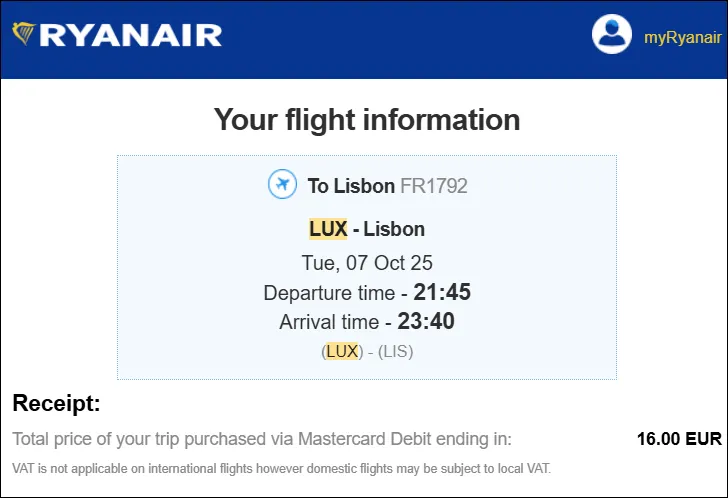
Both Ryanair and Wizz Air offer cheap flights to Lisbon and Faro Airports. If you travel with a small carry-on and are flexible, under €20 tickets are possible to Spain, Morocco, France, the UK and more. Search Skyscanner with flexible date filters. Full list of what I pack and more carry-on rules: Sleeping in a Rental Car Packing List.
After the Algarve we carried on to Andalusia, which can be another entry point to Portugal. Full report: Andalusia – Seville, Gibraltar on €16/Day: Sleeping in a Car. It was the start of our 52-day trip through Spain, Portugal and France: Spain, Portugal & France on €19/Day.
Car Rental in Portugal
We did this trip in our own car, so I can’t comment on rental providers. If you’re flying into Portugal instead, these are the current prices and things worth knowing:
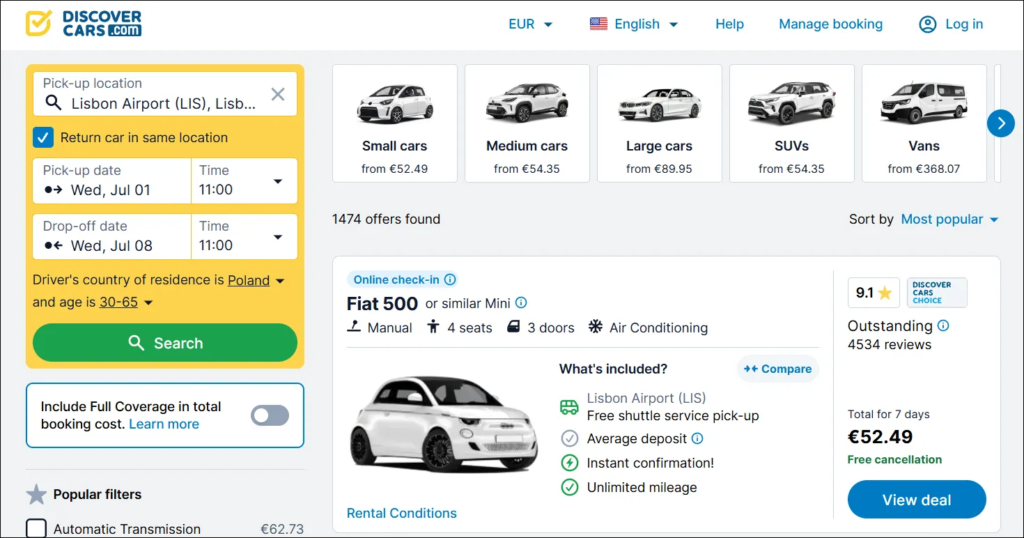
- Current Prices: Small cars in Lisbon from €52.49/7 days (€7.50/day) at the time of writing via DiscoverCars (my review). Full European rental comparison.
- Excess: Decline the desk insurance. Cover it with an independent policy like Cover4Rentals instead: €3/Day Rental Car Guide.
- Tolls: We stuck to free coastal roads throughout – the right call for sightseeing. If you want the fast A2 motorway south from Lisbon, tolls apply (Lisbon to Faro costs around €22.70). Most rental cars come with a transponder since a 2023 law change – confirm at pickup. Activating it links tolls directly to your credit card.
- Fuel: Diesel was around €1.55/l during our October 2025 trip, although prices fluctuate. Auchan and Intermarché are among the cheapest stations. Use Waze or Google Maps for real-time prices.
- Faro: Flying directly into the Algarve and skipping the Alentejo? Pick up a rental car in Faro instead. Cheapest cars from €47.48/week (€6.78/day) at the time of writing.
- Parking: We always managed to find free parking using Google Maps search. More free parking tricks: Budget Travel Tips.
Sleeping in a Car in Portugal
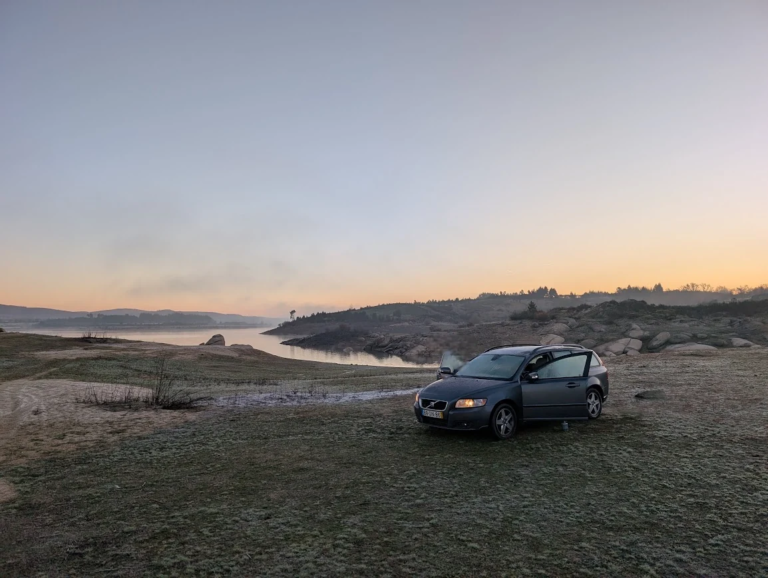
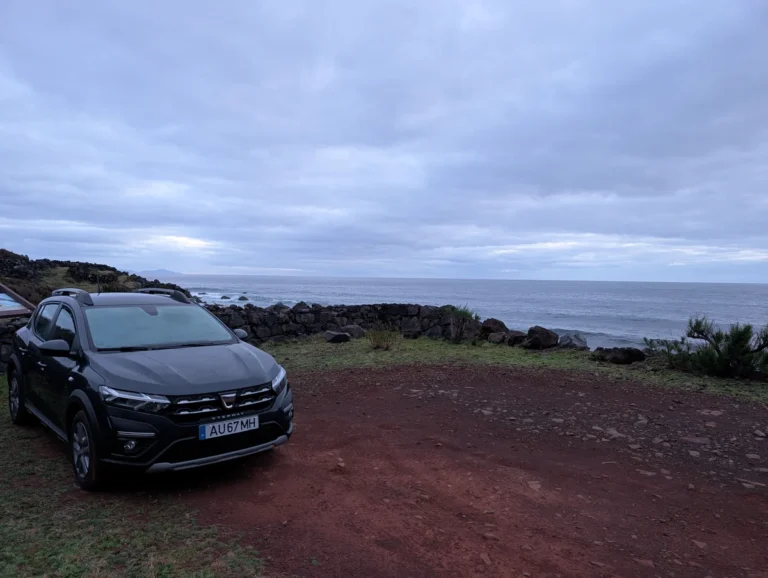
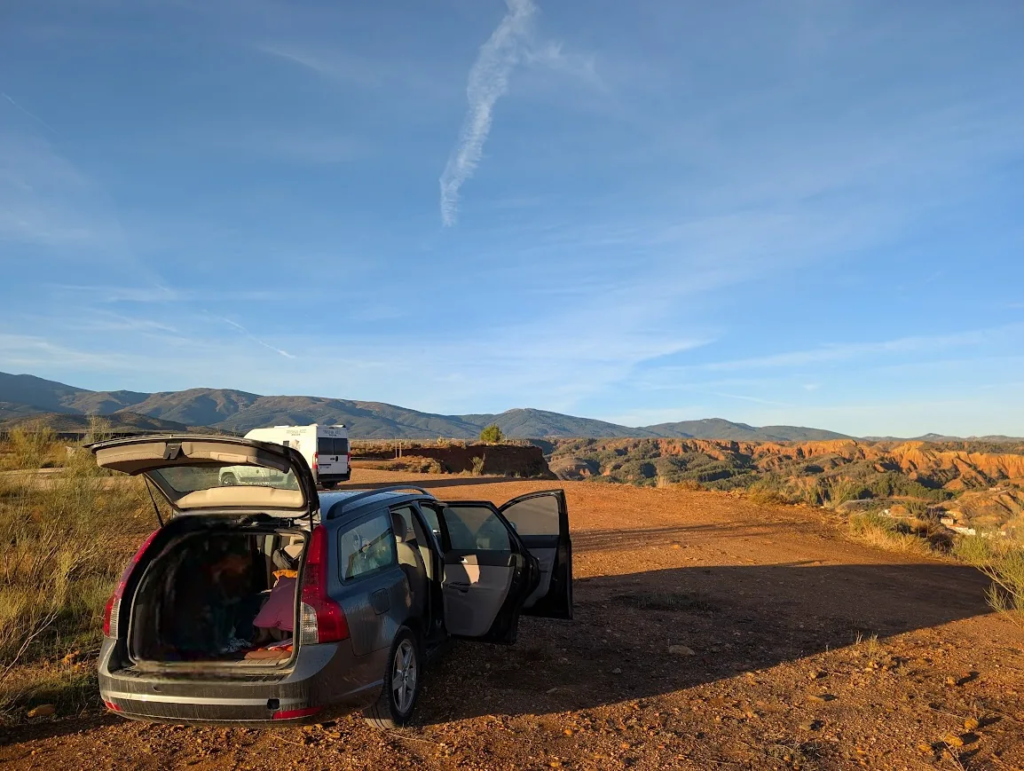
Volvo V50. 4/5. Spacious.
Long car, plenty of room for two. Rear seats folded fully flat – no step. One issue: a fixed metal bar ran the full width at the top of the folded seatback. At 190 cm, it pushed my feet up slightly. An inflatable mat mostly fixed it.
Full sleeping audit: Best Rental Cars to Sleep In.
- Legality: Gray area, generally tolerated outside protected zones. Don’t display camping behavior (chairs, tables outside the car). The Highway Code rules on overnight stays (Law 66/2021, articles 48 and 50-A) are written for “motorhomes or similar.” They ban overnight stays in Natura 2000 areas, protected areas and coastal planning zones, except in authorized places. The law doesn’t define “similar,” so it’s unclear whether a regular car counts. Fines are €60–€300, or €120–€600 in protected zones. Inside parks, the GNR said in 2020 that camping, caravanning and any form of overnight stay outside designated places is an environmental offense, with fines of €200–€36,000. The Costa Vicentina park’s management plan also bans camping and caravanning outside designated places. Country by country: Is It Legal to Sleep in a Rental Car in Europe? Full guide: Sleeping in Rental Cars.
- Facilities: Public toilets in towns, sparse outside. Lidl was the most reliable option throughout the route – free toilets, easy to find. Some beaches have outdoor showers.
- Overnight Spots: Search park4night for marked spots. Supermarket car parks with dedicated campervan places are a reliable option in Algarve. I’ve linked my actual sleeping spots in the Route section below.
- Backup Accommodation: Booking.com has the widest (and usually the cheapest) selection in Portugal. Sort by lowest price, filter to 7.0+ to get rid of bad listings.
Food
€50 for two people over 4 days. €6.25/day per person.
We shopped at Lidl – the cheapest supermarket chain in Portugal, present in most larger towns. It doubles as an overnight spot and has free toilets, which made it a reliable base throughout the Algarve section of the route. Pingo Doce and Continente are the next cheapest alternatives.
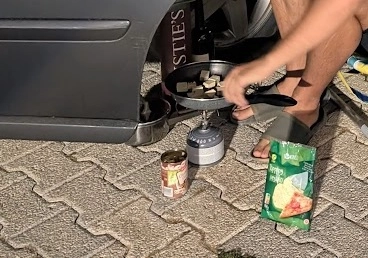
We cooked dinners on a gas stove in Lidl car parks. Supermarket car parks are urban, meaning they fall outside the geographic restrictions of the national rural fire law. That said, Portugal’s official critical fire period runs July 1 – September 30 (though often extended into October), and rules tighten further on very high and maximum risk days. Never use a stove in or near rural areas, forests, or protected zones during this period. Check current risk before cooking outdoors: fogos.pt.
Route
Day 1 – Lisbon to Sines: Cristo Rei, Alcácer do Sal, Comporta
We left Lisbon in the afternoon, crossing the bridge past the towering Sanctuary of Christ the King. You can walk around and visit the grounds and chapel for free. If you want to go up to the viewing platform, you have to pay. We continued on to Alcácer do Sal, a small traditional town that felt deserted. We entered the region of Alentejo. That evening we checked out the beach of Praia da Comporta. It’s a natural beach that gets busy in summer, but was fairly quiet in October. We also hiked for a bit in Santo André and Sancha Lagoons Natural Reserve. We caught the sunset over the lakes there. The place was completely empty – the only person we saw was an older Portuguese farmer herding back his cows.

We slept on a cliff just next to the town of Sines. There was a group of local youth driving around in the evening, which felt slightly sketchy, but ultimately harmless.
Day 2 – Costa Vicentina: Porto Covo, Vila Nova de Milfontes, Odeceixe
We started off the day by relaxing on Praia de Morgavel where we also had our breakfast. The 226 km Fishermen’s Trail follows the coast here as part of the Rota Vicentina network. Later we carried on driving with short stops at Porto Covo and Vila Nova de Milfontes (with its river estuary), both small towns – charming, yet so quiet and still. Later, at Praia de Odeceixe, we went for a swim and a one-hour hike.

We decided to sleep at Lidl’s parking lot in Vila do Bispo after finding it on park4night. Most coastal spots seemed to ban overnight stays because they were part of protected areas. The night was peaceful. The shop shut down at 9pm, the lamps were turned off and just overnighters stayed (many campervans with dedicated spots, but also a couple of smaller cars throughout the parking lot). We woke up just before the shop opened at 8am, so that we wouldn’t have to wait too long to access the toilets.
Day 3 – Cape St. Vincent, Sagres, Lagos, Ponta da Piedade, Alvor
From there we reached the coast and did some dirt road driving (a couple of times we had to turn back as it was getting too rough), using Organic Maps for navigation. The drives were very scenic.

We headed on to Cape St. Vincent with its lighthouse, the southwesternmost point of Portugal and of mainland Europe. Plenty of tourists around, and you can walk around some old fortifications. Afterwards we headed to Sagres, which gave its name to Portugal’s most famous beer (interestingly it didn’t originate there, but in Lisbon). We walked around cliffs and the fortress, but we didn’t head inside because of the queue and also after reading the reviews it didn’t seem worth the wait.
Next stop of the trip was Lagos where we checked out its old town and really liked it – it had an old southern town feel to it, with just the right amount of tourists. Lots of Moorish (Arabic) influence in the architecture.

We spent a couple of hours hiking around the cliffs of Ponta da Piedade, where you can climb down the stairs to the sea. We also went down to the beach of Praia do Camilo, which was definitely too crowded for us.

In the afternoon we hiked around Passadiços de Alvor, a free to access boardwalk that goes between the sea and lagoon. We swam in the lagoon, which is very sheltered. Plenty of locals and tourists alike there, relaxing, swimming, walking. We spent the night at another Lidl’s parking lot – this time in Portimão.
Day 4 – Silves, Benagil, Albufeira, Faro
First stop of the next day was Silves, a town that really enchanted us. It’s distinctly different from the coastal towns, as it used to be the Moorish (Arabic) capital of the area. We walked around for a couple of hours and visited its sandstone castle (€2.80 entry).

After that we headed to the Benagil Cave area. The cliffs are beautiful and you can look down through the cave’s ceiling opening into the sea below. It’s a pretty spot, but we found it to be too busy. It was really hard to find free parking.

Then we headed on to Albufeira, which was pretty forgettable. It’s the most popular resort town in the area, but much of its traditional character has been lost to mass tourism. The center is crowded and full of clubs.
We spent the evening in Faro, where we found another Lidl that allowed overnight parking. Encouraged by the previous experiences, we gave it a try and it was another peaceful night. The overnight spots in the Algarve weren’t scenic, but highly practical. It would’ve been hard to find nice legal spots due to all the local restrictions caused by the high number of campervans, especially in the high season.
Day 5 – Tavira, Vila Real de Santo António, Castro Marim, into Spain
Our first stop next morning was Tavira, another charming town featuring a mix of traditional Portuguese and older Moorish architecture. There’s a castle there you can visit for free and the Roman Bridge (not actually built by the Romans), picturesquely connecting two sides of the Gilão river.

We carried on to a local beach where we relaxed and went for a swim – early October is a great time for swimming in these parts. After that we checked out Vila Real de Santo António, the last bigger town before the Spanish border. Surprisingly, it was very busy, mostly with Spaniards crossing over for the day. The town has a public toilet with a shower for €1, which we were happy to find.

We also stopped at Castro Marim and its hilltop castle. The town was super quiet and sleepy, we really liked the feel of it. It’s the last town we visited before heading into Spain via Guadiana International Bridge.
Season
Mid-October was a great time to visit. It was still very warm – what most Europeans would consider summer weather – but not unbearably hot, as it can be during the peak summer months. Southern Portugal is the hottest region in the country and is prone to wildfires.
October still sees fairly high tourist numbers (if you’re after a more peaceful experience, you might want to wait until November), but we found it to be a good balance.
Practical
Currency
Euro. Cards are accepted almost everywhere, but carry some cash for parking attendants or street vendors. If you’re coming from a non-euro country, use Revolut to avoid conversion fees. There’s a 1% weekend markup, but you can avoid it by exchanging currencies in the app beforehand.
SIM
Any EU SIM works under Roam Like at Home – no need to buy a local one. If you don’t have one, check eSIMDB, filter by the amount of data you need and your trip length, then sort by price.
Lyca Mobile Portugal periodically runs a 50GB for €4/month promo – worth checking before buying anything else.
Language
Portuguese. English is widely spoken in hospitality and tourism, but not reliably outside of it. Learn a few basics: bom dia – good morning, boa tarde – good afternoon, olá – hello, obrigado/obrigada – thanks (male/female).
Tips Summary
- DiscoverCars: Booking an off-peak small car via DiscoverCars gets you rates as low as €7.50/day in Lisbon or €6.78/day in Faro (at the time of writing).
- Real-time Fuel Prices: Check Waze or Google Maps for real-time station prices to find the cheapest diesel.
- Free Coastal Roads: Avoid the costly A2 toll route south from Lisbon, saving around €23.
- Sleeping in a Car: Drops accommodation costs to zero. Gray area in Portugal: tolerated outside protected zones, banned inside them.
- Protected Coastline Ban: Overnight stays are banned in the Southwest Alentejo and Costa Vicentina Natural Park and in other protected and coastal planning zones. Fines start at €60 under the road code (written for motorhomes) and at €200 as an environmental offense.
- Lidl Overnight Parking: Provides reliable, free overnight parking spots outside protected zones, with free toilet access.
- Vila Real Showers: Clean, public toilet and shower facility near the Spanish border for €1.
- Tavira Free Sights: Traditional architecture, the historic Roman Bridge, and the town’s castle ruins are free to visit.
The Budget System
I keep daily travel costs under €30 using two methods:
● €3/Day Rental Car Guide
● Sleeping in Rental Cars
One week of travel cost me less than a day of work in Australia.