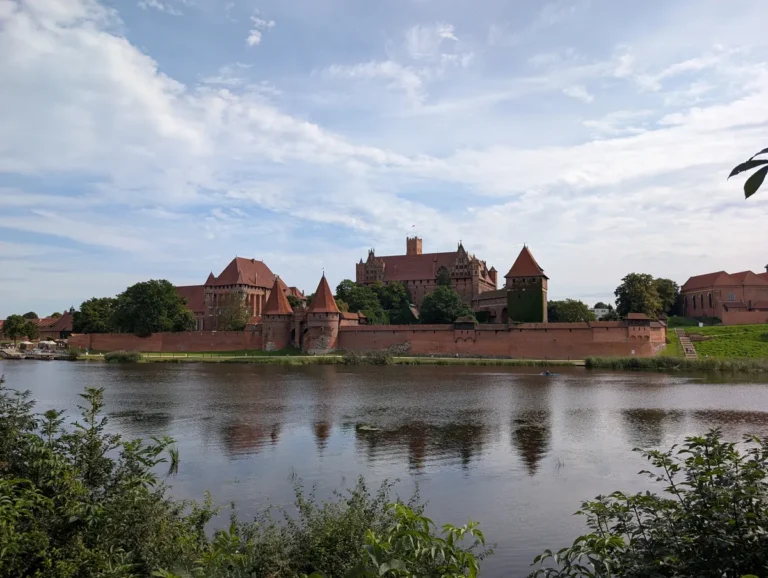
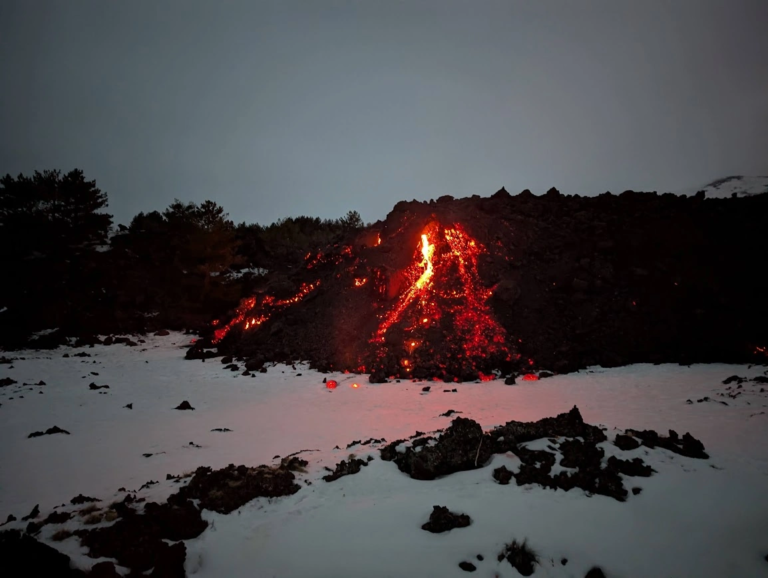
Pico, São Jorge, Faial on €30/Day: Sleeping in Rental Cars
Central Group, Azores: three volcanic islands in the Atlantic. Ten days, three rental cars:
TRIP STATS
- DAILY RATE: €30.46 (per person)
- SLEEP: Sleeping in Rental Cars
- BY: Rental Cars
- PEOPLE: 2
- DAYS: 10
- TOTAL: €609.20
- CURRENCY: Euro (€)
- DATE: March 2025
- ROUTE: Faial (Horta) → Pico → São Jorge → Faial
- TOOLS: DiscoverCars, Cover4Rentals, Continente, Atlânticoline (Ferry)
| ITEM | COST (2P) | NOTES |
|---|---|---|
| Car Rental | €168.20 | €60.50 – 3 days on Faial (Horta) €62.73 – 4 days on Pico €44.97 – 3 days on São Jorge €3/Day Rental Car Guide via DiscoverCars |
| Fuel | €104.00 | €19 – 3 days on Faial (Horta) €51 – 4 days on Pico €34 – 3 days on São Jorge |
| Ferries | €100.00 | €8/person: Horta → Pico €17/person: Pico → São Jorge €25/person: São Jorge → Horta |
| Stay | €0.00 | Slept in the rental cars. |
| Food | €147.00 | €7.35/day per person. Shopped at Continente. |
| Activity | €90.00 | €25/person – Pico climb permit €20/person – crampon rental |
| TOTAL | €609.20 | 10 days at €30.46/day per person |
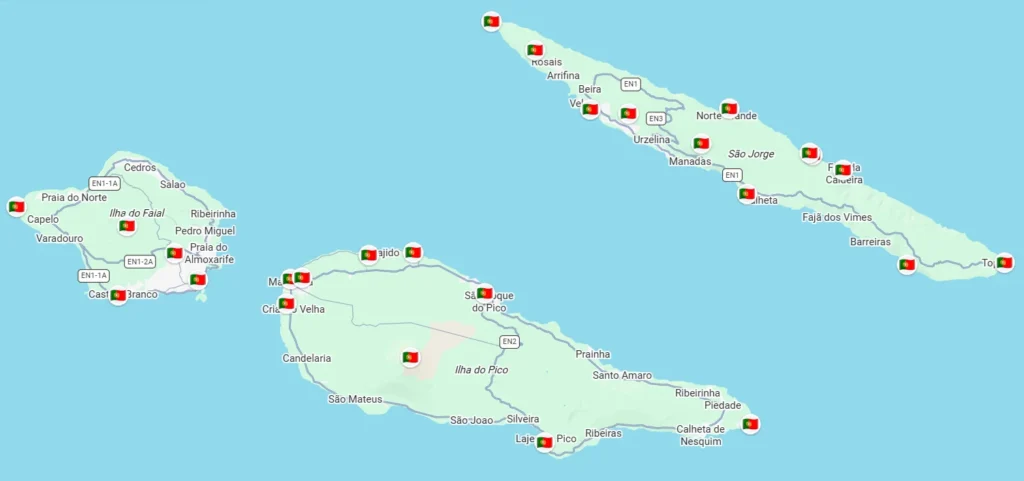
Getting There
Flew in as part of a longer 5-island trip – Lisbon to Horta, then inter-island from there. SATA Air Açores (with its subsidiary Azores Airlines) is the only airline flying to Faial, Pico, and São Jorge. The cheapest way to combine multiple islands is the Skyscanner Multi-City search: select 3 flights in one booking. I got Lisbon–Horta, Horta–Ponta Delgada, and Ponta Delgada–Terceira for €102.29 per person via Trip.com OTA, registered luggage included. Booking directly was double the price. Play around with the dates until the price drops.

Visiting more of the Azores? We went to 5 islands on this trip, sleeping in rental cars on all of them. Trip reports: São Miguel was the cheapest – €16/day. Terceira came in at €24/day. Full 5-island overview: 5 Azorean Islands on €31/Day.
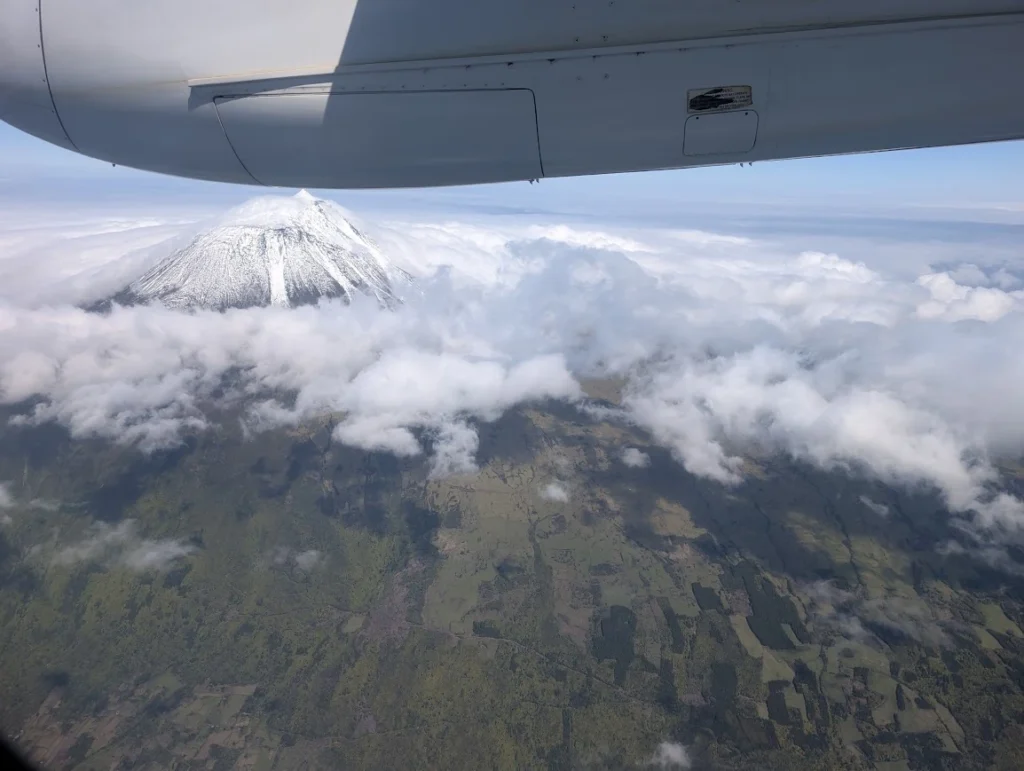
Car Rental in the Azores
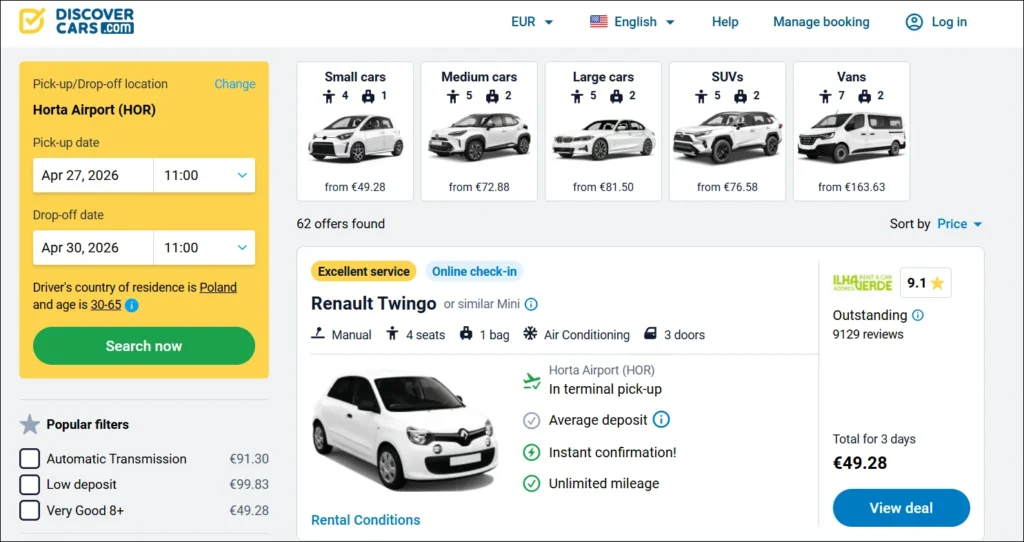
- Cost: €168.20 for 10 days across three islands. We booked São Jorge via DiscoverCars (my review). Pico and Faial via azoresrentalcars.com – it came out cheaper, worth cross-checking both.
- Current Prices: Horta Airport on DiscoverCars – Renault Twingo from €49.28 for 3 days (€16.43/day) at the time of writing. European Car Rental Price Comparison.
Pico
- Provider: Autatlantis. 5/5. No issues. Pickup at Madalena Ferry Terminal, dropoff at Pico Airport – chosen when booking, no price difference. No upsell at the desk.
- Vehicle: Renault Clio. Booked: Economy class (Toyota Yaris or similar).
- Excess: €700. Deposit: €700. They accepted debit card for deposit – helpful when renting multiple cars back to back and running against credit card limits. Our excess was covered by an annual policy with Cover4Rentals, so declined desk insurance. Full process: €3/Day Rental Car Guide.
São Jorge
- Provider: Ilha Verde. 5/5. Smooth. Some upsell at the desk, no issues on return. Pickup and dropoff at Velas Ferry Terminal.
- Vehicle: Dacia Sandero Stepway. Booked: Mini class (Hyundai i10 or similar). Upgraded by provider.
- Excess: €1,200. Deposit: €1,200. Covered by Cover4Rentals, we declined desk insurance. They accepted debit cards for deposit and transferred it towards our next rental in Terceira – no additional hold on the card.
- Deposit Transfer: Autatlantis and Ilha Verde allow deposit transfers if you use their services across multiple islands, preventing you from having multiple holds on your credit card at the same time. We transferred our São Jorge deposit towards our Terceira rental. Tell them at pickup and keep the deposit pre-authorization receipt.
- Tolls: No toll roads in the Azores.
- Fuel: Prices locked and updated monthly – cheaper than mainland Portugal due to lower taxes.
Inter-Island Ferries
- Don’t take the rental car on the ferry – very limited space and high fees from the rental companies on top of the tickets. Get a new car on each island and buy a walk-on ticket. There are car rental desks at ferry terminals.
- Ferries between Faial, Pico, and São Jorge run year-round via Atlânticoline. The longer ones, like São Jorge–Faial (2 hours), can get rough on a windy day, check the wave forecast. On a calm sunny day, it’s very picturesque.
- In summer it’s possible to take a ferry from Pico to Terceira, but it’s a rough 7-hour ride.

Sleeping in a Rental Car in the Azores
Renault Clio. 4/5. Solid. Your average economy car – the kind you’re likely to get booking Economy Class on aggregate sites. We levelled the slight incline and uneven surface by stuffing clothes under our inflated mats. At 190cm, I fit comfortably. We slept well. Full sleeping audit: Best Rental Cars to Sleep In.
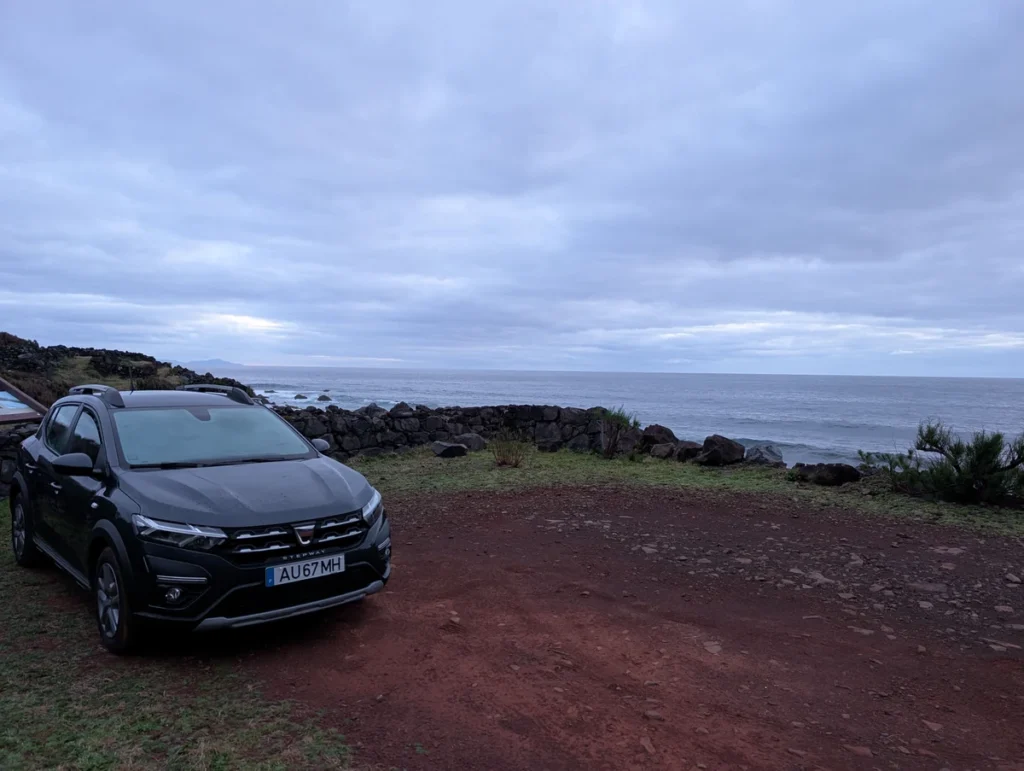
Dacia Sandero Stepway. 4/5. Good. Booked Mini class, upgraded by the provider. Needed two cardboard boxes from a supermarket to level the surface – once sorted, perfectly fine for two.
- Legality: Legally grey area, generally tolerated. You most likely won’t find anybody else doing it on these islands. No camping behavior in Portugal – don’t put chairs or tables outside the car. Full guide: Sleeping in Rental Cars.
- Facilities: A few public toilets, generally clean. Many natural pools for swimming, separated from the ocean (zona balnear).
- Overnight Spots: Very few spots marked on park4night, none on São Jorge. We used Organic Maps to find secluded parking lots. I added some spots in the app, you can too – very helpful in less visited places. I’ve also linked my actual sleeping spots in the Route section below.
- Backup Accommodation: Booking.com generally has the widest selection and lowest prices, but you need to manually sort by lowest price. Also I recommend filtering to 7.0+.
Food
We shopped at supermarkets throughout. €7.35/day per person across 10 days.
The cheapest Portuguese mainland chain – Lidl – doesn’t reach these islands. Continente has one shop in Madalena (Pico) and one in Horta (Faial). Pingo Doce has one shop in Horta as well. These are the cheapest options on those islands. São Jorge has no chains at all. We used Euro Velas in Velas – prices are a bit higher.
Route
Pico
We flew into Faial and the same day took the ferry to Madalena – around 30 minutes. Picked up the car, shopped at Continente (Portugal-wide chain, the biggest supermarket on the island).
First stop was Cachorro – a small cluster of houses built from black lava rock by the ocean, black rocky cliffs, a group of very friendly local cats. The community felt deserted, we didn’t see anyone. We slept next to a church on a gravel track just by the ocean. Nobody passed during the night.
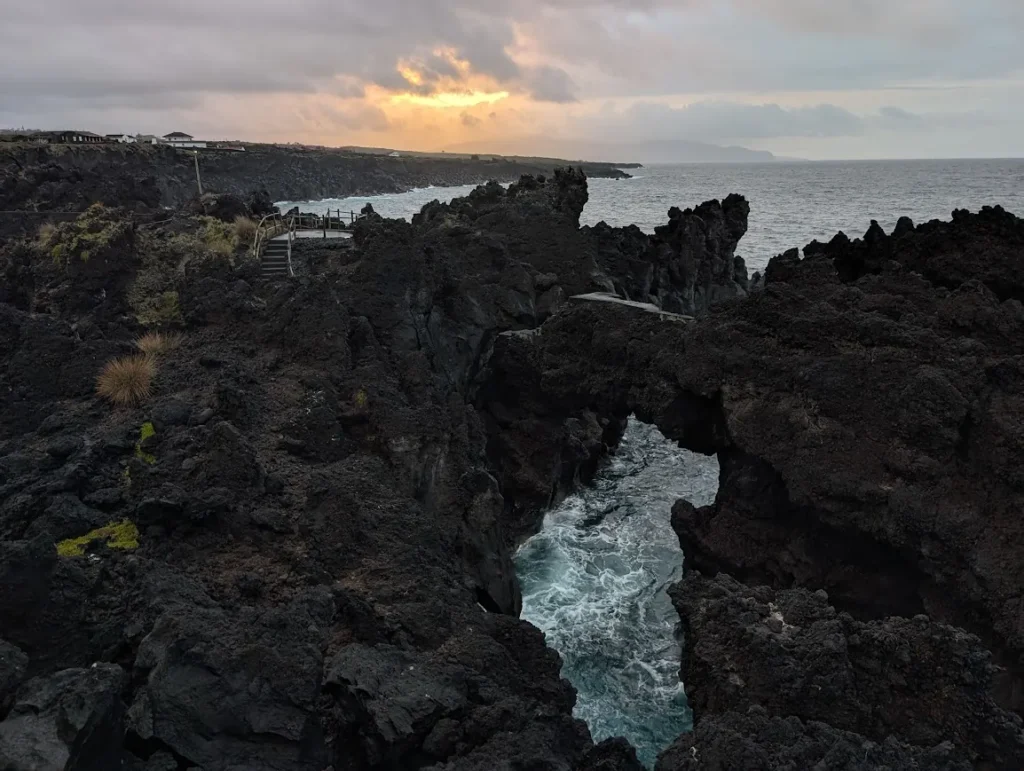
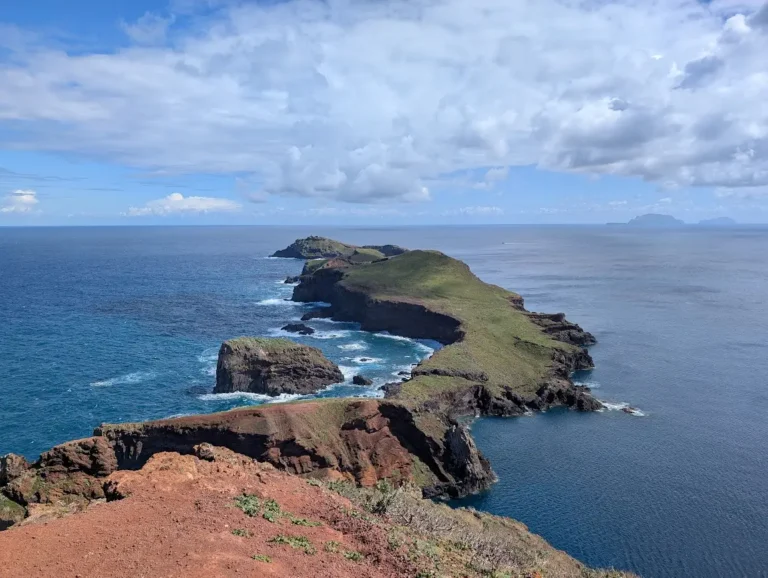
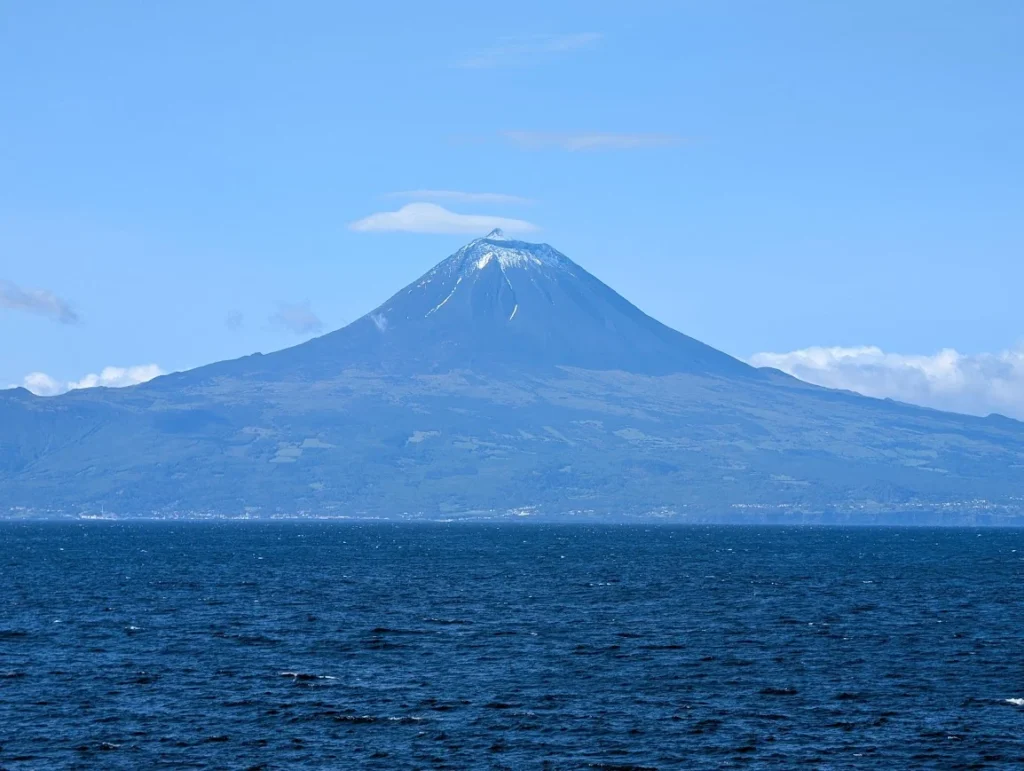
All of Pico is black lava rock. It’s the youngest island in the Azores, formed by the volcano of the same name – Pico, the tallest peak in Portugal at 2,351m.
The Azores are notorious for cloud cover, and the first day was no exception. The next morning we drove up to the Mountain House – the visitor center at the base of the climb – and caught our first clear glimpse of the mountain. We learned crampons were still required due to snow higher up. The ranger mentioned requirements are set daily, so we decided to wait until the morning of the climb before renting, and call first.
Near the visitor center we stopped at Furna do Frei Matias – lava tube caves on private property, free access. Bring a flashlight.
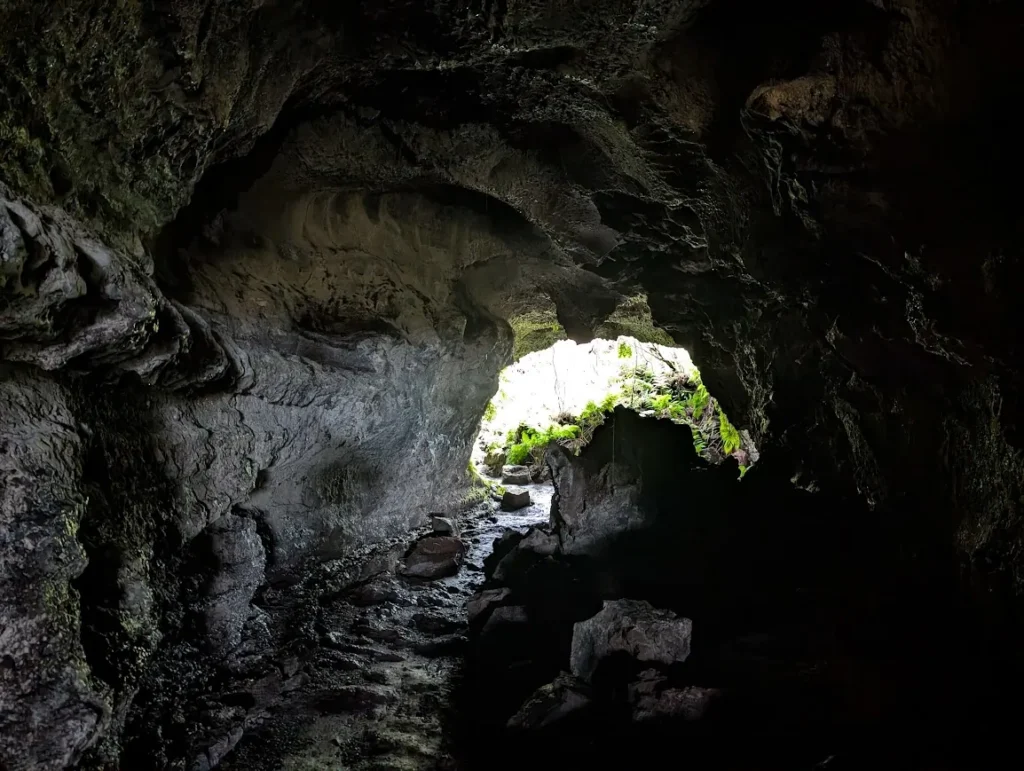
From there we drove back down to the coast and continued the loop through São Roque do Pico, including a swim at the outdoor pools by a windmill. Kept going east until Farol da Ponta da Ilha lighthouse and did some hiking on the lava rock by the sea. Drove back west through Lajes – best viewpoint of Pico when the clouds finally cleared.
We still had time, so we drove up into the central highlands toward the interior lakes. Made it as far as Lagoa do Paúl. The gravel road had sharp rocks – slow going, 20–30km/h. Slept next to Cachorro, close to the airport.
Pico Climb
Next morning we called the visitor center to confirm conditions. Crampons were still required. That was late March. We rented them at Sniper Outdoor in Madalena – €20/day per pair, €20 deposit. A bit pricey, but the only option, and after all – worth it. The owner lets you return them the next morning.
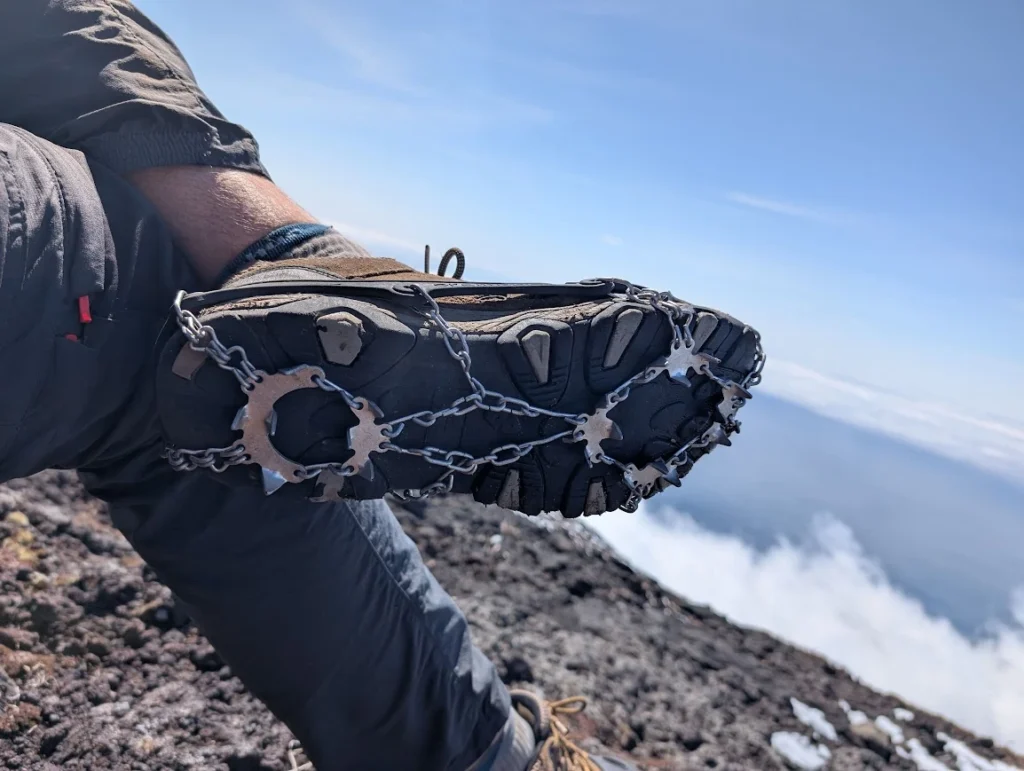
At the Mountain House we paid the climbing fee: €25 to the summit (Piquinho), or €15 to the crater just below. If you pay €25 and only make the crater, you can claim a €10 refund afterwards. The fee includes a mandatory GPS tracker with an SOS button. Staff have access to your location. We were told rescue costs would only be charged if we went off the trail.
The climb is strenuous but doable for fit hikers. The last stretch through the snow gets technical – the crampons were useful. People with a fear of heights may struggle. Plan up to 9 hours. We’re fast hikers and did it in 6. Around 8km round-trip, 1,200m elevation gain.
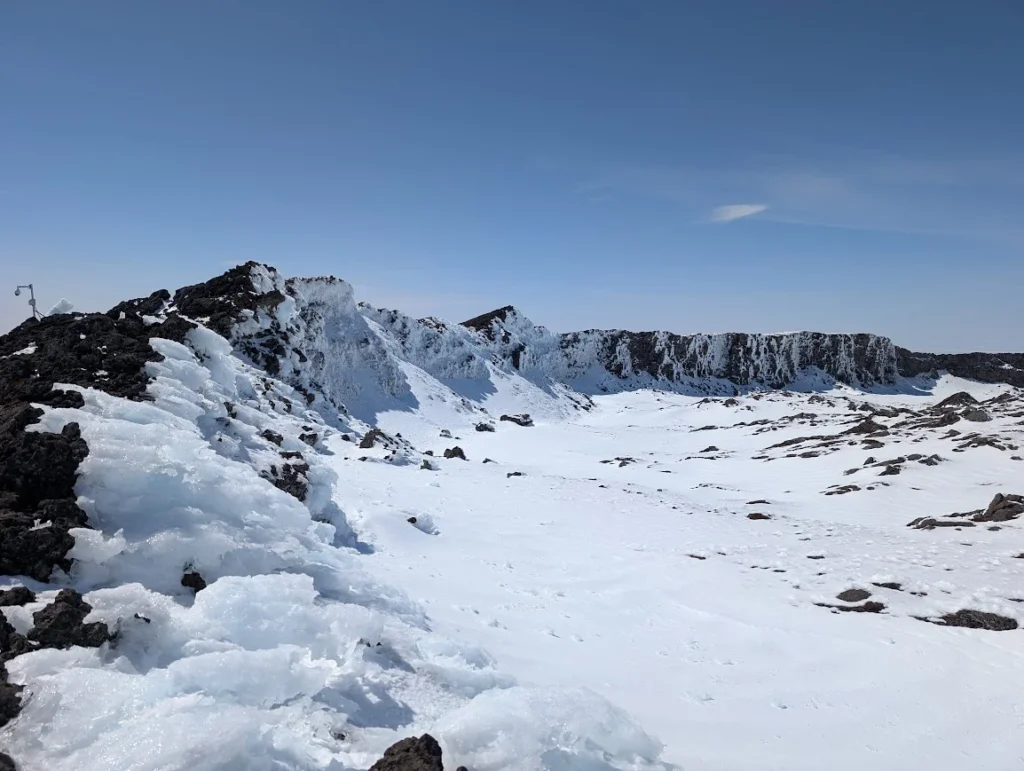
Many days the coast is buried in cloud while Pico is clear above it. Check Mountain-Forecast.com for the most accurate mountain weather. The trail is well signposted, but Organic Maps is useful for tracking distance and elevation. After the hike, we drove back to sleep at the same spot.
Madalena and Lajes
We spent the next morning in Madalena – Wine Museum for €2, with some very unusual dragon trees. Lots of history to read, though much of it was Portuguese-only.
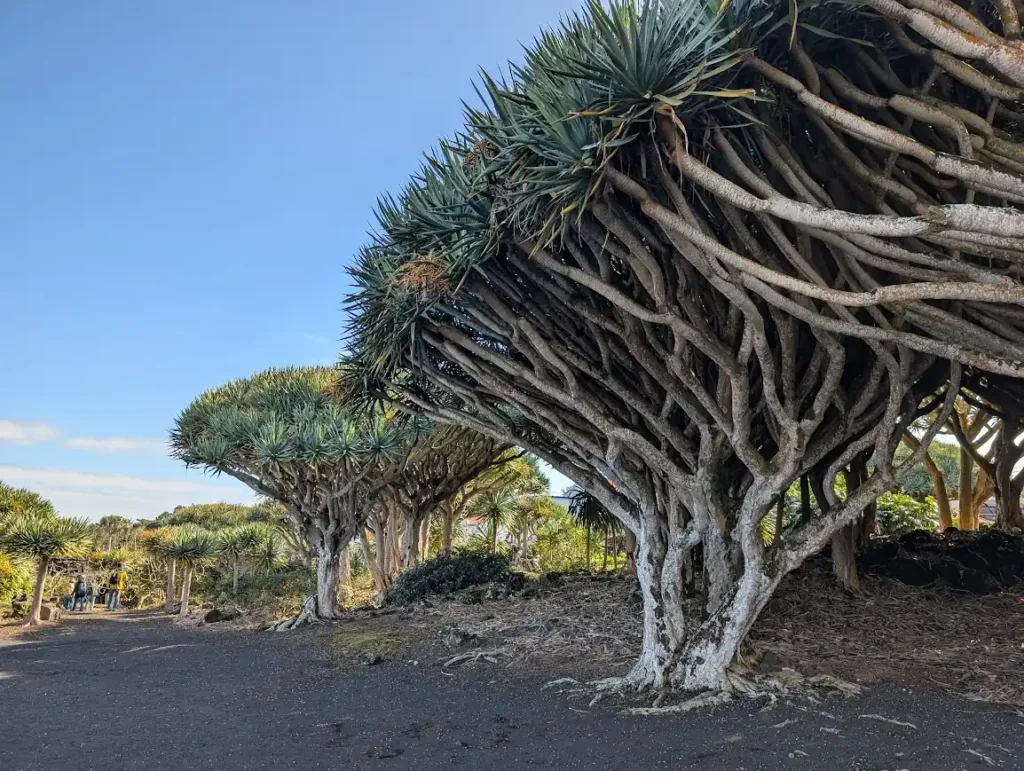
Afterwards, we hiked around the vineyards just south of town (UNESCO) and the Moinho do Frade windmill.
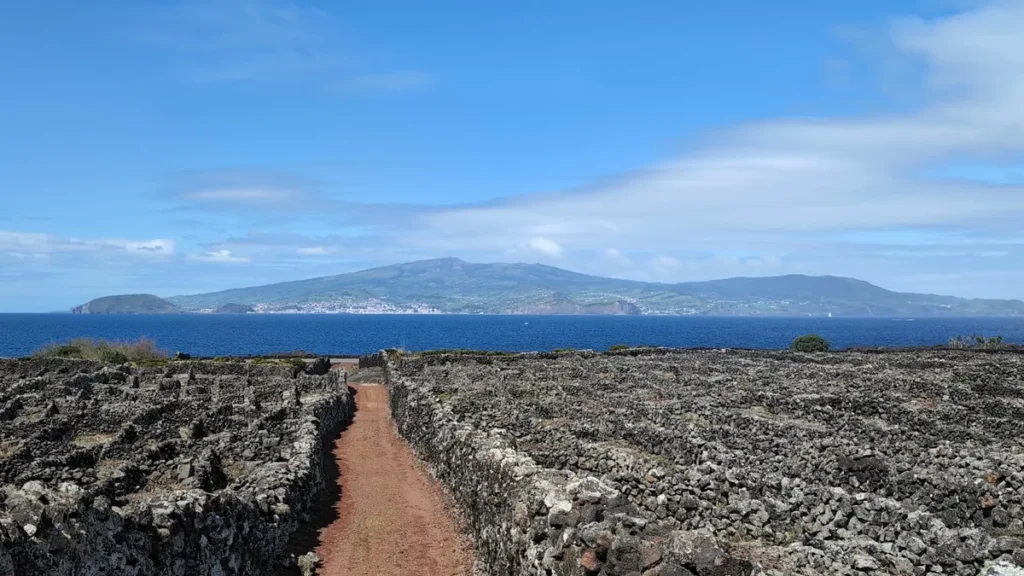
In the afternoon we finished the coastal drive east to Lajes do Pico. Whalers Museum, again €2, with a short film on the island’s whaling history. Very illuminating, worth an hour or so.
Next morning we returned the car at the airport and hitchhiked to São Roque do Pico. Bus service on Pico is scarce and the islands are generally easy for getting rides. We barely waited – a lovely older local gentleman picked us up almost immediately.
São Jorge
From São Roque do Pico we took a ferry to Velas – around 50 minutes. Sea was calm, passage smooth.
São Jorge was by far the least touristic island on this trip. We barely saw other tourists during our whole stay. No bigger supermarket chains either – local shops only, prices a bit higher.
We started by hiking around Miradouro do Morro Das Velas with its cliffs and sheep flocks. It’s a private property, but hiking is allowed and you can open the gate. The landscape is completely different from Pico – no black rock. Afterwards, we drove west all the way to Ponta dos Rosais lighthouse. The last stretch is dirt road but smooth. On the way, Pico da Velha viewpoint offers what I think are the best views of Pico on the whole trip – more spectacular than anything you get on Pico itself. You see both the mountain and the ocean at once. The north coast cliffs are Hawaii-like. On a clear day you can catch a glimpse of Terceira and Graciosa in the distance.
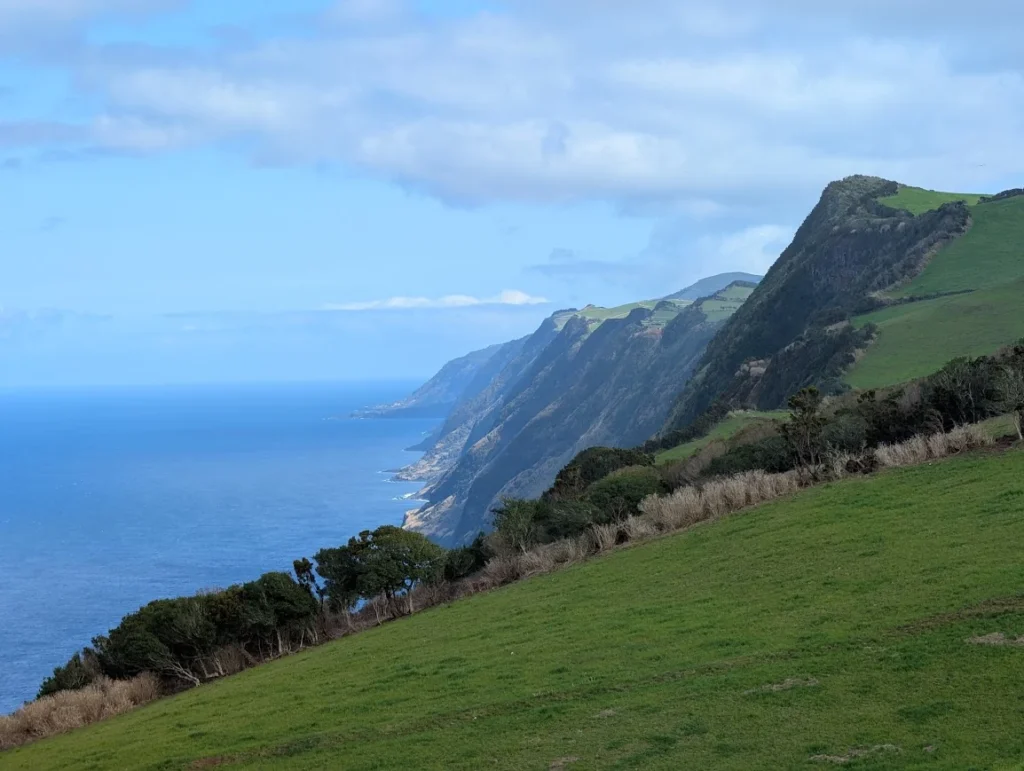
São Jorge is small but very long – over 50km – so driving takes a while. We followed the north coast eastward. Stopped at Simão Dias natural pools. The main road runs a few hundred meters above the coast, with zigzag roads dropping down to coastal villages. Roads are very narrow and locals drive fast – be careful. The villages are beautiful, but after visiting two we decided that was enough. They’re close on the map but driving down and back up eats time and fuel.
São Jorge is known for its fajãs – flat coastal plains at the base of steep cliffs, often covered with houses. We drove down to Fajã dos Cubres and slept there, in a very scenic spot right by the sea.
The next morning we hiked to Fajã da Caldeira de Santo Cristo through Fajã do Belo. You can’t drive there. It’s a 4km dirt track one way – locals are allowed to take quad-bikes, and you can arrange a transfer for around €15–25, but I recommend hiking. The fajã itself is one of the most unique places on the trip – picturesque houses built from volcanic rock, very much alive with locals fishing for the prized local clams (amêijoas), cat colonies, a surfing camp.
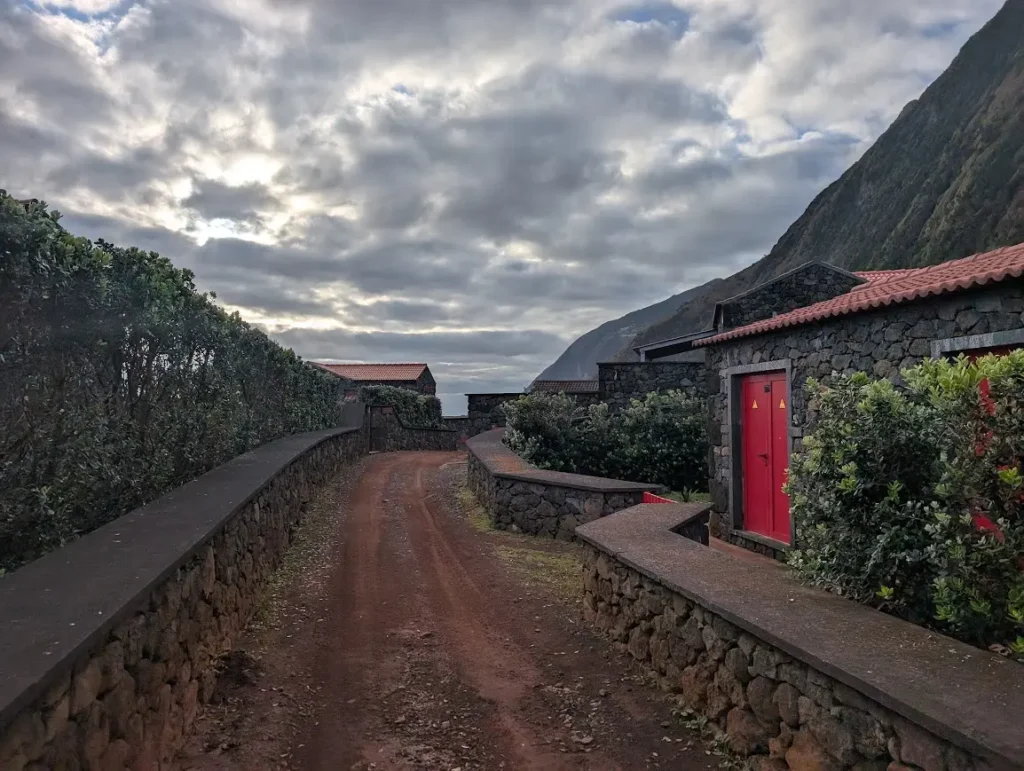
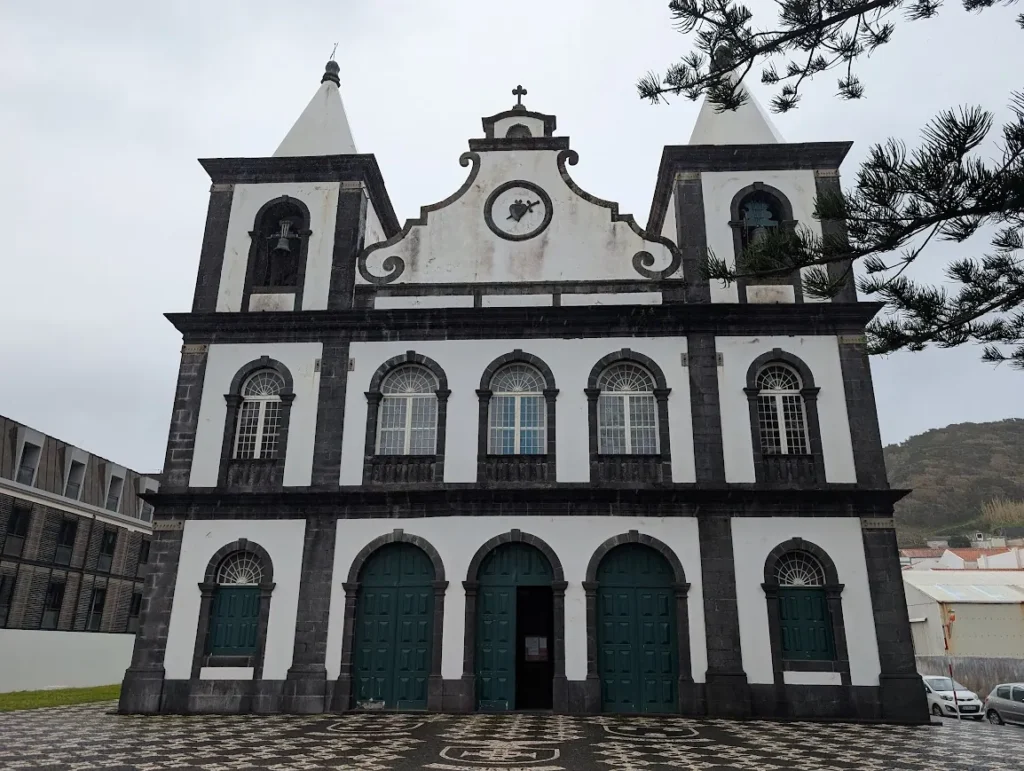
That day we drove east to Farol do Topo lighthouse. The churches in the Azores are very characteristic – white facades, worth stopping at a few. Then we drove back west along the southern coast, stopped in Calheta for a swim in the sheltered outdoor pools just by the ocean, separated from it by rocks. Ended the day at Miradouro do Parque das Macelas – a secluded viewpoint, perfect for the night. We didn’t see anyone.
Having already covered the coast, the next day we drove the central highlands. Lots of dirt roads, but quite smooth – just take it slow with the rental car. We hiked Pico da Esperança, the highest point on the island and the site of a tragic 1999 plane crash. It’s not much of a hike from the road. It was completely foggy – we could barely see anything. Have maps downloaded on your phone. We spent the rest of the day around Velas and slept at the same spot. Next morning we returned the car and boarded the ferry back to Horta, Faial.
Faial
The ferry from Velas to Horta takes around 2 hours. The sea was very rough – 4-meter waves. We got sick and had to rest after arriving. Before doing anything else we shopped at Continente in Horta, the biggest supermarket across the three islands.
Horta is by far the biggest town of the three islands – around 15,000 people. We walked around the center, visited a couple of the characteristic churches, and hiked up to Monte da Guia. Cloud cover was low, couldn’t see much from the top. There’s also a whaling museum there.
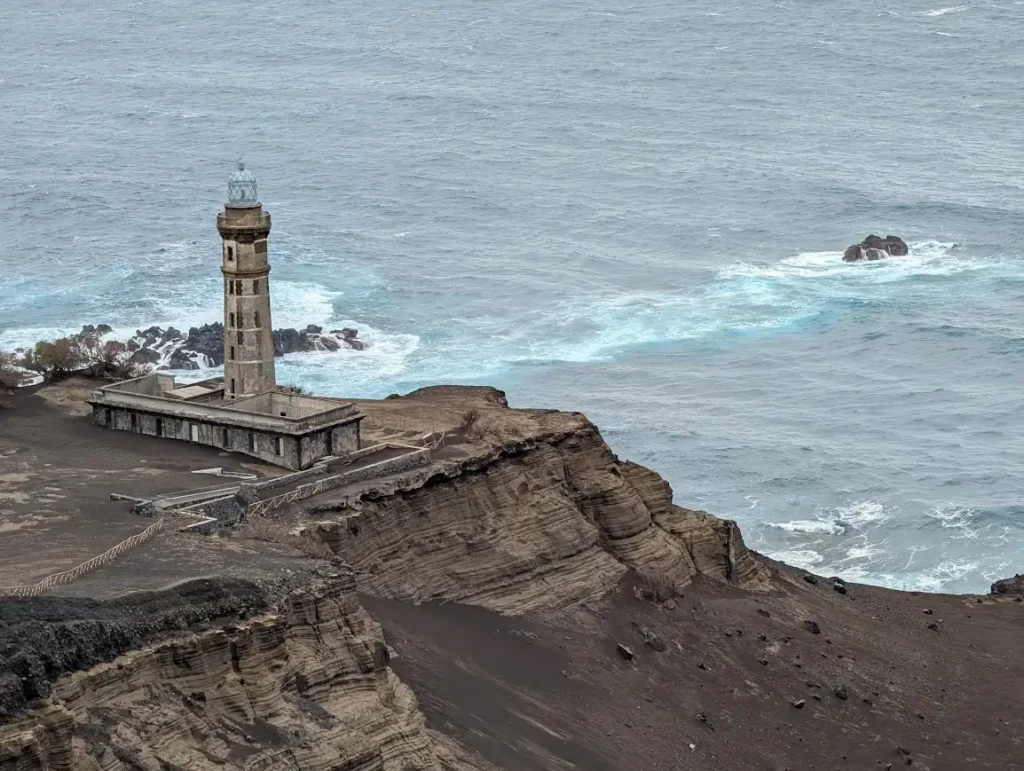
The next day we drove out to Capelinhos – a volcano known for its 1957 eruption, right by the sea with a disused lighthouse. The landscape is otherworldly. We spent a couple of hours hiking around.
The other volcano Faial is known for is Caldeira do Cabeço Gordo. You can hike the crater rim – around 8km, 2–3 hours. The inside of the crater with its lush vegetation is spectacular to look at, but you need the cloud cover high enough to actually see it. When we went, the wind was extremely strong, borderline dangerous. Check Mountain-Forecast.com before going up.
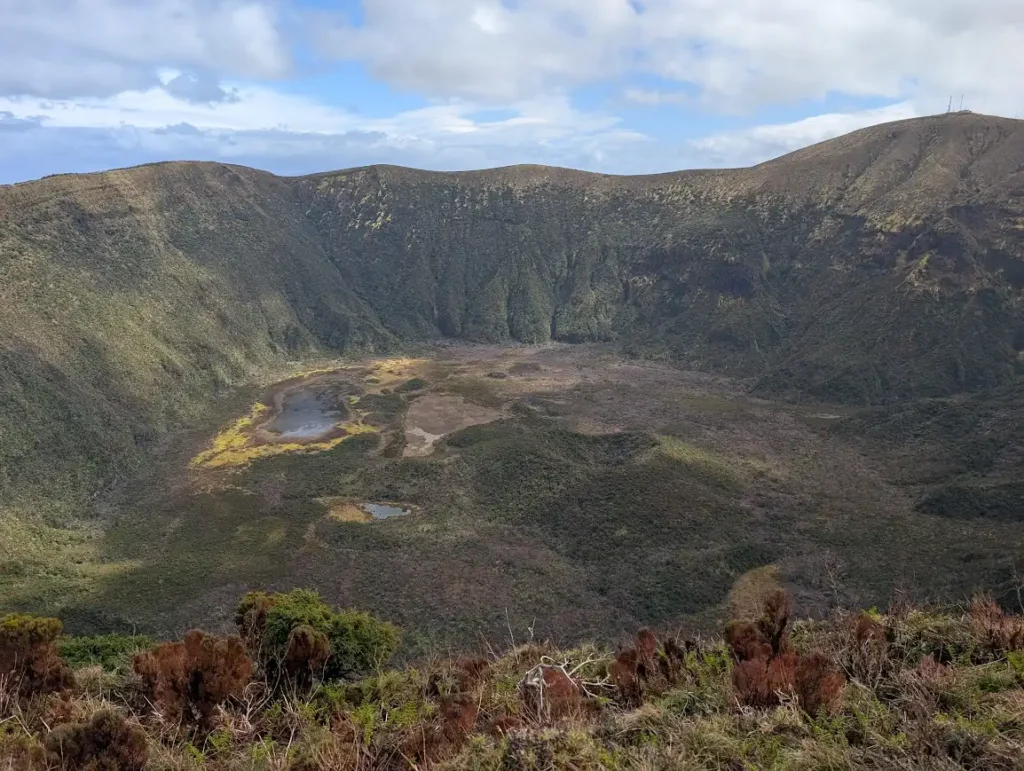
After the night we went to the airport and flew with SATA Airlines to Ponta Delgada on São Miguel, continuing our trip there.
Season
We went late March – off-season. The only real consequence was the crampons for Pico, mandatory due to snow. Temperatures were mild throughout – the Azores don’t vary much across the year thanks to the ocean. Didn’t drop below 10°C at night, which is perfect for car sleeping.
These islands don’t really have a busy high season. June–September is warmest, driest, and longest days, so it makes sense as a target window. But any time of year works.
Practical
Currency
Euro. Cards accepted everywhere – we didn’t use cash at all.
SIM
Any EU SIM works under Roam Like at Home – no need to buy local. If you don’t have one, check eSIMDB, filter by data needed, trip length, and sort by price.
Lyca Mobile Portugal periodically runs 50GB for €4/month promo – worth checking their site before buying anything else.
Language
Portuguese. The Azorean accent is famously thick due to the islands’ remoteness – even native Portuguese speakers sometimes struggle with it. Learn a few basics: bom dia (good morning), boa tarde (good afternoon), olá (hello), obrigado/obrigada (thanks). English is spoken in hospitality and tourism but not reliably outside of it.
Tips Summary
- Skyscanner Multi-City: Combine up to 3 inter-island flights in one booking. We paid €102.29/person via Trip.com – booking directly with SATA was double.
- Cross-Check Rental Platforms: DiscoverCars isn’t always cheapest in the Azores. Pico and Faial came out cheaper on azoresrentalcars.com. Check both before booking.
- Walk-On Ferries: Don’t take the rental car across. Walk on, pick up a new car on the next island. Rental desks at every ferry terminal.
- Deposit Transfer: If using Autatlantis or Ilha Verde across multiple islands, ask at pickup to transfer your deposit to the next rental. Prevents simultaneous holds on your card. Keep the pre-authorization receipt.
- Pico Crampons: Required when there’s snow – rangers check at the Mountain House. Rent from Sniper Outdoor in Madalena, €20/day per pair.
- Pico Climb Fee: €25 to the summit, €15 to the crater. If you pay €25 and only make the crater, ask for the €10 refund.
- Mountain Weather: Check Mountain-Forecast.com before climbing Pico or hiking Caldeira do Cabeço Gordo. Cloud cover and wind are crucial.
- Hiking and Parking: All official trails are free, excluding the Pico climb. Free parking is available at all trailheads.
- Fajã da Caldeira de Santo Cristo: You can’t drive there. Hike the 4km dirt track – the walk is worth it. Quad-bike transfer available from locals for around €15–25 if needed.
- Overnight Spots: park4night has almost no coverage on these islands – nothing on São Jorge at the time of writing. Use Organic Maps to improvise.
- Supermarkets: Lidl doesn’t cover these islands. Continente in Madalena and Horta, Pingo Doce in Horta. São Jorge has no chains – use Euro Velas in Velas, prices slightly higher.
The Budget System
I keep daily travel costs under €20–€30 using two methods:
● €3/Day Rental Car Guide
● Sleeping in Rental Cars
One week of travel cost me less than a day of work in Australia.