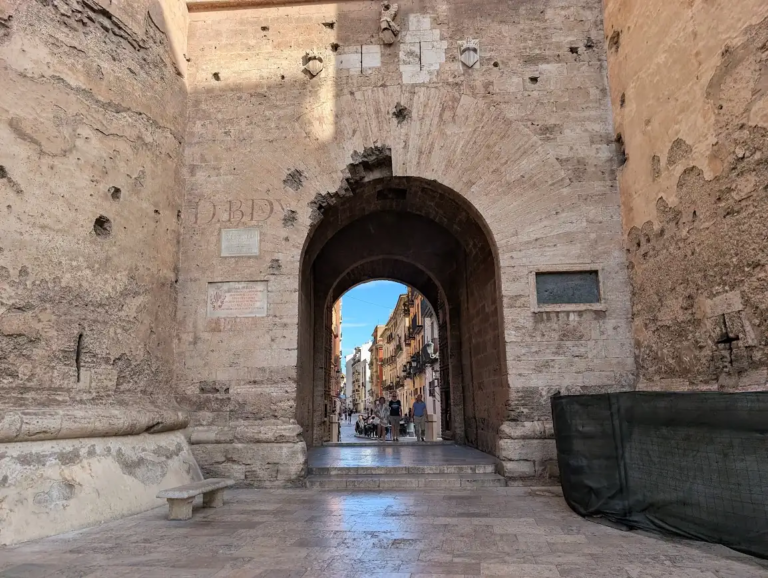
Barcelona & Catalonia on €22/Day: Free Montserrat Tickets
Sleeping in my car through Catalonia: a seven-day road trip from Peñíscola to Figueres, three nights based in Barcelona. A rental car would add €4.42/day per person to the number:
TRIP STATS
- DAILY RATE: €21.87 (per person)
- SLEEP: Sleeping in Car (4 nights), Hostel (3 nights)
- BY: Car
- PEOPLE: 2
- DAYS: 7
- TOTAL: €306.18
- CURRENCY: Euro (€)
- DATE: November 2025
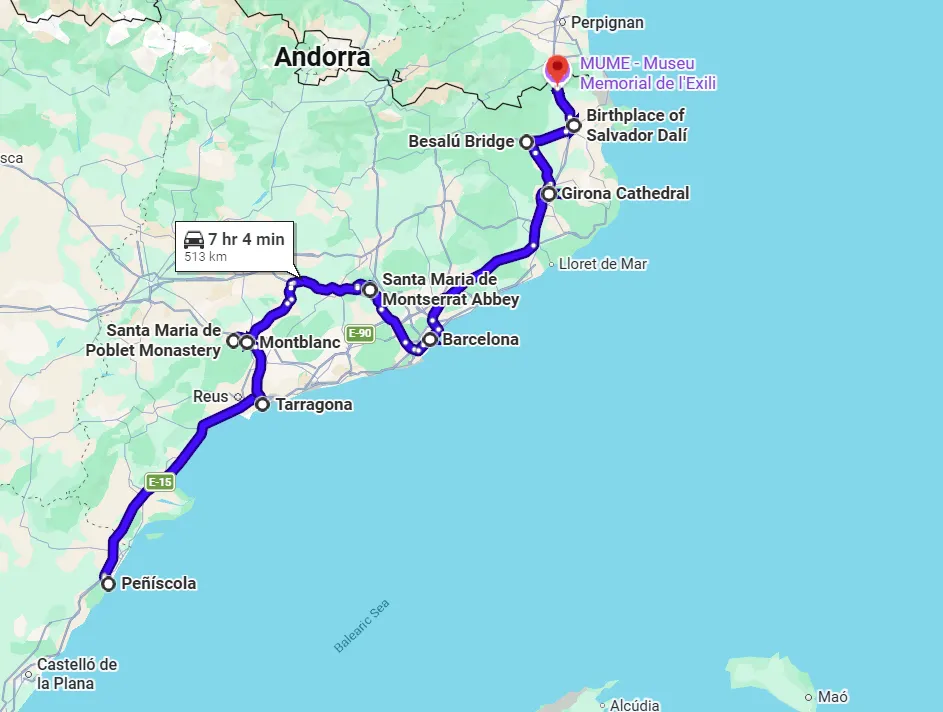
- ROUTE: Peñíscola → Tarragona → Montserrat → Barcelona → Girona → Figueres
- TOOLS: DiscoverCars, park4night, Revolut, Lidl
| ITEM | COST (2P) | NOTES |
|---|---|---|
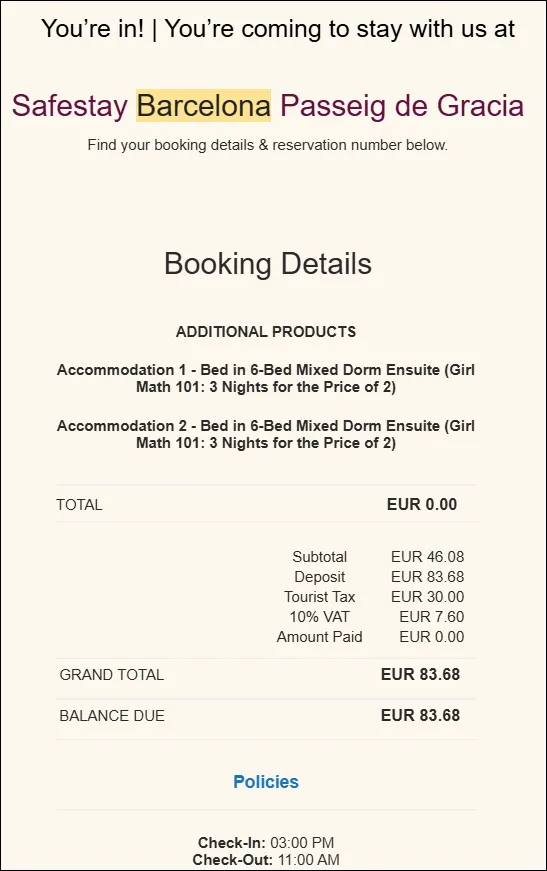
| Stay | €83.68 | 3 nights – Barcelona hostel: Safestay Passeig de Gràcia €13.95/night for a bed. 4 nights – slept in the car – €0 |
| Fuel | €66.00 | €9.43/day. 3 nights parked in Barcelona. |
| Food | €93.00 | €6.64/day per person. Shopped at Lidl. |
| Sights | €63.50 | €11.50 – T-Familiar (Barcelona metro ticket) €26/person – Sagrada Família |
| TOTAL | €306.18 | 7 days at €21.87/day per person |
How €21.87/day per person compares to my other trips: Budget Travel Cost per Day.
Getting There
This route works well as a continuation from Andalusia. We covered it as part of a bigger trip, coming from Portugal and Andalusia, and continuing to France.
- Previous leg: Cartagena to Valencia on €17/Day: 5 Cities & Sleeping in Car
- Next leg: Southern France & Andorra on €24/Day: Sleeping in the Car
- Full trip: Spain, Portugal & France on €19/Day
Flying to Barcelona
If you’re flying with open dates and a small bag, tickets under €25 are possible with Ryanair and Wizz Air via Skyscanner search. At the time of writing, flights from the UK are €16, Italy €17, elsewhere in Spain €18, Croatia €20, France €26, and Germany €27. Full list of what I pack and more carry-on rules: Sleeping in a Rental Car Packing List.
Car Rental at Barcelona Airport
We did this trip in our own car, so I can’t comment on rental providers. If you’re flying into Spain, these are the current prices and things worth knowing:
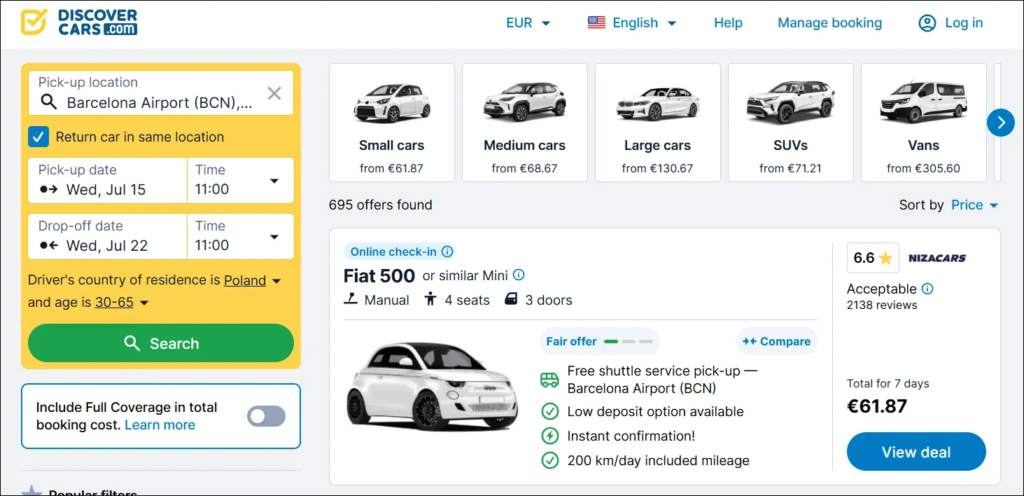
- Current Prices: Small cars at Barcelona Airport from €61.87/week (€8.84/day) at the time of writing via DiscoverCars (my review). Full European Car Rental Price Comparison.
- Excess: Decline the desk insurance. Cover it with an independent policy like Cover4Rentals instead: €3/Day Rental Car Guide.
- Tolls: We stuck to free roads throughout – the right call for sightseeing. Most of the roads in Spain are free with a few exceptions. Some tunnels crossing the Pyrenees to France are paid, but there’s always a free alternative.
- Fuel: Diesel was as low as €1.20/L during our November 2025 trip, although prices fluctuate. Spain’s fuel is consistently one of the cheapest in the EU. Unstaffed stations (like Plenoil or Ballenoil) offer significantly cheaper fuel than the big brands like BP and Shell. Google Maps didn’t reliably show real-time fuel prices in Spain. We used the Gasall app.
- Parking: We always managed to find free parking using Google Maps. Barcelona is notorious for car break-ins and broken windows, but we grabbed a free street parking spot in a wealthier neighborhood of Pedralbes, about a 20-minute walk from Zona Universitària metro station. We left most of our things in the car (blankets, clothes and such), and didn’t have any problems whatsoever. Spots closer to the metro station were either all taken or marked as resident-only. Curb lines are color-coded in Spain and mean the following: white – free and unlimited parking, blue – paid parking, green – usually residents only, yellow – no parking (although you’ll see locals breaking this rule all the time).
- Low Emission Zone (ZBE): Active since January 2020, Monday to Friday 7AM to 8PM. No restriction on weekends, public holidays, or evenings and nights outside that window. Only entering or driving through the city streets during restricted hours counts – being parked inside doesn’t trigger anything. The outer ring roads (Ronda de Dalt, B20, and Ronda Litoral, B10) are exempt entirely, so crossing the city on those to reach the airport or another highway is always fine. Rental cars are Spanish-registered and already compliant – no extra step needed. Foreign-plated cars need to register in advance (up to 15 days processing, €7 one-off fee). Non-compliant ones like ours can still get occasional access: up to 24 daily permits a year through the same portal, €5 each. We didn’t register and just timed our driving around it instead, sticking to weekends and off-hours.
Sleeping in a Car in Spain
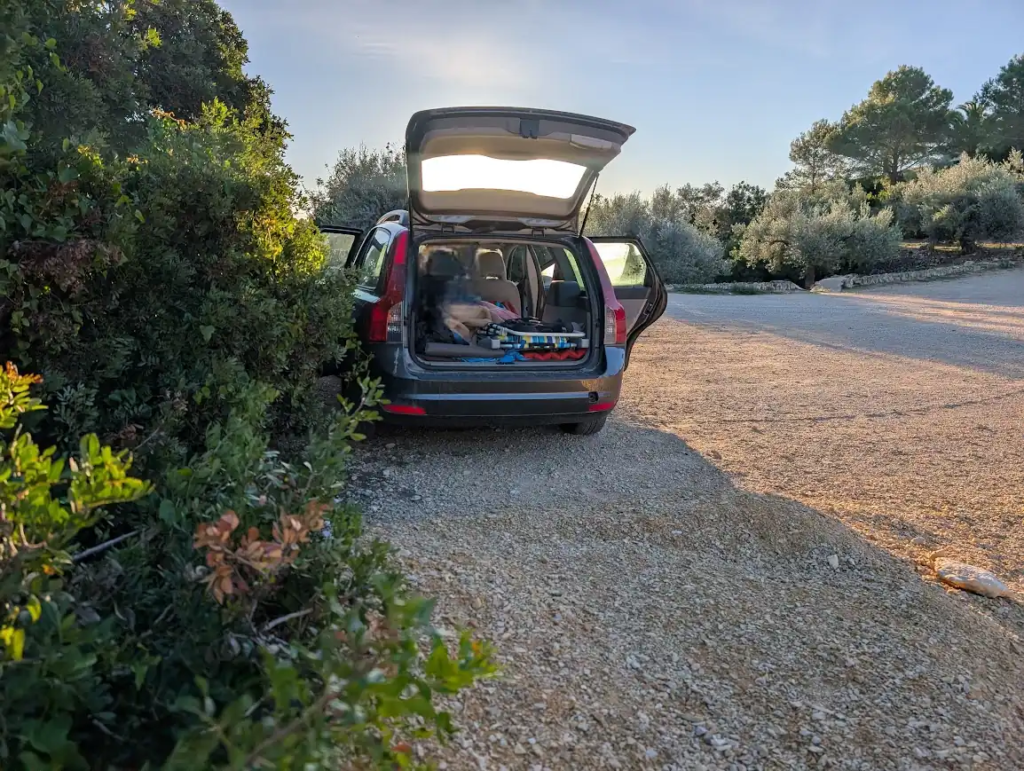
Volvo V50. 4/5. Spacious.
Long car, plenty of room for two. Rear seats folded fully flat – no step. One issue: a fixed metal bar ran across the top of the folded seatback. At 190 cm, the bar pushed my feet up slightly. An inflatable mat mostly fixed it.
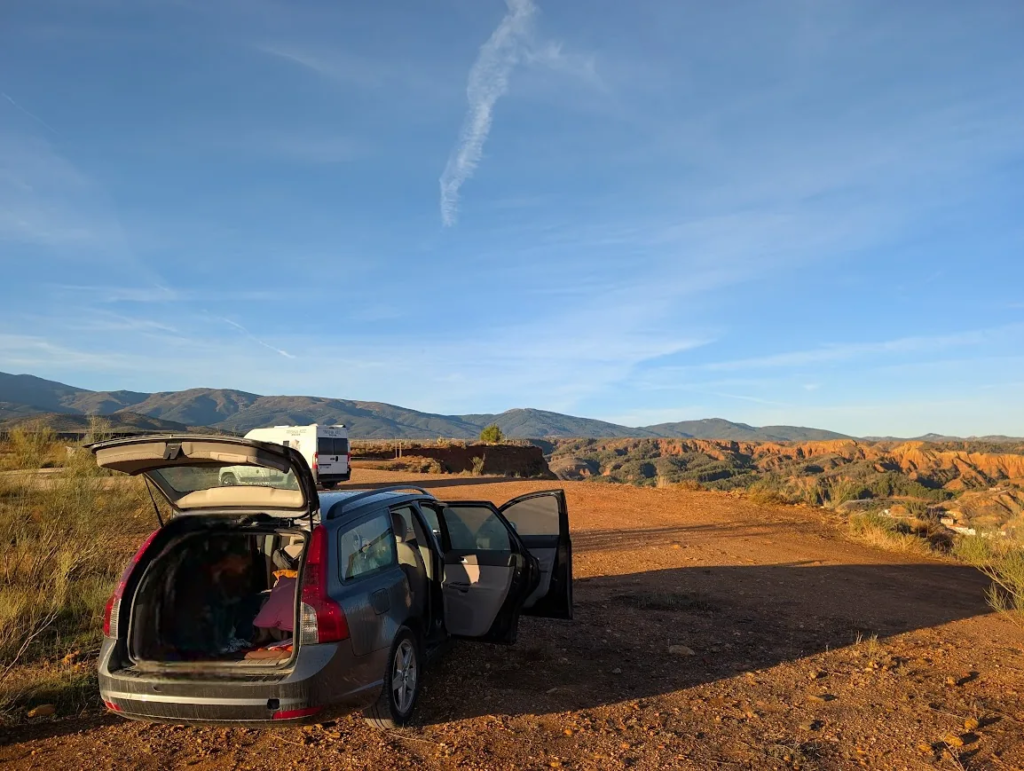
Full sleeping audit: Best Rental Cars to Sleep In.
- Legality: Legal to sleep in your car in Spain as long as you are legally parked and don’t display any “camping” behavior (no tables or chairs outside the car). According to the Spanish Traffic Authority (DGT, Instruction PROT 2026/04, March 2026), a correctly parked vehicle counts as parked whether or not people are inside, as long as only the wheels touch the ground, nothing extends past the vehicle and nothing is discharged. Local bylaws sometimes ban overnight stays, particularly in natural parks and on coastal beaches. Country by country: Is It Legal to Sleep in a Rental Car in Europe? Full guide: Sleeping in Rental Cars.
- Facilities: Public toilets are sparse and unreliable in Spain. Supermarkets (mainly Lidl) were the most reliable option throughout the route – free toilets, easy to find.
- Overnight Spots: Search park4night for marked spots. I’ve linked to the spots I stayed at in the Route section below.
- Backup Accommodation: Booking.com has the widest (and usually the cheapest) selection in Spain. Sort by lowest price, filter to 7.0+ to get rid of bad listings.
Staying in Barcelona
We spent 3 nights in Barcelona. We stayed at Safestay Barcelona Passeig de Gràcia, which was the cheapest central place with decent reviews. They ran a promo on their website with a requirement of creating an account. It ended up costing around €14/night, great price for Barcelona, better than anything else on Booking.com. The tourist tax itself was €5/night per person. More hostel booking tricks: Budget Travel Tips.
The place itself was okay, a bit stuffy, no kitchen, but acceptable quality overall. When checking in, they wanted to charge me the tourist tax again, but I showed them the receipt stating it was already included.
Public Transit in Barcelona: We walked a lot, but still used the metro to get to some sights and to our car parked in the suburbs. Barcelona’s metro runs on a zone system, and Zone 1 covers pretty much everything a tourist needs. A single ride costs €2.90 and doesn’t allow any transfers once you exit.
The smarter choice is the T-Familiar: 8 trips for €11.50, shareable between people, and works across metro, bus, and tram. With the T-Familiar, you get 75 minutes from your first swipe to transfer between different transport lines for free, and it only counts as one trip (e.g., swapping from the metro to a bus). Catch: it doesn’t cover the airport line. That one needs a separate ticket, around €5.90 each way.
Food
€93 for two people over 7 days. €6.64/day per person.
We shopped at Lidl – consistently the cheapest supermarket option across Europe. When there isn’t a Lidl nearby, Aldi is the next best alternative in Spain. Mercadona is slightly more expensive but sometimes the only option. We also shopped at Alcampo and Carrefour a couple of times on this trip for more variety, although prices were higher.
We cooked meals and made coffee on a gas stove. In Spain, outdoor cooking is banned in or near forested areas in the high-fire-risk season. Check current fire risk before cooking outdoors: aemet.es.
Route
We drove into Catalonia from the Valencian Community. Our first night was spent on an official camper parking just by the coast – careful with your belongings, park4night reviews warn of many car break-ins in the area.
Day 1 – Tarragona, Montblanc, Poblet
Our first stop of the day was Tarragona, where we found free parking close to the port. We had a walk around and saw the Roman Amphitheater – you can have a good look from outside the fence, I don’t think paying to go inside is particularly worth it. If you decide to do it, the ticket is €5, with the first Sunday of every month free.
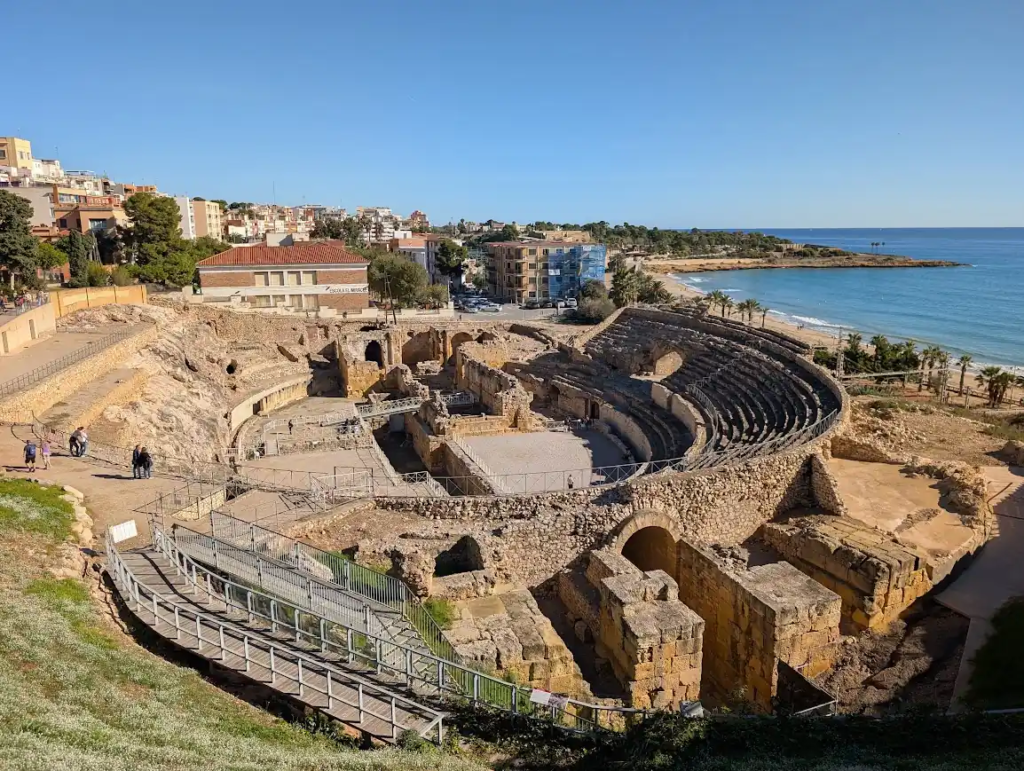
We had a bit of a walk in the city, but didn’t find its center very interesting compared to other cities in Spain.
After Tarragona, we headed north, inland. We wanted to check out the UNESCO-inscribed Poblet Abbey, but on the way saw some beautiful towns and decided to randomly stop in one of them – Montblanc. There were quite a few local visitors, it’s not an international tourist destination, but we really liked it. The old town was more charming than Tarragona. We spent a couple hours there, before heading to Poblet.
Poblet is a beautifully located abbey. Again, it doesn’t feel too busy. The church itself is free. Going deeper into the abbey costs €10.50 – we skipped it.
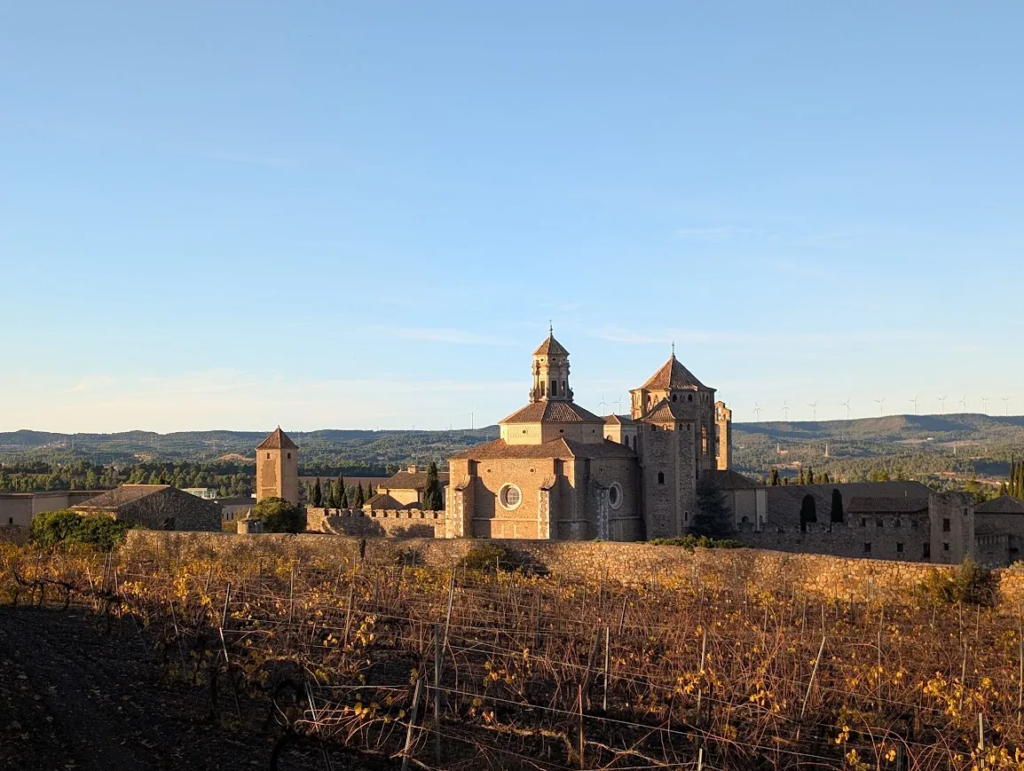
In the evening we drove over close to Montserrat, where we slept at a parking lot close to the road. Some people were coming back to their cars after visiting the monastery, but at night it got very quiet.
Day 2 – Montserrat, Sant Llorenç del Munt
Our first stop of the day was Santa Maria de Montserrat Abbey.
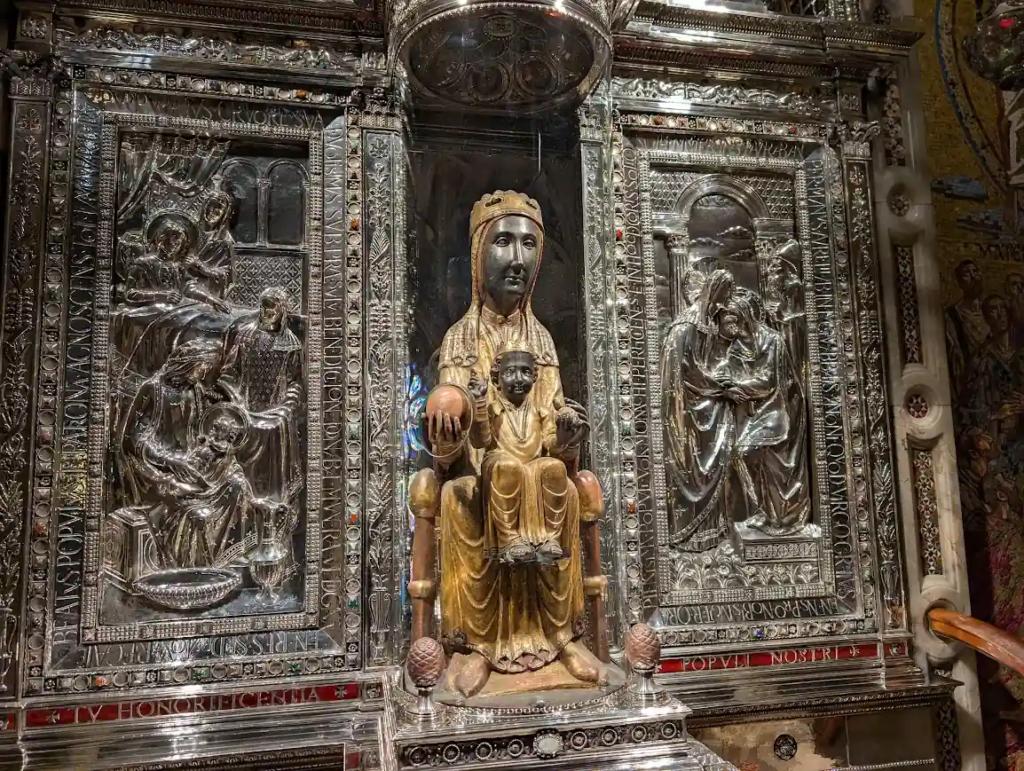
As an EU resident, you can get free tickets to see the sculpture of Montserrat’s Virgin Mary, the Black Madonna. Most online sources say the entry is free only for residents of Spain, but I dug through the official rules and it clearly states “Residents: Catalonia/rest of Spain/countries of the European Union” are eligible for free tickets. The reservations must be made through the official site. I was able to get ones for the next day. Select the resident date, select your EU country origin and identification number (in the “Info” tab there’s a list of numbers they want – in the case of my Polish ID it was the PESEL number). Fill in all the details and you’ll have your free ticket sent to your email.
We selected an early one at 9:00 AM. We parked a bit outside of the official parking lot by the side of the road to avoid paying for parking, and hiked in, maybe 10 minutes. We didn’t have any trouble getting in with our free tickets, and the experience was great, as there was nobody around – it seemed that slot was reserved just for these special free tickets. On the way out, after seeing the famous Black Madonna, before heading through the exit gates, you can turn left and enter the main basilica for free as well.
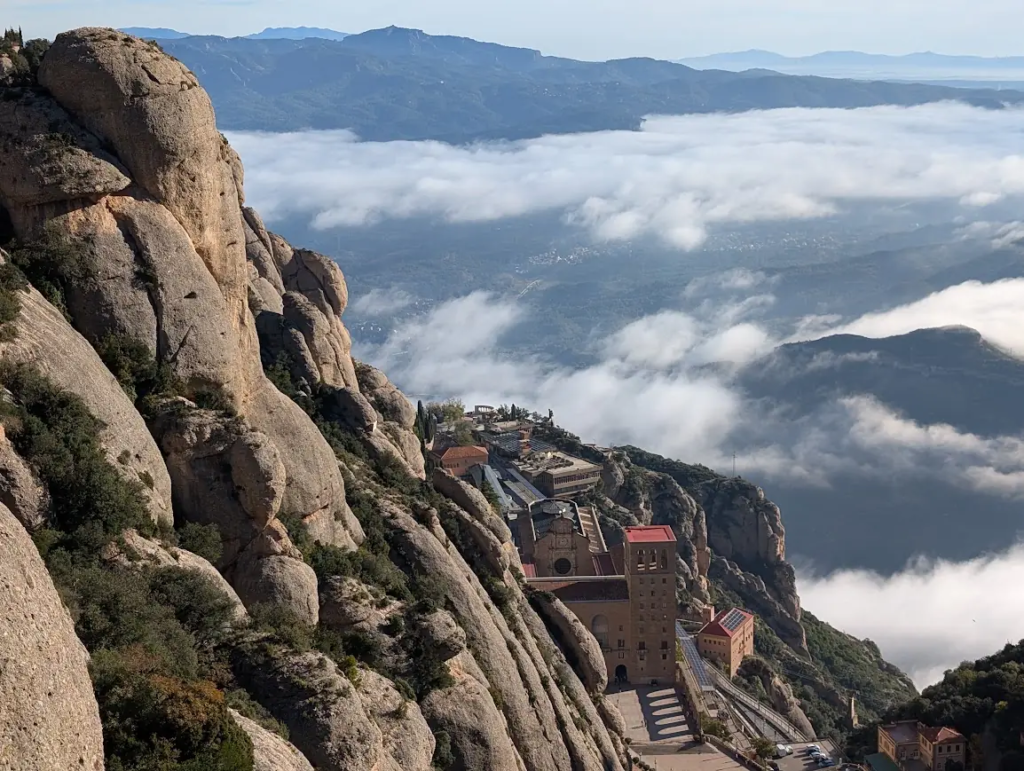
After the monastery we headed up for a 2 hour hike in the mountains just by the monastery – they are quite spectacular.
Our next destination for the day was Sant Llorenç del Munt, where we did a 15km hiking loop in the mountains. The area is beautiful, but not as spectacular as Montserrat. We barely saw anybody on the trails.
In the evening we headed to an overnight spot we found on park4night just before Barcelona, in the forest. We drove down quite a bit and there was no phone signal even though we were just by Barcelona. In the evening there were quite a few cars coming to park out of nowhere – turned out it was a meeting of a running group. Later they all left and the night was very peaceful.
Days 3–5 – Barcelona
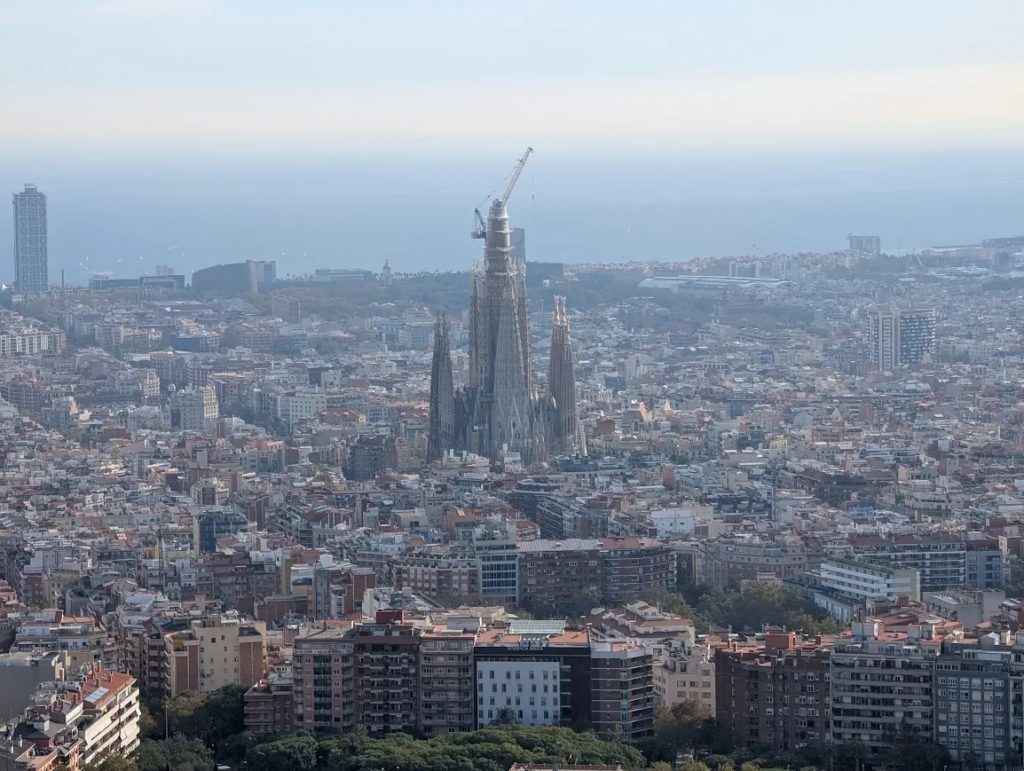
Day 3. We woke up early to get into Barcelona and find a parking spot before the Low Emission Zone regulations kicked in at 7:00 AM (more info on the zone and where we parked in the car section above). We spent the first day walking around the city. We took in some free views from Parc del Guinardó. Then we spent a couple of hours walking back to the hostel (Safestay Barcelona Passeig de Gràcia, just by the iconic Casa Batlló), passing by Park Güell while seeing all the Modernisme architecture, mostly from Antoni Gaudí. We didn’t pay to enter any of these sights (expensive at €20–€40). If I were to choose one, it would be Park Güell, but I had already seen it on my previous trip.
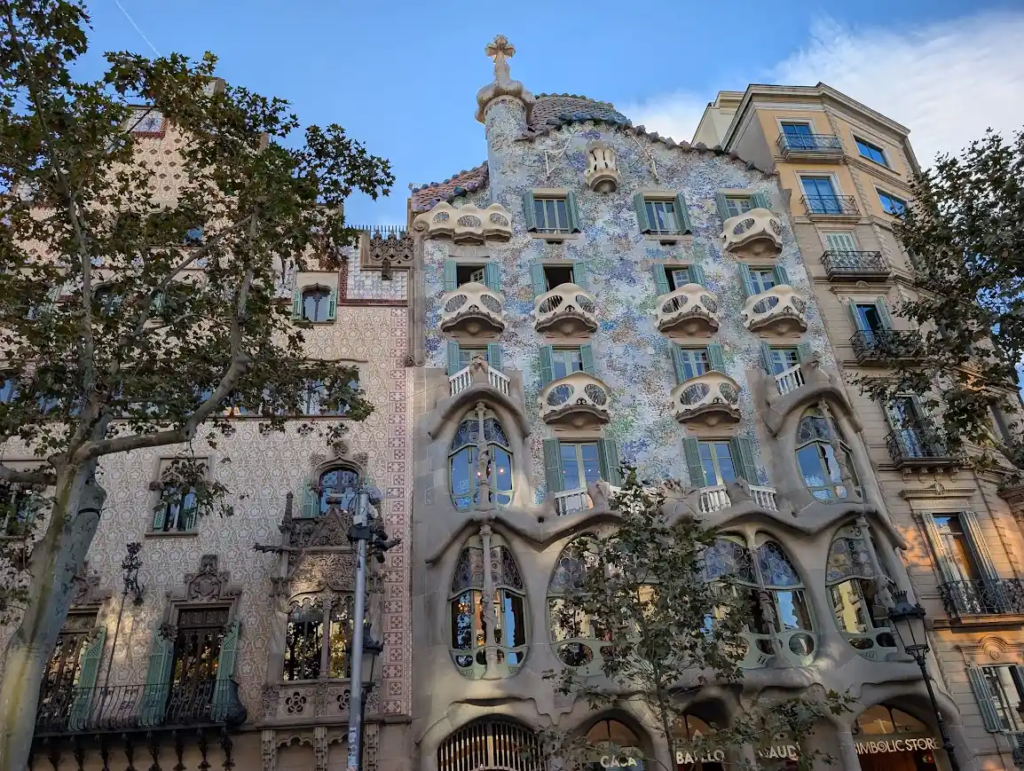
Day 4. We spent the next day mostly walking around the Gothic Quarter and reading up on its history.
In the evening we went to Museu Nacional d’Art de Catalunya in Montjuïc, free Saturdays after 3:00 PM and the first Sunday of the month, prebooking required. €12 otherwise.
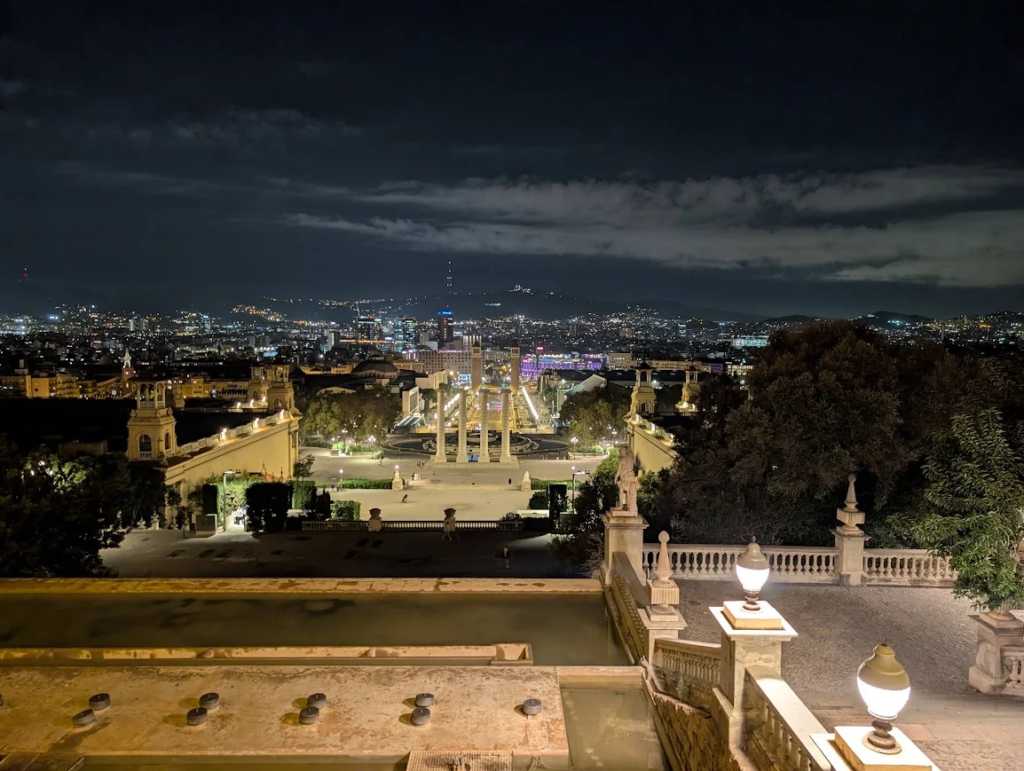
To be honest, Barcelona gave us a lot of conflicting feelings – there seems to be so much poverty there (you can see it by the number of people asking for money), drug addiction, a massive problem with petty crime (pickpockets are everywhere – be very careful, we saw 2 incidents during our 3 nights). Combined with an overtourism and housing crisis it does not paint a very happy picture.
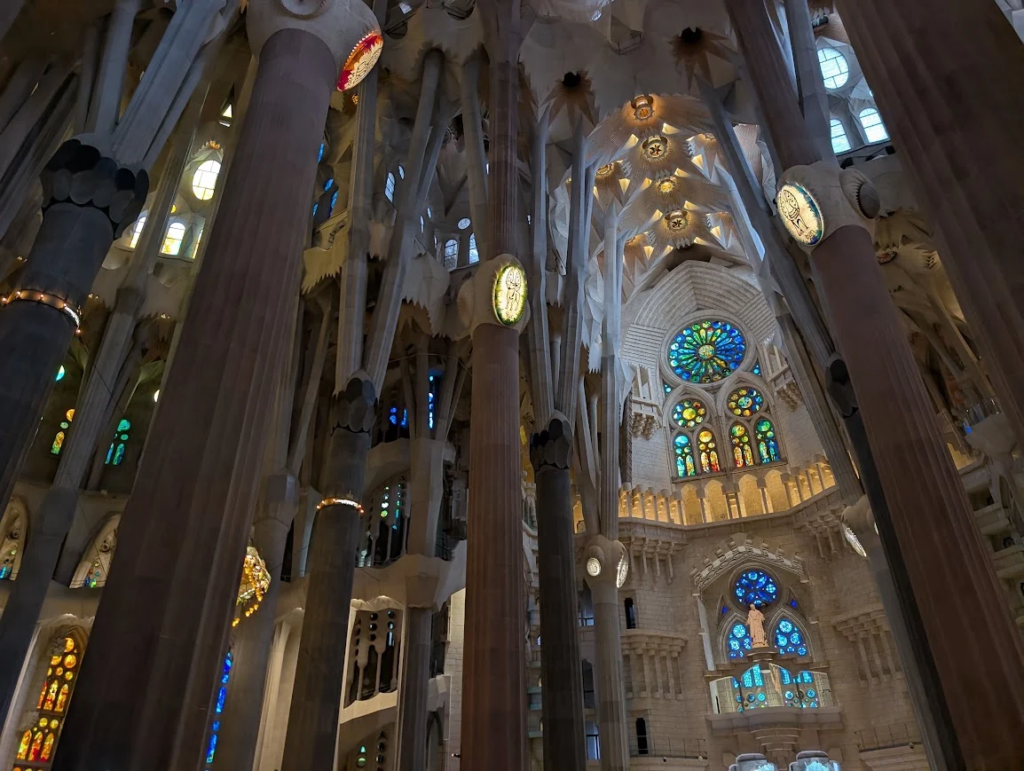
Day 5. We woke up and headed to Basilica of the Sagrada Familia (€26 – normal ticket, €24 – under 30s). In mid-November, low season, we managed to book our tickets 2 weeks in advance, but in peak seasons (holidays, summer) you often need to book as much as 60 days in advance to get the dates you want (that’s when the tickets come out).
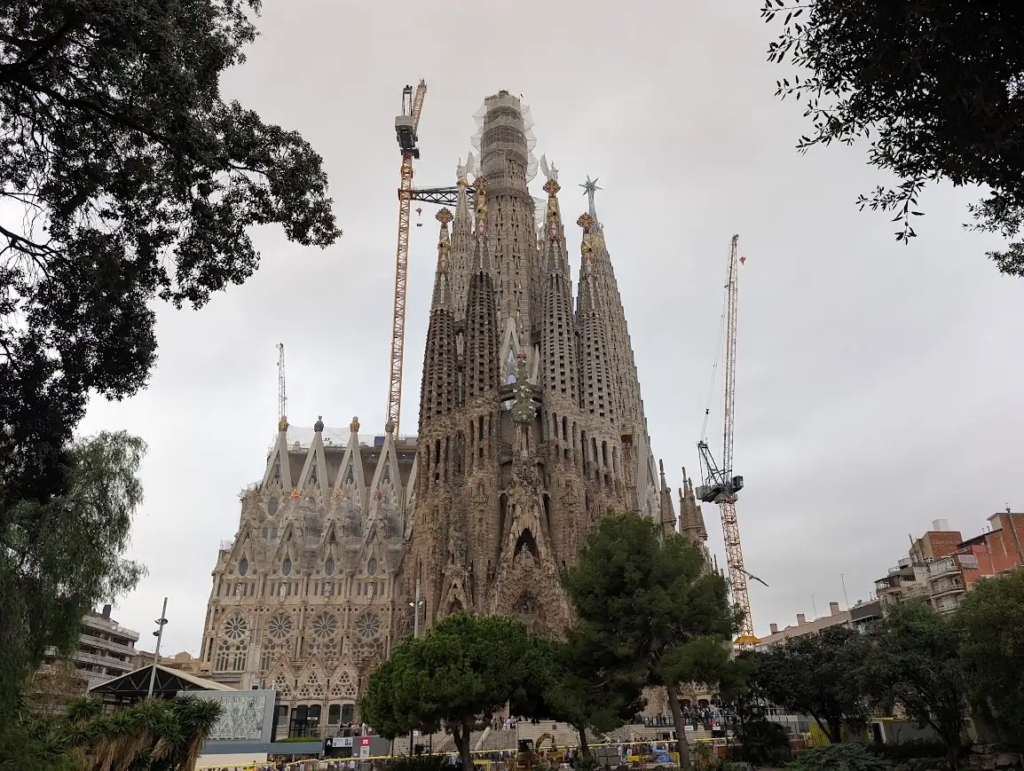
We spent about three hours around and inside the basilica, using the provided audioguide, and it was magnificent. It really is unlike anything else we’d seen before.
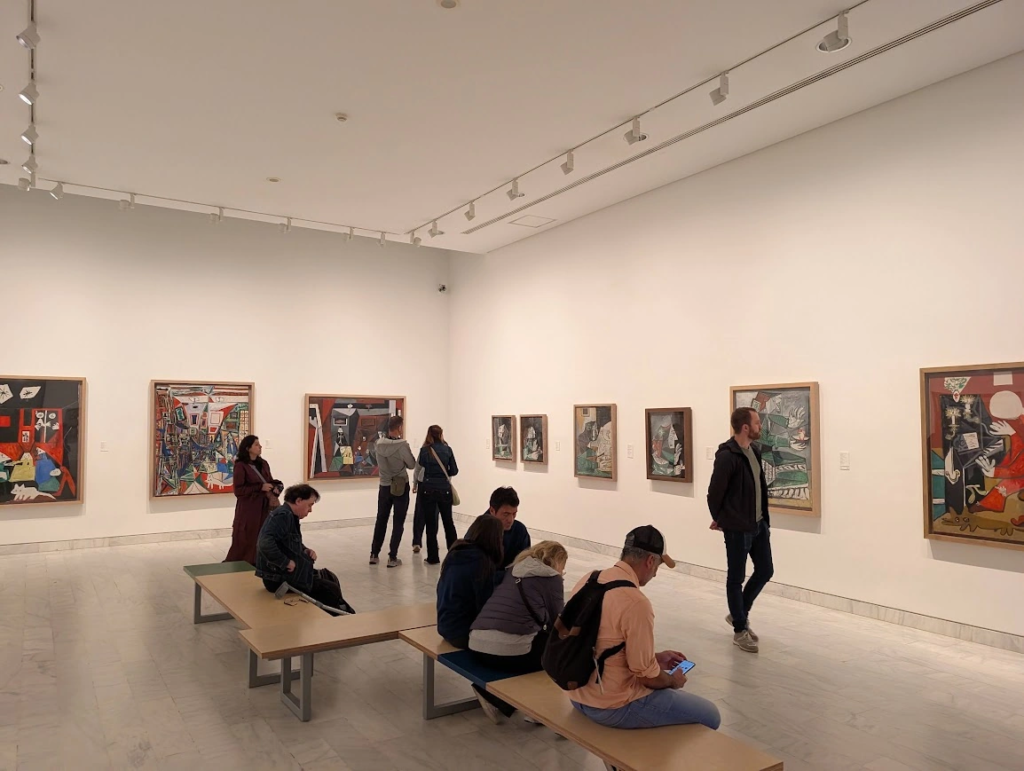
Next stop was the Picasso Museum. Thursday afternoons (4:00–7:00 PM), October to March, plus the first Sunday of the month, are free with a prebooked ticket. Summer hours differ. Full price is €14.
One more free entry in the evening: Basílica de Santa Maria del Mar, free daily from 6:00 PM to 8:30 PM.

Next morning we came back to our car parked in the suburbs, and we checked out the nearby FC Barcelona’s stadium – Camp Nou.
Day 6 – Castellers, Girona, Besalú
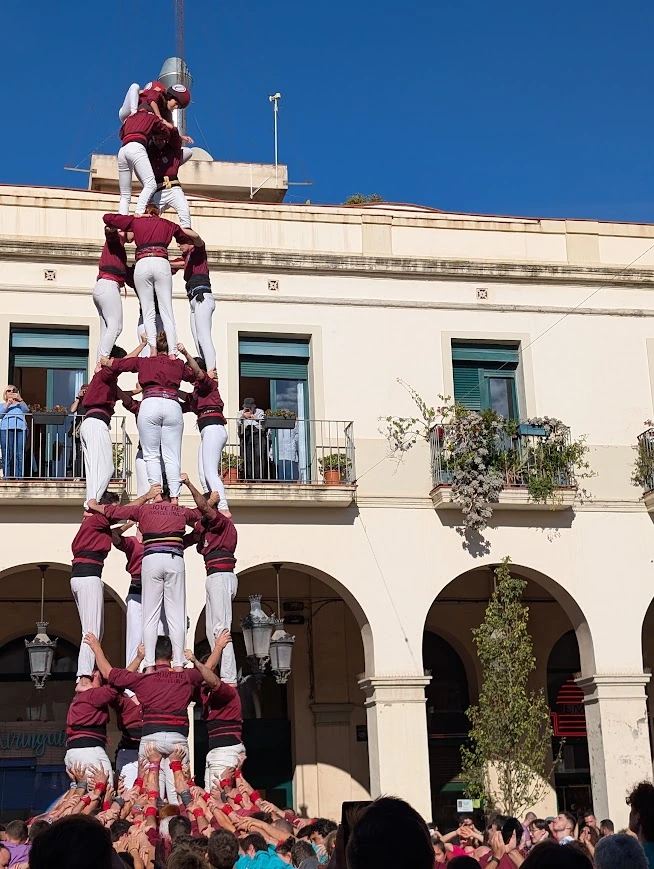
We drove out of Barcelona and headed to its suburbs, where we had looked up a local festival at Plaça de Masadas. We really wanted to see the castells – a local Catalan tradition of human pyramids. There was a competition that lasted 1–2 hours and it didn’t disappoint. To check for these events, you can look up the schedule with locations at castellscat.cat. It really is quite the cultural experience and I recommend it.
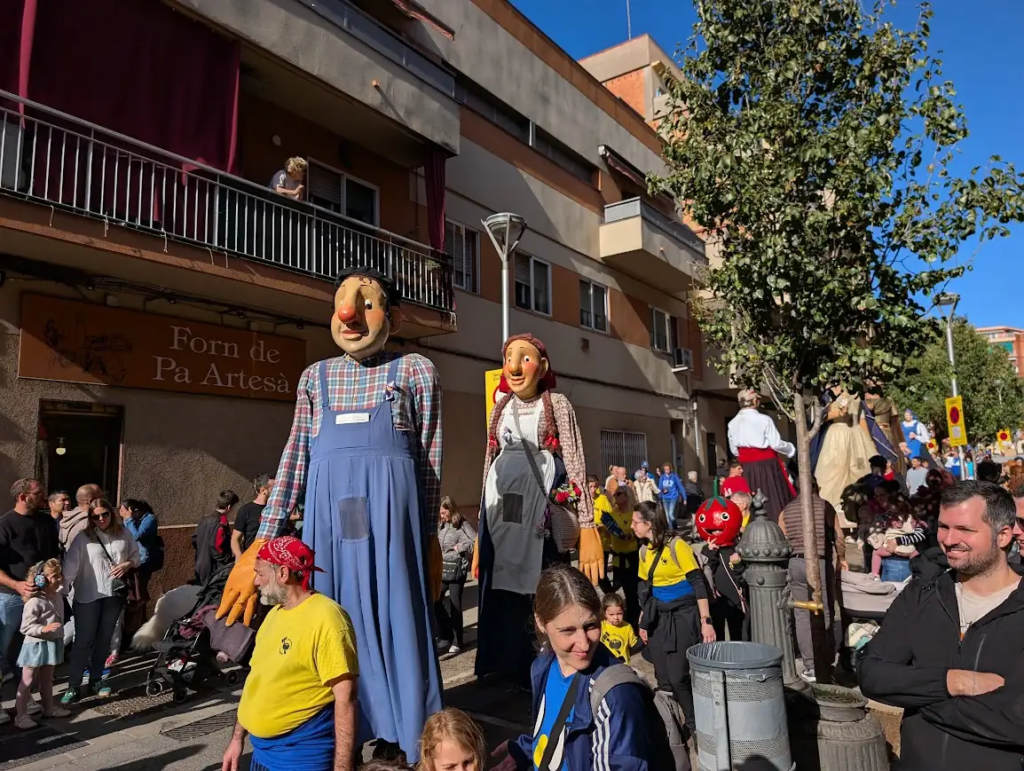
Apart from the human towers, there was a parade of figures of giants – another local tradition.
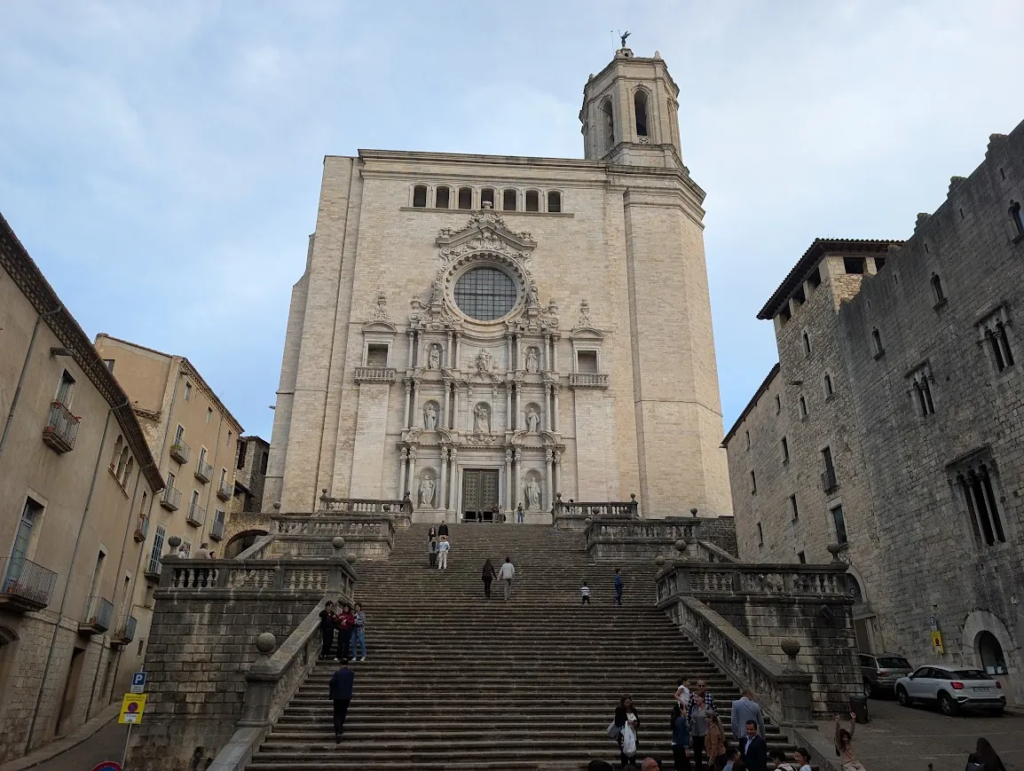
In the afternoon we headed to Girona, walked around, checked out its cathedral (featured in Game of Thrones).
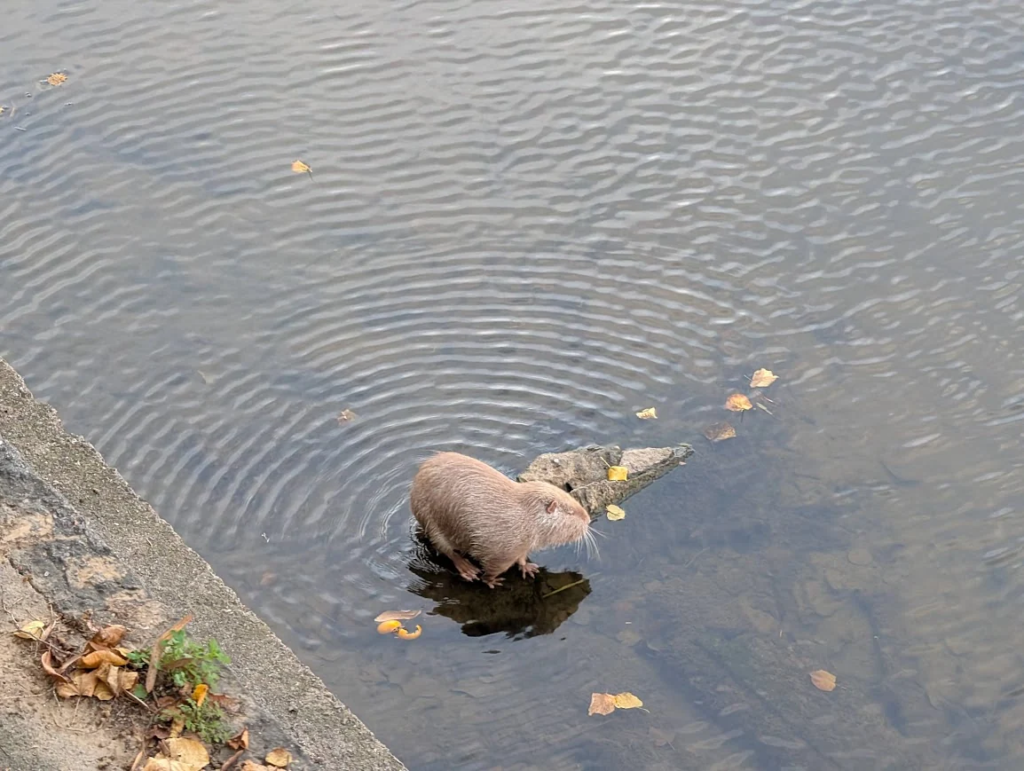
Also, we spent some time wondering what animal infested the local river (turns out it was the South American coypu, not a beaver).
Our last stop of the day was Besalú – charming and quite popular medieval town, known for its well-preserved 12th-century Romanesque stone bridge and rich Jewish heritage.
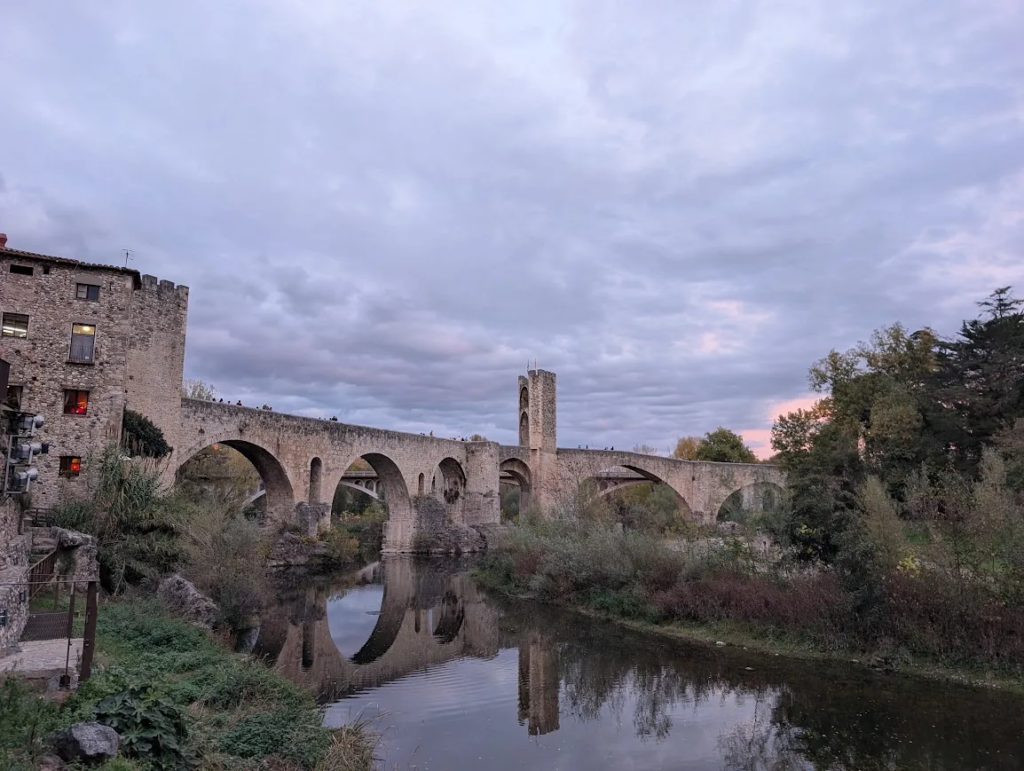
We spent the night in our car, not too far from there, on a local dirt road close to a village. It was super peaceful.
Day 7 – Figueres, Crossing into France
We started the next day by stopping for a while in Figueres, the hometown of Salvador Dalí. We passed by his home (Casa Natal). There’s the Dalí Theatre-Museum, known as the world’s largest surrealist object, designed by Dalí himself. We didn’t go inside, but there are quite a few of his sculptures you can see just by walking around.
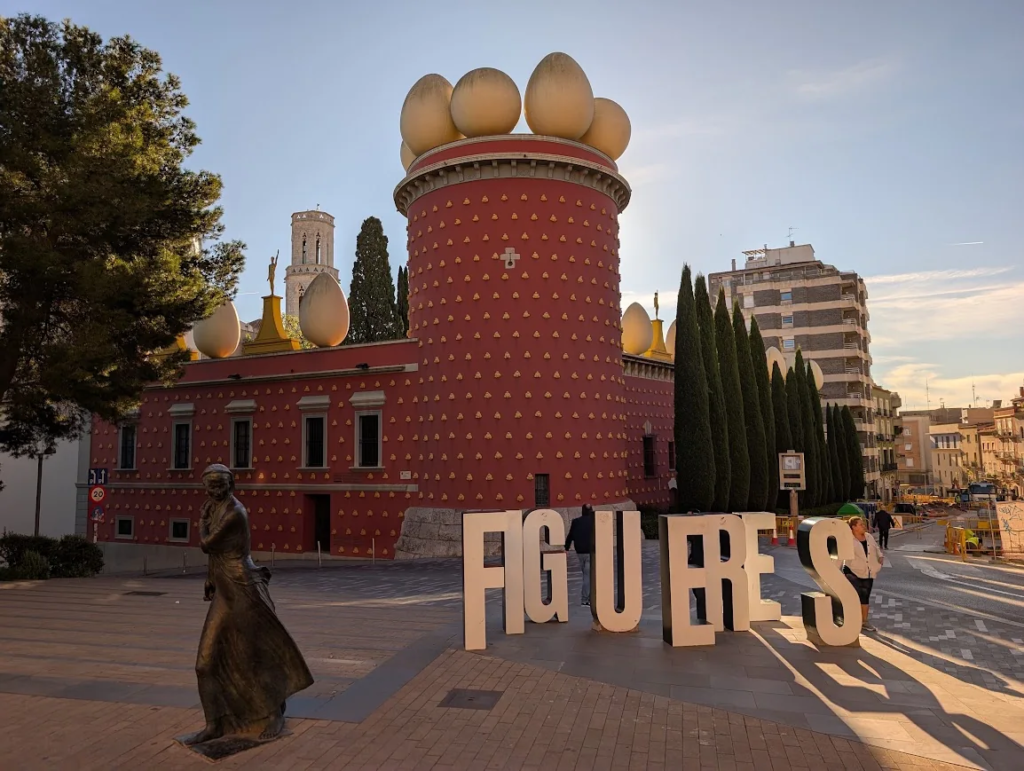
After leaving Figueres, we took the winding coastal road and crossed into France!
Season
We did this leg in mid-November, right after Andalusia and Valencia. Inland stops – Poblet, Montserrat, Sant Llorenç del Munt – were close to empty. Barcelona was a different story. Even in low season the crowds were still noticeable, but much more manageable than in the summer.
Weather stayed mild. Daytime highs around 15–18°C (59–64°F), nights down to 7–10°C (45–50°F).
Low season runs November to March. Hostel prices were noticeably lower than summer would’ve been. I’d avoid July–August for this whole region – heat, plus Barcelona at its most crowded.
Practical
Currency
Euro. Cards are accepted almost everywhere, but carry some cash for parking attendants and street vendors. If you’re coming from a non-euro country, use Revolut to avoid conversion fees. There’s a 1% weekend markup, but you can avoid it by exchanging currencies in the app beforehand.
SIM
Any EU SIM works under Roam Like at Home – no need to buy a local one. If you don’t have one, check eSIMDB, filter by the amount of data you need and your trip length, then sort by price.
Language
Spanish is widely spoken and understood, but Catalan is the region’s own language and locals notice when you make the effort (especially outside of Barcelona). English is widely understood in hospitality and tourism, but not reliably outside of it.
- hola – hello (Spanish and Catalan)
- gracias – thank you (Spanish) / gràcies – thank you (Catalan)
- buenos días – good morning/good day (Spanish) / bon dia – good morning/good day (Catalan)
Tips Summary
- Cheapest Rentals: Search via DiscoverCars – small cars from €61.87/week (€8.84/day) at Barcelona Airport at the time of writing.
- Sleeping in a Car: Legal in Spain as long as you’re legally parked and all activity stays inside the vehicle. No tables or chairs outside. Local bylaws vary – check natural parks and coastal beaches.
- Low Emission Zone (ZBE) in Barcelona: Active Monday to Friday, 7:00 AM to 8:00 PM. Rental cars are already compliant. Foreign-plated cars need to register in advance or buy daily permits (€5 each, up to 24 a year) – or just time your driving around the restricted hours.
- Avoid Pyrenees Tunnel Tolls: Some tunnels crossing into France are paid, but there’s always a free alternative.
- Cheap Fuel: Use Plenoil or Ballenoil instead of BP or Shell. Diesel was around €1.20/L in November 2025. Use the Gasall app – Google Maps doesn’t reliably show fuel prices in Spain.
- Free Street Parking in Barcelona: We found a spot in Pedralbes, a 20-minute walk from the metro. Left our things in the car for a couple of nights with no issues.
- Barcelona Transit: Skip the €2.90 single ticket. Get the T-Familiar – 8 trips for €11.50, shareable, works on metro, bus, and tram, with free transfers within 75 minutes.
- Montserrat Free Entry: EU residents get free tickets to see the Black Madonna – book ahead on the official site, ID or PESEL number required. Saved us the full ticket price.
- Sagrada Familia: Book at least 2 weeks ahead in low season, up to 60 days ahead in peak. €26 normal, €24 under 30.
- Free Museums: MNAC – Saturdays after 3:00 PM and first Sunday of the month. Picasso Museum – Thursday afternoons (Oct–Mar) and first Sunday. Santa Maria del Mar – free daily, 6:00 to 8:30 PM.
- Castells (Human Pyramids): Check castellscat.cat for the schedule of these human-tower competitions – free to watch, worth timing a stop around.
- Outdoor Cooking Ban: Banned in or near forested areas during high fire risk season in Spain. Check aemet.es before cooking outside.
- Season: Mid-November is quiet outside Barcelona itself, mild (15–18°C days), and low season pricing on hostels. Avoid July–August for heat and Barcelona’s worst crowds.
The Budget System
I keep daily travel costs under €30 using two methods:
● €3/Day Rental Car Guide
● Sleeping in Rental Cars
One week of travel cost me less than a day of work in Australia.