Polish Coast, Gdańsk on €16/Day: Sleeping in a €4 Rental Car
Poland’s Baltic coast empties out in April. National parks are free and beaches empty:
TRIP STATS
- DAILY RATE: €15.80 (per person)
- SLEEP: Sleeping in Rental Car (3 nights) + Hostel (2 nights)
- BY: Rental Car, Public Transit
- PEOPLE: 2
- DAYS: 5
- TOTAL: €158.00 (662 PLN)
- CURRENCY: Polish złoty / zł (€1 = ~4.20 PLN)
- DATE: April 2026
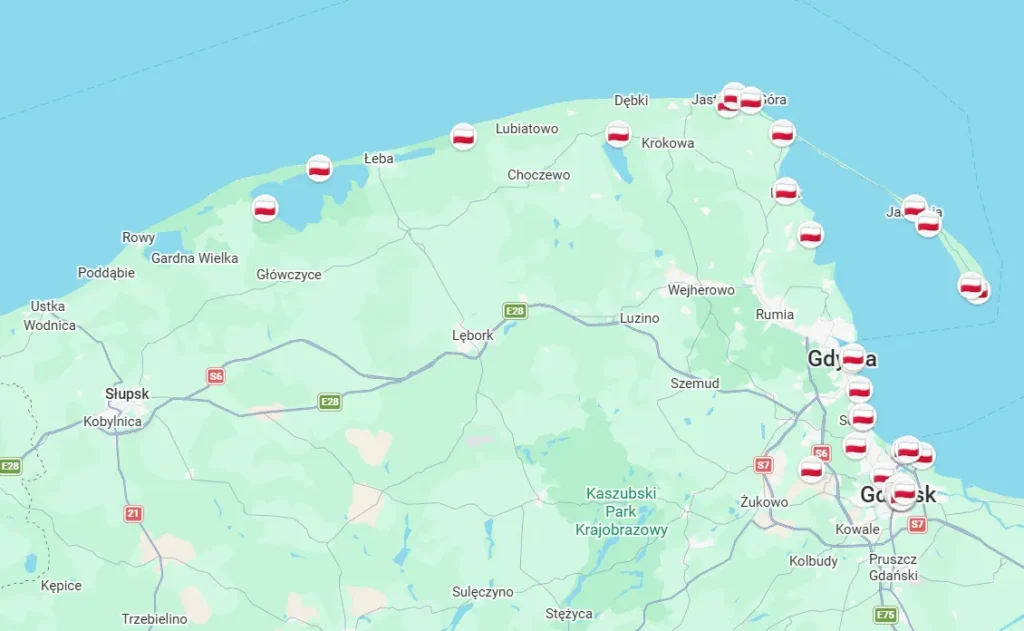
- ROUTE: Gdańsk → Hel → Słowiński NP → Puck → Gdynia → Sopot → Gdańsk
- TOOLS: DiscoverCars, Cover4Rentals, park4night, Revolut, Biedronka, Lidl
| ITEM | COST (2P) | NOTES |
|---|---|---|
| Car Rental | €11.23 | €3.74/day. €3/Day Rental Car Guide CarFree Rent a Car via DiscoverCars |
| Fuel | 100 PLN (~€24) | €8/day. Coastal loop. |
| Parking | 14 PLN (~€3) | Mostly free spots. |
| Carwash | 10 PLN (~€2) | Required by rental provider on return. More below. |
| Stay | 190 PLN (~€45) | 3 nights – slept in the rental car 2 nights – Hostel Galaxy, Gdańsk: 95 PLN/night for double room |
| Food | 223 PLN (~€53) | 22 PLN/day (€6) per person. Shopped at Biedronka and Lidl |
| Transit | 34 PLN (~€8) | Public buses, Gdańsk |
| Sights | 44 PLN (~€10) | Per person: 10 PLN – Sopot Pier 12 PLN – WW2 Museum audioguide (ticket free on Tuesdays) |
| TOTAL | 662 PLN ~€158.00 | 5 days at €15.80/day per person |
How €15.80/day per person compares to my other trips: Budget Travel Cost per Day.
Getting There
Buses: Warsaw → Gdańsk FlixBus tickets can go as low as €5 (21 PLN) booked a week or two ahead. Prices rise last minute. Check Omio for aggregated bus routes, then book direct for best prices. More bus and train tricks: Budget Travel Tips.
Train: Comfortable and fast. PKP Intercity runs Warsaw–Gdańsk frequently in around 3 hours. There are also slower and cheaper connections. Worth checking if travelling as a pair. “Taniej z Bliskimi” discount on the official PKP website – 30% discount for trips booked for 2+ people at least a week ahead.
Flights: Gdańsk Airport (GDN) has strong Ryanair and Wizz Air coverage. I flew Gdańsk → Copenhagen for €15.
Toruń: Worth a few hours as a stopover if traveling through. Gothic old town, birthplace of Copernicus. The tourist information office on the main square offers luggage storage for 15 PLN/day – cards accepted, no booking required.
Car Rental at Gdańsk Airport
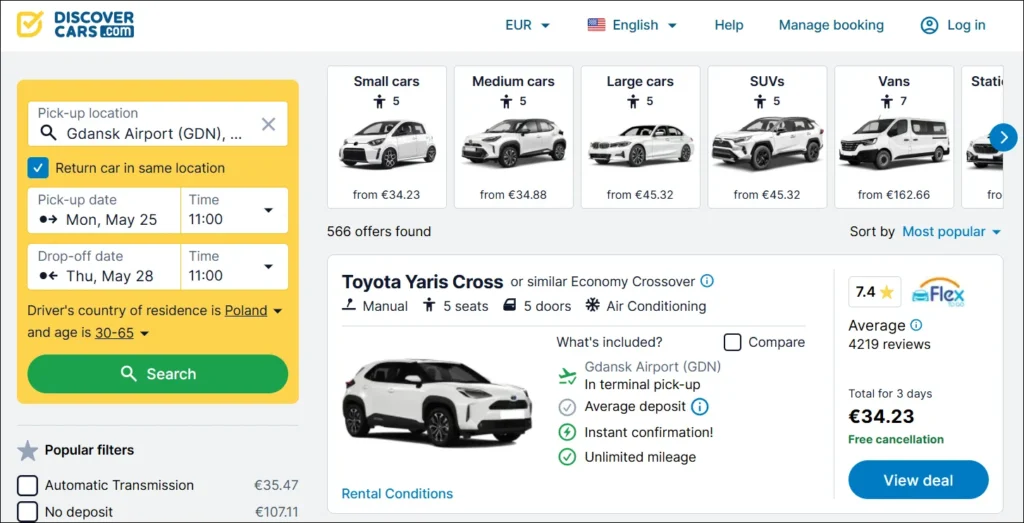
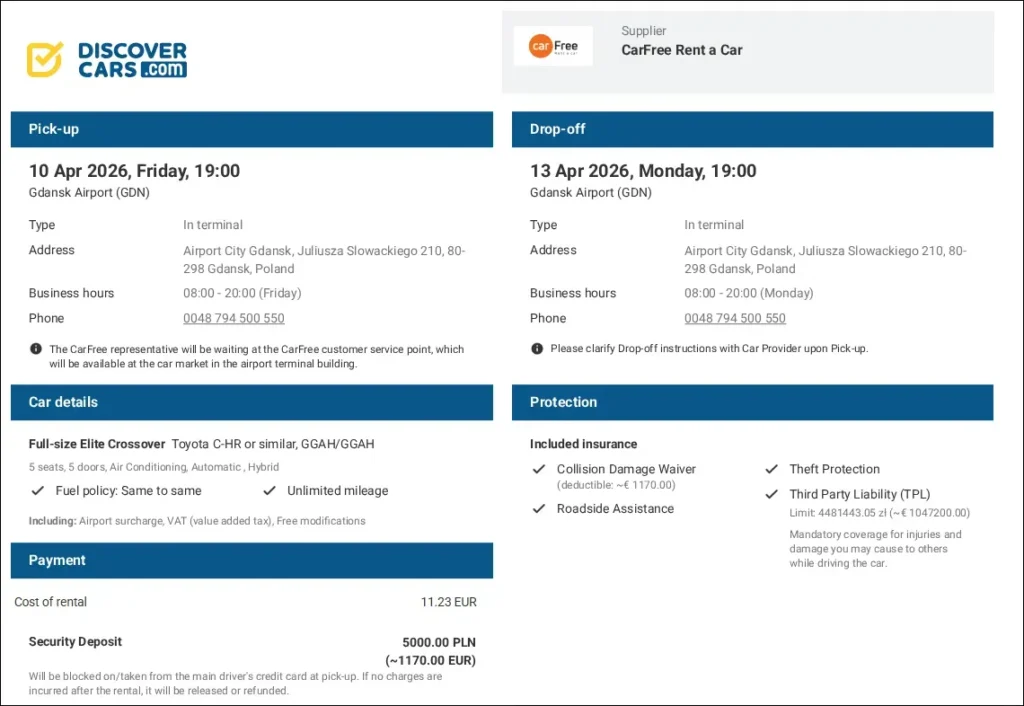
- Cost: We paid €3.74/day (€11.23 for 3 days) via DiscoverCars (my review). Off-season pricing in early April. Full process of avoiding desk upsells: €3/Day Rental Car Guide.
- Current Prices: From €11/day at the time of writing (see screenshot above). European Car Rental Price Comparison.
- Provider: CarFree Rent a Car. 3/5. Cheap, with caveats. Standard insurance scare upsell at the desk – not too hard to decline. The annoying bit: they insisted the car had to be returned washed and vacuumed, otherwise a 500 PLN cleaning fee would apply. Unusual policy. We spent 20 minutes at a carwash before returning it. Handover was fine. We never received post-rental inspection report despite following up – we called, they confirmed no extra charges and said a report was sent, but nothing ever reached our Gmail inbox.
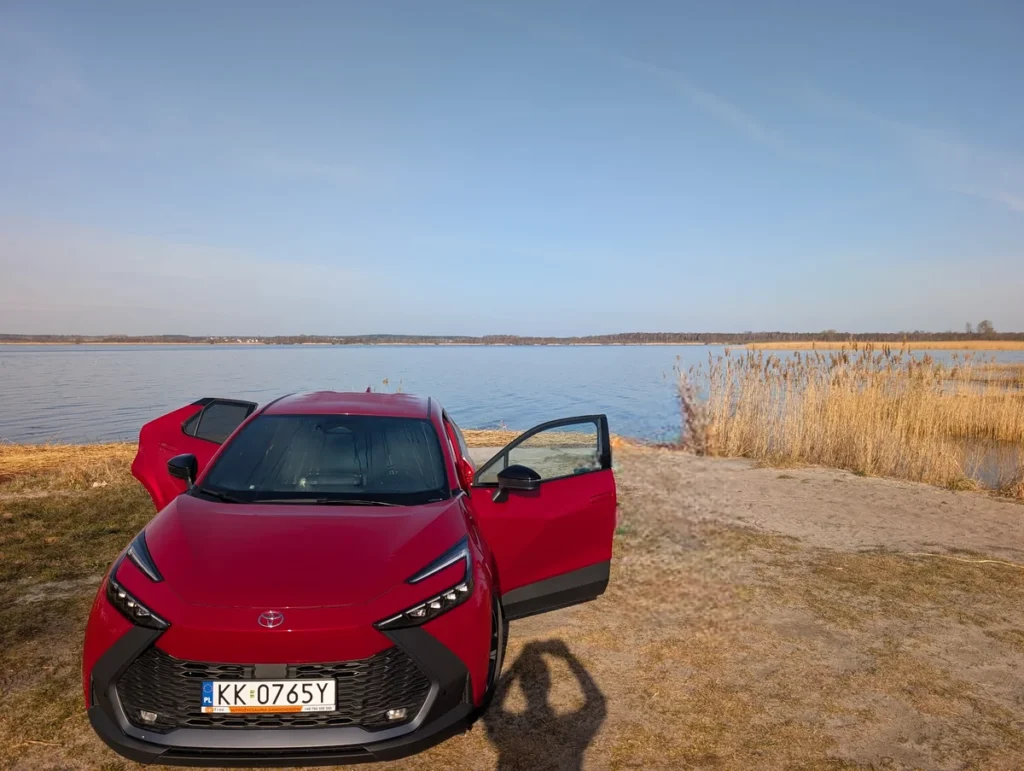
- Vehicle: Toyota C-HR hybrid (booked: Economy Crossover – Toyota C-HR or similar).
- Excess: ~€1,170 (5,000 PLN deposit). Covered by Cover4Rentals annual policy – we declined desk insurance. The deposit took around a month to clear.
- Tolls: None. All roads on our route were free, including motorways. Few roads in Poland are paid.
- Fuel: Use Google Maps or Waze for real-time prices.
Sleeping in a Rental Car in Poland
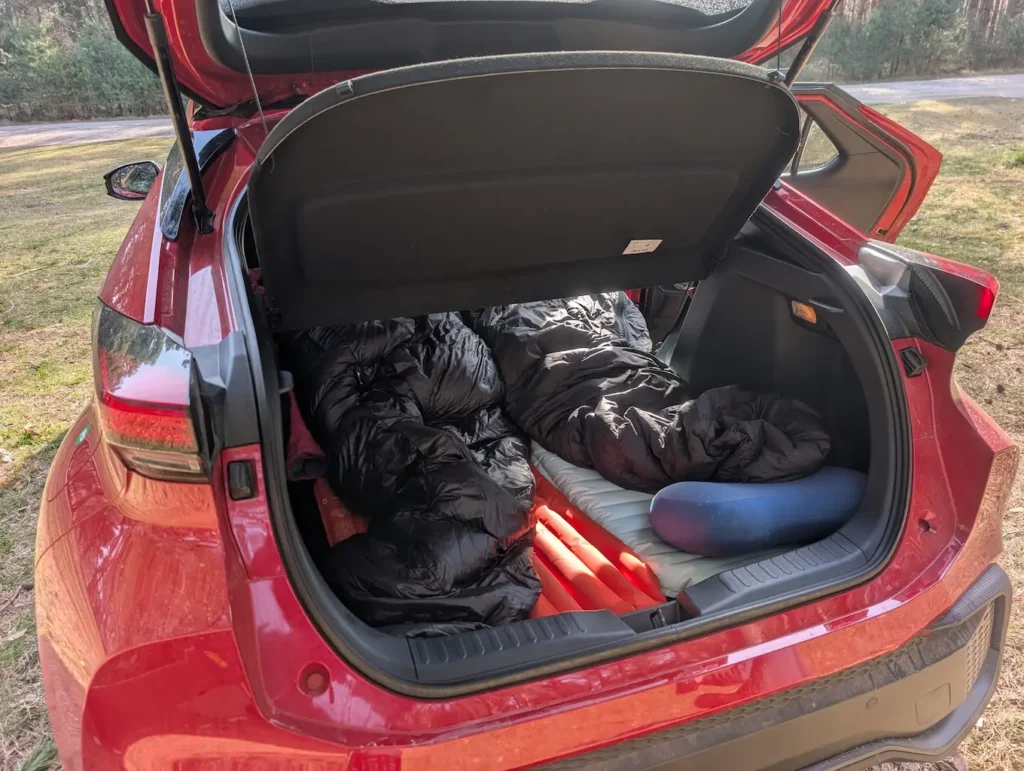
Toyota C-HR hybrid. 3/5. Workable.
Enough space for two. Folding the rear seats leaves a step rather than a flat surface. We fixed it with backpacks under the inflatable mats and some cardboard boxes from Biedronka to make it flatter. Legs toward the trunk, inflatable pillow between the front seats (full kit: Sleeping in a Rental Car Packing List). Once we figured out the setup, it was comfortable for three nights. Full sleeping audit: Best Rental Cars to Sleep In.
- Legality: Generally legal in Poland. No specific law against sleeping in your car, unless a sign prohibits it. What matters is where you park and whether you start “camping” – don’t put chairs outside, cook beside the car, or make it obvious you’re staying overnight. Leaving a car in a forest outside a designated spot is fined (Petty Offenses Code, article 161). Country by country: Is It Legal to Sleep in a Rental Car in Europe? Full guide: Sleeping in Rental Cars.
- Facilities: Decent public toilet coverage along the coast. Some paid.
- Overnight Spots: Park4night for marked spots, Organic Maps for offline navigation. No sleeping inside national parks. In state forests, “Zanocuj w lesie” zones are for tents and bivouacs. Cars can’t drive in, so leave the car at a forest car park. If you plan on using a stove, check local fire regulations first.
Hostel in Gdańsk
Hostel Galaxy. 5/5. 190 PLN (~€45) for a private double room, 2 nights. Clean, warm, good kitchen. Located in Wrzeszcz – around 15 minutes by tram from the old town.
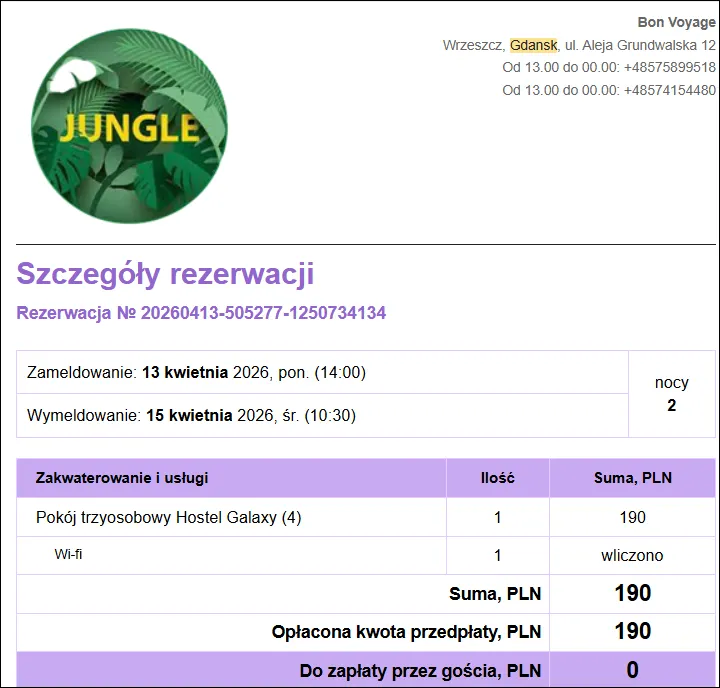
Booking.com has the widest selection and usually the lowest prices. Manually sort by “Price (lowest first)” and filter “Good: 7+” to remove the bad listings. Weekends cost noticeably more. The 1–3 May holiday period and July–August school holidays push prices up significantly.
Food
223 PLN (~€53) for two over 5 days – 22 PLN (~€6)/day per person.
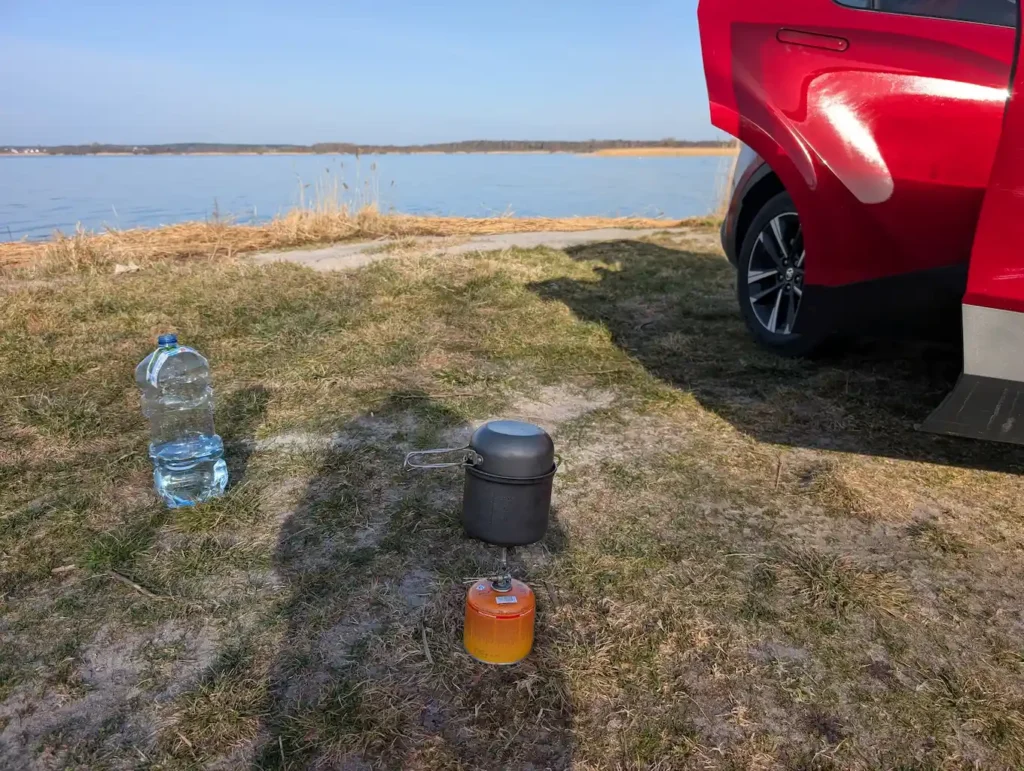
The two cheapest supermarket chains in Poland are Biedronka and Lidl. Biedronka is almost everywhere, including small towns. Lidl only in busier places, but shops are generally bigger and better stocked. Both have loyalty apps with occasional discounts – worth signing up. We shopped at both and cooked on a mobile stove.
Route
Three days in the car along the coast, two nights in Gdańsk on foot.
Poland’s Baltic Sea Coast (3 nights – sleeping in the car)
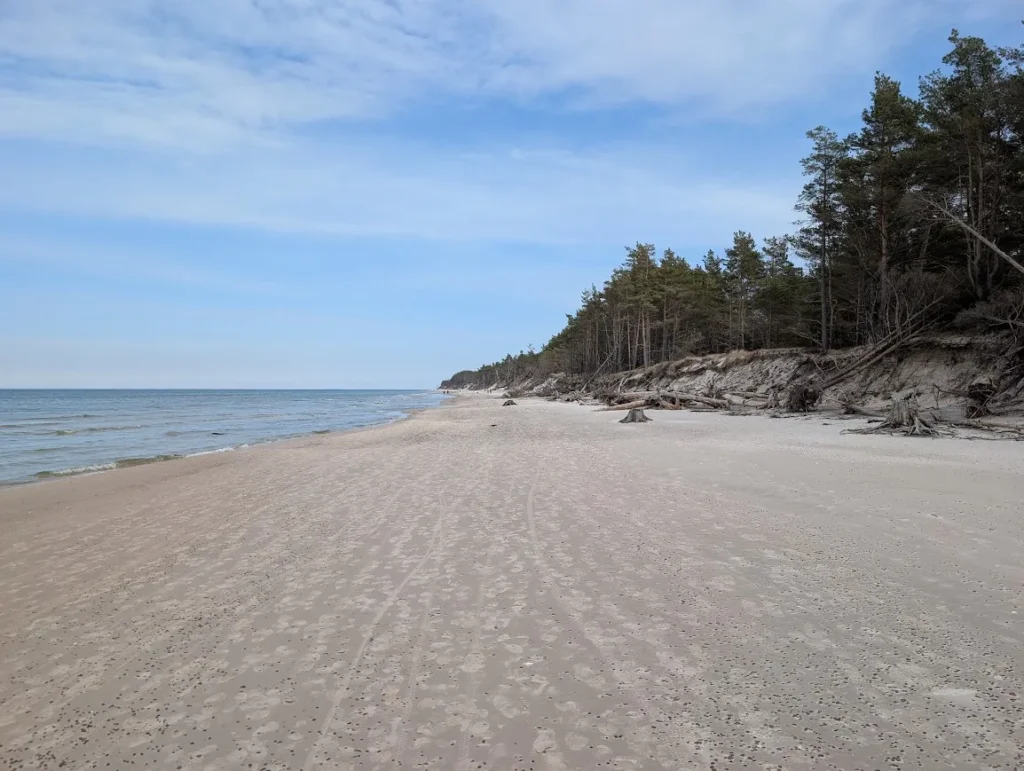
- Hel Peninsula. Forest, beaches, and the town of Hel at the tip. The peninsula is narrow enough that sometimes you can see water on both sides. Quiet in April, very busy in the summer.
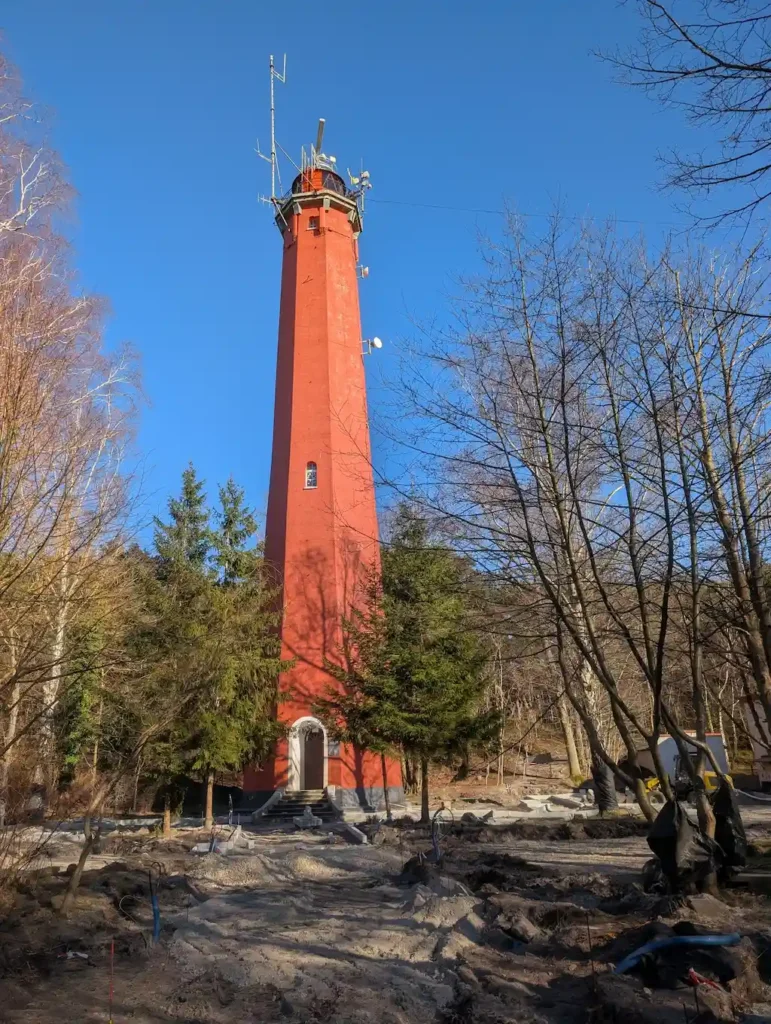
- Rozewie. Lighthouse, actually two of them.
- Jastrzębia Góra. Sea cliffs and empty beaches. The northernmost point of mainland Poland. There is a small monument marking it.
- Stilo Lighthouse. Lighthouse sitting on a sand dune. Nice walk through the forest and dunes to reach it. Entry allowed only in May–September.
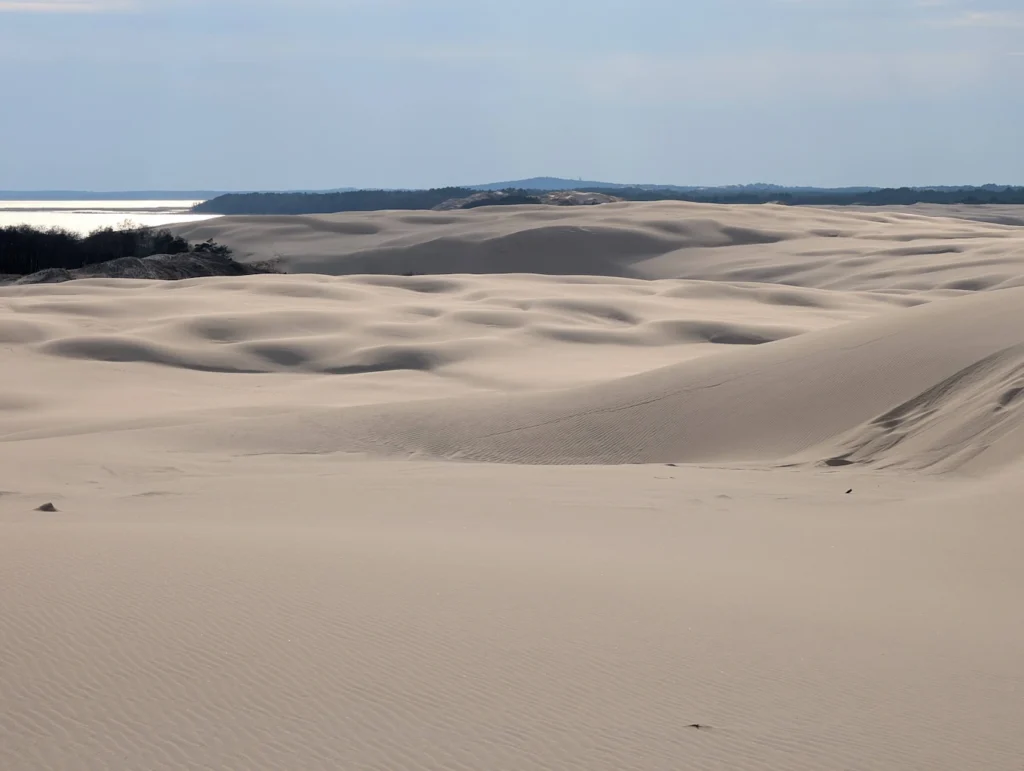
- Słowiński National Park (Łeba side). Moving sand dunes on the Baltic coast. Spectacular. Free national park entry and free parking in April. Both become paid from May: 10 PLN for entry and 9 PLN hourly for parking a car. Hike of around 8–9km, 2–3 hours.
- Puck. Small Kashubian town with a quiet square. Worth it on the drive back.
- Gdynia. Mostly passed through. Functional port city rather than a sightseeing stop.
- Sopot. Resort town with the long wooden pier (molo) – 10 PLN to access it (free between 8pm and 8 am). Lots of Art Nouveau architecture, including the lighthouse.
- Oliwa. Suburb of Gdańsk. Stopped on the way back toward the airport. The cathedral is famous for its baroque organ. Free organ presentations run regularly throughout the year. The schedule changes monthly, check their website.
Gdańsk (2 nights – on foot)
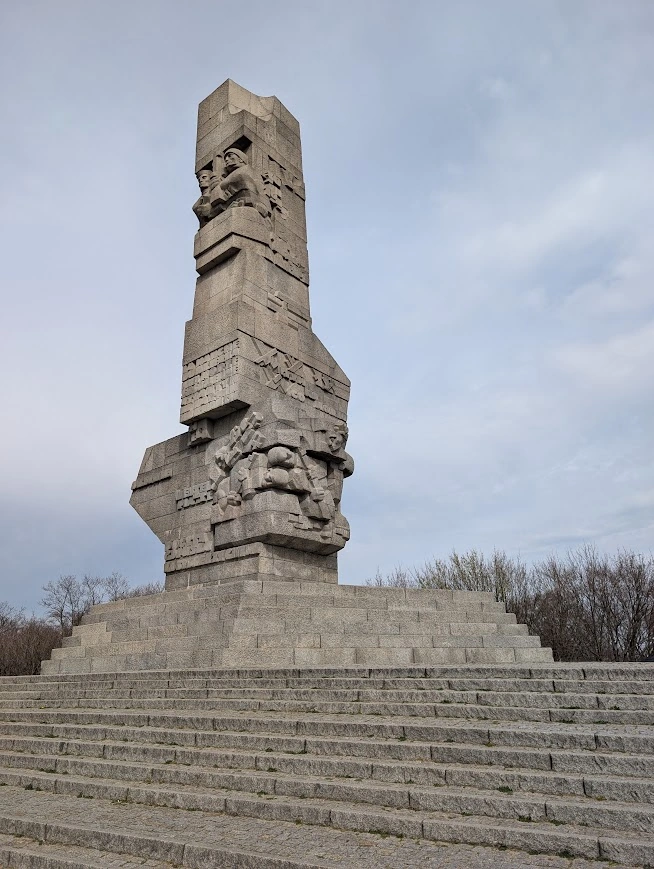
- Westerplatte. Where the first shots of WWII were fired on 1 September 1939. Outdoor exhibition is free. Bus 106 from the centre of Gdańsk.
- European Solidarity Centre (ECS). Birthplace of “Solidarność” movement, which started the changes that eventually led to the fall of communism in Poland. The outdoor areas, Gate No. 2, Sala BHP with exhibitions, and rooftop observation deck are all free. The main exhibition costs extra.
- WW2 Museum. Highlight of Gdańsk. Free on Tuesdays – you need to pick up a free ticket. Queues can be long in summer – go early. Audioguide costs 12 PLN and is worth it. Large museum, allow at least 2.5–3 hours.
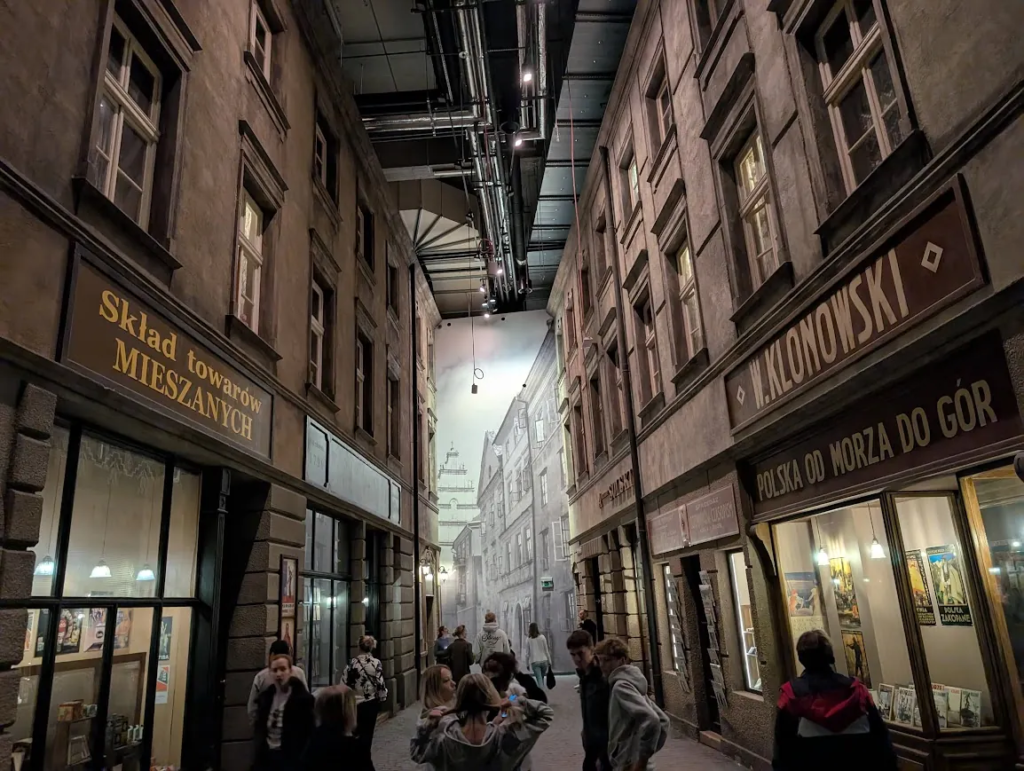
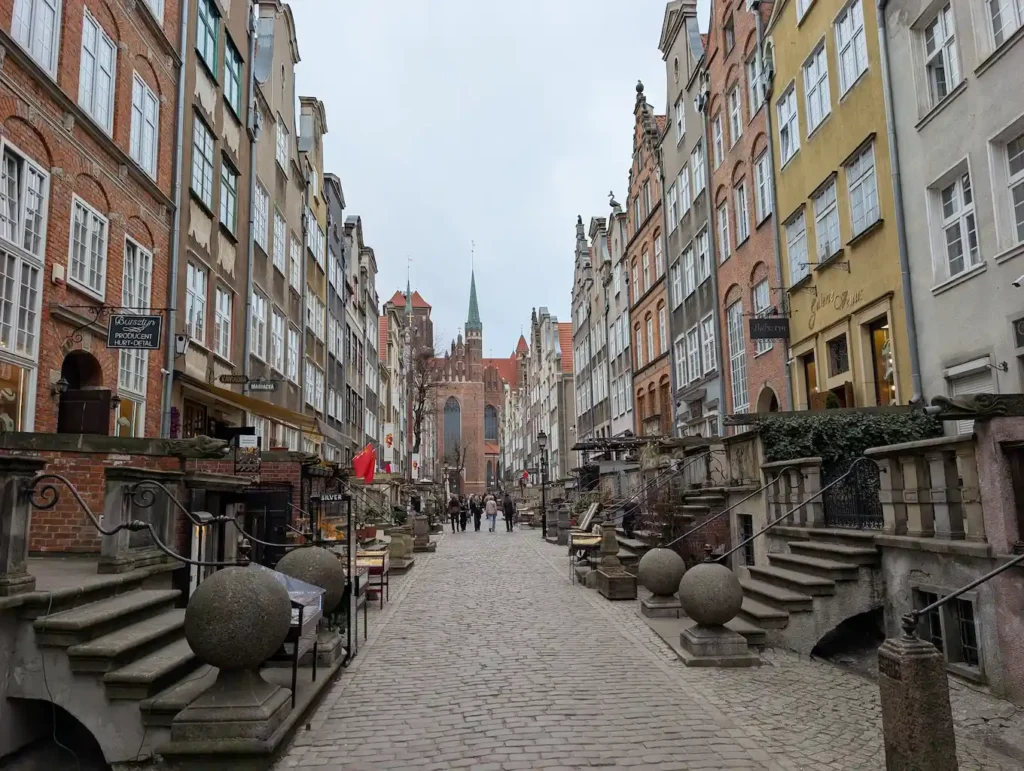
- Old Town & Motława Waterfront. Długa Street, riverside walk, St. Mary’s Church (Bazylika Mariacka). All free. Easy to explore on foot.
Season
April and October are the best-value months for this trip. The trip is cheaper and more pleasant without crowds.
The season changes quickly:
- April: Quiet, mostly free parking, free national park access, empty beaches. A bit cooler, so check the forecast for sunny days beforehand.
- 1–3 May: Polish holiday week. Prices jump, crowds arrive.
- May–September: Parking and national park fees appear.
- July–August: Crowded, expensive, difficult parking, especially near beaches, heavy campervan traffic.
- October: Back to low season, still possible to get warm weather.
- November–March: Cold, winter-like. Often snowy.
- Weekdays vs weekends: Big accommodation price differences year-round, biggest in high season.
Practical
Currency
Polish złoty (zł / PLN). Around €1 = 4.20 PLN at the time of writing. Use a Revolut card for best rates – within 1% of the official rate. There’s a 1% weekend markup – you can pre-exchange in the app beforehand to avoid it.
Most places take card, but carry some cash. Street vendors, local parking attendants, and smaller spots are sometimes cash only. Check Wikivoyage for commission free ATM withdrawals.
SIM
If you’re coming from an EU country, you’ll get a data quota under Roam Like at Home. No extra SIM needed.
Otherwise, check eSIMDB database for a cheap eSIM. Filter by GB and trip duration.
Language
Polish. English is widely understood in Gdańsk and along the coast in season, especially among younger people. Less reliable in smaller towns.
Useful phrases: dzień dobry – good morning/good day, dziękuję – thank you.
Tips Summary
- DiscoverCars: Best rates on rentals. Have an independent excess policy ready (like Cover4Rentals) – you won’t need desk insurance. Full process: €3/Day Rental Car Guide.
- Sleeping in the Car: Generally legal in Poland outside national parks and restricted forest zones. Don’t leave the car in a forest outside a designated spot.
- April and October: Best months. Free national park entry, free parking, no crowds.
- Biedronka and Lidl: Cheapest supermarkets. Biedronka in almost every town, Lidl in larger places.
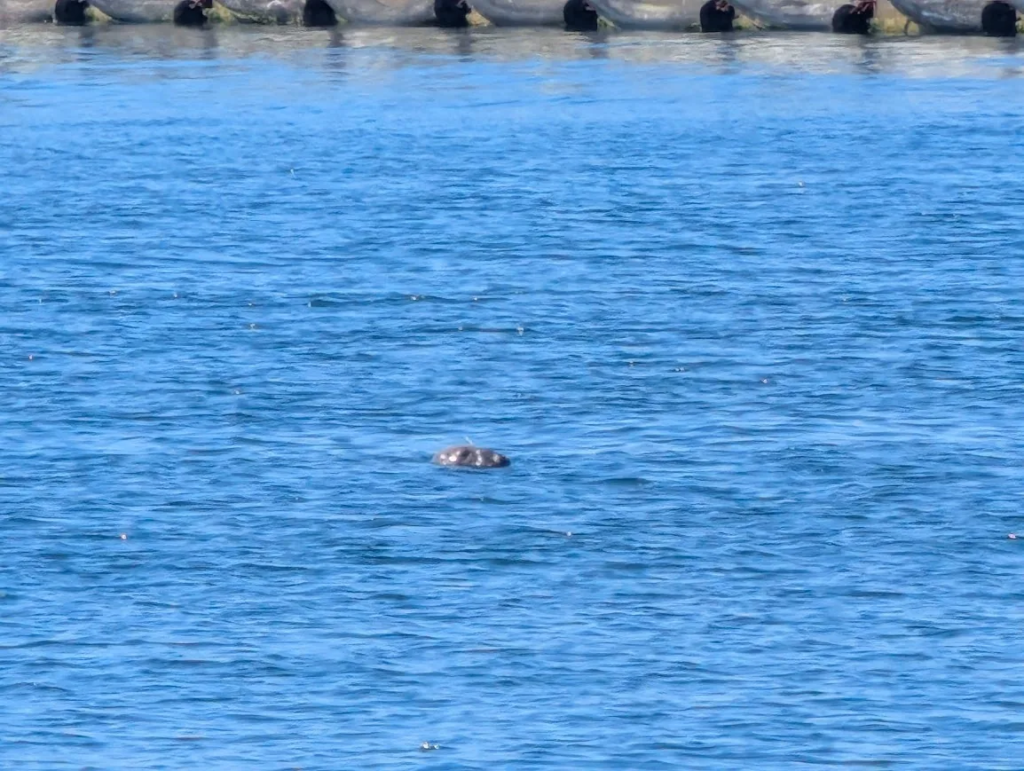
- Seals in Hel harbor: Wild seals sometimes show up in the evening when fishing boats come back. Look carefully – they blend.
- WW2 Museum in Gdańsk: Free Tuesdays. Audioguide 12 PLN, worth it. Allow 2.5–3 hours.
- Oliwa Cathedral: Free organ presentations year-round. Schedule changes monthly – check their website before visiting.
- Avoid: 1–3 May holiday week and July–August school holidays. Crowded, higher prices.
The Budget System
I keep daily travel costs under €30 using two methods:
● €3/Day Rental Car Guide
● Sleeping in Rental Cars
One week of travel cost me less than a day of work in Australia.